

Overview:
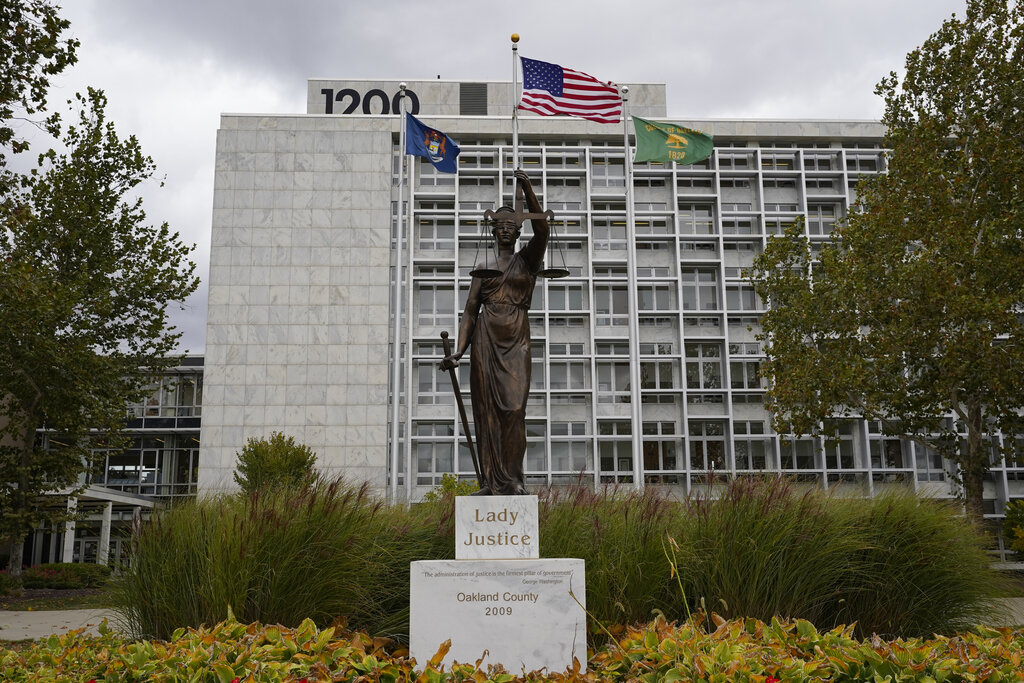
- Oakland County is the only county and second local government to formally oppose DTE Energy's $474-million rate hike request before state regulators.
- Michigan's reputation as a climate refuge is being challenged as tornadoes, flooding, and dam failures cause mounting damage across the state.
- Michigan launches updated reporting system for harmful algal blooms that threaten public health, and will map verified sightings statewide.
➡️ Oakland County takes rare stand against DTE’s $474 million rate hike request Oakland County petitioned state regulators to intervene in DTE Energy’s $474-million rate hike request, making it only the second local government — and the only county — among hundreds in DTE’s service territory to take such action. County leaders argue the proposed hike would further burden residents who are already financially stretched. The Michigan Public Service Commission, which reviews rate requests and hears from businesses, advocacy groups, and government agencies, will ultimately decide the outcome. 📌 Sources: MLive, MPSC
➡️ $1 million boost for Detroit parks as coalition unveils summer schedule The Detroit Parks Coalition announced a $1-million investment in city parks alongside its summer programming schedule. Funding will be directed through the coalition to park stewards and organizations, supporting free concerts, festivals, and wellness events. Among the initiatives is We Walk Detroit, now in its second year, which will offer walking and trail programs at 10 parks this summer. Park goers say they have already noticed significant improvements in attendance and maintenance. 📌 Source: WXYZ-TV
➡️ Michigan’s extreme weather surge challenges myth of climate-safe Great Lakes Michigan, once considered a climate refuge, is being battered by increasingly severe weather. Tornadoes struck Ann Arbor and nine counties this year, while flooding threatened dams and triggered evacuations across dozens of counties. The destruction follows years of costly disasters, including the 2020 Edenville dam collapse that caused an estimated $175 million in damage. Scientists attribute the worsening pattern to climate change disrupting the jet stream, producing more frequent and intense storms across the Great Lakes region. 📌 Source: The Guardian
➡️ Blue Cross, Michigan Medicine agree on contract, end monthslong standoff Blue Cross Blue Shield of Michigan and Michigan Medicine have reached an agreement to maintain in-network status, ending a monthslong dispute that threatened out-of-network charges for roughly 300,000 patients. The two sides clashed over reimbursement rates — Michigan Medicine sought a reported 44% increase while Blue Cross pushed for a 30% cut. Final contract terms remain confidential, but Blue Cross CEO Tricia Keith called the long-term deal a win for affordability and patient access. 📌 Source: The Detroit News
➡️ U-M study draws direct link between climate warming, shifting plant communities A University of Michigan study establishes a direct link between climate warming and shifts in plant communities, moving beyond previous observational research. In Michigan, warm-loving species like sugar maples and eastern redbud trees are expanding northward, while cold-tolerant conifers like black spruce decline. Researchers warn that invasive warm-weather species such as Bradford pear may also spread. The findings aim to help conservationists build more climate-resilient plant communities through strategies including assisted migration. 📌 Source: Michigan Public
➡️ Michigan wants your help spotting harmful algal blooms this summer Michigan’s Department of Environment, Great Lakes, and Energy and Department of Health and Human Services have launched an updated online form allowing residents to report suspected harmful algal blooms at Michigan.gov/HABs or by calling 800-662-9278. Harmful algal blooms, caused by rapid cyanobacteria growth, can pose serious health risks to people and pets, causing symptoms ranging from rashes to breathing difficulties. Verified bloom locations will appear on a public map. Officials say the tool will improve response times and help better understand how blooms develop statewide. 📌 Source: WDIV-TV
