

Overview:
- East Canfield Art Park features sculpture with embedded air quality sensors.
- Planet Detroit will visit the park in a June 20 picnic tour.
- The Canfield Consortium is partnering with Henry Ford Health to install additional monitors throughout the neighborhood to study links between industrial pollution and health outcomes.
The East Canfield Art Park offers an unexpected example on Detroit’s east side of how vacant land and public art can serve as vital resources for an at-risk community.
🗳️ Civic Action Toolbox
Why it matters
The Canfield Consortium, through real-time monitoring at the East Canfield Art Park and the surrounding neighborhood, could use air quality data to push for policy changes.
Who's making public decisions
Michigan regulators evaluate emissions facility-by-facility rather than considering cumulative impacts on neighborhoods.
Civic Actions: What You Can Do
Organizations to Follow
What to watch for next
Watch for results from Canfield Consortium’s partnership with Henry Ford Health analyzing the relationship between industrial emissions and health outcomes, which organizers hope will drive changes to air quality regulation.
Are you taking action? Let us know.
Civic resources compiled by Planet Detroit
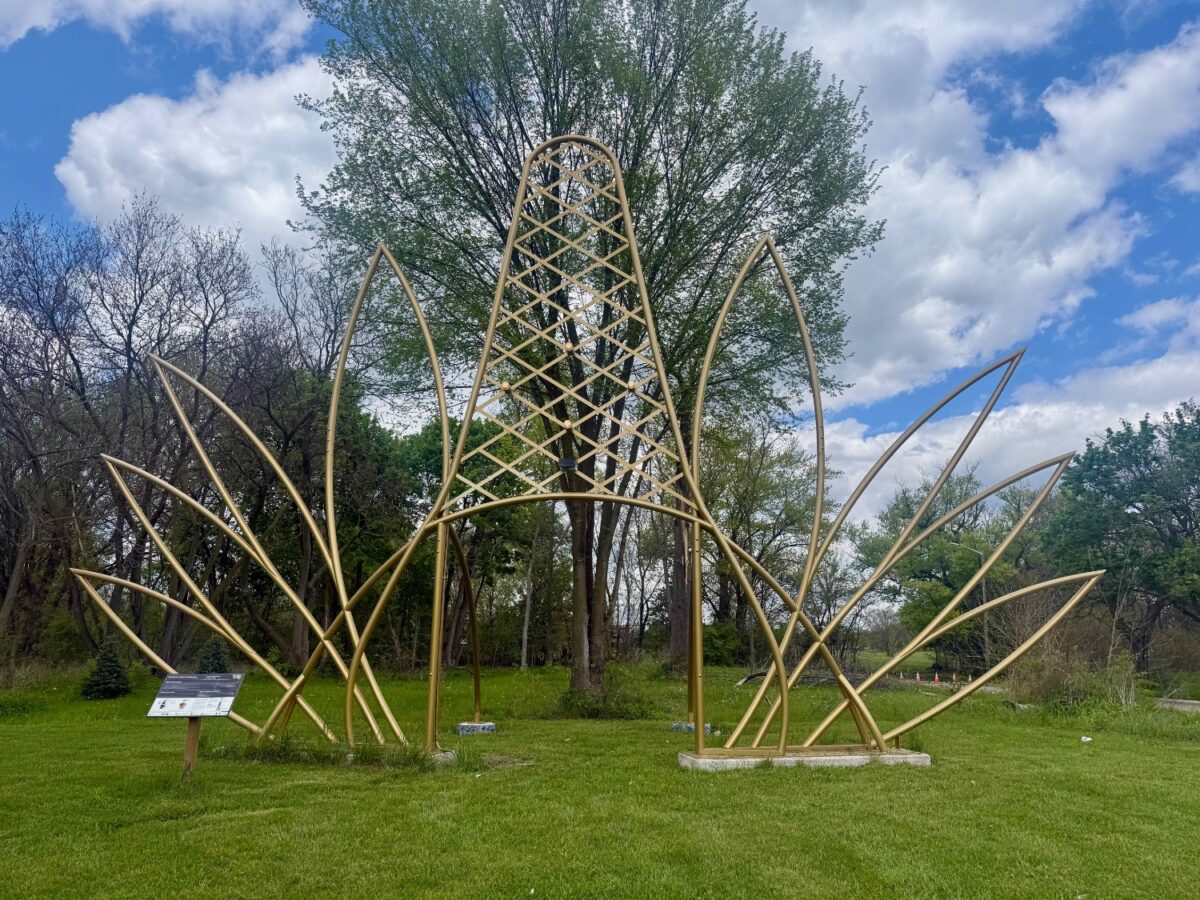
Located a few blocks from the Stellantis Detroit Assembly Complex-Mack, the park transforms formerly vacant land into a community gathering place where art serves not only as cultural celebration, but also as a critical public health tool.
Planet Detroit will explore the East Canfield Art Park in a picnic tour at 11 a.m. Saturday, June 20. Learn more and register here.
The idea behind the art park
For years, residents identified the East Canfield neighborhood’s vacant lots as both a challenge and an opportunity.
Canfield Consortium leaders and sisters Kim and Rhonda Theus envisioned a space that would bring impressive public art directly into the East Canfield neighborhood to inspire community pride.
“You shouldn’t have to leave your neighborhood to have access to great things,” said Kim, the consortium’s president.
That core belief became the foundation for East Canfield Art Park, where a growing collection of sculptures, visual art installations, and unconventional community resources anchor the neighborhood.
Environmental monitoring embedded in art
The park’s largest public art feature is “New Forest, Ancient Thrones,” a sculptural installation created by artist Jordan Weber and unveiled in May 2024.
Visually inspired by crowns of West African and Madagascarian royalty, the sculpture utilizes solar power and a colored LED lighting system to act as a real-time air quality monitor collecting environmental data in a neighborhood that grapples with the negative health effects of industrial pollution.
The air monitor uses the same scale as the Environmental Protection Agency’s air quality index.
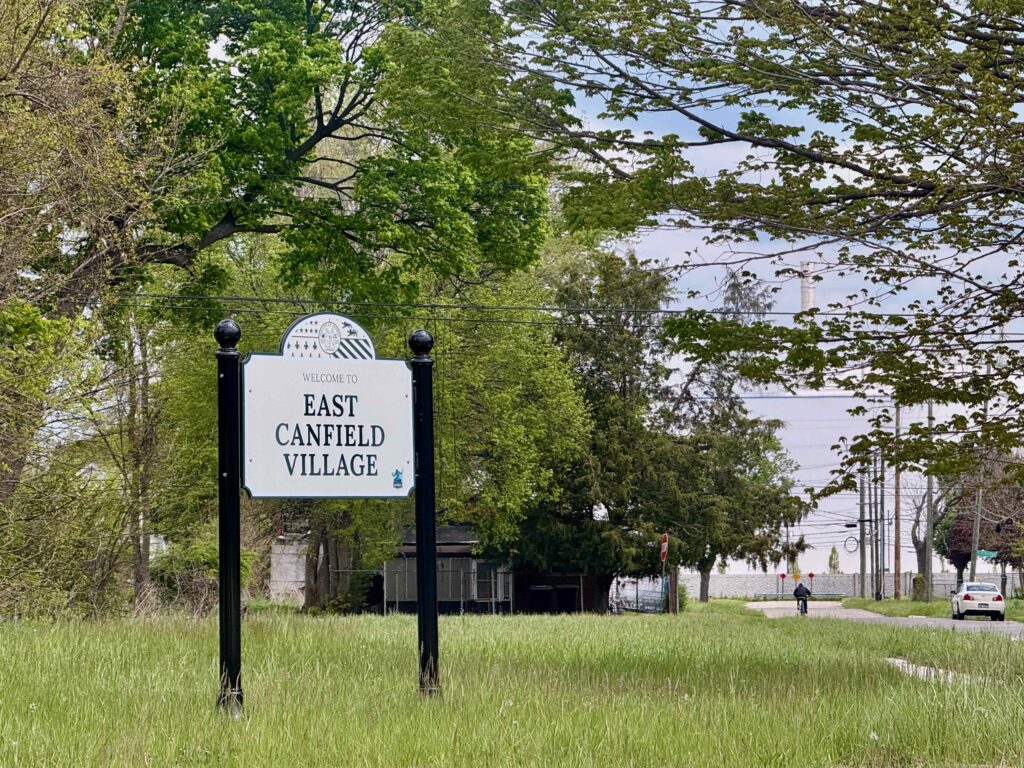
The project emerged through a partnership among the Canfield Consortium, Sidewalk Detroit, and Weber, who spent months attending community meetings and learning about the neighborhood before finalizing the design.
Rhonda said the concept evolved directly from conversations with residents and their concerns about environmental conditions around nearby manufacturing facilities, including the Stellantis plant that expanded in 2019.
“Kim was talking about, you know, we have a huge manufacturing facility literally in the backyard of our community … then we started doing research around air quality,”
Around the same time, Rhonda said community members started sharing physical symptoms that are often caused by air pollution.
“We started having residents in our neighborhood (with) physical effects from the compromised air.”
Residents reported headaches, coughing, sneezing, asthma flare-ups, and other respiratory issues, she said.
Michigan regulators evaluate emissions facility-by-facility rather than by considering the combined effects of multiple industrial operations on a single neighborhood, Rhonda said.
By embedding air quality sensors into a public sculpture, Weber’s installation makes environmental monitoring visible, accessible, and locally accurate.
What’s next for the East Canfield Art Park?
The effort is expanding beyond the boundaries of the park itself. Through a partnership with Henry Ford Health, additional air quality monitors have been installed at homes throughout portions of the neighborhood, according to the Canfield Consortium.
Researchers are collecting data to better understand the relationship between industrial emissions, neighborhood air quality, and health outcomes in communities located near industrial facilities.
“We’re in the early stages of the partnership and we’re still gathering the data and really seeing how we can synthesize both the data and the health outcomes,” Kim said.
Rhonda said the research has potential to make major impacts beyond the neighborhood.
“It’s gonna be great, and propel us forward to ultimately getting legislation changed the way it needs to.”
Inspired by concepts such as forest bathing, the consortium is now developing a second phase known as the “Remediation Forest.”
Planned improvements include an elevated walkway and outdoor classroom designed to maximize access to tree-covered spaces, where air quality may be better.
Rhonda said this second phase of the park aims to provide residents with tangible benefits while longer-term policy solutions are developed for air pollution.
“We said, ‘OK, what could we do at the grassroots level to mitigate it?’ Because right now, the only thing that can really mitigate it in a substantive way, is for legislation to change, which, you know, that’s kind of slow.”
MORE FROM IAN SOLOMON
Detroit nature group joins Sibley Prairie coalition to preserve ‘last of its kind’ landscape
A coalition is fundraising to protect Sibley Prairie, a 440-acre lakeplain prairie in Brownstown Township. Less than 0.5% of Michigan’s original acreage remains.

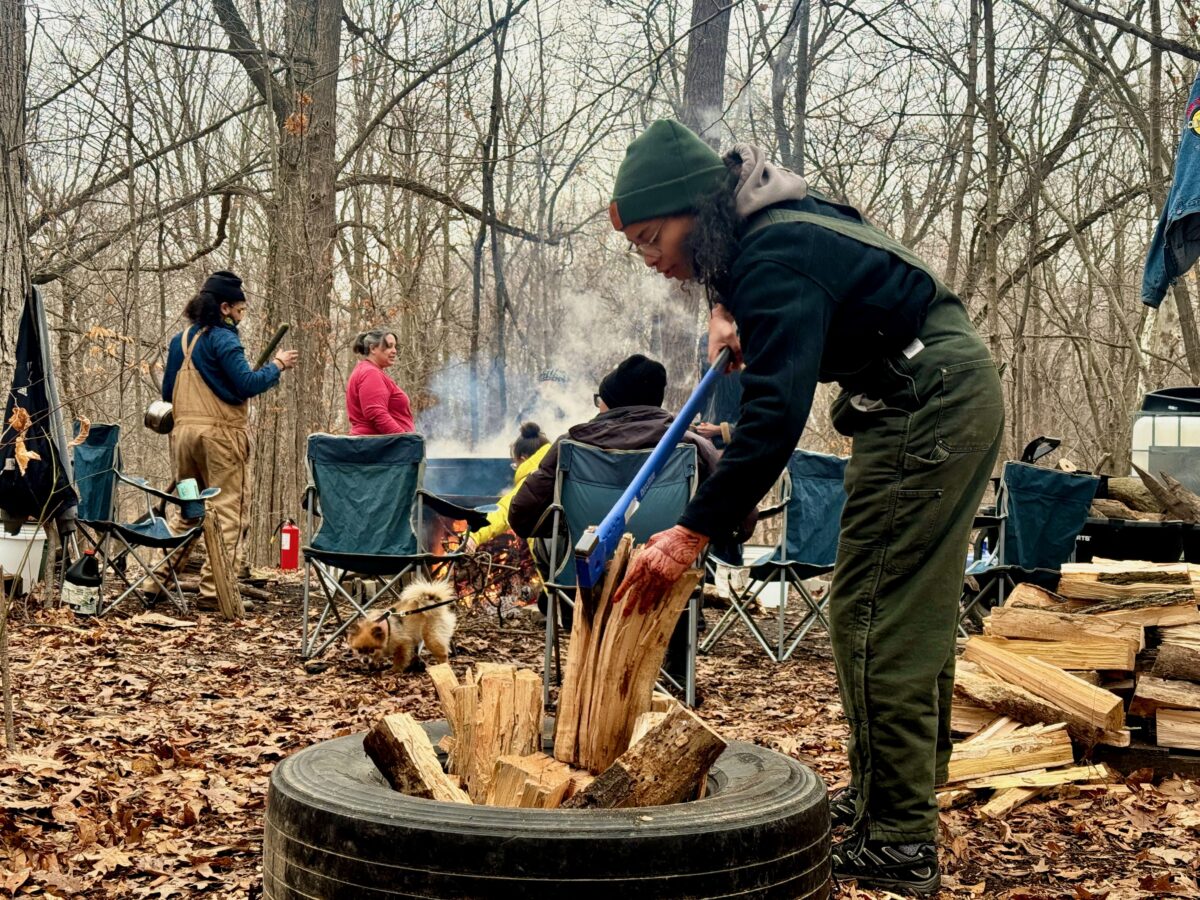
Sugaring in Rouge Park connects Black and Indigenous Detroiters
Rouge Park’s Sugarbush preserves Indigenous maple sugaring traditions while connecting Black and Indigenous Detroiters.
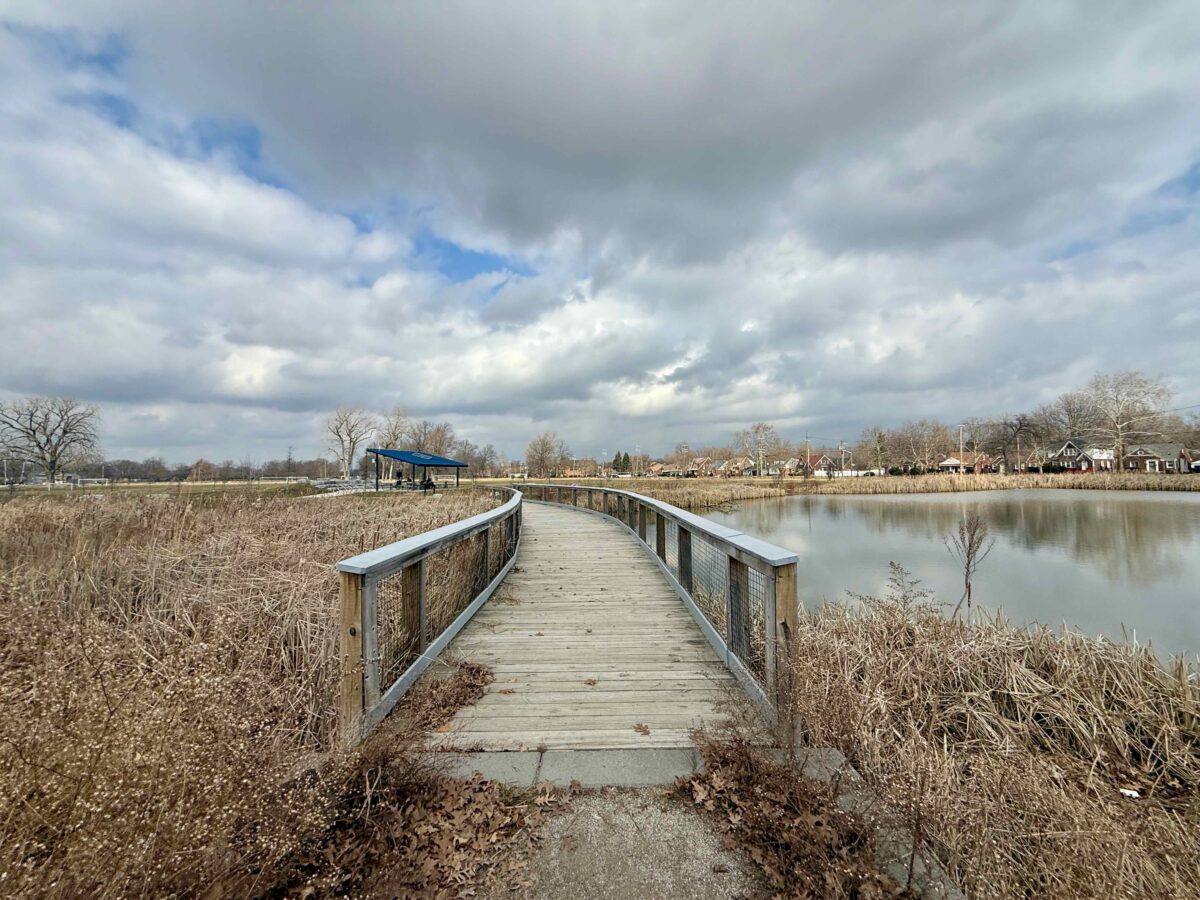
Green stormwater infrastructure in Detroit parks offers examples of flooding solutions
The Chandler Park Marshland “serves as an example of how we can do stormwater in the community,” says Alex Allen, president of the park conservancy.