

Overview:
- Detroit Health Director Ali Abazeed is using a Health in All Policies approach, integrating health and equity into decision-making across departments.
- The city's first Community Health Assessment since 2018 identifies maternal health, food access, health care access, and chronic conditions including asthma as top priorities.
- Abazeed aims to reduce childhood asthma hospitalizations through better air quality monitoring, education, and addressing environmental factors like industrial pollution and housing conditions.
Detroit has an opportunity to redefine public health for Michigan and beyond, according to the city’s newly appointed health director.
🗳️ Civic Action Toolbox
Why it matters
Detroit’s new health director identifies a measurable reduction in childhood asthma as his top goal in Planet Detroit interview.
Who's making public decisions
Detroit Health Director Ali Abazeed says the city is taking a Health in All Policies approach across departments that integrates health and equity discussions in all decision-making.
Upcoming Meetings
Civic Actions: What You Can Do
Organizations to Follow
What to watch for next
Watch for public health developments at the city level after Mayor Mary Sheffield’s March appointment of Ali Abazeed as the new health director. Watch too for the outcome of Councilmember Scott Benson’s data center working group, which includes the health department.
Are you taking action? Let us know.
Civic resources compiled by Planet Detroit
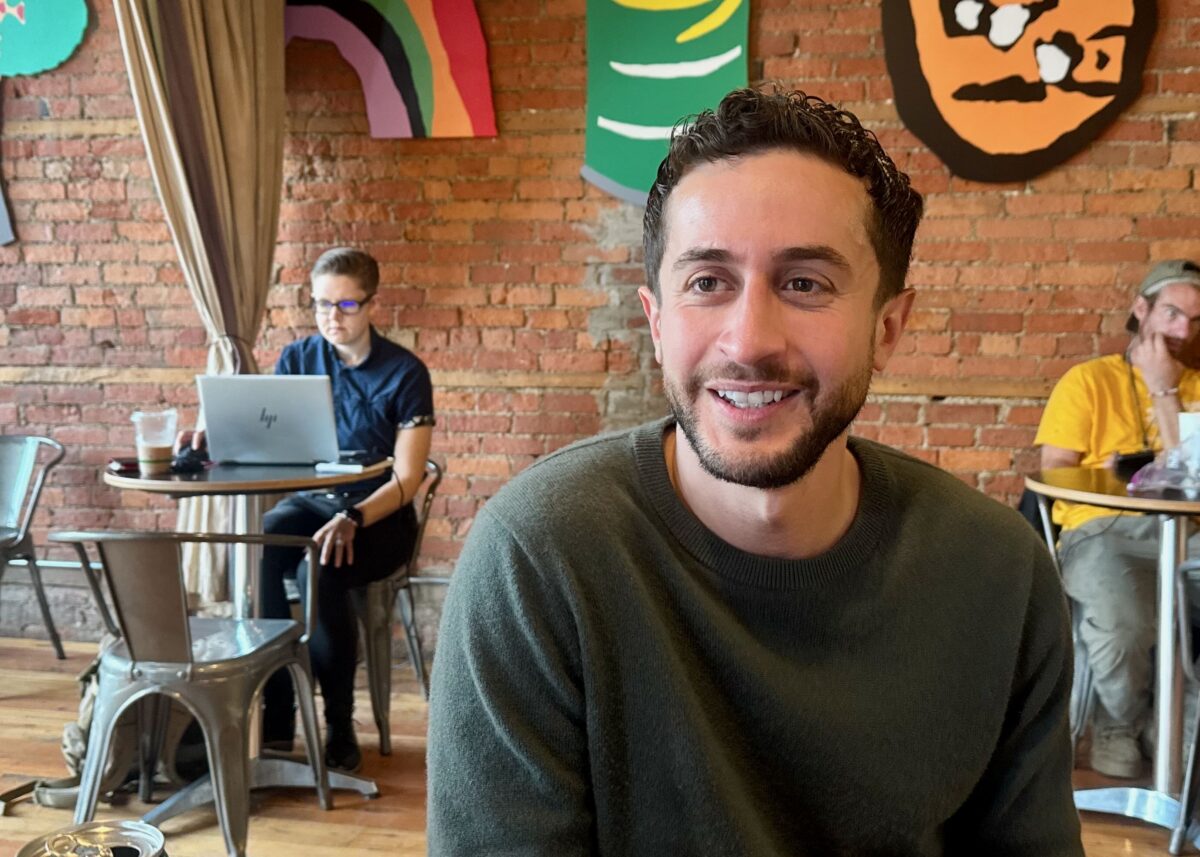
Ali Abazeed was appointed Detroit’s chief public health officer by Mayor Mary Sheffield in March, and left a position leading the Department of Public Health in Dearborn, where he was raised.
On Tuesday, Detroit Health Department unveiled its first Community Health Assessment since 2018, based on a survey of 6,000 Detroiters. The assessment outlines four citywide issues: maternal and infant health, access to healthy food, access to health care, and chronic conditions such as diabetes, high blood pressure, cancer and asthma.
The assessment was released days after the Rise Higher Community Survey conducted by Sheffield’s transition team.
Planet Detroit spoke with Abazeed to learn more about his Health in All Policies approach to city governance, which integrates health and equity discussions in all decision making, and his response to issues like industrial air pollution, climate disasters, and data center proposals.
The interview is condensed and edited for clarity.
What problems are keeping you up as the city’s public health officer?
On March 2, I inherited a 280-person department – a $60-million-plus budget department – and there are things that come along with inheriting departments that size and scope just on its face.
The stuff that keeps me up late at night, the stuff that I think about in my sleep, stuff that wakes me up earlier than I’d like to be woken up, is … I’m doing all this work, but am I doing the work that I want to do on asthma, for example?
Am I doing the work that I want to do on air quality? Am I doing the work that I need to do on behavioral health, opioid use, and substance use?
That’s always the perspective that I think people have with roles like this, which is: it is a lot of admin work, and as much as we all want to be connected to the day-to-day work, I gotta focus on that stuff now.
But I’m a practitioner, I want to do on-the-ground work, and I think the thing that I’m most looking forward to is, how do we get the people in place to be able to do that work on behalf of Detroiters?
You grew up in Dearborn and oversaw its public health department. Do you feel like this is a completely different city in terms of addressing health issues that are impacting Detroiters?
In Dearborn, I started and founded a public health department. It was a different kind of health department, though. It does not have anywhere near the responsibilities of Detroit, of Wayne County, Oakland County, and that was intentional– it was supposed to be a Health in All Policies, think-tank sort of model.
For me, public health is public health. I’ve done public health in refugee camps in the Middle East, in the corridors of Washington, D.C., in southeast Michigan, Dearborn, and now Detroit, formally.
And at the same time, Detroit is a unique case in so many ways. The health outcomes that Detroiters are experiencing – I believe this in refugee camps, in Dearborn, in Washington – they’re all architected.
They’re all designed by decades, if not more, of decisions, and those decisions shape and shift the health outcomes for Detroiters. It’s people, it’s the built environment, it’s the ways in which we’ve designed our roads and recreation and sidewalks.
You’ve spoken about Health in All Policies, and you’ve mentioned the think tank feature of your work with Dearborn. I’m curious how you envision that think tank approach to a health department as big as Detroit’s.
It’s built in the sense that I have conversations and I’m helping advise other departments and divisions. Other folks come to me, whether we’re talking about the Buildings, Safety Engineering and Environmental Department, whether it’s planning and zoning, whether it’s law.
I’ve already been in touch a lot, but conversations do not replace a process.
I’m not interested in every decision that’s being made across city governments coming to us and saying “we’ll be back to you in 18 months,” because that’s how long it typically takes. The mayor wants Health in All Policies, which means I’m not asking other departments to be health experts, I’m asking them to lean on the expertise that exists in the health department.
The Rx Kids program, the first maternal and infant cash program in the U.S., launched in Detroit earlier this year as part of the mayor’s focus on tackling poverty and maternal health issues. How do direct cash payments fit into a traditional public health officer’s toolkit for addressing issues like preterm births and Black infant mortality?
It’s such an amazing program. I’m such a huge fan — the evidence for decades around the planet has shown us that this is how you go after poverty, this is how you improve health outcomes. It’s tragic that this is a radical idea here in America, whereas other so-called “developing” or “developed” countries are doing a version of this, where it’s a check to new moms or new families.
When you are pregnant and when your family is experiencing the birth of a child, your expenses skyrocket. So those resources are just a buffer to decrease stress, to increase dignity, which translates to those reduced outcomes. In Detroit we’ve just dispensed our six-millionth dollar to families. This is a program where people are getting the cash, and we know the ways in which it’s improving health outcomes.
How can a health department better respond to climate disasters, specifically extreme heat, flooding, and wildfire smoke?
I really do believe in the power of education and awareness when it comes to air quality, because if you are dealing with an air quality index of 130 or 140 – God forbid even more with wildfire smoke – then it is extremely informative for people to know, don’t cut your grass today. Maybe don’t go on that walk in your neighborhood, maybe actually stay indoors.
How do we help get people the resources? Air purifiers indoors are actually really critical.
That education with air quality is really meaningful to me. What’s secondary to that, changing your health behavior, is that then people feel mobilized to know that this stuff matters, and they can lobby their government and their politicians to do more work related to increased sensors, but also more importantly, to hold some of these folks accountable that might be responsible for some of these climate disasters.
The health effects of data centers are a growing topic of discussion, and the city’s Rise Higher Community Survey notes that hundreds of Detroiters voiced opposition to data centers. How is your department responding to those concerns?
I’m a part of that data center working group with Councilmember (Scott) Benson. What I want to offer is that as the health department, we want to be in those rooms and we want to be able to do our jobs, which is to offer guidance based on the best evidence, the best data, but also to take into consideration community concerns.
Just last night around 11 p.m., I was doing research on the cumulative health impacts of different sized data centers. I’m doing a lot of learning and I got to be honest, when we hear about data centers, what we’re talking about is the hyperscale — the large ones. Those are the ones in the news, where you’re seeing all these hearings at city councils, etc.
This administration is keen on listening to community partners and making decisions with the community. So this working group is an important step to making sure that everyone has their voice at the table, the health department included.
Many Michigan communities are advocating for cumulative impact legislation to hold polluters accountable. How can the city take a stronger approach to handling pollution problems traditionally overseen by the state and federal government?
People are the experts of their experiences, so when you talk about fenceline communities, they’ve been telling us this stuff for four or five decades. We don’t need more data; we don’t need more cumulative assessments.
That’s all great, by the way. We should continue to contribute to the academic canon, the data canon. But we all know there’s a form of data that can become its own tyrant.
The health department … we have statutory responsibilities and authorities, but we don’t have the capacity and personnel to exercise much of that, to be honest with you, and so a part of that is deployed to other departments.
With Health in All Policies, it’s not only that we want to help advise other departments, but on that particular issue, we want to help lead some of those conversations. I do think that the health department should be playing a role, obviously, on things related to asthma.
But I’m always careful with how we talk about asthma, because it’s tough, it’s multifactorial. You’re talking about housing conditions, you’re talking about proximity to certain industries, you’re talking about neighborhood quality and assessments and whatnot.
I’m not gonna let something as challenging as asthma, which, whenever I bring it up to practitioners, especially pediatricians and respiratory therapists, or whoever, they always say, “Whoa, that’s a tough one.” Like, yeah, it is tough. And I think it’s about time that we start trying to tackle it.
You’ve spoken about asthma hospitalization rates, childhood asthma, and opioid addiction as major areas of concern. What are some metrics or tangible wins you can achieve in those areas?
The outcome that I want to see most happen is a reduction in childhood asthma in the city of Detroit. That’s a hard metric. I want to see asthma hospitalizations, especially amongst children, significantly reduced.
Now I have to figure out how to measure that stuff better, because the way that we measure it currently – not just Detroit, but public health data in general – we’re not doing a good job of that. I’m actually actively asking those questions of my department and of epidemiologists across the state. I need us to get better data to figure out if we’re putting a dent into this stuff.
Right now we’re using CDC Places data, American Community Survey data, vital records.
Chronic absenteeism, for example: that’s not a metric that people would associate with asthma, but it is very associated with asthma. So I want to see chronic absenteeism decreasing across the city, because we actually know asthma is one of the biggest drivers in Detroit.
I don’t want to be beholden to the data industry complex, but we do need better data on things that we actually care about. The range of things that asthma affects is a big one.
How can the city take an active role when federal funding cuts impede on existing health work that’s occurring?
Anytime we hear of another funding cut, my north star has always been that public health is only as strong as our prediction of human behavior is, and so public health needs to do a better job of forecasting the future.
There’s serious cuts to behavioral health, to mental health, to important critical programs like HIV and STI work, and to work related to opioid use and substance use, and homelessness.
Here in Detroit, though, there’s an opportunity to connect different departments, which has a multiplier effect, and I think that can help cushion some of those funding cuts that have been made.
There’s no replacement for resources, but resources aren’t always monetary or financial. Sometimes it’s personnel and people.
PUBLIC HEALTH NEWS

Lead in GLWA communities’ drinking water demands ‘all hands on deck’ response, experts say
Twenty-five Metro Detroit communities have exceeded Michigan’s lead action level in drinking water since 2018.

Guide: What cumulative impact legislation would mean for Michigan communities
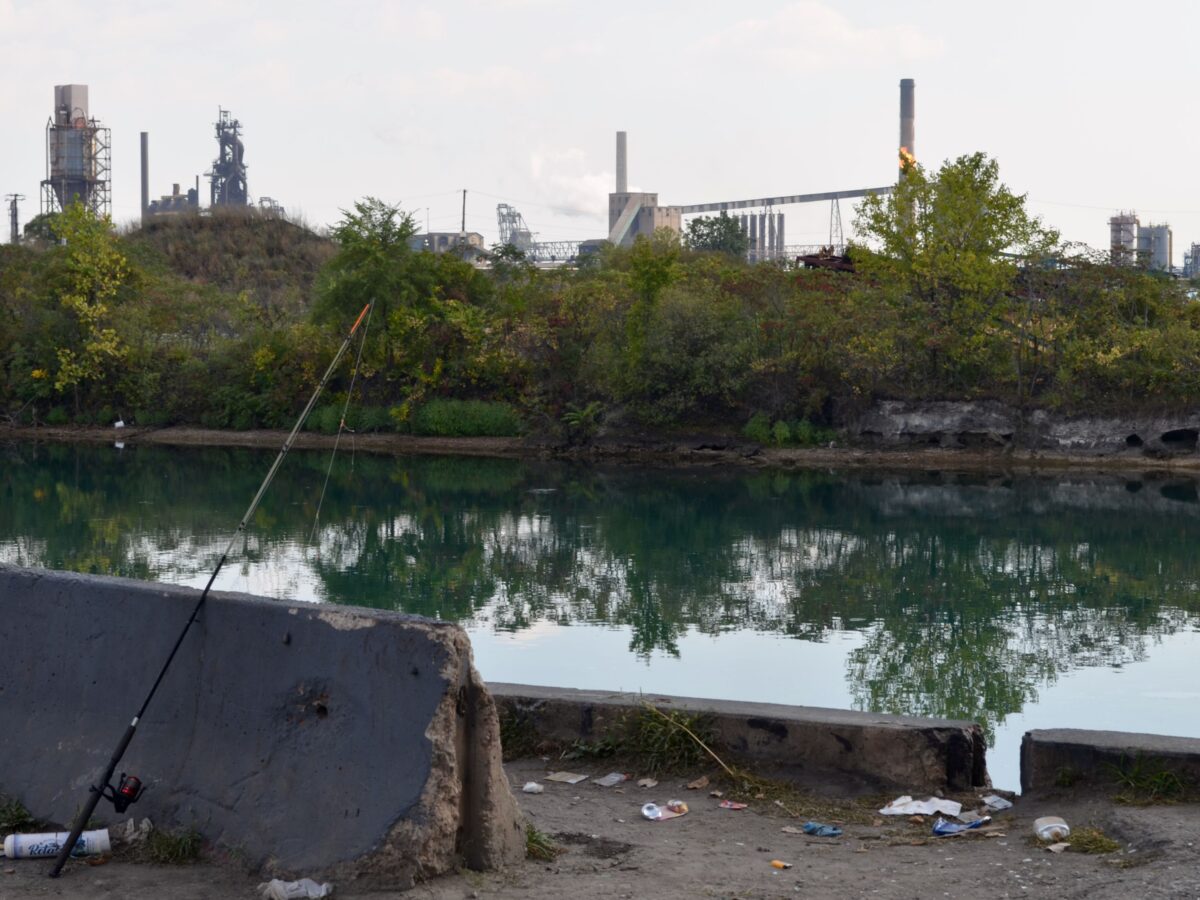
Michigan environmental advocates have pushed for years for legislation to address cumulative impacts in overburdened communities like Southwest Detroit, where residents are affected by pollution from multiple major polluters, smaller operations, and mobile emissions sources.

How Detroit’s East Canfield Art Park merges public art, health data
Sculpture at East Canfield Art Park on Detroit’s east side embeds air quality monitors in public art, providing real-time environmental data for a community living near industrial facilities.

