


Overview:
- Southeast Michigan faces extreme heat Tuesday through Thursday with temperatures near 100 degrees and heat index values exceeding 105 degrees.
- Michigan issues an air quality alert for elevated ozone levels in seven Southeast Michigan counties Monday.
- State officials recommend avoiding strenuous outdoor activity, especially for people with heart disease and respiratory issues like asthma.
Southeast Michigan is under an extreme heat watch from Tuesday afternoon through Thursday evening, and heat index values over 105 degrees are expected.
High temperatures will reach the mid-90s to near 100 degrees, with overnight lows in the low-to-mid-70s offering little relief, according to a Monday report issued by the National Weather Service Detroit/Pontiac office.
The agency recommends drinking lots of fluids, staying in an air-conditioned room, staying out of the sun, and checking on relatives and neighbors. Do not leave young children and pets in unattended vehicles.
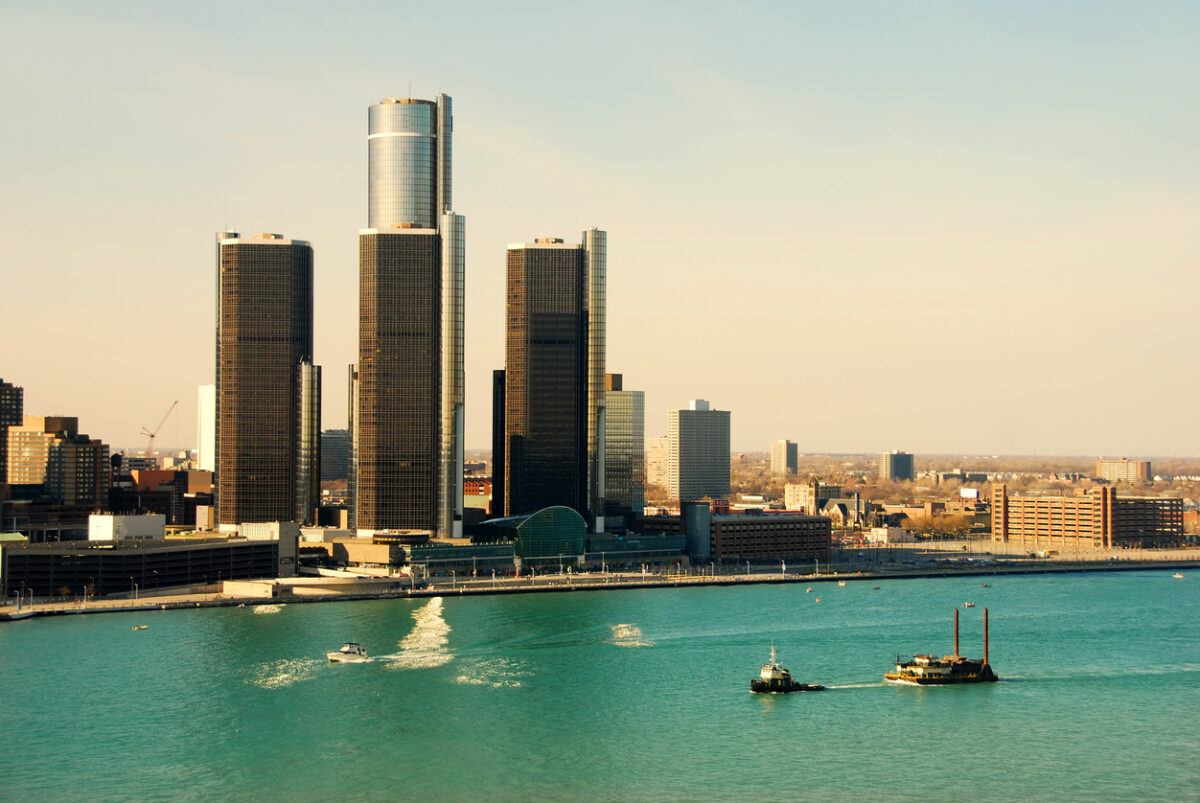
The hot weather is impacting Detroit’s air quality.
The Michigan Department of Environment, Great Lakes, and Energy (EGLE) issued an air quality alert for elevated ozone levels in Southeast Michigan on Monday.
Pollutants in the region are expected to be in the Unhealthy for Sensitive Groups range. The alert covers St. Clair, Livingston, Oakland, Macomb, Washtenaw, Wayne, and Monroe counties.
The dynamic of warm temperatures, ample sunlight, and relatively light winds will allow surface-level ozone to generate in metro Detroit and surrounding areas, according to state meteorologists.
Hourly ozone concentrations may reach the Unhealthy for Sensitive Groups range for multiple hours, according to EGLE.
The state agency recommends avoiding strenuous outdoor conditions, particularly for people with heart disease and respiratory issues like asthma.
Activities that can lead to ozone formation and should be avoided include refueling vehicles, and using gas lawn equipment and charcoal lighter fluid.
“There is the potential for multiple high ozone days this week,” EGLE meteorologist Alec Kownacki said in a statement. “So, we will be diligently tracking weather patterns into the weekend and calling alerts as necessary.”
Read Planet Detroit’s air quality guide, which includes information on the air quality index and individual pollutants including ozone.
Humidity adds to misery in eastern US
A long and dangerous heat wave will blast a large swath of the central and eastern United States this week, the National Weather Service said, with temperatures rising ahead of the July Fourth holiday and feeling even hotter because of the high humidity that’s arriving with it.
Already, parts of the U.S., especially Phoenix and central Texas, and much of the Southwest were experiencing temperatures around 100 F (38 C) on Sunday, while the weather service warned of severe wildfire conditions developing across much of the West as new fires popped up across the region.
On Sunday, well over 130 million Americans across southern and Great Plains states were under moderate to severe heat risk conditions, according to weather service maps, with that area forecast to expand and temperatures to intensify as the week drags on.
Forecasters say several days of high temperatures — some above 100 degrees F — will settle in across the lower Great Lakes, the mid-Atlantic and the Mississippi and Ohio River valleys. Some record highs could be set in areas from the lower Great Lakes to the mid-Atlantic and New England later in the week, said weather service meteorologist Bryan Putnam.
A number of big cities could see their highest temperatures of the year so far as they host World Cup matches and celebrations for America’s 250th anniversary.
Feeling the heat will be the East Coast cities of New York, Philadelphia, Washington and Baltimore, and Midwestern and Great Lakes cities including Chicago, Indianapolis, St. Louis and Detroit. Southern cities including Dallas, Little Rock, Arkansas, and Memphis, Tennessee, will also see high temperatures.
High heat will last into next weekend across the Great Plains, the Southeast and the mid-Atlantic, the weather service said.
Temperatures will reach well into the 90s and low 100 degrees Fahrenheit (mid to high 30s Celsius), the weather service said. High humidity will lead to heat indexes of 100 to 110 degrees F (40 C to 43 C), and as high as 115 F (46 C).
“That’s heat that’s impactful to anyone,” Putnam said. “It’s not just older adults or younger children or people who are spending a ton of time outdoors, maybe straining themselves a little more than normal. This is heat that really could impact everyone, especially with people outdoors going into the holiday weekend.”
The heat index, which factors in humidity and is included on many weather forecasts, provides a sense of how hot it really feels — and what’s dangerous for prolonged exposure or strenuous activity.
AccuWeather meteorologist Tyler Roys said temperatures will be significantly above normal. For instance, in Washington, highs around July Fourth average around 89 degrees F (32 C), while Indianapolis averages around 85 degrees F (29 C). But this week, both cities will be hotter by 10 or 11 degrees F, Roys said.
The high pressure system — an area of dry, sinking air — creating the heat will act like a “rock” that will force storms to go around it and limit rainfall across the East, Roys said. That’s sometimes called a “heat dome.”
Nightly lows in the 70s F (21 to 26 C) or even high 80s won’t provide much relief, meteorologists said.
For those who don’t have air conditioning, especially in Eastern Seaboard cities like New York where lows may not dip below 80 F (27 C), it’s going be miserable to sleep, Roys said.
Roys also said this is a primetime for heat-related illnesses because people’s bodies aren’t able to recover and cool off.
During extreme temperatures, limit outdoor activity, stay hydrated and ensure access to air-conditioning and other cooling areas, the weather service said.
The weather service said it expected extremely dry and windy conditions that could promote rapid wildfire spread across the Great Basin and the Southwest on Sunday.
In hot, windy conditions near the Colorado-Utah border, three firefighters working for the U.S. Wildland Fire Service and U.S. Forest Service were killed, and two others sustained burn injuries, when they were overcome by flames from fast-moving wildfires.
Wildfire activity has intensified across the Western U.S. as hot, dry and windy weather fueled flames in Utah, Colorado, Arizona and elsewhere.
MORE PLANET DETROIT COVERAGE

Sierra Club to sue EPA over Detroit ozone status
The Sierra Club plans to sue the EPA for missing a deadline to determine whether Southeast Michigan meets federal ozone standards, as new monitoring data shows air quality may be worsening across the region.

Detroit air quality gets another F from American Lung Association
Detroit’s air quality receives another F grade from American Lung Association, ranking among the nation’s worst for particle pollution.

Heat waves challenge Detroit renters: Should city legislate air conditioning?
A Detroit apartment building’s air conditioning failure raises questions about what the city can do to protect renters from heat as the climate warms.
