

Overview:
- Detroit area ranks 11th-worst nationally for short-term particle pollution and 9th for year-round PM2.5, says American Lung Association.
- Wayne County experienced 20 high ozone days and 25 high PM2.5 days between 2022-2024.
- The American Lung Association warns that data centers' growing energy demands and EPA rollbacks of pollution protections threaten air quality improvements.
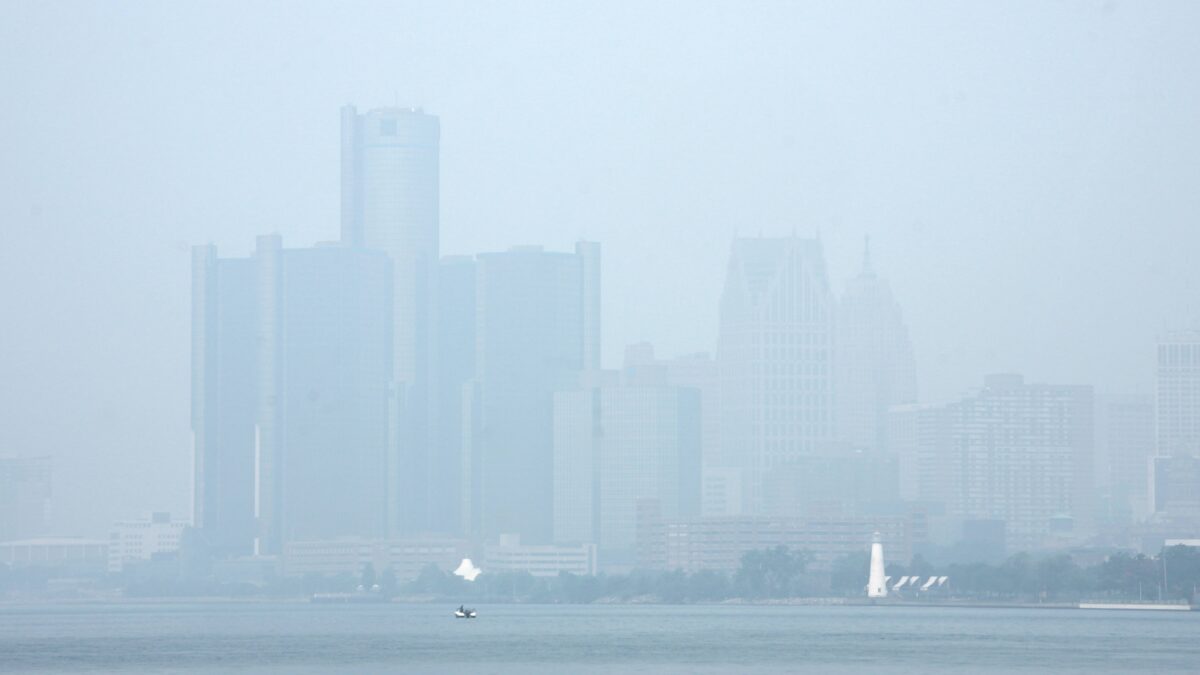
Detroit’s air quality again received an F in the American Lung Association’s annual State of the Air report, which found levels of ozone and fine particulate matter have worsened slightly.
🗳️ Civic Action Toolbox
Why it matters
Detroit’s air quality receives a failing grade in the American Lung Association’s 2026 State of the Air report, with the area seeing an increase in the number of high ozone and PM2.5 pollution days.
Who's making public decisions
The Environmental Protection Agency sets and enforces air pollution standards, though the agency has rolled back rules protecting against power plant and vehicle pollution.
Upcoming Meetings
Open Comment Periods
Civic Actions: What You Can Do
Organizations to Follow
What to watch for next
Watch for Michigan policymaker decisions on data center proposals and the measures they take to protect residents from associated power plant and backup generator emissions.
Are you taking action? Let us know.
Civic resources compiled by Planet Detroit
The report ranks Detroit among the top 25 worst regions nationally for short-term particulate matter (PM2.5) pollution and year-round PM2.5.
The Detroit-Warren-Ann Arbor region ranks No. 11 for short-term particle pollution, worse than its No. 22 placement in 2025; and No. 9 for year-round PM2.5, an improvement from its No. 6 ranking last year.
Wayne County’s annual unhealthy PM2.5 days rose from an average of 8.5 to 9.3.
PM 2.5 is 30 times smaller than the width of a human hair and can lodge itself in lung cells and move into the bloodstream. It’s linked to cardiopulmonary illness, premature mortality and mental health issues.
The Detroit-Warren-Ann Arbor area ranked 39th worst nationally for ozone pollution, worse than its 2025 ranking of No. 45.
Wayne County experienced 20 high ozone days between 2022 and 2024 and 25 high PM2.5 days over the same period, with one day in the federal Air Quality Index‘s purple range, or very unhealthy.
Unhealthy ozone pollution days increased from a weighted average of 6.2 in last year’s report to 6.8 per year.
Ozone pollution is associated with respiratory problems and can increase the frequency of asthma attacks.
The success of the Clean Air Act in reducing emissions from transportation, power plants, and industry is being challenged by climate change, with higher temperatures contributing to ozone formation and climate change-driven wildfires increasing PM2.5 pollution, the report said.
Now is the time to strengthen air pollution protections, but the EPA is doing the opposite, Harold Wimmer, president and CEO of the American Lung Association, said in a statement.
“In the last year, EPA has weakened enforcement and rolled back rules that would have protected kids from power plant and vehicle pollution,” he said.
An EPA spokesperson told Planet Detroit the agency is committed to clean air, land, and water for all Americans.
“All our regulatory decisions are rooted in gold standard science and the law. It is not surprising to see ALA—which gets lots of money from left-wing foundations—fearmongering with their latest report. What ALA failed to acknowledge is that U.S. air quality has seen massive improvements in recent decades.”
The Trump administration has proven it can both protect human health and the environment, and grow the economy, the spokesperson said.
Children, people of color at increased pollution risk
Nearly half of U.S. children, or 46% of those under 18 years old, live in an area that received an F for at least one measure of pollution included in the report, while 10% live in a community with a failing grade for short term PM2.5, annual PM2.5, and ozone.
Infants, children, and teens are especially vulnerable to air pollution, with developing lungs that breathe in more air for their body size than adults, the report says.
“Unfortunately, too many people in the Detroit-Warren-Ann Arbor, MI metro area are living with unhealthy levels of ozone and particle pollution,” Kezia Ofosu Atta, advocacy director for the American Lung Association, said in a statement.
“This air pollution is causing kids to have asthma attacks, contributing to chronic health conditions, and making people who work outdoors sick.”
Nationally, a person of color is more than twice as likely as a white person to live in an area with a failing grade on all three pollution measures included in the report, while a Hispanic person is over three times as likely, the American Lung Association said.
The report’s methodology differs from the Environmental Protection Agency’s system for determining ozone and PM2.5 violations.
Among the differences: the report’s inclusion of exceptional event days, where the EPA can exclude air monitoring results from days it determines were influenced by “unusual or naturally occurring events” like wildfires.
The report is based on data from 2022, 2023, and 2024, which the lung association said are the most recent three years of publicly available, quality nationwide air pollution data.
Air quality improvements face climate, data center, policy headwinds
The rapid development of data centers may contribute to air pollution, the State of the Air report says. The facilities’ growing energy usage could lead to associated emissions from power plants and diesel generators, according to the American Lung Association.
Most data centers rely on regional power grids where coal and methane gas still make up a significant portion of power generation and emit PM2.5 and nitrogen oxides (NOx), the report said.
Many data centers are also building their own on-site fossil fuel power plants, and analysis of data center hubs like Northern Virginia shows that clusters of diesel generators can rival the total permitted emissions for small power plants, according to the lung association.
“We urge Michigan policymakers to take action to improve our air quality, including ensuring that any proposals for data centers be designed in partnership with the community, and powered by renewable, zero-emission energy sources,” said the lung association’s Ofosu Atta.
Editor’s note: This story has been updated with comment from the EPA.
AIR QUALITY NEWS

Detroit’s ozone status in focus Wednesday at Michigan regulatory hearing
Michigan regulators will hold a virtual hearing Wednesday on a proposal that could weaken air quality protections in Southeast Michigan, following a court ruling that found the EPA violated the Clean Air Act.


After Zug Island pollution lawsuit, attorney urges community engagement
Annie Seaman worked on Zug Island for 40 years from 1973 to 2013. She wore all pink to a community meeting about pollution from the island, but the stories she tells about her time as a U.S. Steel Great Lakes Works employee are less than rosy. Seaman, who lives in Detroit, worked as a powerhouse…

Michigan updates air quality alert system as wildfire smoke season approaches
Michigan will alert residents sooner when air quality reaches the Air Quality Index’s unhealthy for sensitive groups range.