


Overview:
- An Afghan asylum seeker was detained for 68 days in Michigan before being released on $15,000 bond.
- ICE arrests in Michigan jumped from 85 in January 2025 to 477 in January 2026.
- “I had the hope that my life would get better when I get to the U.S.,” he said. “But unfortunately I have not reached that goal yet.”
This reporting was made possible in part with support from the Poynter Institute.
M is a man in his 40s who belongs to Afghanistan’s Hazaras, an ethnic minority group that has long faced persecution and violence. When the Taliban took over, remaining in Afghanistan no longer felt possible, he said.
🗳️ Civic Action Toolbox
Why it matters
Immigration policy under the second Trump administration is shifting beneath the feet of immigrants, says the lawyer for an Afghan asylum seeker living in Michigan.
Who's making public decisions
Federal courts and immigration authorities.
Upcoming Meetings
Civic Actions: What You Can Do
What to watch for next
Watch for a possible U.S. Supreme Court decision on the Trump administration’s appeal of mandatory detention policies after lower courts found they violate due process protections.
Are you taking action? Let us know.
Civic resources compiled by Planet Detroit
After the Taliban took control of Kabul in 2021, M entered the U.S. in 2022. He was arrested and detained by border patrol agents and paroled into the country for a few months. He subsequently filed an application for asylum, which remains pending.
He settled in Michigan after friends told him the state has a sizable Hazara community. Years passed.
“The Taliban are anti-Hazara,” he said through an interpreter. “They were killing us.”
M’s lawyer, Rebecca Olszewski of the Michigan Immigrant Rights Center, or MIRC, said he regularly reported to immigration authorities and worked and lived his life legally.
He requested anonymity due to fear of retribution by U.S. immigration authorities.
Historically the largest Afghan ethnic group, the Hazara community has significantly declined in size due to longstanding persecution and forced migration, according to Minority Rights Group, an international human rights organization.
Immigrant ‘tormented’ by family left behind in Afghanistan
A week before M’s asylum interview in December 2025, the Trump administration paused asylum decisions. The decision came in the wake of the Nov. 26, 2025 shooting of two National Guard soldiers in Washington, D.C. Rahmanullah Lakanwal, an Afghan national, was charged in the shooting.
No decision was made at M’s asylum interview. The next day, Olszewski said M received a message directing him to report to U.S. Immigration and Customs Enforcement (ICE).
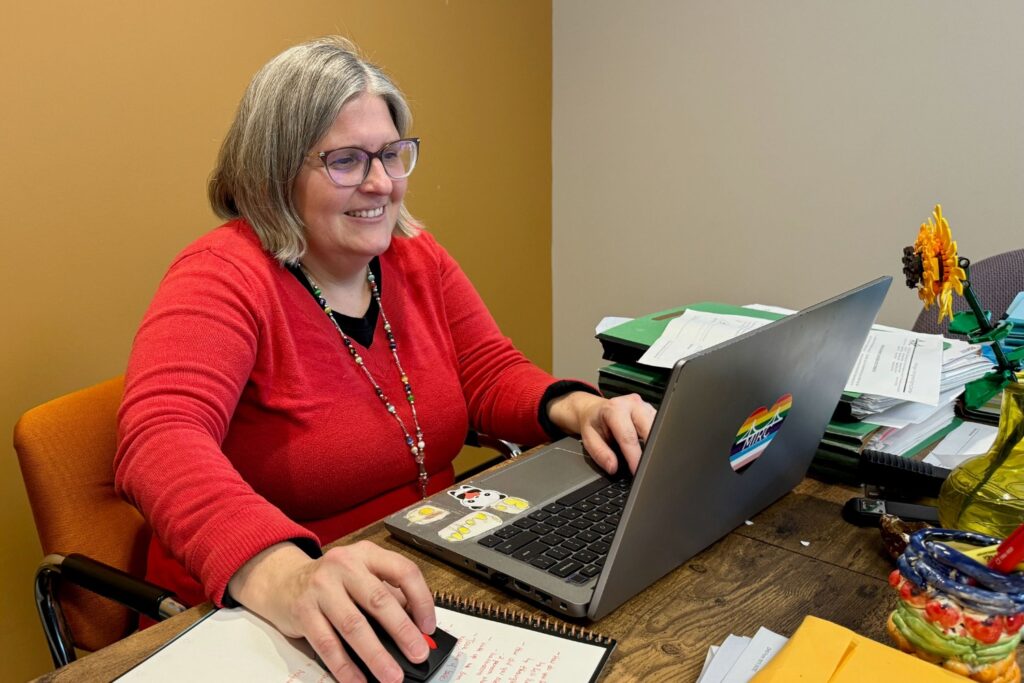
“He called me, we had this discussion that didn’t sound good,” she said. “I told him to be prepared and have someone else drive him.”
ICE detained him without an opportunity to post bond or be released on other conditions, Olszewski said.
M said he was “not the same” after spending months in a Michigan detention center, kept up at night “tormented” by thoughts of his family he left in Afghanistan.
After 68 days in detention, M was released with a judge’s order on a habeas corpus petition filed by Olszewski. Friends raised $15,000 for his bond.
Olszewski said M is grateful to return to normalcy, as she said detention was “quite traumatizing” for him.
The federal government argued in M’s case the court should deny the habeas petition because he had not exhausted administrative remedies, specifically pursuit of a bond hearing and appeal of any unfavorable decision, according to court documents.
How immigration supervision works
M now wears an ankle monitor that must be charged every seven hours and has new reporting requirements; if the conditions aren’t followed, he faces deportation, Olszewski said.
If the monitor malfunctions, that could be counted against M as failure to comply, the immigration lawyer said, adding that one of her clients was deported due to a malfunctioning monitor.
The wait for M’s ICE appointment in June lasted six hours. The appointment was 10 minutes.
One morning last month, M sat beside Olszewski in an ICE office in a squat brick building off Jefferson Avenue.
When M’s name was called, officials fitted a monitor around his ankle and gave him a new set of reporting requirements: in-person at the Jefferson office and at home every other week, where an ICE officer may or may not show up, Olszewski said.
Before M was detained, he snapped a photo of himself once a month and uploaded it to an app on his phone, she said.
M walked out of the meeting frustrated as he came to terms “with the difficult nature of supervision,” Olszewski said, but added that wants to do things right.
“This is less than a perfect way to go about it, because even with the best of intentions, something can be considered as failing to comply,” she said.
Olszewski said there’s a point to some supervision, like making sure clients attend court and stay in touch with immigration.
“Now, this level of supervision seemed to suggest he didn’t follow the rules, and therefore, they’re going to keep an extra close eye on him,” she said. “M is desperate to do things the right and good way.”
Christine Sauvé, policy, engagement, and communications manager at MIRC, said the organization received over 5,000 calls last year, and detention calls were up threefold.
MIRC is on the pro bono list for ICE, she said, and the agency takes calls from anyone in detention to provide legal advice and an “honest assessment.”
The agency’s services to low-income immigrants are free.
A growing reality in immigration court
When the Trump administration introduced a mandatory detention policy in July 2025, Olszewski said people didn’t have any recourse to request bond, regardless of how long they’ve lived in the country.
Immigrants or their attorneys started habeas petitions, she said. A writ of habeas corpus, Latin for “you have the body,” allows people who have been detained by the government to challenge their detention in court.
On April 28, the Second Circuit Court of Appeals rejected President Donald Trump’s interpretation of immigration law and the mandatory detention policy.
In June, the Trump administration appealed the matter to the Supreme Court, asking judges to resolve a division among federal appeals courts.
The shift comes amid a broader expansion of immigration enforcement during the second Trump administration. Immigration arrests inside the United States more than quadrupled over the course of the first year of the second Trump administration, according to Deportation Data Project researchers.
ICE arrests in Michigan jumped from 85 in January 2025 to 477 in January 2026, according to data provided by ICE to the Deportation Data Project.
Throughout the United States, ICE began making more arrests of people without criminal convictions, in communities, immigration courts, and at ICE check-ins, the April report states.
The most visible street arrests began in June 2025 in high-profile operations in Los Angeles, Washington, D.C., Chicago, and Minneapolis-St. Paul, according to the Deportation Data Project.
Within 100 miles of any land border or U.S. coastline, U.S. Border Patrol agents can conduct warrantless stops and searches in vessels, vehicles, trains, aircrafts, and enter private lands, but not dwellings, within an external boundary.
Customs and Border Protection considers all the Great Lakes as borders, rendering the entire state of Michigan within the warrantless 100-mile zone, according to the ACLU.
This provision has been in place since 1953 under federal law, but Fourth Amendment protections still apply, according to the ACLU. If officials don’t have a warrant, they need “reasonable suspicion” – specific facts about a person that make it reasonable to believe they committed an immigration violation or crime, according to the American Civil Liberties Union.
In 2016, the ACLU and MIRC filed a lawsuit against the U.S. government seeking disclosure of Border Patrol records. Over five years, the government produced thousands of pages of withheld documents that formed the basis for a 2021 ACLU report examining Border Patrol activity in Michigan.
Border Patrol uses racial profiling to target immigrants from Latin America and other people of color, according to the report.
Asylum seeker ‘did everything that was asked of him’
For 68 days, M lived inside of a Michigan detention facility. He said the physical conditions were “OK” – two people to a cell, he didn’t go hungry, and when he got sick, he received medication.
The psychological strain was harder, he said.
“Being in detention is quite taxing and frustrating,” he said, “One is going to be psychologically impacted, and after two months you’re not going to be the same person.”
M’s wife and children live in Afghanistan, and he has not seen them since 2022. They are not pursuing an asylum case in the United States, he said.
“My wife has a dangerous disease,” he said.
“The idea of my family being there, and me there, would torment me and haunt me during the night, which made it quite difficult for me to fall asleep and that was quite debilitating.”
M’s release came after Olszewski filed a habeas corpus petition arguing that his detention violated Constitutional due process protections.
The habeas petition is becoming a popular tool for lawyers to free clients from detention while they wait for their cases to be heard, but it’s time intensive and costly, Olszewski said. She worked for more than 20 hours on M’s petition, she said.
Once M’s habeas petition was granted, Olszewski said she struggled to navigate the payment process.
“We tried to pay bond in person and the office was closed,” she said. “This process is set up in such a way that makes it really difficult for someone to succeed, and I’m a lawyer trying to navigate it.”
Olszewski said M did “everything right and everything that was asked of him,” but under Trump, the system is shifting underneath the feet of immigrants, she said.
“The rules of the game are changing in such a way as to make it almost unwinnable for those who came to our country to seek protection from persecution,” she said.
“I would argue that it’s unconscionable that … my client and others are being denied the basic rights guaranteed to them.”
The human cost of detention
A father of three who has a rare form of leukemia spent months in detention, first in Ohio, then North Lake Processing Center in Baldwin, Michigan without access to his medication for 22 days after an Aug. 5 traffic stop in Macomb County.
In October 2025, a court granted the habeas petition filed by Jose Contreras Cervantes, a Jalisco, Mexico native who spent 20 years unlawfully in Michigan, allowing him to be with his wife and children while his immigration case proceeds.
“The case challenged a Trump administration directive that eliminated bond hearings for long-term U.S. residents detained by immigration authorities that … left unchallenged, threatens to put potentially millions of noncitizens across the country in mandatory immigration detention with no access to judicial review,” according to the ACLU.
“The administration’s goal is to break people’s spirits by locking them up, throwing away the key, and making them so desperate that they agree to leave their loved ones behind. This policy is family separation with a different name,” Miriam Aukerman, senior staff attorney at ACLU of Michigan, said in a press release.
Shortly afterward, ICE released Contreras Cervantes from custody.
In May, the U.S. Court of Appeals for the Sixth Circuit upheld district court rulings involving Contreras Cervantes and other detainees, and affirmed they are entitled to bond hearings rather than mandatory detention without individual review.
“I don’t know how much time God will give me with my family, but to be robbed of two and half months of precious time together was really hard,” he said. “I am so grateful to be back home, but no one should have to suffer what we have been through,” Contreras Cervantes said in the ACLU press release.
Waiting for an answer
On a Wednesday morning in June, 11 people lined the fluorescent-lit halls of the McNamara Federal Building waiting for immigration court to open. They hail from Mexico, Cuba, Venezuela, Haiti, and Senegal. Some leaned against the white walls with their eyes closed and arms crossed, clutching documents in a manila folder.
That day, the courtroom was scheduled to hear over 100 immigration cases. Most in the waiting room did not have lawyers.
One young Venezuelan woman explained during questioning from Judge Robert Gundlach that she entered the United States on Aug. 23, 2024 in San Ysidro, California without valid immigration documents and filed for asylum because she feared returning home.
The court said it would schedule a longer asylum hearing for her at a later date, where she could demonstrate evidence of fear, such as letters from friends and family, police reports, or medical documents.
As she left the room, a person from Cuba shook her hand to wish her luck and said “buena suerte” — good luck.
M’s asylum case is still pending, Olszewski said.
When he thinks of Afghanistan, M said he only remembers war and fighting.
“I had the hope that my life would get better when I get to the U.S.,” he said, and started to cry. “But unfortunately I have not reached that goal yet.”
MORE FROM PLANET DETROIT
‘You didn’t try to get my vote’: How Democrats lost Dearborn, and what it would take to win it back
After a historic 35% swing away from Democrats in 2024, Arab Americans are reshaping Michigan politics.


Social worker, artist honor Southwest Detroit’s grief over deportations with community altars
The Altars for Collective Grief project invited the Southwest Detroit community to submit photos of loved ones affected by immigration enforcement.

Immigration crackdown’s health effects: ‘Like a roller coaster’
A Venezuelan couple describes navigating life in Michigan in an uncertain environment for immigrants. The executive director of Ypsilanti’s Corner Health Center says public health impact of immigration crackdown by Trump administration will be felt “for a generation.”