

Overview:
- Friends of the Detroit River needs $350 million in matching funds to complete a $1-billion cleanup of 3.6 million cubic yards of contaminated sediment.
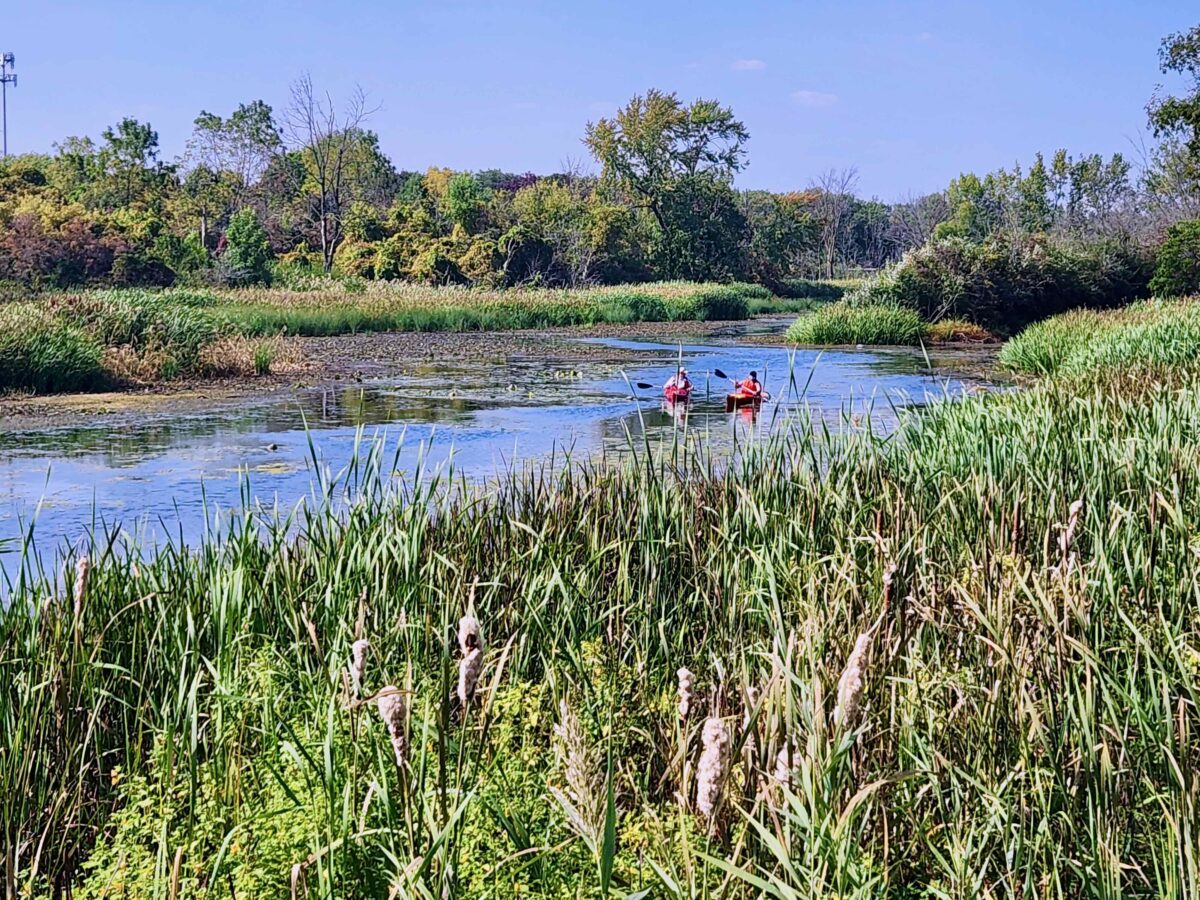
- The Detroit River lost 97% of its coastal wetlands to development but remains one of the most biologically important Great Lakes waterways, with millions of fish spawning there each spring.
- “We all have a role to play, whether it's teaching young people about it, whether it's the stewardship part,” Detroiter Erma Leaphart says of the river.
A person standing on the Detroit River shoreline 50 years ago would hesitate to touch the water, according to the Friends of the Detroit River’s McKenzi Waliczek.
🗳️ Civic Action Toolbox
Why it matters
The Detroit River has transformed dramatically as a result of cleanup and restoration efforts, as well as riverfront parks and developments that allow the public to enjoy formerly industrialized stretches. At the same time, the river faces a $1-billion challenge in the remediation of sediment contaminated with PCBs, mercury, and other toxins.
Who's making public decisions
The Friends of the Detroit River is spearheading river cleanup efforts, working with partners such as the EPA, EGLE, and U.S. Army Corps of Engineers.
Upcoming Meetings
Civic Actions: What You Can Do
Organizations to Follow
What to watch for next
Construction on the final Lakewood East Park restoration project in the Detroit River is expected to begin in spring 2027, completing a1 4-site habitat restoration effort. Follow the Friends of the Detroit River for more updates and events, and watch for fundraising efforts and funding news regarding the Detroit River cleanup.
Are you taking action? Let us know.
Civic resources compiled by Planet Detroit
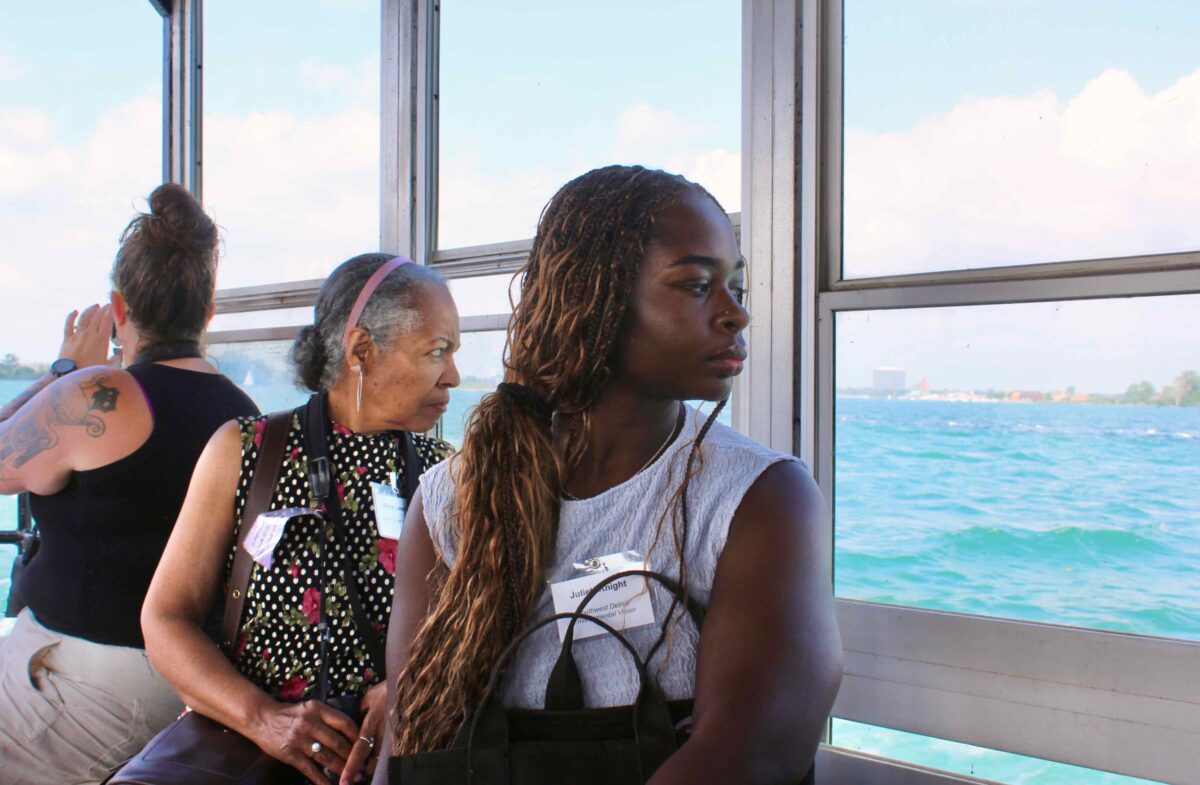
The progress made since that era — from industrial dumping ground to a beloved recreational and tourist attraction — framed a boat tour led by the nonprofit that departed from the Detroit Wayne County Port Authority, circled Belle Isle, and highlighted river restoration projects.
An estimated 3.6 million cubic yards of contaminated sediment remains on the U.S. side of the Detroit River, or enough sediment to fill thousands of dump trucks lined up for miles, said Waliczek, director of programs for Friends of the Detroit River.
The price tag for the cleanup is about $1 billion, she said.
The Great Lakes Legacy Act provides a 65% federal match for nonfederal restoration funding, but the incentive depends on reauthorization of the Great Lakes Restoration Initiative.
Friends of the Detroit River needs about $350 million in nonfederal matching funds to reach the $1-billion funding goal for the Detroit River cleanup.
The effort secured $10 million last month from an EPA and EGLE partnership.
Detroit River: Critical Great Lakes waterway
As the Samuel D. Buchanan, a boat operated by a second-generation captain, cruised down the Detroit River, passengers took in the views of Milliken State Park, Belle Isle’s Lake Okonoka, the island’s south fishing pier, and Blue Heron Lagoon.
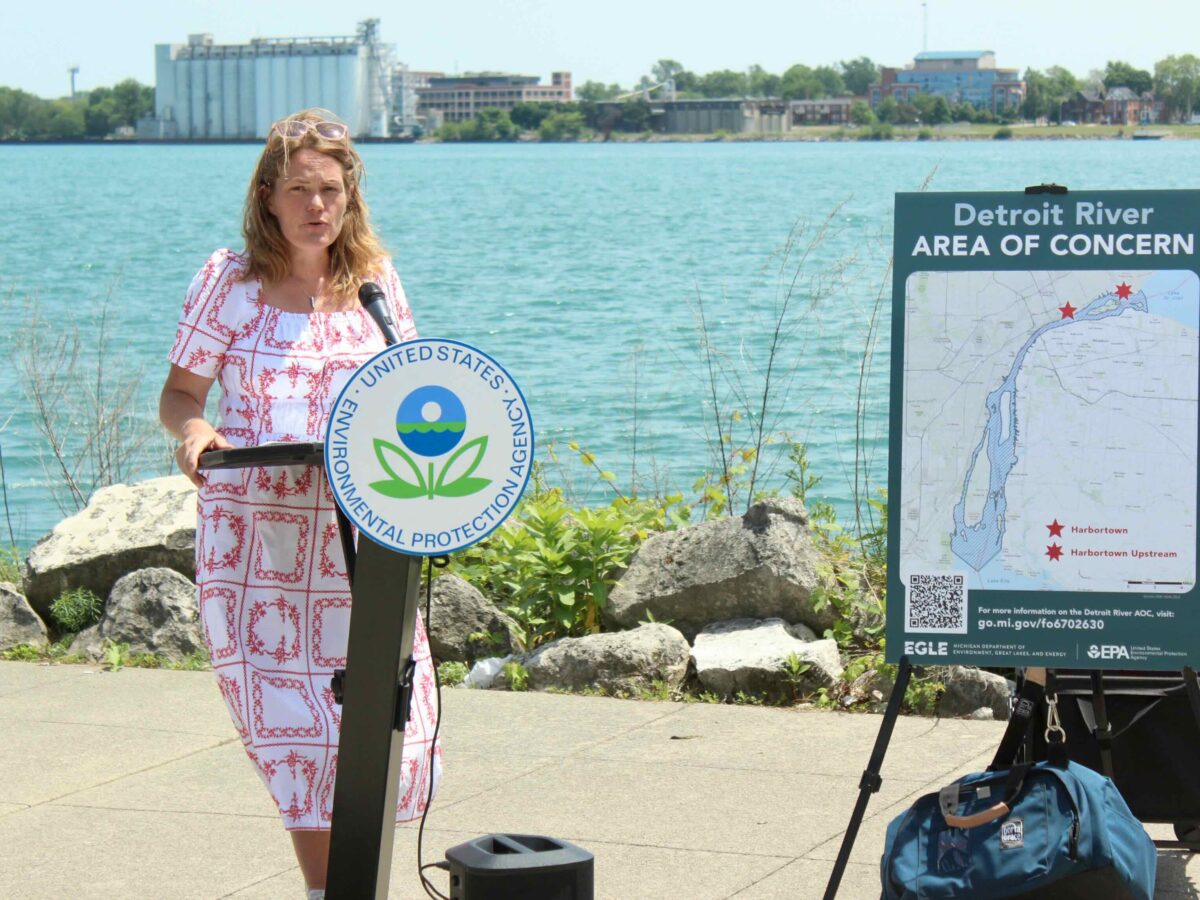
The tour also visited Lakewood East Park and the Harbortown and Harbortown Upstream sediment remediation sites.
“The Detroit River isn’t just water, it’s where people fish to feed their families, where folks learn to kayak and boat, where entire ecosystems depend on what’s happening beneath the surface,” Waliczek said.
“For over a century, industry powered this region, but it also left behind contaminated sediments, damaged habitats, and shorelines that no longer function naturally.”
The U.S. shoreline of the Detroit River has lost approximately 97% of its coastal wetlands to human development, according to a 2017 study by the U.S. Fish and Wildlife Service and U.S. Geological Survey.
“The Detroit River is one of the most biologically important waterways in the Great Lakes,” Waliczek said.
“Every spring millions of fish move up through this river to spawn, countless birds, reptiles, amphibians, mammals depend on the small amount of habitat that remains and the habitat that we are restoring.”
The challenge of Detroit River contamination
Contaminants including PCBs, PAHs, and mercury were identified from more than 1,000 sediment samples from the Detroit River, said Sam Noffke, aquatic biology specialist with the Michigan Department of Environment, Great Lakes, and Energy.
The contaminants persist in the environment and accumulate in the food chain, he said.
As the self-described “contaminated sediment guy,” Noffke has worked on Detroit River remediation “nonstop” for more than a decade, he said.
Noffke started by examining 40 years of sediment data to get an idea of areas to prioritize for cleanup, he said.
Members of the boat tour recalled a long list of shoreline industries, such as the Superfund site McLouth Steel in Trenton, and the Uniroyal Tire plant once located west of the MacArthur Bridge to Belle Isle.
Noffke said disposing of contaminated sediment remains a challenge, as the Pointe Mouillee confined disposal facility is nearing capacity. The facility, located on a small island at the mouth of the Huron River, is expected to run out of space in four years, according to a September 2025 Detroit News report.
EGLE, the U.S. Army Corps of Engineers, and Environmental Protection Agency are discussing alternatives, such as raising dikes at Pointe Mouillee to increase capacity, creating new confined disposal facility cells, or possibly reusing clean material, Noffke said.
“That’s a major hurdle we are trying to deal with.”
The 700-acre Detroit River Area of Concern extends the length of the river, from Lake St. Clair to Lake Erie.
Detroit River group kicks off final priority habitat restoration project
The habitat restoration effort spearheaded by Friends of the Detroit River includes 13 completed projects.
The EPA and National Oceanic and Atmospheric Association are some of the Detroit organization’s partners on the restoration projects.
The habitat projects will be removed from the Area of Concern list within three to four years by addressing two beneficial use impairments related to fish and wildlife habitat, Waliczek said.
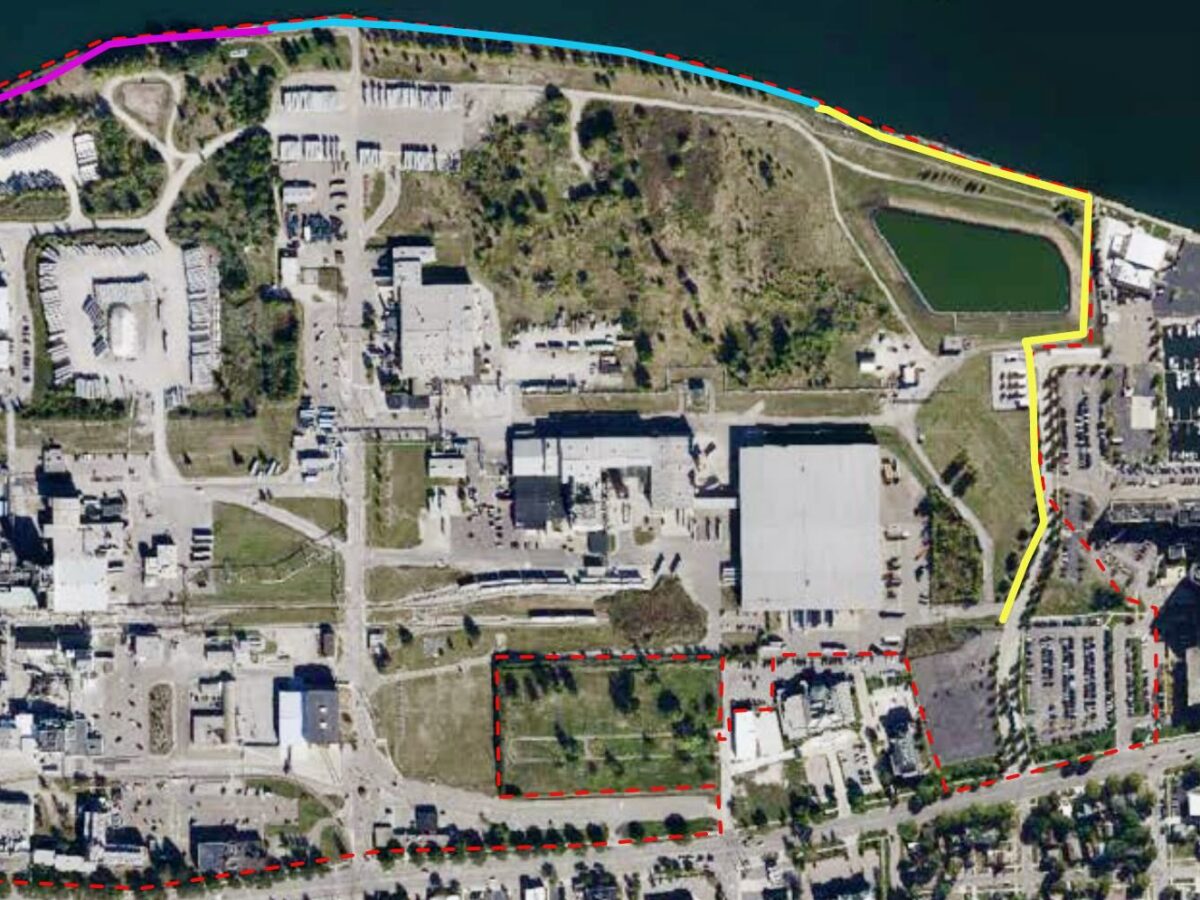
Detroit’s Lakewood East Park is the 14th and final priority habitat restoration project in the Detroit River Area of Concern.
The project includes nearly 1 mile of Detroit River shoreline and adjacent canals where the river meets Lake St. Clair. The plans call for removing much of the seawall and restoring the natural shoreline, Waliczek said.
Although surrounded by neighborhoods and hardened shorelines, the Detroit park’s canals, wetlands, and open shoreline provide significant restoration potential, Waliczek said, benefiting fish that migrate between Lake Erie, Lake St. Clair, and the broader Great Lakes system.
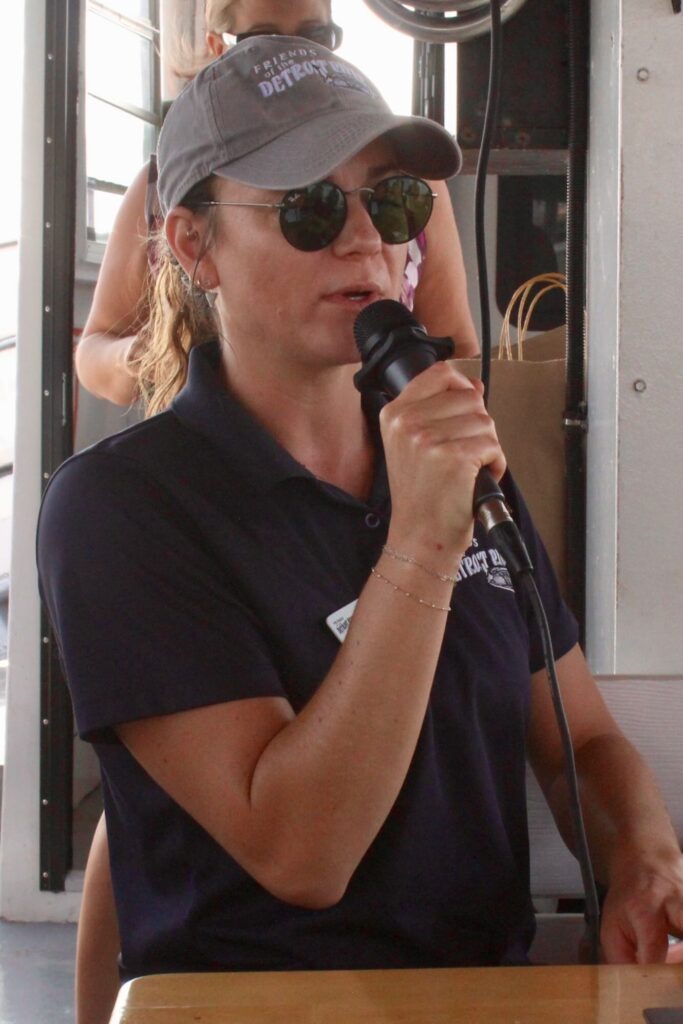
Friends of the Detroit River Executive Director Tricia Blicharski said the Lakewood East Park project is scheduled to begin this month, with a three-year timeline. Community engagement and plan review will begin immediately, and construction is expected to start in spring 2027, she said.
‘We all have a role to play’
At Belle Isle, restoration projects at Blue Heron Lagoon and Lake Okonoka are improving fish and wildlife habitat by deepening the lake, creating fish nursery areas and opening previously enclosed water to the Detroit River, said Terry Heatlie, a habitat restoration specialist under contract with NOAA.
One of the tour attendees, Terry Campbell, recalled fishing on Belle Isle with her father. The pier near Blue Heron Lagoon was “always” filled with anglers, she said.
“You ate the fish, and arguably it was more contaminated back then than it is now, but it was a part of how you fed the family in the summertime,” she said.
Detroiter Erma Leaphart, a retired Sierra Club organizer in the Great Lakes program, said she would spend time by the river before the riverwalk was built, chatting with fishermen along the river.
“I loved just sitting on the river, watching the freighters, waves, the breeze, these guys who were like family, even though I didn’t know them, but I knew them as fishermen,” she said.
Everyone has a stewardship responsibility, Leaphart said.
“We all have a role to play, whether it’s teaching young people about it, whether it’s the stewardship part,” she said. “You have an ongoing responsibility to protect the asset, protect what you’ve done, and protect it for future generations.”
MORE DETROIT RIVER COVERAGE
EPA approves BASF’s Wyandotte cleanup plan for Detroit River pollution
The EPA approves BASF’s plan to address groundwater contamination at its Wyandotte facility, where up to 60 gallons per minute of contaminated groundwater flows into the Detroit River near the city’s drinking water intake.

Detroit River restoration receives $10 million boost from EPA, state
The EPA and state are investing $10 million to clean up toxic sediment in the Detroit River.

Historic wild rice restoration underway in the Detroit River: ‘Living tribute to the First Nations’
The Nottawaseppi Huron Band of the Potawatomi is working with conservation partners to restore wild rice in Detroit River wetlands, bringing back a sacred grain that disappeared over a century ago.