


Overview:
- Federal Judge Gershwin Drain rejects DTE Energy's move to pause Clean Air Act compliance requirements at Zug Island facility while it appeals a lawsuit.
- DTE must comply within 250 days, the judge said, adding that ongoing sulfur dioxide emissions from EES Coke Battery pose substantial health risks.
- The judge approved a 30-day stay on $120 million in financial penalties to give DTE time to revise its appeal bond.
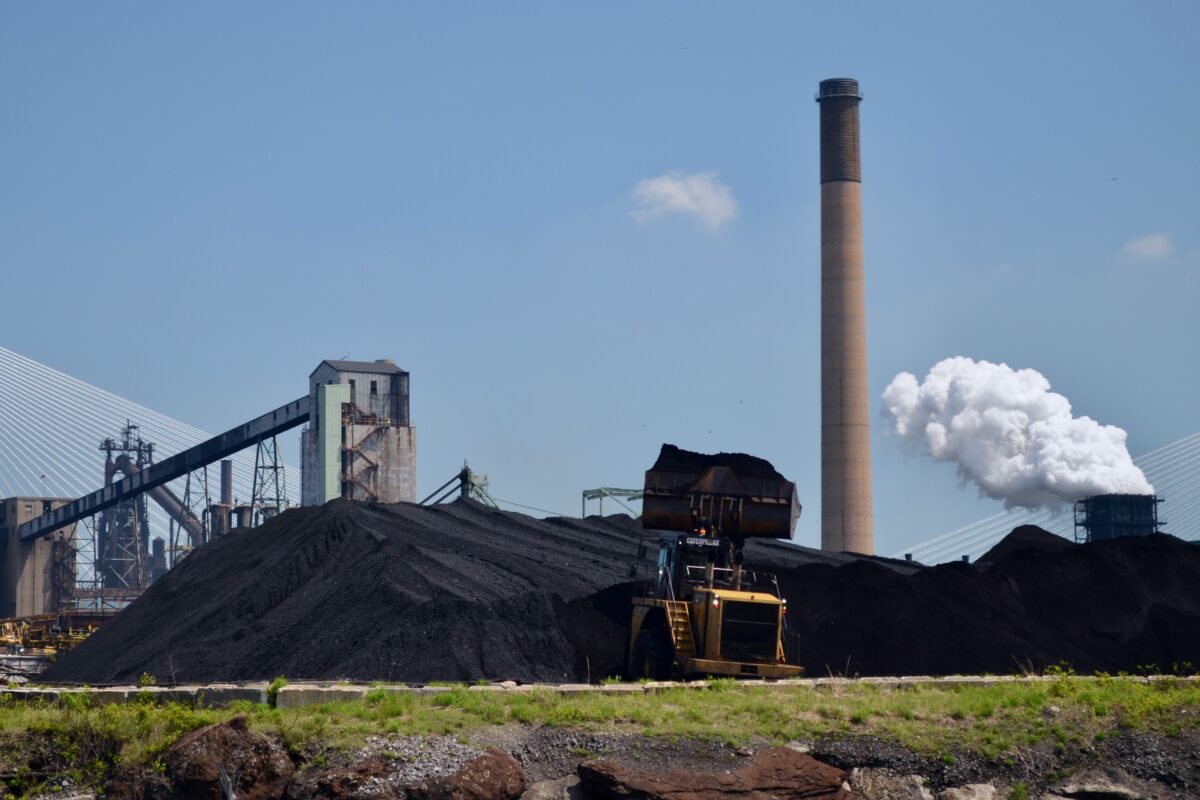
A federal judge denied DTE Energy’s bid Thursday to delay Clean Air Act compliance on Zug Island while the utility appeals its loss of an air pollution lawsuit.
The decision means DTE’s EES Coke Battery facility must comply with the Clean Air Act by Nov. 1 — and form a community quality action committee — following its February loss in a lawsuit filed by the Environmental Protection Agency over sulfur dioxide pollution.
The status quo on Zug Island in River Rouge is causing irreparable harm, the judge said in Thursday’s order.
“The facility’s excess emissions have caused, and continue to cause, significant harm to surrounding communities and the public at large. For example, as one of Michigan’s largest sources of (sulfur dioxide) emissions, the facility’s excess emissions pose substantial health risks.”
Drain ordered a $100-million civil penalty payable to the U.S. government and $20 million in community air quality improvement funds in a Feb. 24 judgment against DTE and three of its subsidiaries.
DTE appealed the case and filed a motion for a stay March 25.
Drain approved a 30-day stay Thursday on the financial judgments to give DTE an opportunity to make revisions he requested to the utility’s proposed $123.5-million appeal bond.
DTE lawyer: Zug Island emissions will continue while lawsuit on appeal
DTE has not demonstrated it’s likely to win a reversal of Drain’s order on appeal, the judge said, adding that its motion “largely repackages arguments that this court already considered and rejected” in resolving the lawsuit.
DTE lawyer Michael Hindelang argued that without a stay on Drain’s order, EES Coke Battery faces an “impossible choice”: Spend hundreds of thousands of dollars it may not get back to apply for “potentially unnecessary” EPA New Source Review permits, or shut down altogether.
The public gains nothing from a denial of DTE’s motion, Hindelang said in an April 15 court filing.
“The emissions will continue while defendants pursue their appeal regardless.”
EPA lawyer Thomas Benson said the estimated $150,000 to $200,000 cost to apply for permits is a “modest” and “relatively minimal” expense that will not cause irreparable harm to large, profitable entities.
“EES Coke alone, the smallest defendant, has $12.8 to $22 million in annual cash flow. DTE, the largest defendant, reports annual profits of more than $1 billion,” he said in an April 8 court filing.
DTE’s argument that EES Coke Battery will be forced to shut down is “speculative and theoretical,” Benson said, as pollution control installation costs would not be due until after the appeal is resolved.
DTE Energy spokesperson Jill Wilmot said the utility has filed an appeal with the Sixth Circuit Court and cannot provide further comment on pending litigation.
An EPA spokesperson said: “In keeping with longstanding practice, EPA does not comment on pending or current litigation.”
Judge says he’ll approve DTE bond if utility makes changes
While Drain denied DTE’s motion outright for a pause on EPA permit applications, he left the door open to putting DTE’s payment of a $100-million fine and $20 million for community air quality improvements on hold while the case is at the Sixth Circuit Court of Appeals.
DTE requested to post a $123.5-million bond that it said covers the civil penalties; the monetary component of the injunctive relief ordered by the court; and roughly one year of post-judgment interest on the civil penalties.
Drain will approve the bond if revisions are made, and parties are entitled under federal rules to a stay of a monetary judgment if they file a satisfactory bond, he said.
The bond identifies DTE Energy Co. alone as a principal, and not the lawsuit’s other defendants, the judge said — EES Coke Battery, DTE Energy Services, Inc., and DTE Energy Resources, LLC.
All of the companies are “jointly and severally liable under the judgment,” Drain said.
The utility must either add all defendants as co-principals on the bond, or a provision that DTE Energy remains liable for all defendants regardless of the outcome of the appeal, he said.
The Zug Island pollution lawsuit
EES Coke Battery produces coke, a raw material in the steelmaking process. Coke is produced by heating coal in an oxygen-free environment.
DTE exerted sweeping control over a heavily polluting coke facility, profiting from delayed compliance while nearby communities bore irreversible health costs, Drain said in a Feb. 17 order that followed a September bench trial.
DTE argued unsuccessfully in the case that it is not liable for EES Coke Battery and its Clean Air Act violations.
The court found that DTE saved $70 million by failing to comply with the Clean Air Act.
Residents deserve immediate relief: Sierra Club
Elayne Coleman, director of the Sierra Club Michigan Chapter, reacted to Thursday’s decision in a statement.
“Today’s decision affirms what we already knew: That the residents of Southwest Detroit and River Rouge are owed immediate relief after enduring years of illegally polluted air and the health threats that come with it,” she said. The Sierra Club intervened in the Zug island pollution lawsuit.
Editor’s note: This story has been updated with responses from the EPA and DTE Energy.
MORE ZUG ISLAND COVERAGE

After Zug Island pollution lawsuit, attorney urges community engagement
Annie Seaman worked on Zug Island for 40 years from 1973 to 2013. She wore all pink to a community meeting about pollution from the island, but the stories she tells about her time as a U.S. Steel Great Lakes Works employee are less than rosy. Seaman, who lives in Detroit, worked as a powerhouse…


DTE appeals $100 million federal judgment over Zug Island air pollution
DTE Energy is challenging a federal court’s $100-million judgment over sulfur dioxide pollution from its Zug Island coke facility. The utility must also fund $20 million in community air quality programs.
Century of contamination: How Zug Island became Detroit’s industrial epicenter
Early ideas for the island included a city garbage dump with a promise of the operations being “smokeless and odorless,” or improving the land into a “healthful resort similar in attractiveness to Belle Isle.”