

Overview:
- Advocates want Wyandotte to switch from its Detroit River drinking water intake to regional system due to contaminated groundwater that flows from BASF into the river near the intake.
- State testing shows Wyandotte's water meets safety standards, but official says tests are not available for all compounds present at BASF.
- EGLE found infrastructure problems with Wyandotte's water system in 2025 unrelated to BASF, and is requiring repairs under a consent agreement.
Downriver residents and environmental advocates are calling for Wyandotte to switch to the Great Lakes Water Authority for the city’s drinking water source due to polluted groundwater that flows from a BASF Corp. site into the Detroit River.
🗳️ Civic Action Toolbox — see how you can get involved
Why it matters
Wyandotte's drinking water source is the Detroit River, just downstream from a BASF site that has discharged contaminated groundwater into the river for decades.
Who's making public decisions
The Michigan Department of Environment, Great Lakes, and Energy regulates drinking water systems. The City of Wyandotte has authority over its water source, although Michigan environmental regulators can provide support.
The Great Lakes Water Authority would need to conduct analysis to confirm it can supply the city with water.
Contact Your Representatives
- Debbie Dingell (Democrat)
U.S. Representative, Michigan District 6, District 6
202-225-4071 - Darrin Camilleri (Democratic)
State Senator, 4
sendcamilleri@senate.michigan.gov - Rylee Linting (Republican)
State Representative, 27
ryleelinting@house.mi.gov
Civic Actions: What You Can Do
- Review state records on Wyandotte drinking water
The state of Michigan launched a webpage on Wyandotte drinking water quality in August. - Write a letter to the editor
Share your perspective with your community. - Register to vote or check your registration
Make sure your voice counts in the next election.
Organizations to Follow
What to watch for next
Follow updates on the city's drinking water on a new state webpage. Watch for whether Wyandotte or the state formally requests a GLWA analysis of connecting the city to the existing regional water main — and how the city's drinking water consent agreement is executed.
Are you taking action? Let us know.
Powered by Civic Action Toolbox
Environmental advocates said connecting to GLWA water is necessary because the city’s drinking water intake is downstream from the chemical company’s North Works property, which has discharged contaminated groundwater into the river for decades.
Wyandotte officials emphasize the city’s drinking water is safe.
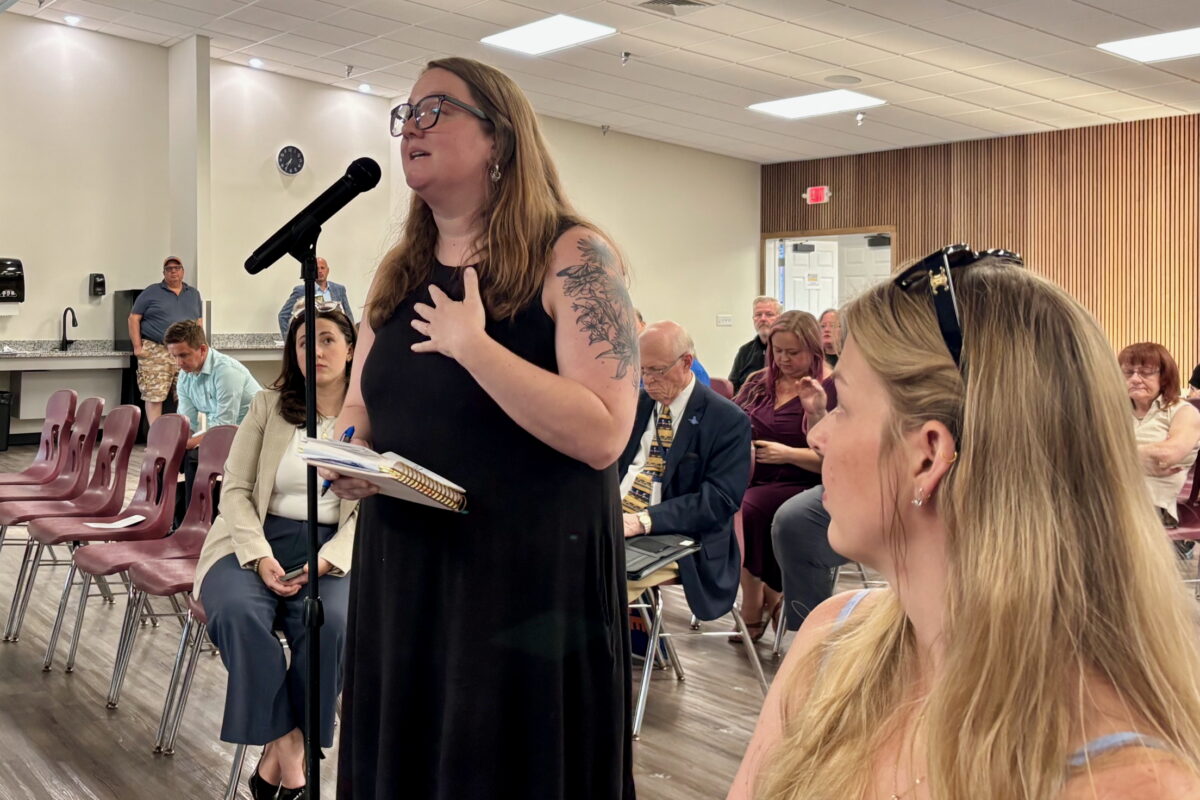
The remarks were made at a Downriver environmental town hall hosted Aug. 25 in Trenton by U.S. Rep. Debbie Dingell, an Ann Arbor Democrat.
State officials said the city is meeting monitoring requirements, and testing shows contaminant levels below drinking water standards.
The Michigan Department of Environment, Great Lakes, and Energy (EGLE) launched a webpage last month that tracks Wyandotte water testing results, compliance, and enforcement actions, and EGLE investments in the city’s water system.
In April 2025, EGLE found “significant deficiencies” in Wyandotte’s water system, including the treatment, distribution, and storage of drinking water. The problems are not tied to BASF.
Extensive testing for dozens of compounds has not found significant contamination at Wyandotte’s drinking water intake, roughly 1,700 feet from the BASF site, Mike Bolf, EGLE engineering unit supervisor, said during the town hall.
Tests aren’t available for all contaminants, Bolf said, adding that EGLE will support the city if it decided to switch water sources.
Wyandotte and EGLE signed a consent agreement Aug. 28, 2025. The agreement with the state requires the city to repair water infrastructure, inventory the condition of water treatment pipes, and submit a plan for lead service line replacements, among many other requirements.
Wyandotte’s water exceeds water quality standards, and the city is making progress on the requirements included in the consent agreement, and is on schedule, Wyandotte Municipal Services General Manager Paul LaManes said in an email.
Wyandotte Municipal Services is a publicly owned water, energy, and telecommunications utility.
“We are lucky in Wyandotte that we operate our own reliable municipal services department,” LaManes said. “It’s run by friends and neighbors in the community, so we can say with absolute confidence that the drinking water provided by the city exceeds state and federal quality standards.”
BASF pollution mitigation could begin in 2027
The Environmental Protection Agency approved a pollution mitigation plan for BASF June 30 that includes a perimeter barrier to limit the flow of groundwater into the river, a groundwater collection and extraction system, and an on-site groundwater treatment facility. Construction on the project could begin in 2027.
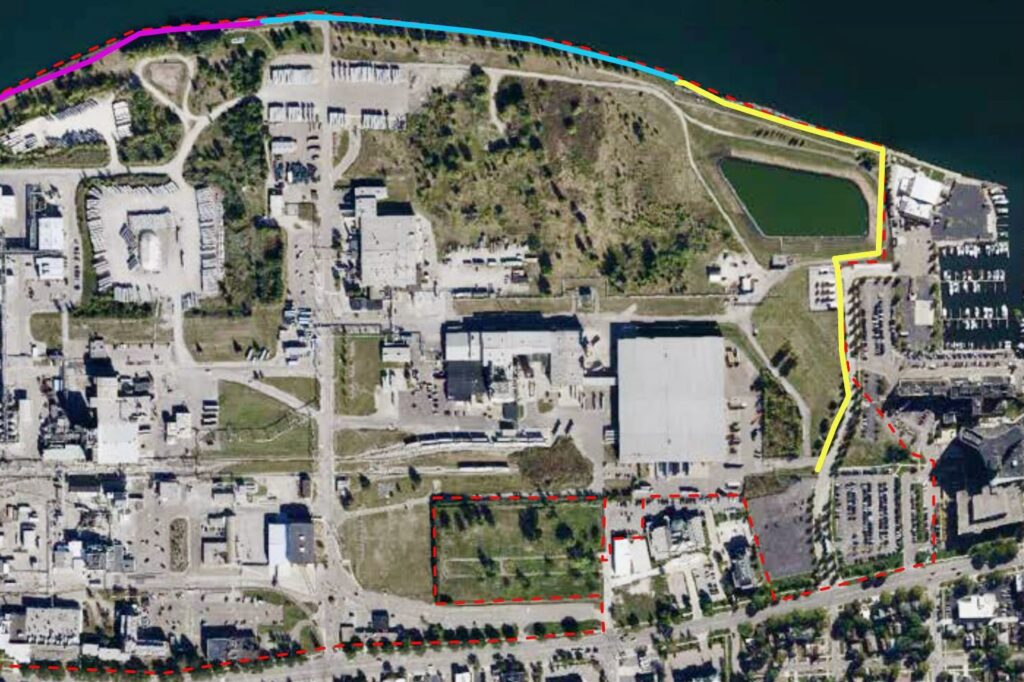
Documents previously shared with Planet Detroit show that up to 60 gallons of contaminated groundwater per minute have been flowing from the 230-acre North Works site into the Detroit River, carrying toxic PFAS chemicals, mercury, arsenic, naphthalene, benzene, and other chemicals.
Some of this water has registered a pH as high as 13.22. Substances with a pH of 12.5 or above are classified as hazardous waste by the EPA.
This pollution flows into the drinking water intake’s critical assessment zone. EGLE spokesperson Scott Dean said the zone covers a 2,000-foot area around the drinking water intake.
BASF spokesperson Chris Kozak told Planet Detroit in a statement that questions about Wyandotte water quality and safety are best addressed by public agencies and water system officials.
GLWA connection could bypass Detroit River pollution issues, advocate says
Cyndi Roper, water policy advocate with the nonprofit Natural Resources Defense Council, said during the town hall that she’s concerned about Wyandotte’s drinking water system and its source, the Detroit River.
Wyandotte should source its water from a GLWA water main running through the city, and the state should secure funding for the project, so the burden doesn’t fall on residents, she said.
“The concern that I have is that we can’t know everything that might be entering that water intake and the ability for the community to treat it,” Roper said.
Bolf said EGLE would be “supportive of any option that ensures safe drinking water, sustainability, (and) affordability for the residents.”
The agency can’t compel the city to switch its water source, he said.
EGLE Director Phill Roos responded to comments from another attendee who supports the GLWA switch, and said the agency is happy to join any conversation about an alternative water supply.
“We have a lot of water systems around the state, too many, and they become difficult to operate at times, difficult to maintain,” Roos said. “It’s easier when you have them pooling together multiple communities as GLWA does.”
Jody Caldwell, GLWA chief planning officer, told Planet Detroit in a statement that the utility’s Wyandotte water main could likely meet the city’s needs, but it would require analysis.
“GLWA would be happy to provide these analyses subsequent to receiving a request from the city of Wyandotte or the Michigan Department of Environment, Great Lakes and Energy,” he said.
GLWA’s drinking water intakes are located in the Detroit River at Fighting Island; at Belle Isle where Lake St. Clair flows into the river; and Lake Huron.
The Fighting Island intake is upgradient from the BASF site, according to the EPA. The island, which is in Canada, is owned by BASF.
New state webpage tracks Wyandotte water testing
EGLE and Wyandotte have performed extensive testing of incoming Detroit River water from the city’s drinking water intake, Bolf said.
“It’s not ideal to have that contamination site directly upstream of an intake,” Bolf said, adding that Wyandotte is sampling much more frequently than other drinking water systems because of this risk. Contaminant levels reliably and consistently meet drinking water standards, he said.
Water systems normally sample treated water, Bolf said. Wyandotte has also been sampling incoming water, and testing a list of around 30 different compounds — some of which are unregulated, Bolf said.
Tests aren’t available for all the compounds present at BASF, Bolf said.
EGLE’s Dean said the agency is not aware of certified laboratories testing for naphthalene and phenanthrene, which are polycyclic aromatic hydrocarbons, or PAHs. Naphthalene is considered a possible human carcinogen, according to the EPA.
EGLE performed side-by-side sampling with Wyandotte, repeating the tests performed by the city, and found no difference, he said.
Bolf said the city has completed around 10 of 22 required actions in its consent agreement with the state, and none are overdue. Extensions were granted for some requirements, he said.
Ashley Satkowksi, a Southgate resident who lives on the border of Wyandotte and frequently dines in the city and consumes its water, said she’s concerned that pollution from BASF could impact residents and patients at Henry Ford Wyandotte Hospital.
Regulators can’t test for all contaminants, and protecting the public should be paramount, she said.
“Seeing that the GLWA connection could be possible — that is what we should push for.”
MORE WYANDOTTE COVERAGE
EPA approves BASF’s Wyandotte cleanup plan for Detroit River pollution
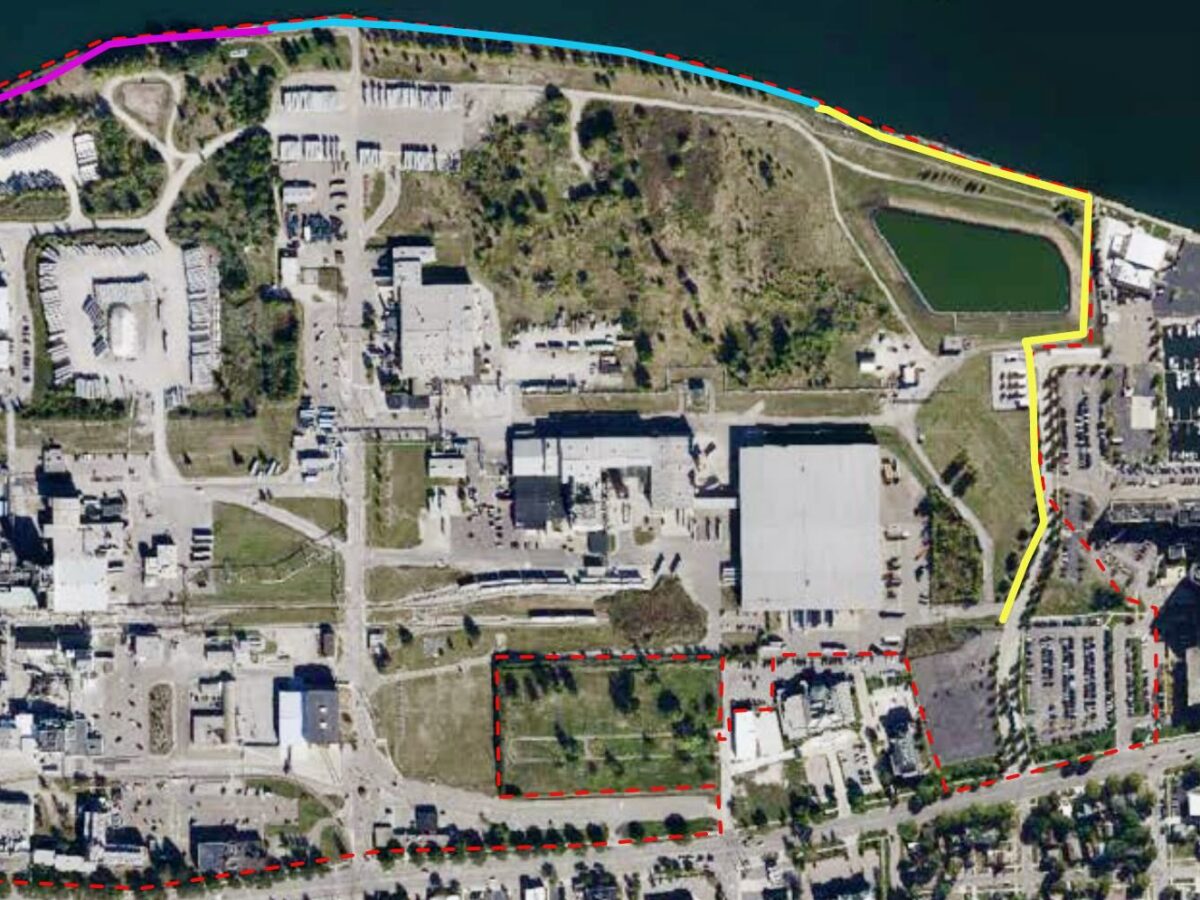
The EPA approves BASF’s plan to address groundwater contamination at its Wyandotte facility, where up to 60 gallons per minute of contaminated groundwater flows into the Detroit River near the city’s drinking water intake.

Wyandotte officials vote against restoring fluoride to drinking water: ‘I have my reasons why’
Wyandotte drinking water has not been treated with fluoride in a decade, which the state flagged in an April report that found “significant deficiencies” in the city’s drinking water system.
Wyandotte to craft fluoride plan 10 years after removing it from drinking water
Wyandotte says in response to state environmental regulator that it will create a fluoride plan by October. The city discontinued drinking water fluoridation in 2015.