

Overview:
- Michigan lawmakers propose increasing radioactive waste disposal fees from $5 to $75 per ton, a 1,400% increase.
- Wayne Disposal has accepted 650,000 tons of radioactive waste, including 450,000 tons from Manhattan Project sites.
- A judge permanently barred the Manhattan Project waste shipments in May, citing risks to Belleville Lake, the Huron River, and Lake Erie. The landfill's owner is appealing the decision.
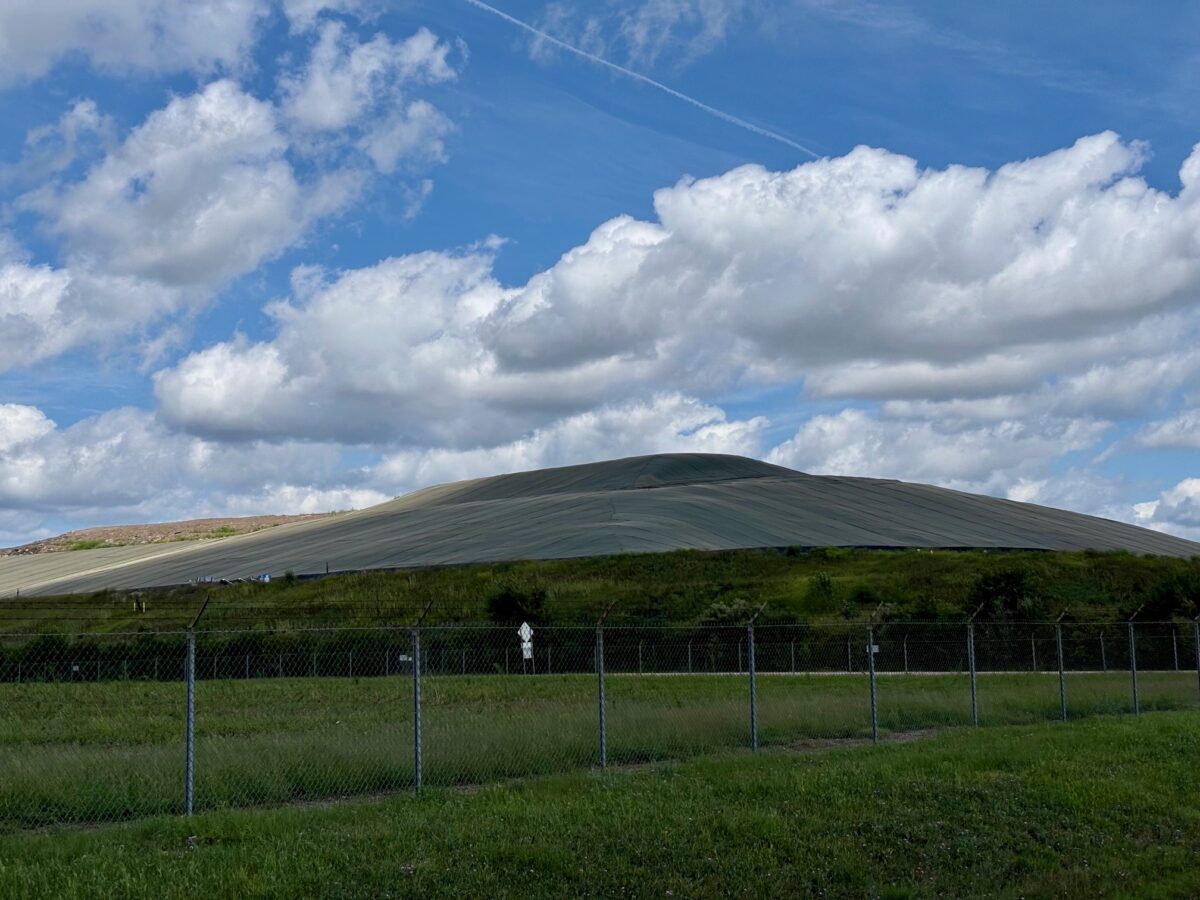
Michigan legislators introduced bills in late September to drastically increase fees for dumping elevated radiation waste — like the Manhattan Project-era waste that was sent to a Wayne County landfill until a judge halted the shipments.
🗳️ Civic Action Toolbox
Why it matters
The legislation to increase Michigan's tipping fees comes on the heels of a Wayne County Circuit Court decision that halted shipments of Manhattan Project-era elevated radiation waste to the Wayne Disposal landfill in Van Buren Township.
Who's making public decisions
The Michigan Legislature and governor would decide on bills targeting elevated radiation waste fees and safeguards. The Michigan Court of Appeals will decide on Republic Services' appeal of Judge Kevin Cox's order against the company's Wayne Disposal landfill.
Contact Your Representatives
Civic Actions: What You Can Do
Organizations to Follow
What to watch for next
Watch to see whether the TENORM fee bills are reintroduced at the start of the next legislative session, since they are unlikely to move during the lame-duck period, and for the outcome of Republic Services' appeal.
Are you taking action? Let us know.
Powered by Civic Action Toolbox
If signed into law, the legislation would impact landfills that accept elevated radiation waste known as technologically enhanced naturally occurring radioactive material, or TENORM.
House Bill 6395 would increase the disposal fee landfills pay for TENORM from $5 per ton to $75 per ton, a 1,400% increase.
The legislation is tie-barred to House Bill 6396, which provides a tax credit for Michigan-based facilities that accept TENORM to make up for the fee increase. The bills were referred to the House Regulatory Reform Committee.
State Rep. Jim DeSana, R-Carleton, said he introduced the bipartisan TENORM legislation in response to the uproar over the Manhattan Project waste at Wayne Disposal, he told Planet Detroit.
“We’re surrounded by water, and my district is very close to a lot of waterways,” he said.
On May 27, Wayne County Circuit Judge Kevin Cox issued an order permanently barring the shipments of Manhattan Project waste to Wayne Disposal in Van Buren Township. The harm from the waste is long-lasting or permanent, and cannot be offset with monetary damages, he said.
Landfill owner Republic Services appealed Cox’s ruling, arguing in a September court filing that Cox’s decision is based on potential future risk, not present or imminent injury.
650,000 tons of TENORM accepted at Wayne Disposal
Michigan allows some types of TENORM to be disposed of at Type II landfills, which are located across the state, and other, more restrictive types of waste disposal facilities.
Before the injunction, Wayne Disposal was one of five facilities nationally, and the only site east of the Mississippi, cleared to receive material by the Corps’ Radiation Safety Support Team, a Corps official said at a 2024 town hall meeting.
Wayne Disposal has accepted 650,000 tons of TENORM, 450,000 tons of which were from Manhattan Project sites, according to a Sept. 28 court filing.
Michigan’s Department of Environment, Great Lakes, and Energy approved a 23%, 5.2-million-cubic-yard expansion of the facility in January.
Republic Services didn’t respond to a request for comment on how the TENORM legislation could impact Wayne Disposal.
Republic spokesperson Roman Blahoski previously stressed the facility’s safety, and said it’s designed to handle TENORM and other complex waste streams.
Waste’s impact on water a top concern: State lawmaker
DeSana’s district is south and east of Wayne Disposal, extending south from Taylor to Monroe, with the Huron River passing through it.
In the May 27 court order, Cox said that transporting TENORM for downblending at the Wayne Disposal facility poses a “real risk” of accidents and impacts to Belleville Lake, the Huron River, and Lake Erie.
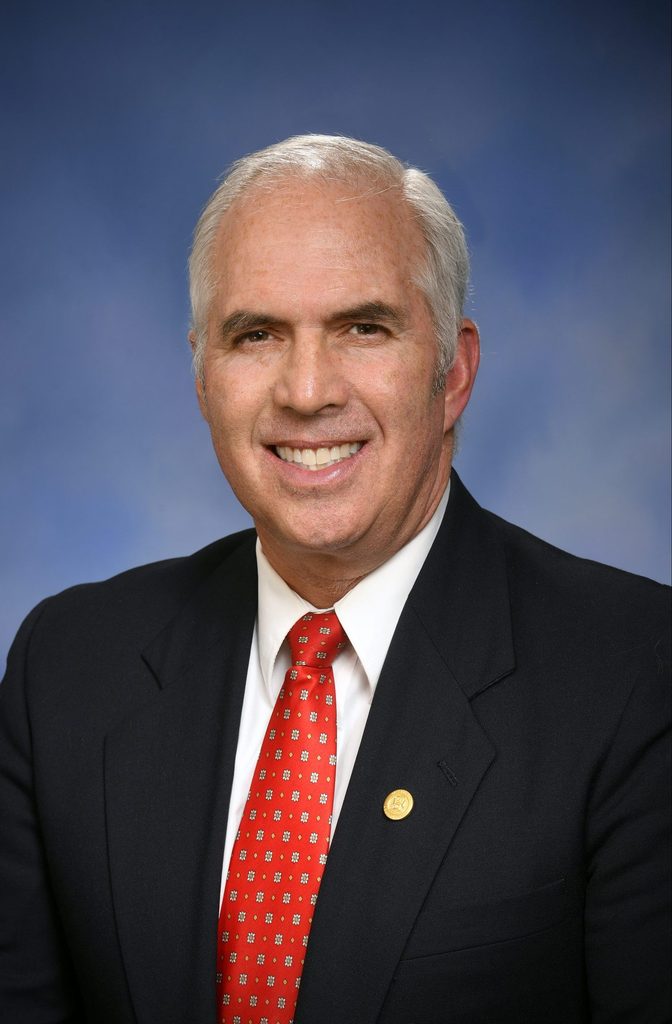
DeSana said he’s concerned about the long half-life of some of the radioactive waste being disposed of at Wayne Disposal, and how it could impact waterways. Half-life refers to the time it takes for half the radioactive atoms in a radionuclide to decay.
Brent LaSpada, a Corps project manager, said in 2024 that materials the Corps planned to ship from New York’s Niagara Falls Storage Site to Wayne Disposal contained radioisotopes that included uranium-235 and uranium-238. The radioisotopes have half-lives of roughly 700 million years and 4.5 billion years, respectively.
DeSana’s opponent in the race for Michigan House District 29, Democrat Darian Counts, told Planet Detroit he supports doing an audit of jobs, taxes, and other benefits created by bringing out-of-state hazardous and radioactive waste along with the costs for Michiganders.
Counts said he doubts it’s worthwhile to bring the material into the state, adding that he supports raising TENORM disposal fees.
DeSana said it’s unlikely the TENORM legislation will advance during the lame-duck period following the election. DeSana regrets that what he views as a nonpartisan issue has not moved forward, he said, adding that the legislation could be reintroduced at the start of the next legislative session.
“In my opinion, everybody in our state House and state Senate, and our governor, should be opposed to bringing this amount of radioactive waste to Michigan,” DeSana said.
Gov. Gretchen Whitmer’s office did not respond to a question on whether she supports the TENORM legislation.
Landfill leak could impact Great Lakes, advocate says
Jeneen Rippey, president and co-founder of the nonprofit Michigan Against Atomic Waste, told Planet Detroit she supports DeSana’s legislation.
The group has advocated against shipments of TENORM to Wayne Disposal.
“If it got approved, it wouldn’t be as attractive for everyone outside of our state lines to bring their TENORM here,” Rippey said of the legislation.
It’s a bad idea for Michigan to take so much out-of-state waste when a potential landfill leak could impact the Great Lakes, she said.
The Great Lakes hold roughly 21% of the world’s fresh surface water, according to the Environmental Protection Agency.
2025 legislation would ban downblending, some TENORM
State Rep. Reggie Miller (D-Van Buren Township) and state Sen. Darrin Camilleri (D-Trenton) introduced House Bill 4393 and Senate Bills 246 and 247 in 2025 that would have added new safeguards, including prohibiting the disposal of certain types of TENORM and banning the downblending of TENORM.
Wayne Disposal is located in the legislators’ districts.
Downblending refers to a process where radioactive waste is mixed with other material to reduce the radioactivity level and allow for disposal.
The Michigan Senate passed SB 246 and SB 247. Neither the Senate bills nor the House bill have passed out of the House Natural Resources and Tourism Committee.
MORE WAYNE DISPOSAL COVERAGE

Data centers, hazardous waste weigh on voters in Michigan’s 31st House District
Republican Laura Perry and Democrat Shannon Dare Wayne compete to replace retiring state Rep. Reggie Miller in a district grappling with a proposed Google data center and ongoing lawsuit over radioactive waste shipments to Wayne Disposal.

Wayne County landfill’s lawyers say radioactive waste ban ‘judicial overreach’
Wayne Disposal challenges a Wayne County judge’s decision blocking shipments of elevated radiation waste from Manhattan Project-era sites, calling it “judicial overreach” despite expert testimony on increased radiation levels near the Van Buren Township landfill.
Judge permanently blocks Manhattan Project radioactive waste from Wayne Disposal landfill
The court order permanently blocks Wayne Disposal from accepting Manhattan Project-era radioactive waste, siding with local communities that argued the shipments pose irreparable harm to public health.