


Overview:
- Michigan regulators approve fast-track DTE Energy power contracts for Saline Township data center.
- The commission reviewed all redacted material in the DTE contracts and ensured no costs will be passed on to the utility’s other customers, says Michigan Public Service Commission Chair Dan Scripps.
- Residents and some lawmakers urged the MPSC to allow for a contested case to ensure the data center doesn’t raise utility bills, decrease energy reliability, undermine Michigan’s climate law, or leave ratepayers to pay for stranded costs if the facility uses less power than anticipated or ceases operation.

Michigan regulators voted Thursday to approve DTE Energy’s application for quick approval of its contracts for the OpenAI and Oracle data center project in Saline Township.
The decision denies ratepayer advocacy, environmental, and other groups an opportunity to file testimony on the project’s impacts as part of a contested case.
“I know that this conversation is happening in every state in the country right now, and I would put the contracts that are in front of us today on par or better with any that have been approved in the country,” Michigan Public Service Commission Chair Dan Scripps said.
The commission reviewed all redacted material in the DTE contracts and ensured no costs will be passed on to the utility’s other customers, Scripps said.
DTE has maintained that the data center costs will not be passed on to other customers.
Mike Byrne, the MPSC’s chief operating officer, said the commission’s conditional approval of the DTE data center contracts includes requirements for cost allocation and rate design proposals that ensure future large load interconnection customers pay the cost of interconnection.
These requirements also include a proposed administrative fee for additional data centers and other large electric loads, he said.
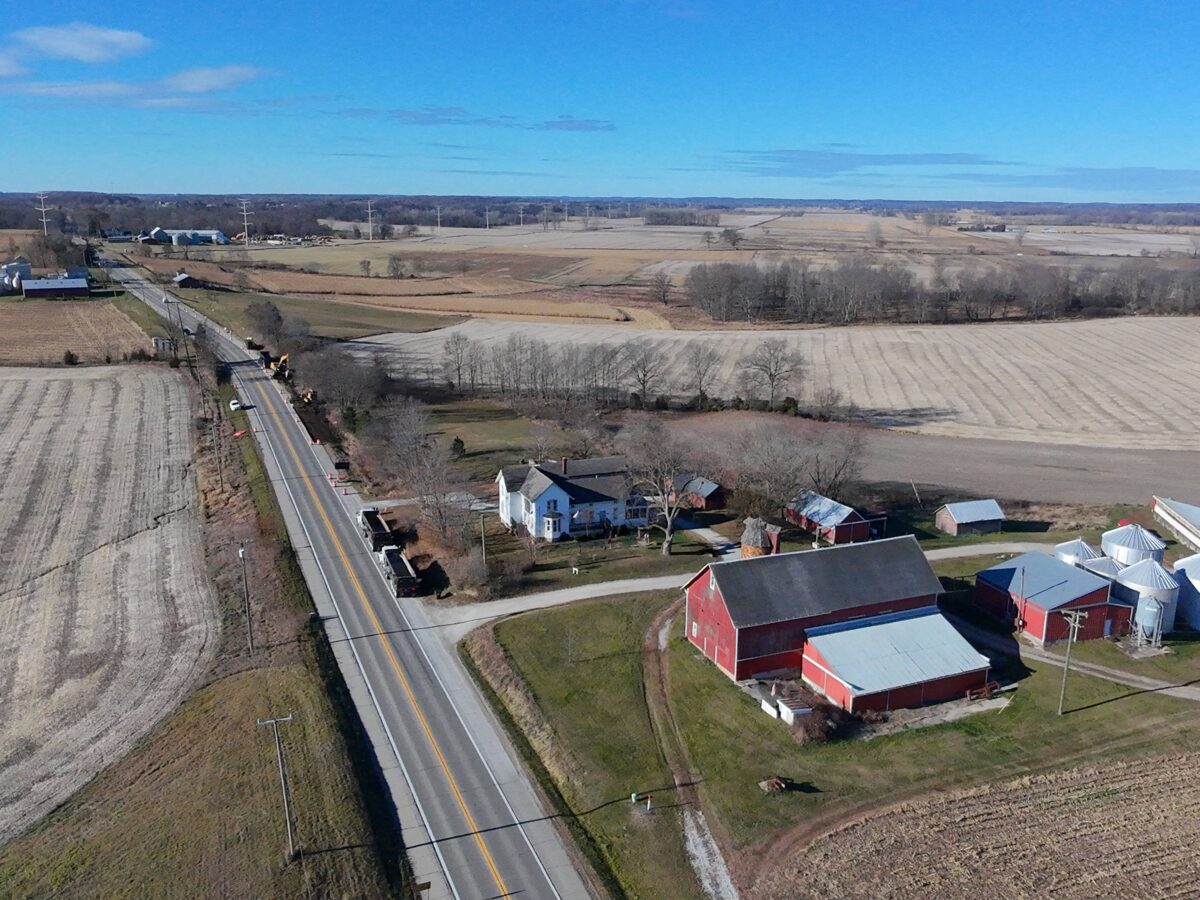
The $7 billion, 1.4 gigawatt data center is planned for 575 acres of farmland south of Ann Arbor.
The Saline Township board voted against rezoning land for the development in September, then agreed to a settlement after the township was sued by landowners and developer Related Digital.
Michigan Attorney General Dana Nessel said in a statement after Thursday’s vote that she’s “extremely disappointed” in the decision following the calls for the commission to allow a contested case.
“While I am relieved that the commission at least purports to have placed some conditions on DTE’s application, without being able to see the full, unredacted contract, and study the predicate conditions and enforcement mechanisms set by the commission, it is impossible to verify any of these claims today,” she said.
DTE spokesperson Ryan Lowry said the utility is obligated to serve any customer, including data centers, that come into its service territory.
“That’s why we’ve been so focused on making sure our broader customer base is protected with these contracts to ensure they will not subsidize data center rates,” Lowry said in an email statement.
“We acknowledge there’s a range of viewpoints and emotions about this decision. We remain deeply committed to supporting our customers and the communities we serve by delivering the safe, reliable energy they depend on each day.”
Lee Shaver, a senior energy analyst with the Union of Concerned Scientists, said the MPSC got it wrong Thursday.
“By approving this application, the commission failed to adequately scrutinize DTE’s claims that this data center would not harm affordability, reliability, or Michigan’s clean energy goals,” Shaver said in a statement. “While the commissioners claim that the conditions they applied to their approval will address those risks, the decision gets the order wrong: the time to ensure that Michiganders are protected is before building a city-size data center, not after.”
Attorney general, residents urged Michigan regulators to get it right
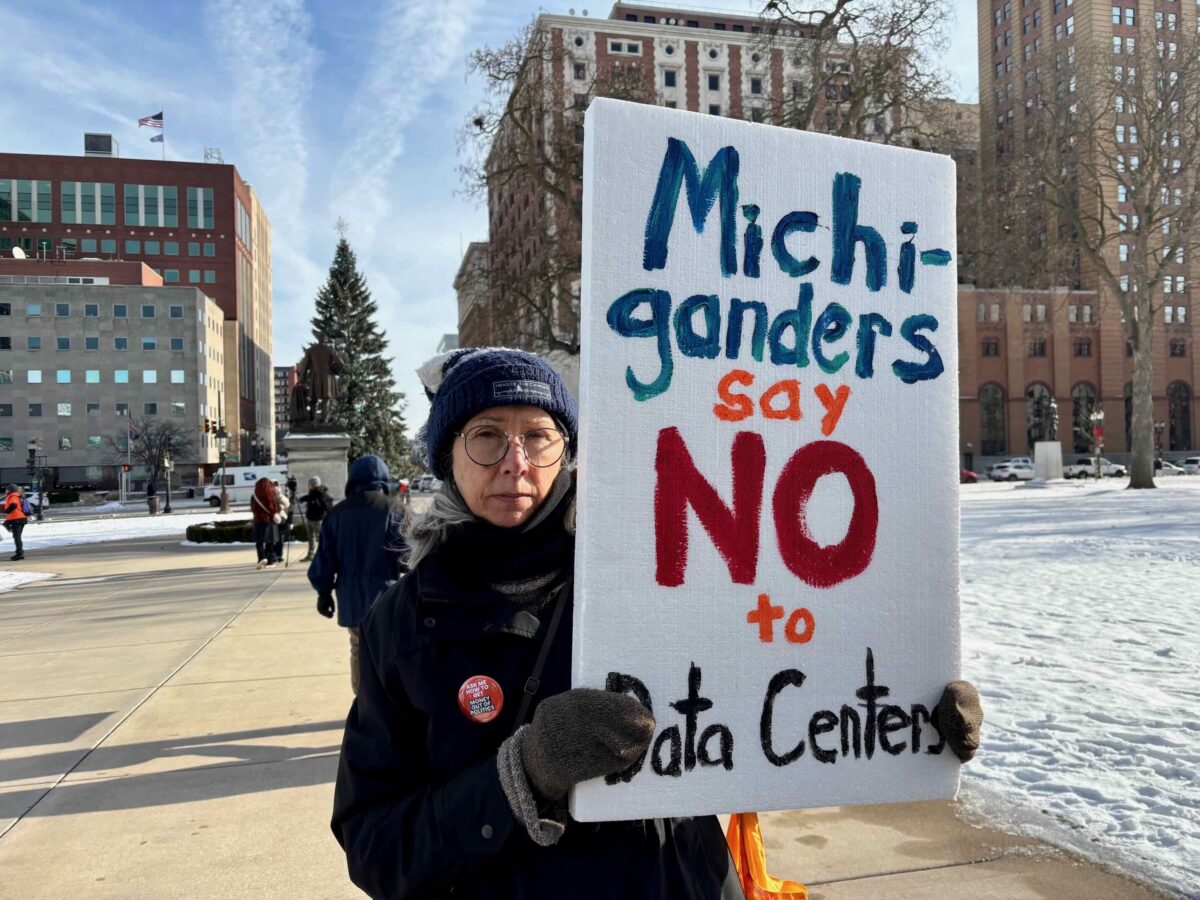
Grassroots opposition to data centers in Michigan communities is widespread and nonpartisan, with a Tuesday anti-data center rally in Lansing drawing over 100 residents, many from communities facing possible data center projects.
Residents and some lawmakers urged the MPSC to allow for a contested case to ensure the data center doesn’t raise utility bills, decrease energy reliability, undermine Michigan’s climate law, or leave ratepayers to pay for stranded costs if the facility uses less power than anticipated or ceases operation.
Michigan’s 2023 renewable energy law contains an “off ramp” provision that allows fossil fuels to remain online if there is inadequate capacity to meet demand.
The Saline Township facility won’t require new fossil fuel generation, DTE President and CEO Joi Harris said in October. Each new large data center after Saline could require a new natural gas plant, she said.
By Thursday morning, the case received over 5,500 comments on the MPSC’s webpage, many of which call for a contested case or express opposition to the data center.
“The contracts remain public only under significant redactions and promises made by DTE to hold ratepayers harmless remain flimsy and unsupported in the public record,” attorney general Nessel said in a Nov. 18 statement, calling for a contested case.
At the rally on Tuesday in Lansing, Nessel said it was important for the commission to get it right on the case, because it could create a precedent for other data centers coming to the state.
The project garnered support from union and business group representatives at a Dec. 3 online MPSC hearing on the project.
Michigan Gov. Gretchen Whitmer is a vocal supporter of the data center, saying in a statement the project would create 2,500 union construction jobs, 450 permanent, high-skill jobs on site, and 1,500 more jobs in the county.
New reports on Oracle’s financial backing
The MPSC’s decision comes as the Saline Township data center’s financial backing is called into question. On Wednesday, The Financial Times reported that data center developer Blue Owl Capital will not be support the project after negotiations with Oracle stalled.
Oracle has a growing debt load and a stock price that’s down significantly from a recent peak, The Wall Street Journal reported in November. Moody’s Ratings and S&P Global Ratings “have edged closer to reclassifying the company’s bonds as junk debt,” the Journal reported.
Oracle told the Financial Times that developer Related Digital selected “the best equity partner from a competitive group of options” and that its equity deal is “moving forward on schedule and according to plan.” Related Digital declined to name the project’s investor.
Questions remain over data center cost allocation issues
Environmental and ratepayer advocates have raised concerns that cost allocation models could shift costs for building out infrastructure for data center costs onto other ratepayers. They have also warned other ratepayers could be left to pay for stranded costs if the data center ceases operation before grid investments are paid off.
DTE’s application for the Saline Township data center contains a power supply agreement of roughly 19 years, with an option for the customer to extend it by 20 years. It also contains an energy storage agreement with a duration of 15 years.
The length of these contracts is roughly equivalent to the 15-year contract terms recently adopted by the MPSC for Consumers Energy as part of a tariff for its largest customers.
The MPSC established a framework for addressing such cost allocation issues in that ruling, requiring Consumers to file six cost-of-service studies and rate design proposals with the state to examine large load customers’ impact on rates. These reports will be used to set rates going forward.
MPSC Chair Scipps said the conditional approval granted to DTE Thursday also includes “a requirement to file a generally applicable data center tariff supported by six cost of service studies and that will be reviewed in a contested case.”
Commissioner Shaquila Myers said future utility rate cases are the “appropriate forum” to assign costs to data center customers so that existing customers do not experience cost increases.
Several commenters at the end of Thursday’s meeting expressed doubt they would really be protected from costs associated with the Saline Township project.
Kalkaska County resident and anti-data center activist Seth Bernard said he hopes the commission’s promise that DTE and its shareholders will bear all the risk for costs not recovered from the data center customer is upheld.
He encouraged attendees to support recently introduced legislation to repeal tax incentives for large data center customers and the ballot initiative to prevent DTE, Consumers Energy, and other large companies doing business with the state from contributing to political campaigns.
“There’s an opportunity for all of us to deal with some of the bigger issues that are challenging us here,” he said.
Editor’s note: This story has been updated with additional details.
🗳️ What’s next? Tips for civic action
Who’s making civic decisions
🏛️ The Michigan Public Service Commission regulates DTE Energy.
Why it matters
⚡ Opponents of an Oracle and Open AI data center in Saline Township say it could impact DTE Energy customers’ utility bills, which the utility denies. Supporters of the project like Gov. Gretchen Whitmer say it will create thousands of temporary construction jobs, hundreds of permanent jobs, and bring tax dollars to local communities.
Data center power demands could make it more difficult for the state to meet its climate goals, depending on what generation sources are used.
Michigan’s Department of Environment, Great Lakes, and Energy will decide on a wetland permit for the Saline Township facility.
The Michigan Legislature could opt to advance legislation that rolls back the state’s tax incentives for data centers and adds statewide regulations for the facilities.
How to take civic action now
- 📅 Attend at 6 p.m. on Dec. 18, the Michigan Department of Environment, Great Lakes, and Energy’s virtual hearing on a permit application for the Saline data center’s proposed wetland, stream, and floodplain impacts. To attend the online hearing, register at https://bit.ly/WRD121825. After registering, you will receive a confirmation email containing information about joining the meeting. To join by phone, call 855-758-1310 and use meeting ID 841 0513 8539 #.
- 🌱 Follow the Sierra Club Michigan Chapter and Citizens Utility Board of Michigan for advocates’ viewpoints on MPSC activities.
- 📩 Email the MPSC at LARA-MPSC-commissioners@michigan.gov. Public comments can be made to EGLE on the agency’s public notice webpage for the wetland permit.
- ✉️ Mail the Michigan Public Service Commission, PO Box 30221, Lansing, MI 48909
What to watch for next
🗓️ Any action by the Michigan Legislature on data centers.
Civic impact
🌍 Following and engaging with Michigan’s utility regulator is one way residents can influence the impact data centers have in the state.
⭐ Please let us know what action you took or if you have any additional questions. Please send a quick email to connect@planetdetroit.org.
MORE DATA CENTER NEWS
Data center protest at Michigan Capitol aims to pressure regulators ahead of DTE Energy decision
New legislation would roll back Michigan’s tax incentives for large data center developments, which were signed by Gov. Gretchen Whitmer at the end of 2024.

DTE Energy says it expects Saline data center approval later this month, has more deals in negotiation
DTE has 3 gigawatts of data center deals in late-stage negotiations, the utility says in Friday update.

Michigan regulators blow past DTE’s data center deadline
Michigan regulators announce virtual hearing Dec. 18 on a planned Saline Township data center’s wetland, stream, and floodplain impacts.