


Overview:
- Environmental and consumer advocates ask the Michigan Strategic Fund to amend its data center tax exemption guidelines, highlighting a disregard for statutory clean energy mandates.
- Current rules permit tax breaks without proving compliance with the 90% clean energy procurement requirement, which environmental advocates say undermines the law and could escalate fossil fuel use and costs for Michigan residents.
- They urge the MSF board to "close this loophole" and ensure new energy users support the state's clean energy transition.
Environmental and consumer advocates are urging the Michigan Strategic Fund to revise newly released guidelines for data center tax exemptions, arguing the rules ignore the state’s clean energy requirements.
MSF’s interpretation of the state’s updated sales and use tax laws would allow data centers to qualify for tax breaks without demonstrating that they will meet a mandated 90% clean energy procurement requirement, the Michigan Environmental Council, Natural Resources Defense Council, Sierra Club, and the Citizens Utility Board of Michigan said in a Nov. 13 letter.
The letter, drafted by Troposphere Legal, states the guidelines “are not authorized by law and are contrary to the text of the relevant statutes.”
The Michigan Strategic Fund directs state appropriations for business development.
Michigan amended its tax code earlier this year to provide exemptions for data center equipment if facilities meet specific standards within six years, including compliance with green building rules and the procurement of clean, renewable energy.
Under the law, data centers must show they have obtained — or will obtain — 90% of their power from clean energy sources as defined in the state’s Clean and Renewable Energy Act.
“I can confirm the MSF board has received the letter and it will be included in the packet for their next public meeting in December, just as all written communications to the board are,” Michigan Strategic Fund spokesperson Danielle Emerson told Planet Detroit in an email.
The MSF’s guidance allows facilities to qualify by signing a long-term contract with a regulated utility provider under Michigan’s clean energy framework.
Environmental advocates say this interpretation does not ensure compliance because no Michigan utility currently provides a 90% clean energy portfolio, nor are they required to reach that level within the next six years.
Environmental groups urge clean energy compliance for data centers
In the letter, advocates argue the MSF’s approach “renders the law’s 90-percent clean energy standard meaningless,” noting that utilities are not required to reach an 80% clean energy mix until 2035–2039, well beyond the timeline for data centers to meet the tax exemption threshold.
The groups say MSF must deny or revoke exemptions for facilities that do not meet the 90% requirement as the law directs.
Leaders from the four organizations warn that weak enforcement could increase fossil fuel demand and shift costs onto Michigan residents. They called on the MSF board to “close this loophole” and ensure large new energy users contribute to the state’s clean energy transition.
🗳️ What’s next? Tips for civic action
Why it matters
⚡Michigan law requires data centers seeking tax exemptions to show they will run on 90% clean energy. Advocates say current state guidance weakens that standard, potentially increasing fossil fuel use and costs for ratepayers.
Who’s making civic decisions
🏛️ The Michigan Strategic Fund Board administers data center sales and use tax exemptions and sets the guidelines at issue.
How to take civic action now
- 📄 Read the full letter submitted by MEC, NRDC, Sierra Club, and Citizens Utility Board of Michigan.
- 🗣️ Submit a public comment or question to the MSF board about the clean energy enforcement standard.
- 🧾 Review the “Enterprise Data Center Sales and Use Tax Exemption Guidelines” and compare them with statutory requirements.
- 💬 Contact your state legislators to ask how they plan to ensure the 90% clean energy requirement is upheld.
Learn more 🔍 Read Planet Detroit’s Guide to Data Centers to learn more about the threats and opportunities surrounding data centers.
What to watch for next
🗓️ Follow updates from MEC, NRDC, Sierra Club, and CUB for upcoming hearings or opportunities to weigh in.
Civic impact
🌍 Weighing in on this process helps residents ensure that large energy users meet Michigan’s clean energy goals and do not shift long-term costs onto communities.
⭐ Please let us know what action you took or if you have any additional questions. Please send a quick email to connect@planetdetroit.org.
More Planet Detroit reporting on data centers
University of Michigan regents approve $785 million Los Alamos computing center project
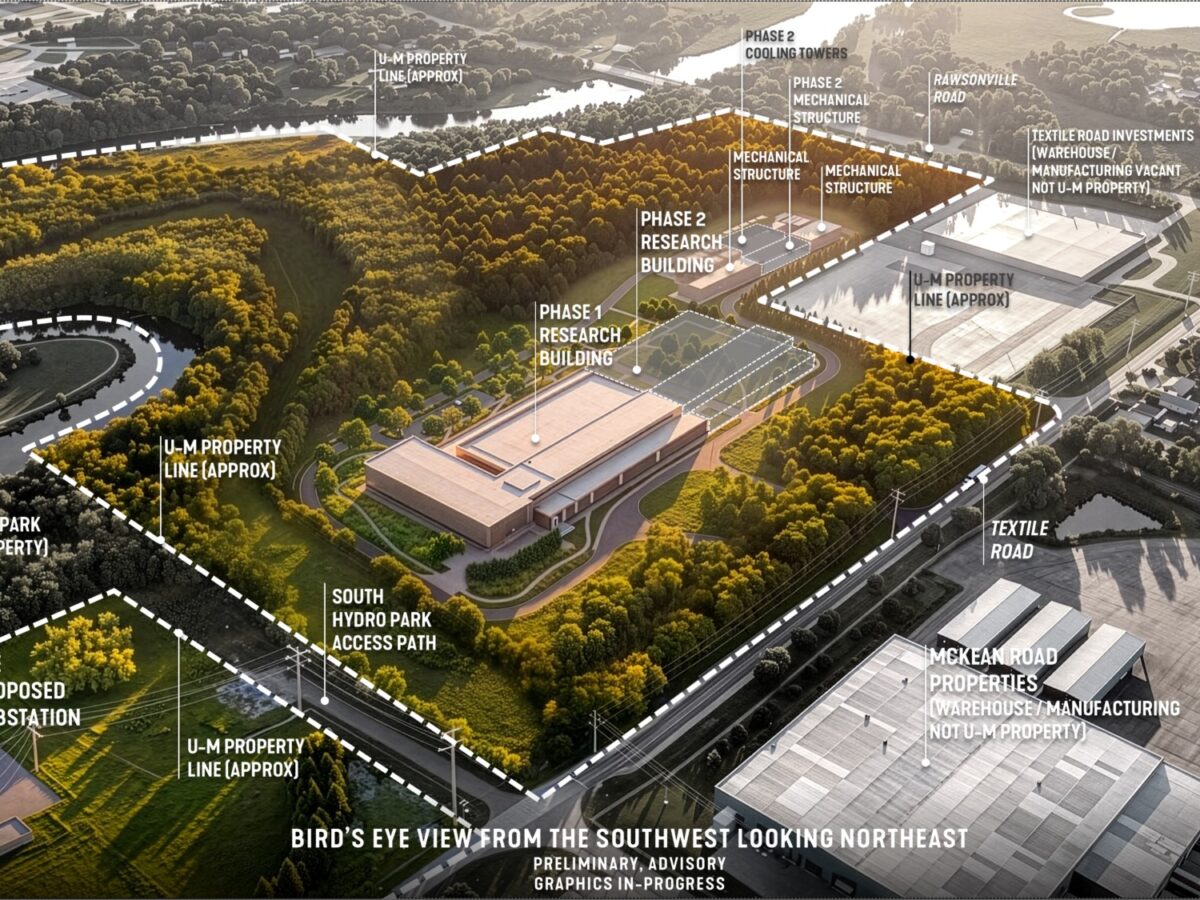
The University of Michigan Board of Regents voted to move forward with a 100-megawatt computing center with Los Alamos National Laboratory on Textile Road in Ypsilanti Township. Local elected officials and residents oppose the project, citing noise, generator emissions, and risks to the Huron River.

Big US data centers emit more carbon than Denmark: Harvard study
A Harvard study finds the largest U.S. data centers emit more carbon dioxide than Denmark, while climate talks in Turkey launch a voluntary clean AI pledge.


Ypsilanti Township data center site is ‘highly archaeologically sensitive’: State historic office
The University of Michigan is working with an archeologist to assess whether Indigenous artifacts or human remains could be found at its proposed Ypsilanti Township data center site. State officials warn that land near the Huron River is highly archaeologically sensitive.

DTE to sell non-utility business to fund grid upgrades, data center growth
DTE Energy will sell its non-utility Vantage business, expected to raise $3 billion, to help pay for a $44 billion investment plan for grid reliability, renewables, and data center demand. Critics, including Michigan Attorney General Dana Nessel, continue to raise concerns about ratepayer impacts.

What Michigan election results mean for data centers, DTE, clean energy
Democrats won control of the governor’s office and both chambers of the Michigan Legislature, and voters passed a ban on political spending by utilities. Environmental advocates say the results could protect the state’s clean energy law and increase pressure on utilities and data centers.