

Overview:
- Middle Eastern and North African Americans have been categorized as white in health studies, making it impossible to track their specific disease risks including higher rates of cardiovascular disease, diabetes, and dementia
- The Detroit Aging and Memory Project recruited over 600 Arab and Middle Eastern Americans aged 65+ for the first comprehensive assessment of Alzheimer's prevalence in this population
- Up to 45 percent of dementia risk can be prevented through addressing contextual factors like food access, pollution exposure, and chronic stress—conditions that disproportionately affect immigrant communities
Planet Detroit’s neighborhood reporters are local residents who cover health, environment and climate issues in their neighborhoods. The Lab is made possible with the generous support of the Kresge Foundation.
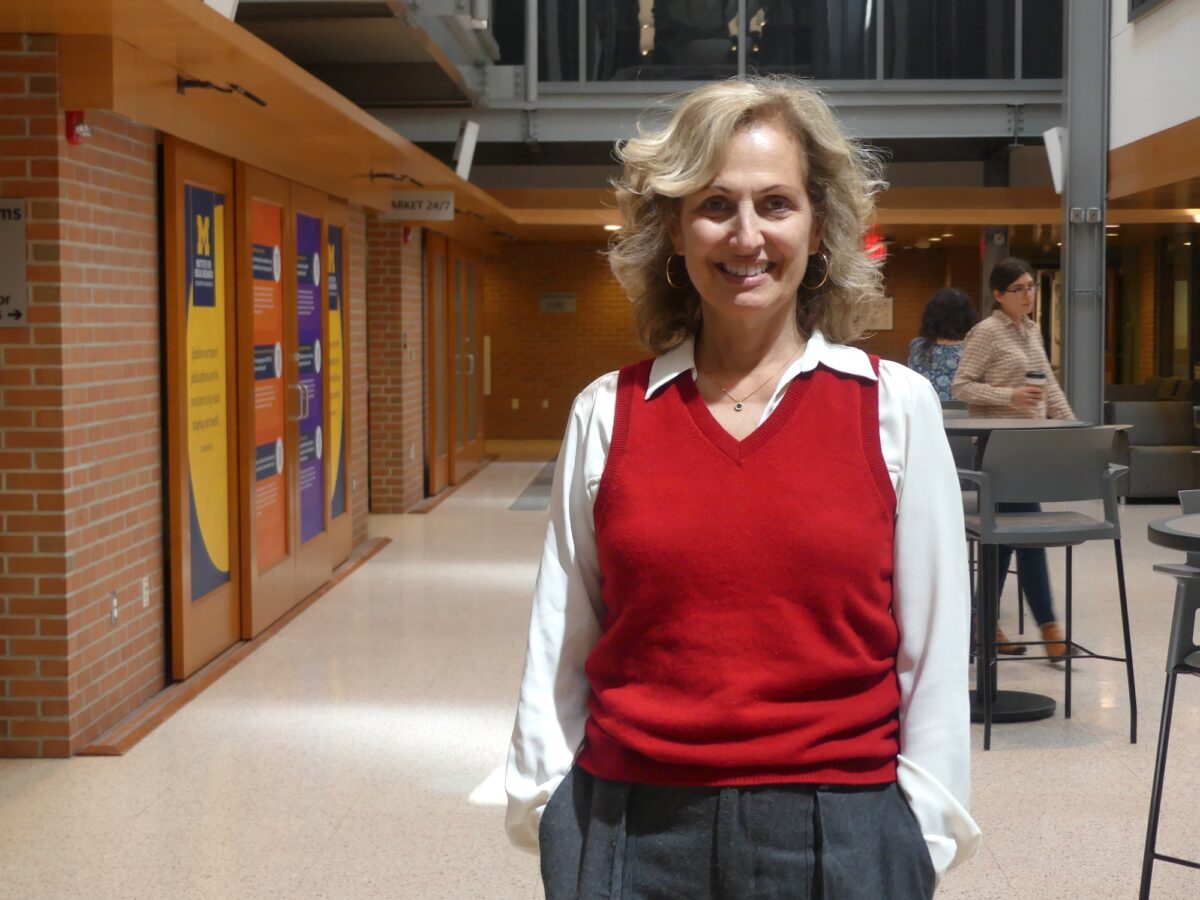
Growing up as the daughter of immigrants in Detroit, Dr. Kristine Ajrouch was fascinated by a question that would shape her entire career: “How does the meaning-making that happens through culture lead to identity?”
This question drove her to study ethnic identity among Arab American youth in the mid-1990s. But during her dissertation interviews, an unexpected pattern emerged that would redirect her career. The young people insisted that what made them different from other Americans was their commitment to family—specifically, that they would never put their parents in a nursing home.
“I thought that was fascinating, but also misguided,” Ajrouch recalls. “Most of these kids didn’t even have grandparents here. They’d never actually experienced what aging in America looks like.”
That disconnect between cultural ideal and lived reality launched Ajrouch on a three-decade journey to understand aging in Middle Eastern and North African (MENA) communities—work that has become increasingly urgent as this population ages and faces rising rates of Alzheimer’s and dementia yet remains unaccounted for in most health research.
Now a professor at the University of Michigan’s Institute for Social Research, Ajrouch is leading groundbreaking efforts to document dementia prevalence in MENA communities for the first time in U.S. history. It’s work that has required not just scientific rigor, but cultural translation, community trust-building, and a willingness to challenge a medical establishment that has long failed to recognize the uniqueness of these populations.
Invisible in the data
“MENA populations have been historically categorized as white,” Ajrouch explains. “So any large-scale health studies that might have included someone of Middle Eastern background—they’re just marked as white. There’s no way to isolate the data, no way to understand their specific health risks or needs.”
This statistical invisibility has real consequences. Community studies suggest MENA populations show higher levels of cardiovascular disease, diabetes, and depressive symptoms—all risk factors for Alzheimer’s. The migration experience itself, often involving trauma, displacement, and acculturation stress, may create additional vulnerabilities. But without data, there’s no way to secure resources, develop culturally appropriate interventions, or even convince funding agencies that this research matters.
“I’ve been told repeatedly that the population is too small to be important, or not unique enough to tell us something new about immigration and adaptation,” Ajrouch says. “Getting funding for MENA-focused research is like pulling teeth.”
Straddling worlds in Detroit
Her own background gives her unique insight into these challenges. The daughter of an Iranian immigrant father who fled political persecution in the 1950s and a Lebanese American mother whose parents arrived in the 1920s, Ajrouch grew up straddling worlds in Detroit.
“My father was trilingual, studied medicine in Paris and preferred the French language, and my mom was very staunch about us being American—there was nothing ‘foreign’ about us,” she remembers. “I didn’t learn Arabic or Persian. My mom only spoke Arabic to my grandmother when she didn’t want me to understand something.”
It wasn’t until recent years that Ajrouch fully recognized how much her immigrant heritage shaped her. “I’m married to a Lebanese immigrant. I didn’t really think about how much of my life is connected to immigration until maybe five years ago. I realized there’s a lot of cultural and homeland influence on how we live our lives, even when we think we’re completely Americanized.”
Building the first study of its kind
The Detroit Aging and Memory Project, which Ajrouch leads, represents the first systematic attempt to assess Alzheimer’s prevalence among Arab and Middle Eastern Americans aged 65 and older in metro Detroit—home to one of the largest MENA populations outside the Middle East. The project managed to recruit over 600 participants for intensive two-hour assessments, including cognitive testing in Arabic and English, and comprehensive surveys about health, social networks, migration experiences, and stress.
“I thank from the bottom of my heart everyone who participated,” Ajrouch says. “Getting our community to participate in research is incredibly difficult. There’s suspicion, especially from countries with political instability. When your main concern is survival, participating in research isn’t a priority.”
Her persistence became a defining feature of the project’s early years, especially as outreach efforts met stigma and hesitation within the community.
“Working with Dr. Ajrouch taught me to stay persistent and not give up,” said Donna Jawad, Community Outreach Coordinator for MCCFAD. “In the early days, the stigma and barriers around Alzheimer’s in the MENA community felt too strong to break. She would always say to me, ‘Donna, baby steps—we will get there.’ She was right. Through her research, I’ve seen a real shift in how the community views Alzheimer’s and participation in research.”
Focus on prevention
The project has now expanded into the Healthy Brain Project, inviting participants to the University of Michigan for MRI scans and blood draws to identify biomarkers for dementia risk. There’s also a proposal for follow-up interviews to track disease progression over time.
But perhaps most importantly, Ajrouch’s team is working to shift how we think about dementia risk factors. They’re promoting the concept of “contextual factors”—the often-invisible environmental and social conditions that shape health outcomes.
“Up to 45 percent of dementia risk can be prevented by paying attention to contextual variables,” she explains. “Do you live in a food desert where your only option is a convenience store? Are you in an area with high pollution? Can you afford to reduce stress in your life? Not everyone has the opportunity to make healthy choices.”
A Fulbright fellowship in Lebanon in 2008 deepened Ajrouch’s understanding of how culture shapes aging. Teaching at Hagazian University in Beirut, she experienced a radically different relationship to time and social connection.
“Life there is organized around social things, and work is something you just have to do,” she reflects. “It’s the opposite of here. At first I thought I needed alone time, but after months there, I came to really appreciate always having people around, very engaged. When I came back to Michigan, I think I experienced mild depression from the isolation.”
The experience also highlighted the emotional depth of Arabic language and communication. “People ask about you and wish well on you in a way that feels like sincere concern about you and your larger circle. The Arabic language is very emotional—you feel a deeper connection.” Inspired by this, she now takes weekly Arabic lessons online with a tutor in Lebanon.
One of Ajrouch’s current projects tackles the profound stigma surrounding dementia in MENA communities. Inspired by Fred Rogers’ philosophy that “if it’s mentionable, it’s manageable,” she’s partnering with the National Council of Dementia Minds to create videos profiling MENA community members living with dementia.
“We want to humanize them, give them voice,” she explains. “But it’s been incredibly hard to find people willing to talk about it. The stigma is so strong.”
The project also aims to engage faith leaders and encourage them to discuss dementia in their sermons. “Once you have a diagnosis, there’s an opportunity for an improved life,” Ajrouch says. “But first we have to make it speakable.”
What comes next
Looking ahead, Ajrouch’s dream is expansive yet precise: “To make MENA populations visible in the larger efforts to promote good health. To have a seat at the table. Right now, they get the tail end of what’s being done.”
She’s quick to emphasize that this isn’t a zero-sum game. “We’ll be helping all of America by doing this research. Every population that’s included contributes to the greater good. Some of what we learn from MENA communities will help everyone.”
At 60, a mother of two and grandmother with a third grandchild on the way, having spent her entire life in Michigan, Ajrouch embodies the complex identity negotiations of the Arab American experience. She’s American-born but immigrant-connected, scientifically trained but culturally attuned, fighting for recognition of a community that’s simultaneously hyper-visible in political discourse and invisible in health data.
“Context matters,” she says, returning to her center’s mission. “Where you come from, when you arrived, whether you were welcomed or not—these things shape your health in ways we’re only beginning to understand. My job is to make sure we don’t miss this story just because someone decided the population was too small to count.”
MORE FROM THE NEIGHBORHOOD REPORTING LAB
Shaquille Quamae Hall’s vision for Detroit youth: ‘Many hands make light work’
Detroit photographer and Planet Detroit Neighborhood Reporting Lab participant Shaquille Quamae Hall details his journey from mentee to mentor.

Highland Park resident and filmmaker Jamela Lugo-Thomas inspired by city’s water crisis
The College of Creative Studies grad combines lived experience with film to shine a light on issues of clean water access as part of Planet Detroit’s Neighborhood Reporting Lab.

Detroit residents become reporters in Planet Detroit’s 2026 journalism program
Nineteen Detroit-area residents kicked off Planet Detroit’s third annual Neighborhood Reporting Lab, a six-week program that trains community members to tell environmental stories about their neighborhoods.

