

Overview:
- Federal lawmakers propose $500 million for Low-Income Household Water Assistance Program that helped prevent nearly 1 million shutoffs during pandemic.
- Dingell and Tlaib introduced a bill that would provide $20 billion annually for an EPA water affordability program in April.
- "We know that millions of Americans are still struggling to keep up with their water bills and many have their water turned off as we speak," Tlaib says.
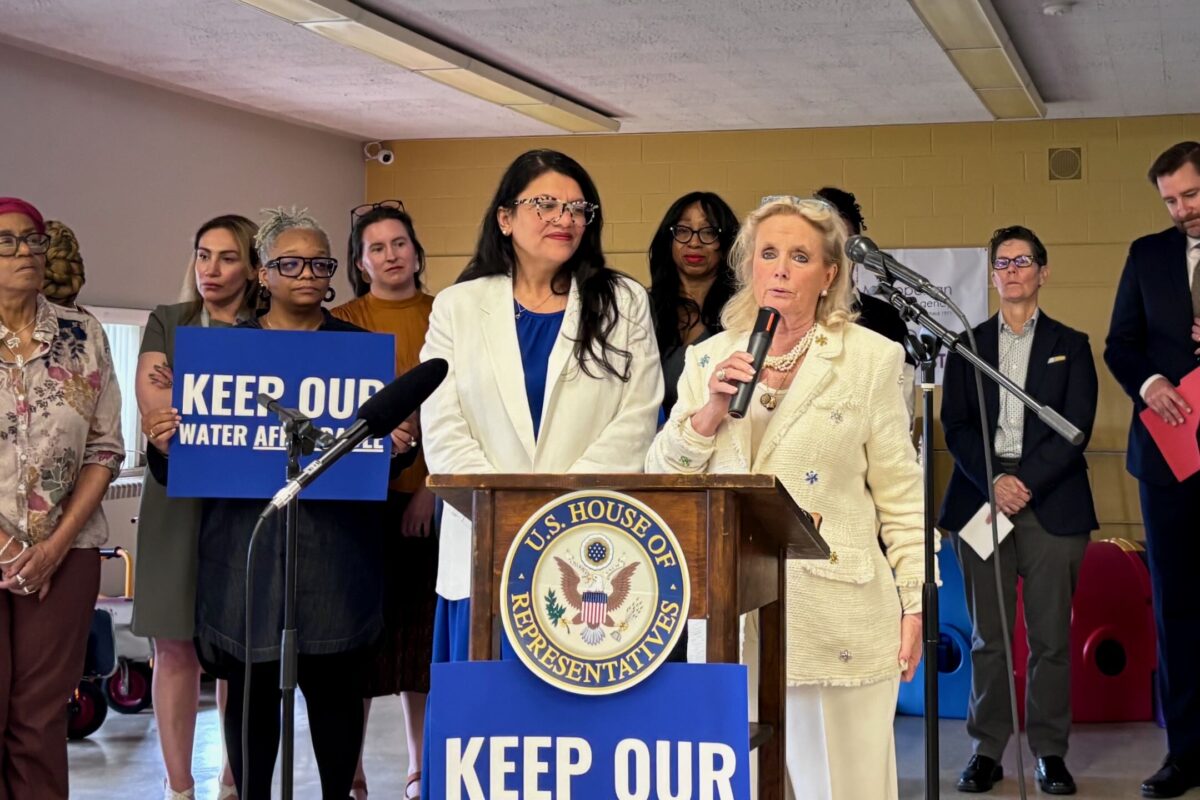
U.S. Reps. Rashida Tlaib (D-Detroit) and Debbie Dingell (D-Ann Arbor) are backing legislation that would create universal drinking water access for low-income households and provide $500 million for a COVID-era federal water assistance program.
🗳️ Civic Action Toolbox
Why it matters
Advocates say rising water bills are forcing Metro Detroit families to choose between paying for water and affording food or heat, with shutoffs threatening access to a basic necessity.
Who's making public decisions
The U.S. Congress could pass legislation to prevent shutoffs and fund water assistance. Rep. Rashida Tlaib says this could be included in a continuing resolution if Democrats take control of the House.
Upcoming Meetings
Civic Actions: What You Can Do
Organizations to Follow
What to watch for next
Watch for a Congressional vote on water assistance funding bills introduced by Dingell and Tlaib, and whether the funding is included in a continuing resolution if Democrats gain control of the U.S. House in the midterms.
Are you taking action? Let us know.
Civic resources compiled by Planet Detroit
Dingell and Tlaib introduced the Water Access Act Monday to provide $500 million in funding to the Low-Income Household Water Assistance Program (LIHWAP).
The LIHWAP program helped low-income households pay water and wastewater bills, prevent shutoffs, and ensure access to safe water during the pandemic.
The program, which is no longer funded, helped over 1.5 million households and prevented almost 1 million shutoffs.
“Too many families in Michigan and across this country are finding that rising costs are turning something that is essential, a basic human right, (into) another source of economic anxiety and hard choices,” Dingell said at a Tuesday press conference at Wayne Metropolitan Community Action Agency in Dearborn Heights.
Dingell and Tlaib reintroduced the Water Access and Affordability Act in April. It would provide $20 billion annually for 10 years for a low-income water affordability program at the Environmental Protection Agency.
This legislation includes automatic enrollment in access programs and measures to reduce enrollment burdens; assistance for low-income households; a prohibition on water service disconnections and associated fees; and provisions for equitable treatment of owner-occupied households and rental households, among other measures.
“We know that millions of Americans are still struggling to keep up with their water bills and many have their water turned off as we speak,” Tlaib said.
Water access has widespread support, Tlaib said, adding that LIHWAP was created during the first Trump administration.
Water legislation could be revived after midterms: Tlaib
Dingell said it’s unlikely the water assistance legislation will pass in the current Congress.
Tlaib told Planet Detroit the legislation could be included in a continuing resolution if Democrats take control of the U.S. House next year.
Tiana Starks, communication director for the water rights nonprofits We the People of Detroit, urged Congress to act on Dingell and Tlaib’s legislation at Tuesday’s press conference.
Programs like the Supplemental Nutrition Assistance Program, or SNAP, and Low Income Home Energy Assistance Program, or LIHEAP, show the crucial role that government assistance programs can play, she said.
Water bills are rising faster than inflation, with declining federal funding placing the burden on water utilities, municipalities, and residents, Starks said.
“No family in this country should have to choose between water and food, or between water and heat, or between water and basic survival,” Starks said.
“But what we’re seeing is that that is the choice that far too many people are being forced to make.”
Tlaib and Dingell’s legislation is before Congress during an ongoing water affordability crisis.
The average residential water bill rose 50% nationally since 2010, according to a 2025 report on LIHWAP from the federal Administration for Children & Families.
Around 6% of Michigan households are water-burdened, meaning they spend more than 5% of their income on water service, a 2024 University of Michigan study found.
Michiganders’ water costs have risen as federal funding plummeted.
Federal dollars covered 50%-60% of capital funding for water infrastructure in the late 1970s and early 1980s, but paid for 7% in 2021, according to a report from the Value of Water Campaign, a coalition of nonprofits, utilities, and private companies.
In Michigan, State Sen. Stephanie Chang (D-Detroit) spearheaded legislation that has attracted bipartisan support and backing from utility industry leaders. The legislation would create a statewide water affordability program, cap water bills for low-income Michiganders, and add shutoff protections, among other measures.
The water affordability legislation introduced in the Michigan House would enact income-based billing, debt forgiveness, and shutoff protections.
The Senate legislation passed out of committee in November. The House bills have yet to receive a hearing.
DRINKING WATER NEWS
Guide: What Michigan voters need to know about PFAS ahead of the midterms
This story is part of a series by Planet Detroit on the environmental and health issues at stake in the 2026 midterm election. PFAS, which stands for per- and polyfluoroalkyl substances, is the umbrella term for an alphabet soup of chemicals, which exist in dozens of common household items, from cookware to clothing to food…

Guide: Michigan’s water affordability issue by the numbers
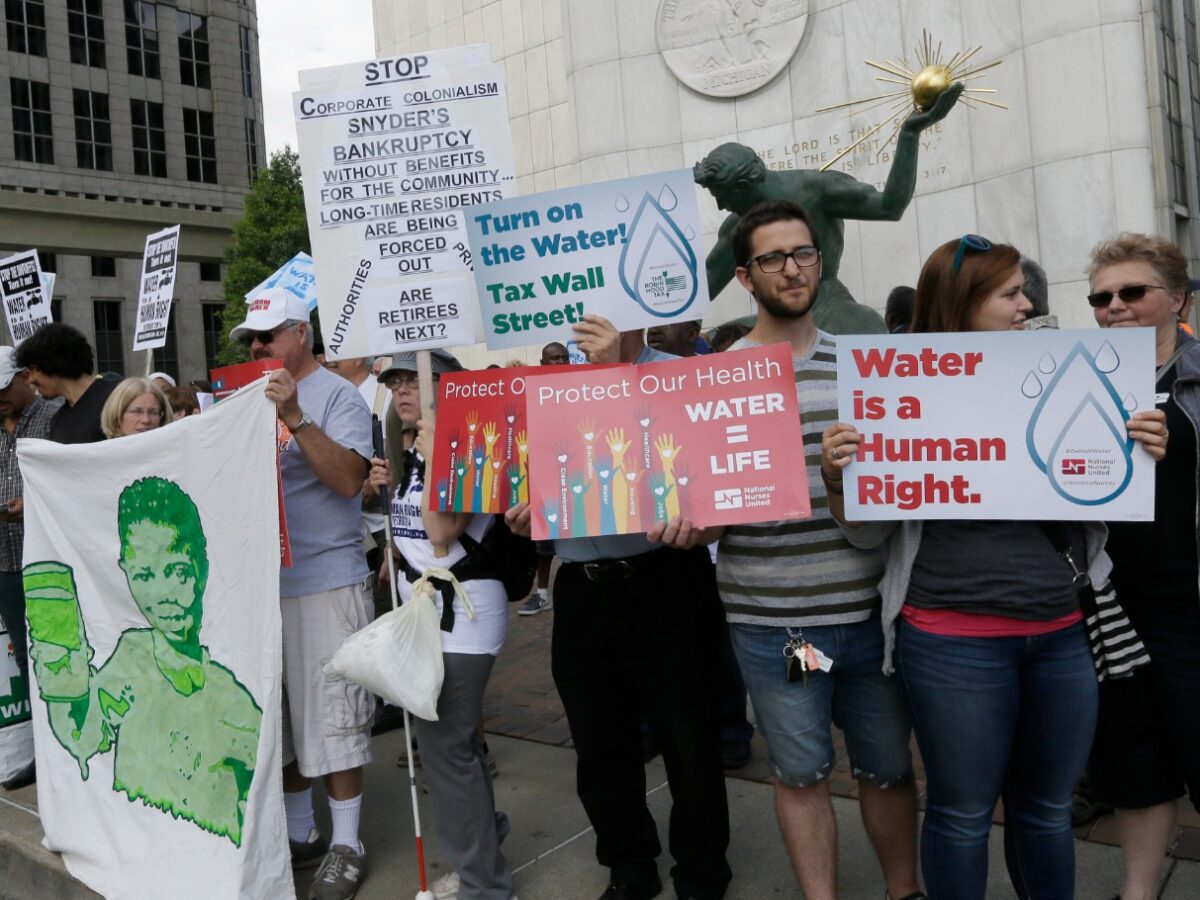
Between 6.59% and 10.75% of Michigan households are water-burdened, spending more than 5% of their income on water service, according to a University of Michigan study.

$10 million in water assistance funding advances in Michigan Senate: ‘Basic human need’
The Michigan Senate Appropriations Committee advanced a budget Thursday with $10 million for water assistance—double last year’s amount but far short of the $60 million advocates say is needed to address Michigan’s growing water affordability crisis.