

Overview:
- Michigan monitors seven PFAS compounds in drinking water.
- PFAS were detected in 59 southeast Michigan water systems in 2024, though none were found in treated water from the Great Lakes Water Authority serving Metro Detroit.
- Michigan Democrats have introduced bills to ban PFAS manufacturing and sales, while the 2026 midterms could determine whether stricter regulations advance.
This story is part of a series by Planet Detroit on the environmental and health issues at stake in the 2026 midterm election.
PFAS, which stands for per- and polyfluoroalkyl substances, is the umbrella term for an alphabet soup of chemicals, which exist in dozens of common household items, from cookware to clothing to food packaging.
🗳️ Civic Action Toolbox
Why it matters
The regulation of PFAS contamination in Michigan could shift due to proposed regulatory rollbacks by the Trump administration and the outcome of the midterm election.
Who's making public decisions
The Michigan PFAS Action Response Team monitors seven compounds across state agencies. The Michigan Legislature is considering a Democratic-backed package of bills to regulate PFAS testing, ban products containing the chemicals, and provide relief to impacted farmers. The Trump administration’s proposed rollback of PFAS standards rescinds federal limits on four of six PFAS compounds that were set during the Biden administration.
Civic Actions: What You Can Do
Organizations to Follow
What to watch for next
Are you taking action? Let us know.
Civic resources compiled by Planet Detroit
In general, the substances support the water- or grease-repellent function we’ve come to expect from these items. They’re known as “forever chemicals” because their strong chemical bonds don’t break down in nature, and can build up in the human body.
Their effect on human health is still being studied, but existing research suggests PFAS are linked to various cancers and other diseases, including kidney and testicular cancer.
Michigan amended its drinking water rules to include PFAS limits in August 2020, making it among the first states to do so. The federal government issued stricter PFAS standards in 2024 that the Trump administration now proposes to roll back.
Here’s where PFAS regulations and legislation stand as Michigan heads into midterm elections that could tip the vote on environmental laws.
Michigan’s PFAS standards
The Trump administration’s proposed rollback of PFAS standards last month rescinded federal limits on four of six PFAS compounds that were set during the Biden administration. The rollback also allowed for water systems to delay compliance with the remaining two standards.
In Michigan, the state monitors seven PFAS compounds, and the federal ruling has no effect on that work, according to Abigail Hendershott, executive director of the Michigan PFAS Action Response Team, which works across seven state agencies. What’s more, the state has stricter standards than at the federal level.
At the same time, Michigan has looser standards for most of the PFAS compounds for which the Trump administration is dropping limits altogether.
This will impact Michigan communities contaminated with the chemicals affected by the federal rollback, as Planet Detroit reported last month.
In 2024, Planet Detroit reported that PFAS were detected in 59 southeast Michigan water systems. In the Great Lakes Water Authority, which serves much of Metro Detroit, none were detected in treated water, but untreated, “raw” source samples did have detectable amounts.
The PFAS Action Response Team’s Hendershott said: “There is no reason to be worried about Michigan’s municipal public water supplies in the state.”
The concern with PFAS is their ubiquity in modern life, she said. Unlike problematic substances found in industrial settings, PFAS “are in our houses.”
Michigan lawmakers back PFAS bills
When U.S. Sen. Elissa Slotkin (D-Michigan) served in the U.S. House of Representatives, she sponsored multiple pieces of PFAS cleanup and regulation legislation.
In January, U.S. Reps. Haley Stevens, Debbie Dingell, Hillary Scholten, and Rashida Tlaib, all Michigan Democrats, were among the lawmakers who introduced bipartisan legislation to regulate PFAS as a hazardous chemical under the Clean Air Act. No action has been taken on the bill.
In April, state House Democrats introduced a package of bills addressing various concerns around PFAS, including testing, relief for impacted farmers, and a prohibition on the manufacture, sale and distribution of products containing the chemicals. The bill package has yet to be taken up.
PFAS allies, education
Besides the Michigan PFAS Action Response Team, nonprofits working in this area include the Great Lakes PFAS Action Network, the Environmental Working Group, the Sierra Club, and others.
The week of Sept. 21, 2026 is PFAS Awareness Week in Michigan.
Events are planned around the state addressing knowing which fish are safe to eat, and consumer product awareness and education about avoiding foam deposits on Michigan waterways, which can contain the chemicals, Hendershott said.
MORE MIDTERMS 2026 NEWS

Michigan environmental news: Consumers rate hike, SNAP rolls shrink, Joe Louis Greenway funding
Consumers Energy customers will pay higher gas bills starting Nov. 1, Michigan food banks face surging demand as SNAP rolls shrink, and three wildfires burn across the Upper Peninsula.


Google data center secures Van Buren Township approval, with startup expected in late 2027
Van Buren Township’s planning commission approved Google’s data center site plan in a 5-1 vote Wednesday, despite concerns from nearby residents about construction noise, dust, and health impacts. The facility is expected to begin operations in late 2027.

How heat from a Wisconsin data center is being stored for the winter
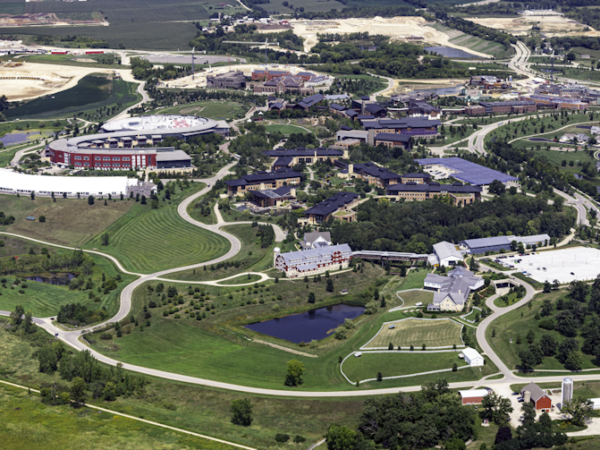
Servers produce heat every hour of the year, and a Wisconsin campus shows how drilled wells can bank summer warmth in rock for winter use.
