

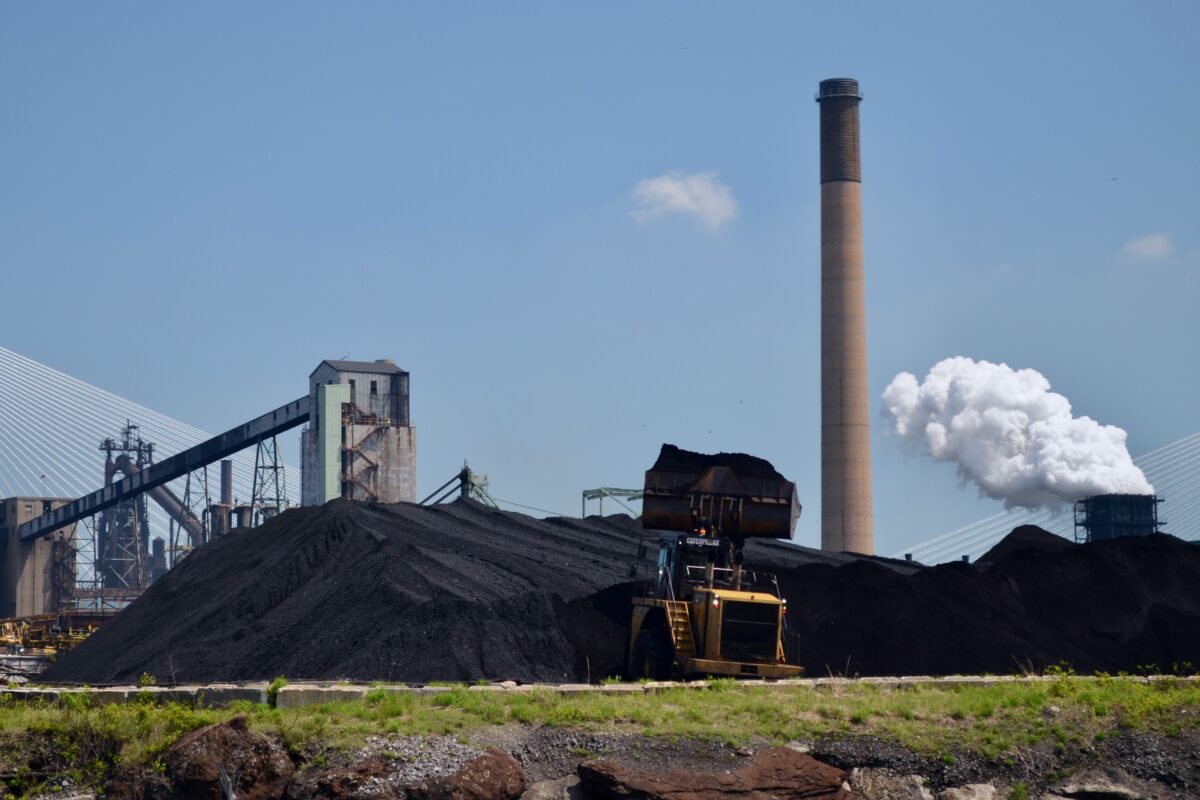
Overview:
- DTE Energy's EES Coke Battery on Zug Island releases toxic pollution in Southwest Detroit, where asthma hospitalization rates are three times the state average.
- The U.S. Geological Survey identified Michigan's Midcontinent Rift as a high-potential source for naturally occurring geologic hydrogen that could replace coke in steel production.
- A proposed Great Lakes Green Steel Consortium would transition regional blast furnaces to hydrogen-based production, eliminating the need for coke and ending decades of pollution.
Thirty times smaller than the width of a human hair. That’s the width of a PM2.5 particle — the microscopic pollution pouring from DTE Energy’s EES Coke Battery on Zug Island near Southwest Detroit, where residents suffer asthma hospitalization rates three times the statewide average.
Respiratory damage is only part of the story. Airborne particulate matter gets into children’s developing brains, robbing them of IQ points, disrupting neurodevelopment, and quietly dimming cognitive potential before a kid ever sets foot in a classroom.
Dark matter
EES Coke Battery is not a household name. It should be.
The company heats coal in oxygen-free ovens to produce metallurgical coke, the fuel that blast furnaces at steel mills cannot run without.
The sulfur dioxide and particulate matter released in that process do not travel with the coke to the steel mill. They stay in Southwest Detroit, and in the lungs of the people who live there.
The product from EES Coke Battery feeds blast furnaces that produce the steel in your car, your refrigerator, and the building you work in.
The buyers of that steel do not pay the health cost of making the coke that made it possible. That cost is paid in hospitalizations, cardiovascular disease, and premature deaths. It is an externality, which is an economist’s way of saying someone else is paying your bill.
DTE Energy – Michigan’s dominant electric utility, the one that just filed for a $474-million rate increase — is the owner of EES Coke Battery.
For decades, the EPA valued a statistical life at approximately $11.7 million, a figure used to weigh the human cost of pollution against the cost of cleaning it up.
Applied to the estimated 29 to 57 annual premature deaths caused by EES Coke, that math produces somewhere between $348 million and $667 million in annual uncompensated health costs, against a one-time $100-million fine for decades of violations.
In January 2026, the Trump administration eliminated the calculation entirely. The official value of a human life in Southwest Detroit, according to the EPA, is now zero dollars.
The hydrogen unlock
An alternative to coke-fed blast furnaces already exists, and it runs on the most abundant element in the universe. Sweden’s Stegra is building a commercial steel mill powered by clean hydrogen.
Their process, green hydrogen plus direct reduced iron, eliminates coke entirely. No coke means no sulfur dioxide, no PM2.5. The only byproduct is water vapor.
The barrier is not technology. It is the cost of hydrogen and the political will to force the transition. Michigan may have an answer to both.

Geography is destiny
Beneath the state lies the Midcontinent Rift, a geological formation created when the North American continent began splitting apart more than 1 billion years ago and then stopped.
In January 2025, the U.S. Geological Survey identified it as one of the highest-potential regions in the country for naturally occurring geologic hydrogen, sometimes called white hydrogen, which forms continuously as water interacts with ancient volcanic rock deep underground.
Gov. Gretchen Whitmer signed an executive directive in January establishing the Michigan Geologic Hydrogen Exploration and Preparedness Initiative to begin unlocking it.
The state that is home to one of the worst industrial air pollution crises in the Midwest may also be sitting on the clean fuel that makes the source of that pollution obsolete.
Geologic hydrogen piped to Great Lakes blast furnaces could eliminate the need for metallurgical coke entirely, ending the cycle that begins in coal mines and ends in the lungs of Southwest Detroit children.
The applications extend beyond steel. The same hydrogen could displace the fossil fuels used to produce ammonia for fertilizers, power heavy trucks and shipping, and decarbonize industrial processes that electricity alone cannot easily reach.
Michigan moonshot
The resource and the problem are in the same state. That does not happen often, and Michigan cannot afford to squander it.
The federal and state governments should jointly fund an accelerated geologic hydrogen exploration and extraction program, treating it with the urgency of a defense procurement rather than a routine research grant. Whitmer’s executive directive is a start. It is not enough.
Steel producers should be brought to the table to form a Great Lakes Green Steel Consortium with a binding timeline to transition Great Lakes blast furnaces to hydrogen-based direct reduced iron furnaces. And DTE’s EES Coke Battery operating permits should be tied explicitly to that timeline. When hydrogen is available, the coke ovens close. Not as a penalty. As a plan.
The children in zip codes 48217 and 48209 cannot wait 30 years for the market to sort this out. They are already paying the price of steel they will never be able to afford. The least Michigan can do is use the resource sitting beneath their feet to stop charging them for it.
Oak Ridge was in Tennessee. Los Alamos was in New Mexico. This one belongs in Detroit.
Planet Detroit’s Voices column includes opinion pieces from our community of partners and readers. These pieces express the voices of the authors and not necessarily those of the publication.
ZUG ISLAND COVERAGE
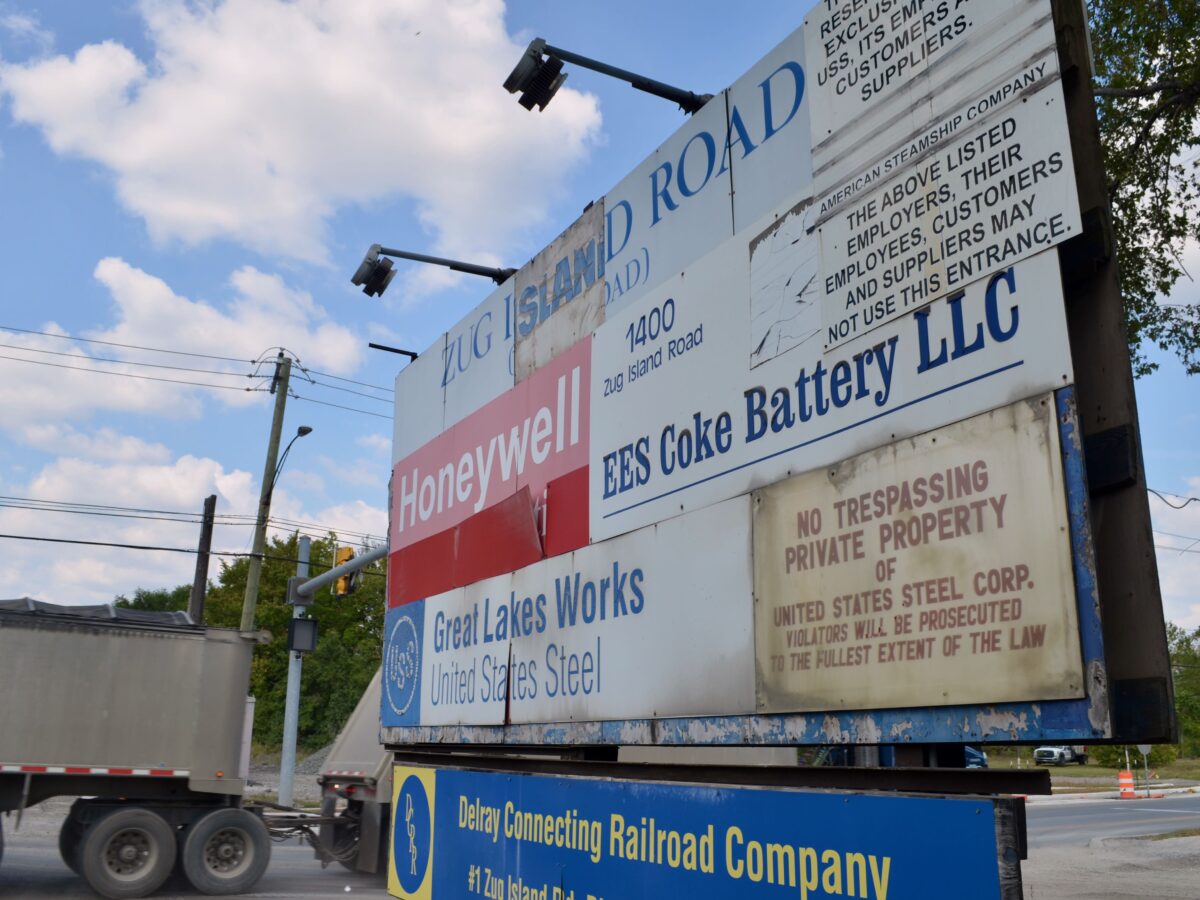
Michigan environmental news: Tlaib’s Make DTE Pay Act connects rate hikes, pollution violations
U.S. Rep. Rashida Tlaib introduces bill that would double Clean Air Act penalties for utilities seeking rate increases within two years of violations, following $100-million penalty against DTE Energy and and subsequent rate hike request.


After Zug Island pollution lawsuit, attorney urges community engagement
Annie Seaman worked on Zug Island for 40 years from 1973 to 2013. She wore all pink to a community meeting about pollution from the island, but the stories she tells about her time as a U.S. Steel Great Lakes Works employee are less than rosy. Seaman, who lives in Detroit, worked as a powerhouse…


DTE appeals $100 million federal judgment over Zug Island air pollution
DTE Energy is challenging a federal court’s $100-million judgment over sulfur dioxide pollution from its Zug Island coke facility. The utility must also fund $20 million in community air quality programs.