

Overview:
- Gov. Gretchen Whitmer's June 1 appearance at the Oracle and OpenAI data center groundbreaking in Saline Township drew widespread criticism from progressives.
- Over 70% of Americans oppose having a data center built near their home.
- Political analysts say data centers could become a decisive 2026 election issue, with Secretary of State Jocelyn Benson facing scrutiny because her husband is employed by the Saline Township project's developer.
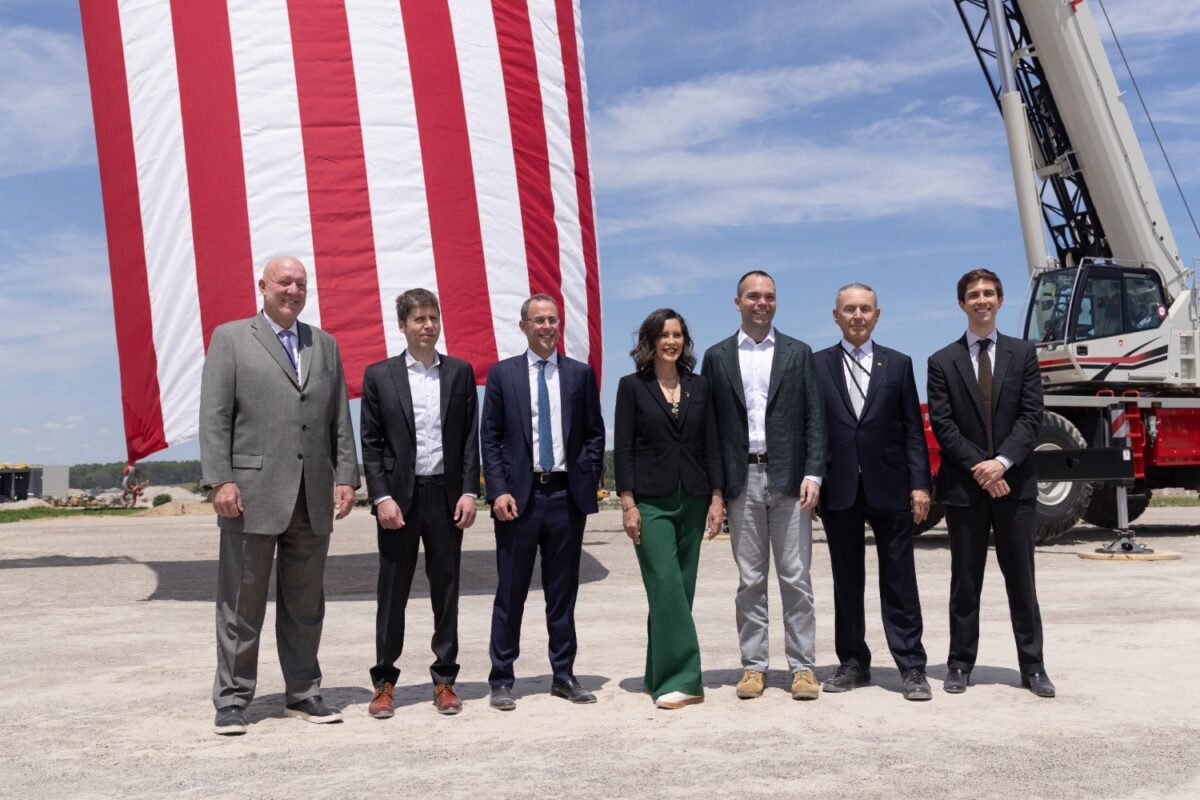
Michigan Gov. Gretchen Whitmer’s appearance at the June 1 groundbreaking for Oracle and OpenAI’s 1.4-gigawatt data center in Saline Township elicited a deluge of criticism.
🗳️ Civic Action Toolbox
Why it matters
Michigan’s data center debate comes against the backdrop of the 2026 midterm elections. Critics argue the massive energy demands of the facilities could increase utility bills and trigger provisions allowing fossil fuel plants to stay online longer, potentially undermining Michigan’s climate goals.
Who's making public decisions
Gov. Gretchen Whitmer and the Michigan Legislature hold authority over statewide data center tax incentives and regulations, while municipalities decide on zoning and development approvals.
Upcoming Meetings
Civic Actions: What You Can Do
Organizations to Follow
What to watch for next
Watch for messaging on data centers from Secretary of State Jocelyn Benson, the Democratic favorite for governor in 2026, and her Republican opponent, as well as action taken on the developments by the Michigan Legislature and Gov. Gretchen Whitmer.
Are you taking action? Let us know.
Civic resources compiled by Planet Detroit
At a board meeting in Ypsilanti Township last week, where officials oppose a University of Michigan data center project, Supervisor Brenda Stumbo criticized the developments with a picture from the Oracle and Open AI groundbreaking projected behind her.
“The way Governor Whitmer has gotten on this train has caused this to happen in the state of Michigan,” Stumbo said.
Instagram posts criticizing the governor and her participation in the Saline Township event attracted thousands of likes and shares.
Whitmer’s appearance may have attracted such a strong response because of growing opposition to data centers and the fraught nature of the Saline Township project itself.
U.S. Rep. Rashida Tlaib (D-Detroit) called Whitmer’s support for the Saline Township project “disgusting” on X, formerly Twitter.
“So disappointed in Governor Whitmer’s support of data center expansions in our state especially when so many Michiganders are opposed,” Tlaib wrote.
The Saline Township project will bring billions of dollars to the state, create jobs and energy savings for residents, and protect air, land, and water, the governor said in a press release for the groundbreaking.
The Saline Township board voted against rezoning land for the development in September, then agreed to a settlement after the township was sued by landowners and developer Related Digital.
Former Saline Township Treasurer Jennifer Zink resigned in May, citing death threats, Spectrum News reported.
Whitmer: No on moratorium, yes on regulations
Whitmer will not sign data center moratorium legislation, she told Kalamazoo’s WZZM-TV earlier this month.
She supports codifying stricter rules for data centers that were included in the Saline Township contracts, she told the news outlet.
Whitmer’s office did not respond to a request for comment on this story.
The governor issued a statement in support of data center legislation introduced by Michigan Senate Democrats last week that would add regulations around environmental impacts, energy usage, labor practices, deal transparency, and community benefits, according to Bridge Michigan.
DTE Energy’s contracts for the Oracle and OpenAI data center include a power supply agreement of roughly 19 years, with option for the customer to extend it by another 20 years. The contracts also contain a 15-year energy storage agreement.
The conditional approval of the contracts includes requirements for cost allocation and rate design proposals that ensure future large load interconnection customers pay the cost of connecting to the grid, Mike Byrne, the Michigan Public Service Commission’s chief operating officer, said in December.
‘A slap in the face’
Over 70% of people in the U.S. oppose the building of a data center near their home, according to a May poll from the climate publication Heatmap. The figure is a sharp increase from September, when respondents were evenly divided on the issue.
Polling from Progress Michigan, a progressive advocacy group, shows Michiganders are most concerned about data centers’ water use and impacts on energy costs.
Will Lawrence, a climate activist and candidate in the Democratic primary for Michigan’s 7th Congressional District, which includes Lansing and Brighton, is among those who criticized Whitmer’s appearance at the groundbreaking.
“It just looks to me like a slap in the face to the residents of Saline Township that in no uncertain terms said they didn’t want this project,” Lawrence told Planet Detroit.
Photos of Whitmer appearing alongside OpenAI CEO Sam Altman at the groundbreaking likely sent a strong message to many people who are skeptical of data centers but haven’t been following the issue closely, he said.
Lawmakers and candidates for office must address residents’ distrust, and ensure the benefits of artificial intelligence and the data center buildout are shared, Lawrence said.
“People are being asked to accept a shared sacrifice and are being told that it will result in a shared benefit for the common good,” he said. “But people don’t trust that there is going to be a common good coming out of it.”
Whitmer’s data center support destroyed presidential prospects: Political analyst
Whitmer, often viewed as a potential 2028 presidential candidate, remains popular as she nears the end of her second term in office, according to a Morning Consult survey.
Whitmer said in May she wouldn’t run for president, before backtracking hours later and saying, “Never say never.”
Political analyst and former Republican lawmaker Bill Ballenger said the backlash to the governor’s data center support, along with her appearances with President Donald Trump, likely ended any presidential aspirations the governor may have had.
“I think she wants to get as much favorable stuff for the state of Michigan out of the Trump administration as she can, and if it means that she loses favor with national Democrats, she’s willing to pay that price,” Ballenger said.
Trump recently backed a plan to bring a fighter mission to Selfridge Air National Guard Base in Macomb County. The Michigan Economic Development Corp. estimates Selfridge brings $850 million in economic impact to the state.
Data centers emerge as top 2026 election issue
Data centers could become a big issue in the general election, Ballenger said.
It’s key how Secretary of State Jocelyn Benson, the favorite for the Democratic gubernatorial nomination, reacts to the data center issue, and what position her Republican rival takes, he said.
Benson has drawn scrutiny because her husband Ryan Friedrichs is a vice president for Related Companies, the developer of the Saline Township data center.
Friedrichs said in March that he will no longer work on Related’s Michigan projects, Crain’s Detroit Business reported. Related told Michigan Advance later that month that Friedrichs received no commission on the Saline Township data center.
Benson supports guardrails for data centers, including measures to increase transparency, require public hearings, support clean energy, and protect water and land, according to her campaign website.
Ballenger said candidates with contentious data center fights in their districts may be inclined to take strong positions on the issue. Others may try to dodge a topic that has become polarized, he said.
While there is widespread community opposition to data centers, the projects are supported by many unions and business interests that make campaign donations and endorsements.
Lawrence, the Lansing congressional candidate, stressed the importance of listening to voters on this issue, and said they are often met by condescension from public officials or bullying by developers.
“What I say to voters is that your skepticism is legitimate and I share it,” he said.
The candidate criticized the use of nondisclosure agreements by data center developers and what he said is an overall lack of transparency in the development process.
“We deserve the right to determine our own futures and it’s wrong that these deals should be getting shoved down our throats.”
Michigan legislators have introduced moratorium legislation. The New York Legislature passed a one-year data center moratorium this month.
In Illinois, Gov. JB Pritzker paused new tax incentives for data centers.
Whitmer signed sales and use tax exemptions for data centers into law in early 2025.
Data centers have encountered intense opposition in many Michigan communities, with residents concerned the facilities could increase their utility bills, and bring noise and air pollution.
Environmental advocates have expressed concern the facilities’ power demands could trigger an “off ramp” provision in Michigan’s climate law, allowing fossil fuel generation to stay online if there’s a capacity shortage.
Data center developers and public officials have said the projects could bring thousands of temporary construction jobs and millions in local tax benefits.
MORE ON DATA CENTERS
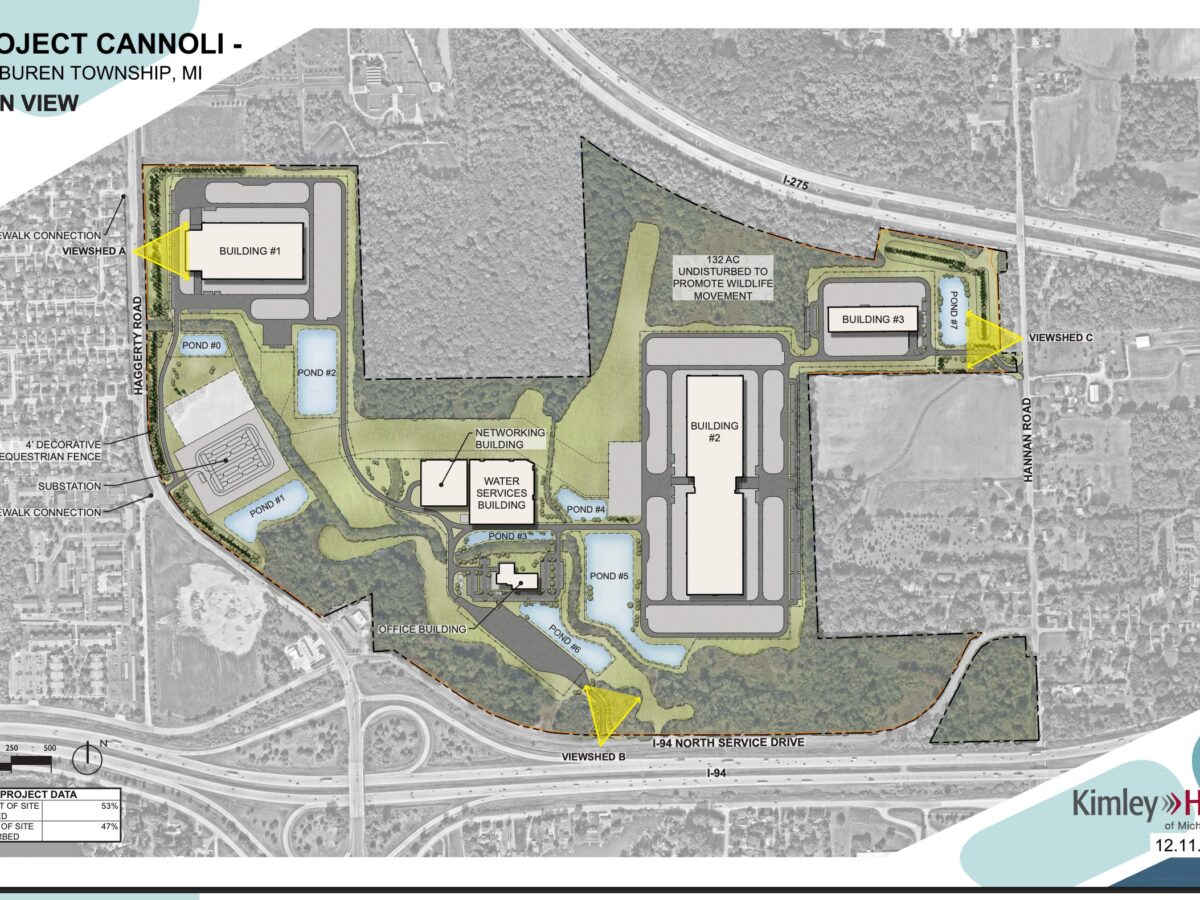
Google data center in Van Buren Township would destroy 13 acres of wetlands
Speakers at a public hearing on the wetlands permit for a 1-gigawatt Google data center question why it can’t be built on a brownfield.


Why data centers are key issue in Michigan’s Democratic Senate primary
Candidates in the closely watched Senate race need to offer specific plans for addressing data centers, environmental advocates say.
Allen Park planners reject proposed data center: ‘We’re gonna celebrate with one eye open’
Allen Park Planning Commission recommends the adoption of a six-month data center moratorium.