

Overview:
- Detroit is breathing easier after reaching historic pollution levels last week, when wildfire smoke pushed the Air Quality Index beyond the upper limit of hazardous.
- Pollution levels are expected to fall in the moderate range Tuesday, but forecasters say conditions could worsen later in the week as high pressure brings warmer, drier weather.
- Health officials urge residents with respiratory conditions to limit outdoor activities and note that wildfire smoke contains over 1,000 toxins linked to serious health problems.
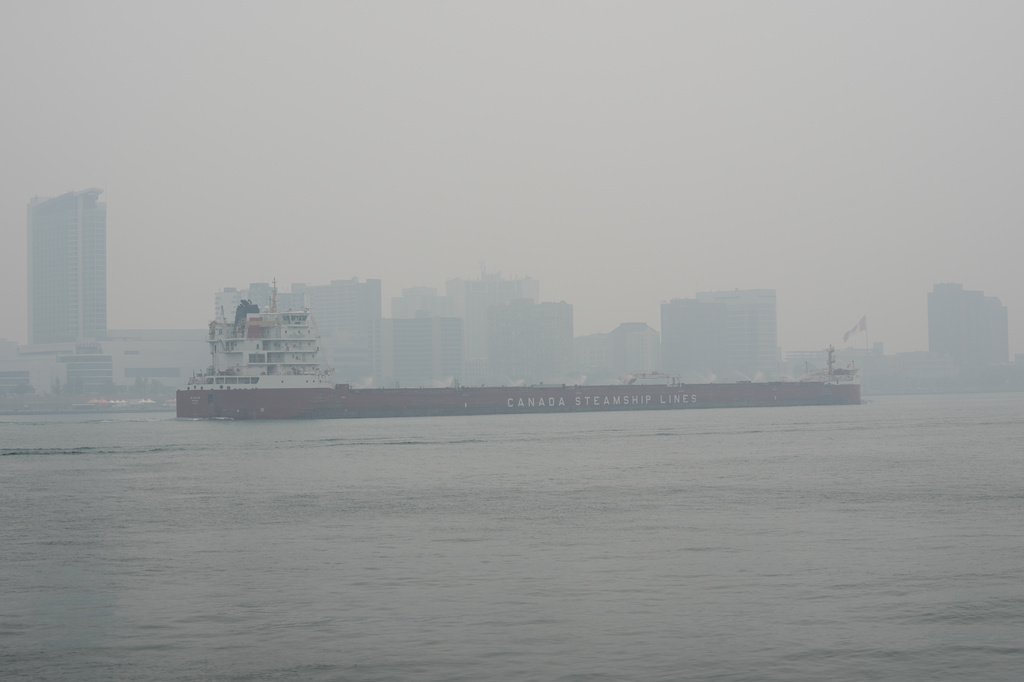
Detroit’s near-term air quality is forecast to improve as smoke from Ontario wildfires clears out of the region.
🗳️ Civic Action Toolbox
Why it matters
Wildfire smoke exposure increases risk of heart attacks, respiratory problems, premature births, and long-term health issues like cancer and dementia.
Who's making public decisions
The Michigan Department of Environment, Great Lakes, and Energy issues air quality alerts for the region.
Upcoming Meetings
Civic Actions: What You Can Do
Organizations to Follow
What to watch for next
Monitor EGLE forecasts to find out when pollution levels drop to a. moderate range and the statewide air quality alert is lifted.
Are you taking action? Let us know.
Civic resources compiled by Planet Detroit
A statewide air quality alert remains in place Monday, with pollution falling mostly in the unhealthy for sensitive groups range.
A weather system will move through the region and bring fine particulate matter, or PM2.5, into the moderate range Tuesday, Michigan Department of Environment, Great Lakes, and Energy (EGLE) meteorologist Stephanie Hengesbach said in a forecast issued Monday.
High pressure will settle over the region Wednesday and Thursday, bringing dry conditions and warming temperatures, Hengesbach said.
“Under this warmer, dry setup, there is potential for increased smoke formation, so we will issue another forecast update on Wednesday to refine expectations for smoke for the rest of the week.”
Improved air quality conditions are forecast across the Great Lakes region Tuesday and Wednesday, according to the U.S. Interagency Wildland Fire Air Quality Response Program.
Air pollution declines from historic high
Pollution levels were in the Air Quality Index (AQI) moderate (yellow) and unhealthy for sensitive groups (orange) ranges over the weekend, according to a Sunday update from Jim Haywood, senior meteorologist at the Michigan Department of Environment, Great Lakes, and Energy (EGLE).
This marked an improvement from Thursday and Friday, when Detroit’s air quality was listed as hazardous (maroon) and very unhealthy (purple) on the Environmental Protection Agency’s AirNow website.
The AQI values represented the worst pollution the city has experienced since 1999, when regulators began tracking the AQI in Detroit.
Over 1.8 million acres have burned in Ontario this year, according to the Canadian Interagency Forest Fire Centre.
Wildfires are also ablaze in northeastern Minnesota, and more than 70,000 acres have burned as of Sunday, KMSP-TV reported.
University of Michigan professor Jonathon Overpeck told The New York Times last week that as long people continue to burn fossil fuels, temperatures will rise, droughts will increase, and there will be larger, more frequent wildfires and smoke events.
Protect yourself from toxic smoke
On average, 24,100 people died each year in the lower 48 states between 2006 and 2020 because of long-term exposure to wildfire smoke, according to a study this year in the journal Science Advances.
A Stanford study projects that U.S. wildfire smoke deaths will increase with climate change, and by midcentury hit an annual cost of $244 billion in terms of the economic value the government puts on each life.
Scientists have counted at least 1,000 toxins in wildfire smoke, according to Colorado State University environmental toxicologist Luke Montrose.
Smoke leads to an increase in emergency room visits for people suffering from heart attacks and other cardiovascular and lung issues, as well as mental issues, doctors, and scientists told the Associated Press.
Smoke harms pregnant women, increasing the risk of premature births and low-weight babies who could have breathing problems the rest of their lives, doctors and studies say. In the long-term, prolonged smoke and air pollution exposure is connected to some cancers and dementia.
Dr. Patricia Paz-Arabo, chair of emergency medicine at Trinity Health Livonia, told Planet Detroit Thursday that people should seek immediate medical attention if they experience any of these symptoms:
• Persistent or worsening cough.
• Difficulty breathing or shortness of breath.
• Chest pain or tightness.
• Worsening symptoms of any chronic respiratory condition.
In Detroit, recreation centers and public libraries are open during normal business hours.
The city is distributing free face masks while supplies last during regular business hours at recreation centers. Find details at this link.
EGLE advises residents to avoid strenuous outdoor activities, especially those with heart disease and respiratory conditions like asthma.
Keep windows closed overnight to prevent smoke from getting indoors and use central air conditioning with MERV-13 or higher rated filters, if possible, the agency says.
While higher-rated air filters like MERV-13 help capture particles, the HVAC manufacturer Carrier warns they can strain systems that aren’t designed for them.
Additional resources are available in Planet Detroit’s guide for dealing with wildfire smoke.
The Associated Press contributed to this report.
MORE AIR QUALITY COVERAGE
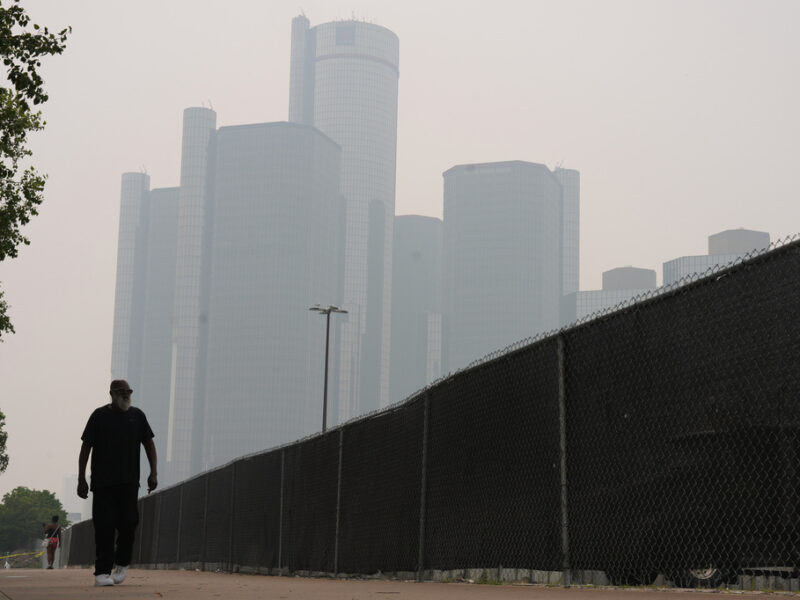
Detroit air quality to improve Saturday, but relief may be short-lived
Detroit’s air quality ranks as the worst in the world for the second day Friday as smoke from Ontario wildfires continues to pour into Michigan. Air quality is expected to improve slightly Saturday before worsening again.

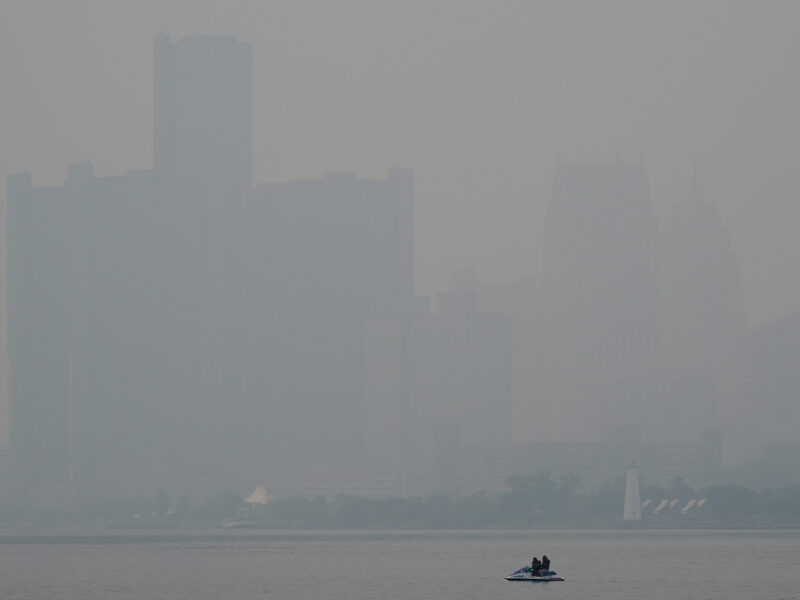
Detroit air quality is worst in city’s recorded history from Canadian wildfires
Detroit is experiencing its worst air quality since record-keeping began in 1999, with pollution levels reaching 650 on the air quality index Thursday due to thick wildfire smoke from Ontario.

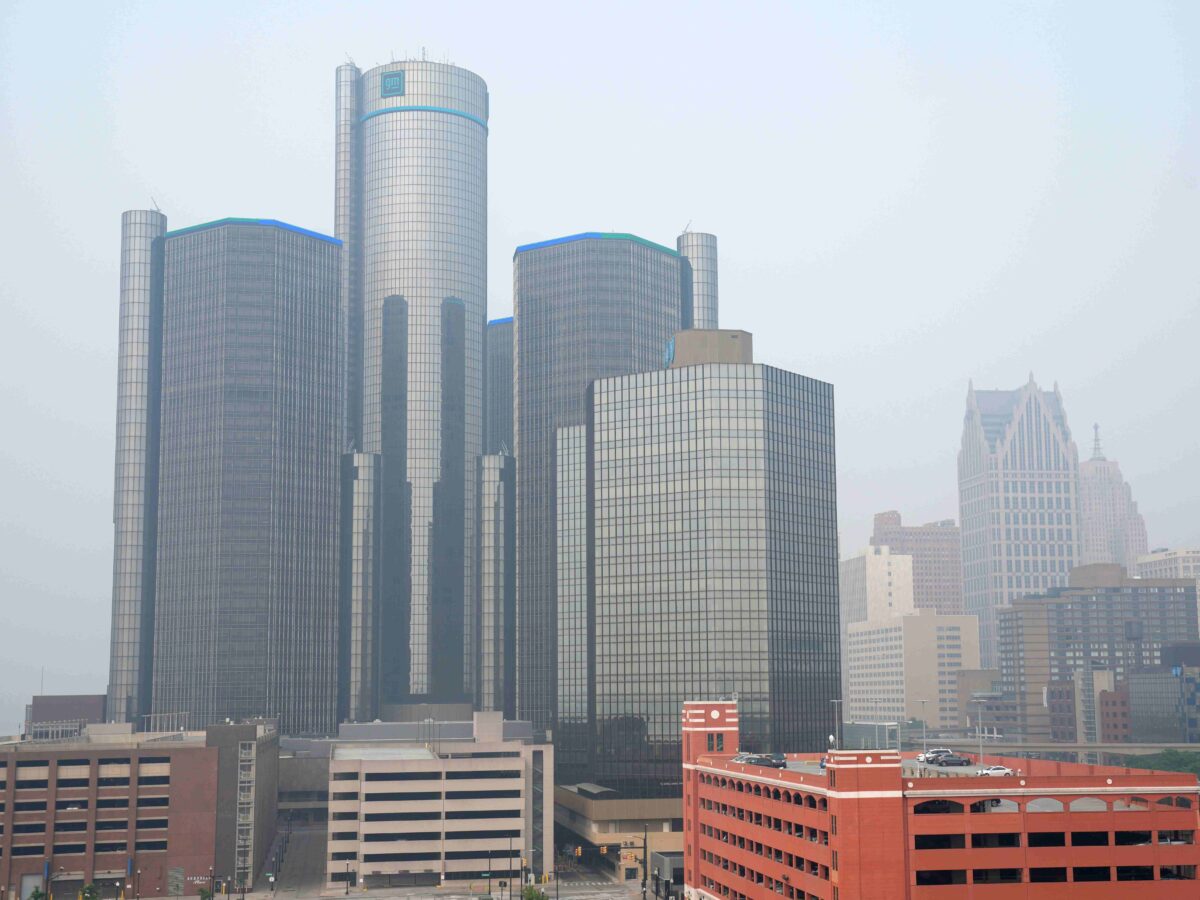
What to do when Detroit air is polluted with wildfire smoke
As wildfire smoke drifts across borders, its health impacts are felt unevenly. Vulnerable groups like those with chronic conditions, pregnant women, children, and first responders face heightened risks.