


Overview:
- The Detroit Zoo closed the Australian Outback Adventure and Goat Yard outdoor exhibits when air quality ranked as the world's worst.
- Sensitive animal species were moved to climate-controlled indoor habitats, while other animals could choose between indoor and outdoor spaces during the wildfire smoke event.
- The zoo's six-member welfare science team designs habitats with extreme weather in mind, using advanced HVAC systems to protect animals from heat, cold, and poor air quality.
As Detroit breathed the world’s worst air for two consecutive days last week, the Detroit Zoo was open for business.
The decision came with caution and modifications, and centered on the fact that the zoo’s animals have access to indoor space, and in the case of more sensitive species, climate controlled habitats, said Mike Murray, chief life sciences officer at the Detroit Zoological Society.
“Animal, staff, and guest wellbeing is always our top priority,” Murray said.
“Whether it’s the air conditions we had last week, heat, sun, or a polar vortex — we spent a great deal of time building our campus and designing these state-of-the-art habitats with that in mind.”
The air quality, which hit a jaw-dropping 724 on the Air Quality Index at one point Thursday morning, still called for some modifications.
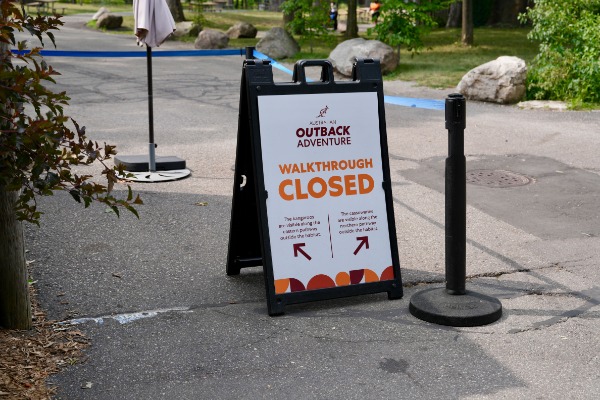
The zoo closed its Australian Outback Adventure, which features red kangaroos and cassowaries, and Goat Yard Encounter Thursday and Friday to prevent staff and guests from spending extended time outdoors.
“Animal care never stops. And we want to make sure that if we’re out there monitoring the animals, that our team is also safe,” Murray said. “And same for our guests – that they’re not in spaces longer than they need to be.”
How the Detroit Zoo manages extreme weather
Clouds of wildfire smoke are toxic to both humans and animals, research shows, and can lead to issues including respiratory stress, neurological impairment, and respiratory and cardiovascular disease.
Detroit Zoo habitats are designed with all kinds of extreme weather in mind, Murray said.
A team of six welfare scientists, part of the zoo’s Center for Zoo Animal Welfare, studies the animals’ behavior and explores how habitats can be improved.
“We get all kinds of weather here in Michigan,” Murray said. “A lot of our animals already have access to protected spaces that are climate controlled; many of them have very high tech HVAC systems.”
Jeff Sell, the zoo’s communications director, said Friday that species that are naturally more sensitive to air quality either live in climate-controlled indoor habitats or were moved to their indoor spaces.
As for the animals roaming freely between outdoor and indoor spaces, Murray said they tend to know when they should change their surroundings.
“Sometimes animals are four steps ahead of us,” he said.
“Sometimes even before it rains, we find that the animals are seeking shelter and then we realize that there’s rain coming, as an example. So it’s really just giving them the choice to be where they are the most comfortable.”
The Detroit Zoo is open 362 days out of the year. Thanksgiving, Christmas Day, and New Year’s Day are the only scheduled closures.
Sell said the zoo has closed a handful of times due to excessive cold, when the wind chill well below zero degrees, in the last three to four years.
Going forward, Murray said the zoo will navigate future extreme weather with animal wellness as a top priority, along with ensuring its team can do their job with as little exposure to the elements as possible.
“Weather has always been one of extremes in Michigan,” Murray said. “That’s our job, to be prepared for all sorts of Michigan weather, and we will continue to do just that.”
MORE AIR QUALITY COVERAGE
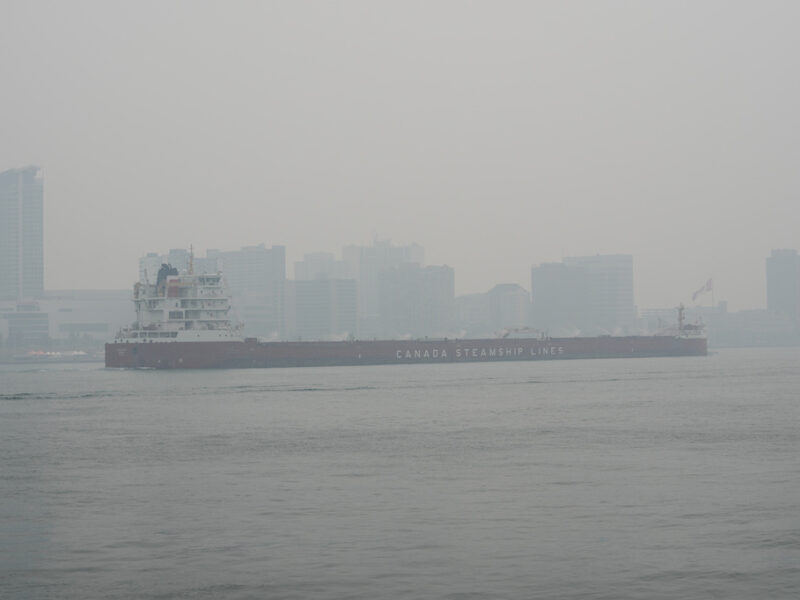
Detroit air quality improves as wildfire smoke eases: What the forecast says
Detroit’s air quality is forecast to improve Tuesday as smoke from Ontario wildfires clears, though concerns remain about potential new smoke formation later this week.

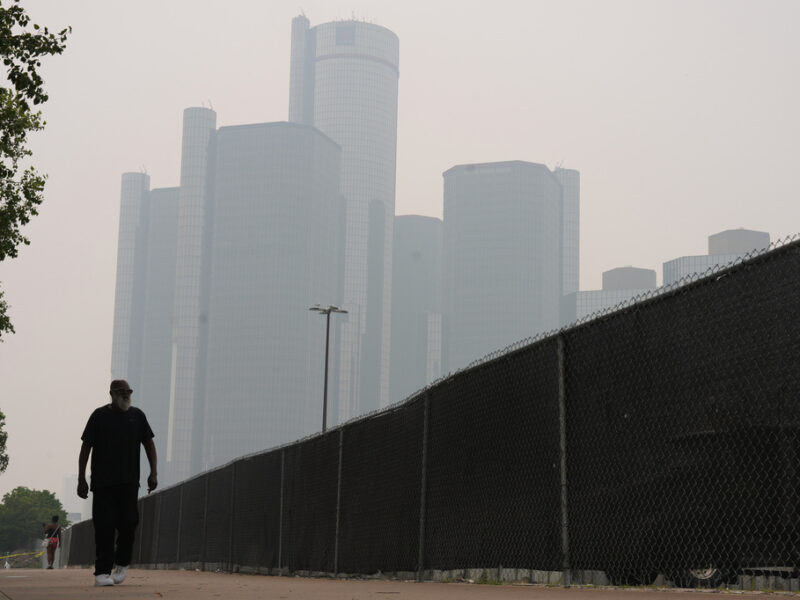
Detroit air quality to improve Saturday, but relief may be short-lived
Detroit’s air quality ranks as the worst in the world for the second day Friday as smoke from Ontario wildfires continues to pour into Michigan. Air quality is expected to improve slightly Saturday before worsening again.
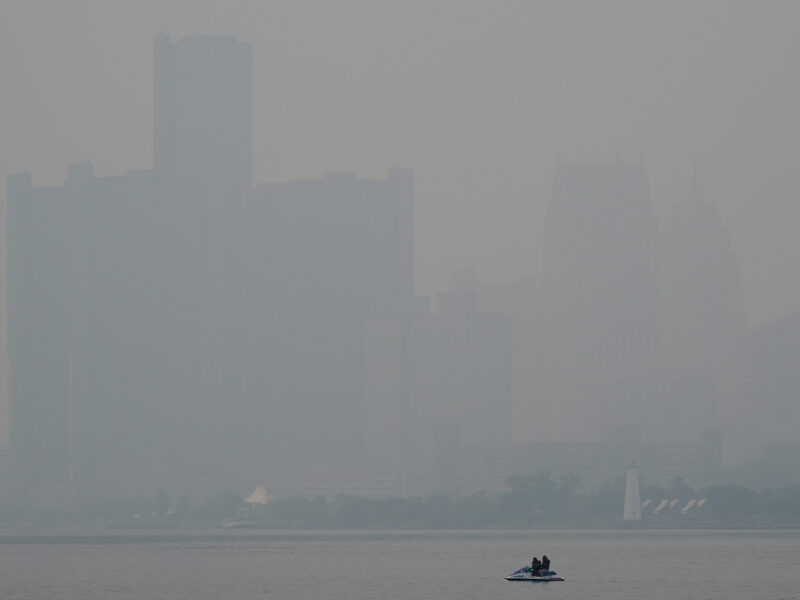
Detroit air quality is worst in city’s recorded history from Canadian wildfires
Detroit is experiencing its worst air quality since record-keeping began in 1999, with pollution levels reaching 650 on the air quality index Thursday due to thick wildfire smoke from Ontario.
