

Overview:
- Canadian wildfires like the ones that sent hazardous smoke to Detroit in July are twice as likely due to climate change, and the fire weather is no longer rare, new report says.
- Wildfire smoke contains fine particulate matter linked to 24,100 annual deaths in the U.S. from cardiopulmonary illnesses and premature mortality.
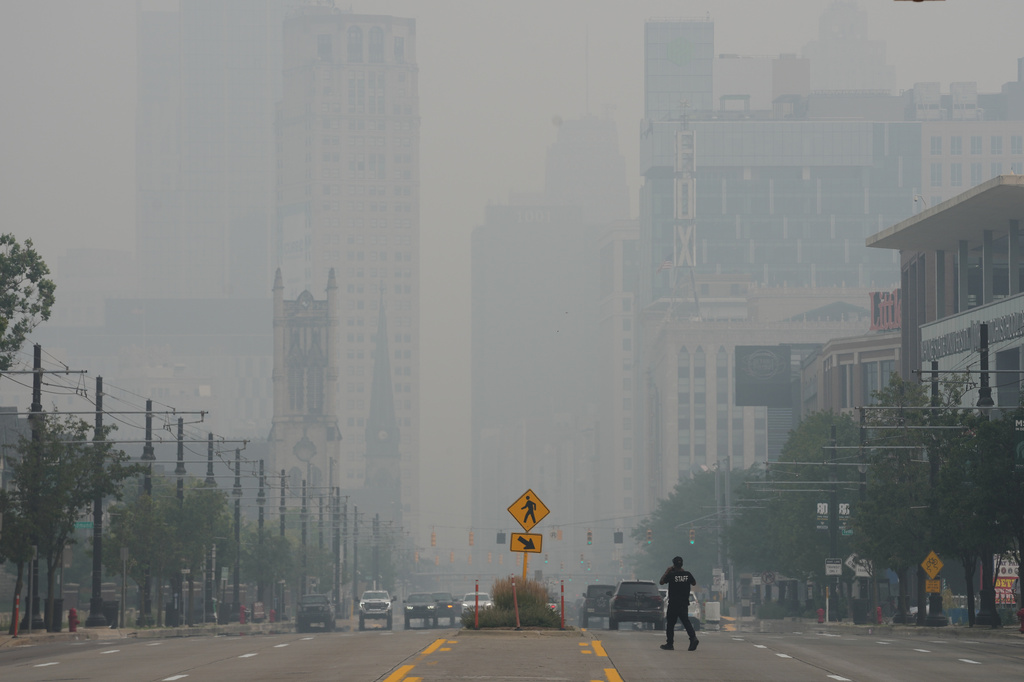
- Detroit's Air Quality Index exceeded hazardous levels on July 16, reaching the highest values since recordkeeping began in 1999.
Wildfires like those in Ontario and Canada’s Northwest Territories that sent toxic smoke to Detroit for several days in mid-July are twice as likely to occur due to human-caused climate change, according to a Thursday report.
This year’s fire weather is no longer rare, and is likely to occur every two to six years in the Northwest Territories and every six to 15 years in Ontario, according to the report from World Weather Attribution.
Climate change made fire weather like what occurred in Ontario and the Northwest Territories more likely by a factor of two or more, researchers found when combining observations with climate models.
The group is an international scientific collaboration that analyzes climate change’s influence on extreme weather events.
‘We need to rapidly move away from fossil fuels’
The scale and intensity of Canadian wildfires has fundamentally changed since 2023, and adaptation to more severe fire weather is not enough, Dr. Theodore Keeping, a research associate at Imperial College London’s Centre for Environmental Policy, said in a press statement.
“We need to rapidly move away from fossil fuels to avoid events like this becoming even more of a reality,” Keeping said.
Wildfire smoke contains large amounts of fine particulate matter, or PM2.5, which is 30 times smaller than a human hair, allowing it to lodge itself in lung cells and move into the bloodstream.
PM2.5 is associated with cardiopulmonary illnesses, premature mortality, and mental health issues.
On average, 24,100 people died each year in the lower 48 states between 2006 and 2020 because of long-term exposure to wildfire smoke, according to a study this year in the journal Science Advances.
Smoke in Detroit on July 16 exceeded the U.S. Environmental Protection Agency Air Quality Index (AQI) hazardous range, the scale’s highest category.
Detroit’s AQI values climbed higher that week than at any point since recordkeeping began in 1999.
Once-rare fires become frequent, especially in northern forests
To assess the role climate change played in recent fires, scientists working with World Weather Attribution used observations and climate models, focusing on the seven-day and 30-day periods of the most extreme fire weather in Ontario and the Northwest Territories.
The conditions were compared to what would be expected in a world without fossil fuel emissions.
Researchers found the rapid rate of burning and spread of fires tested fire prevention and response capabilities, despite the mobilization of substantial resources.
Many communities are facing repeated displacement from wildfires, and Indigenous communities are disproportionately affected, according to researchers.
“A few years ago, a fire of this magnitude would have been a rare event,” Roop Singh, head of urban and attribution portfolios at the Red Cross Red Crescent Climate Centre, said in a statement.
“It is now happening more often as a result of climate change, with communities barely having the time to recover from one wildfire before the next one hits.”
NASA research published in 2024 reached similar conclusions. Extreme wildfires became more frequent, more intense, and larger over a 21-year span, the agency said.
The largest increase in extreme fire behavior was in the temperate conifer forests of the western U.S. and the boreal forests of North America and Russia, according to NASA.
MORE AIR QUALITY NEWS
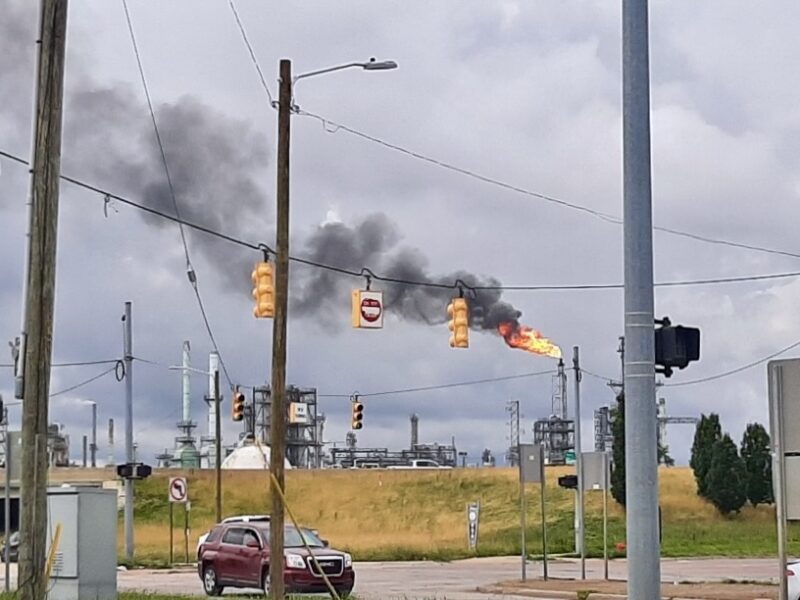
Marathon Petroleum wins air quality permit approval for Detroit refinery expansion
Michigan regulators approve air quality permits for Marathon Petroleum’s Southwest Detroit refinery expansion with added conditions.

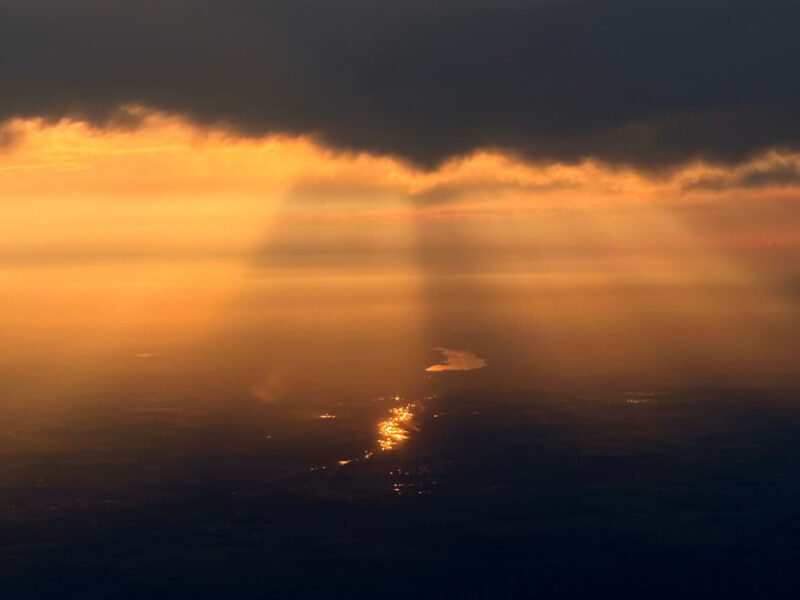
Rain brings some relief for Canadian fire crews, Detroit air quality
Air quality improves in Detroit after hazardous wildfire smoke last week, but experts warn that fires in Ontario and other Canadian provinces could send more pollution toward Michigan.


Detroit Zoo stays open through wildfire smoke: How it keeps animals, people safe
As Detroit’s air quality hit a dangerous 724 on the Air Quality Index during recent wildfire smoke, the Detroit Zoo modified operations to protect animals, staff, and visitors while staying open.