


Overview:
- The U.S. Army Corps and Great Lakes Water Authority are studying flood risk in Southeast Michigan to recommend federal investments in large-scale mitigation.
- We The People of Detroit advocates for neighborhood-scale green infrastructure, sustained public engagement, and regional coordination to protect vulnerable residents.
- "The burden of flooding in Detroit does not fall evenly," write Tiana Starks and Sara Hughes.
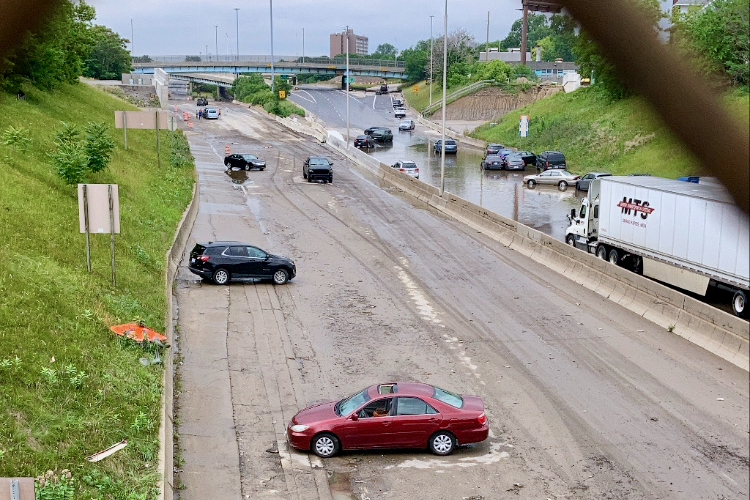
On a summer night in 2021, torrential rain overwhelmed Southeast Michigan.
Nearly 6 inches fell in 24 hours. Freeways turned into rivers. Emergency crews conducted water rescues along I-94. Across Detroit and its inner suburbs, water surged through basement drains and windows, filling homes with sewage and stormwater.
The city of Detroit received over 25,000 flooding complaints and 40,000 damage claims. FEMA awarded more than $29 million to Detroit residents in the aftermath.
That storm was not a fluke. The U.S. Army Corps of Engineers and the Great Lakes Water Authority (GLWA) are now partway through the Southeast Michigan Flood Risk Management Feasibility Study, a congressionally authorized effort to understand and address the region’s growing flooding problem.
The study examines how heavy rainfall, aging infrastructure, and shifting Great Lakes water levels interact to produce the kind of devastation Detroit experienced in 2021, and it will deliver recommendations for potential federal investment in large-scale flood mitigation.
The choices made through that process will shape how the region manages water for decades. Getting them right requires understanding not just the engineering, but the ways communities experience flooding.
The burden of flooding in Detroit does not fall evenly. Neighborhoods with older housing stock and aging combined sewer systems — pipes built in the late 19th and early 20th centuries to carry both stormwater and sewage — flood most frequently.
Many of these communities are lower-income and majority Black, reflecting decades of housing segregation and uneven public investment.
When those systems overflow, it is residents in these neighborhoods who find furnaces destroyed, floors ruined, and family keepsakes lost to contaminated water. Insurance is often unavailable. Repairs can cost thousands. For some, repeated flooding has made their homes effectively unlivable.
Climate change is intensifying the problem. The Great Lakes region has experienced some of the largest increases in heavy precipitation events in the United States over the last several decades.
Decades of disinvestment have left the infrastructure increasingly unable to cope: since the 1980s, the share of water infrastructure funding provided by the federal government has fallen drastically, leaving it largely to states and municipalities to finance a repair backlog that exceeds $625 billion nationally.
In Michigan, emergency management and austerity budgeting have forced municipalities to defer maintenance, contributing to hundreds of water main breaks each year. One catastrophic 2025 break in Southwest Detroit caused more than $12 million in recovery and repair costs.
We The People of Detroit (WPD) knows this crisis firsthand. In 2021, our newly purchased East English Village property was under 2 feet of water. The recovery ultimately cost over $300,000. Rather than simply repair and move on, we began to think bigger.
The resulting green stormwater infrastructure (GSI) project transformed the backyard into a functioning stormwater system: a rain garden, permeable paving, a trench drain, and underground storage that now protects WPD’s property and our three adjacent neighbors.
WPD is partnering with the city to scale similar projects across other flood-prone neighborhoods.
That project is a model worth the Army Corps study — and subsequent efforts — taking seriously, and it outlines what effective flood mitigation requires and how it benefits communities. Based on these experiences, we suggest the following:
Invest in community-scale infrastructure as part of the solution. Distributed GSI such as rain gardens, permeable pavement, and neighborhood retention systems can effectively reduce flood burdens and help improve water affordability by increasing permeable area and reducing stormwater fees. Existing state and federal stormwater funding programs could be increased and restructured to prioritize and fund neighborhood-scale GSI in communities with the greatest flood exposure and fewest resources.
Build on early community engagement to ensure it meaningfully shapes study outcomes. GLWA and the Army Corps have integrated public outreach through community workshops, but engagement is only valuable if it continues through the study’s analytical and decision phases, and demonstrably influences recommendations. The feasibility study should continue to be informed by community voices. It should establish clear mechanisms for how community input, particularly from frontline neighborhoods with the greatest flood exposure, will be weighted alongside engineering and economic criteria when options are evaluated and prioritized.
Fix the governance fragmentation that leaves communities behind. Stormwater in metro Detroit flows across dozens of municipal boundaries, but funding and accountability are carved up jurisdictionally. Decision makers should explore mechanisms to enable regional coordination for project planning and financing, and ensure that the communities bearing the greatest risk can access and direct infrastructure investment, regardless of local fiscal capacity.
Detroit’s 2021 floods offered an early look at what American cities will increasingly face: aging infrastructure, intensifying storms, and the communities least able to absorb the damage bearing the brunt of it. The Army Corps feasibility study is a rare opportunity to respond at scale and in a way that benefits vulnerable residents.
Planet Detroit’s Voices column includes opinion pieces from our community of partners and readers. These pieces express the voices of the authors and not necessarily those of the publication.
MORE FLOODING COVERAGE
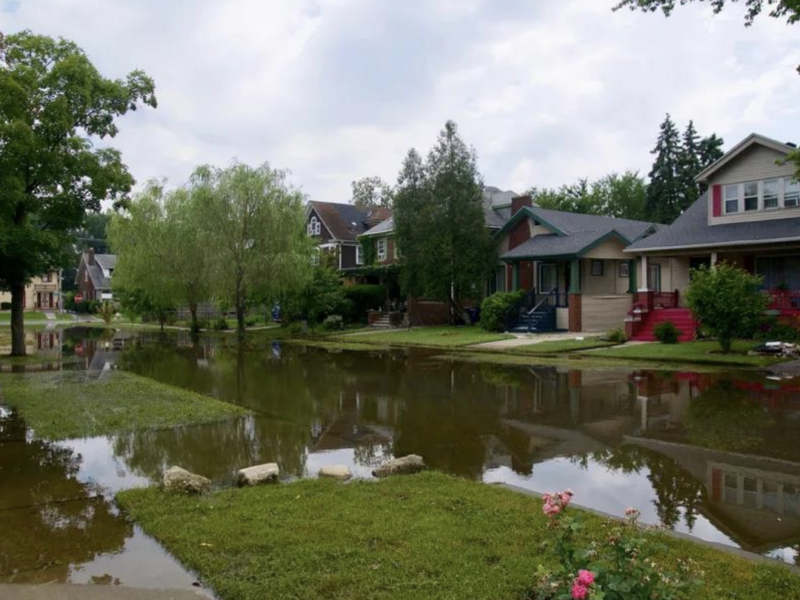
VOICES: How can Detroit residents protect their homes from flooding? New resource hub offers answers
The University of Michigan Detroit Sustainability Clinic has launched a new Flood Resilience Hub to help residents, neighborhood organizations, and community leaders access flood preparedness resources, funding opportunities, and resilience planning tools in one centralized platform.

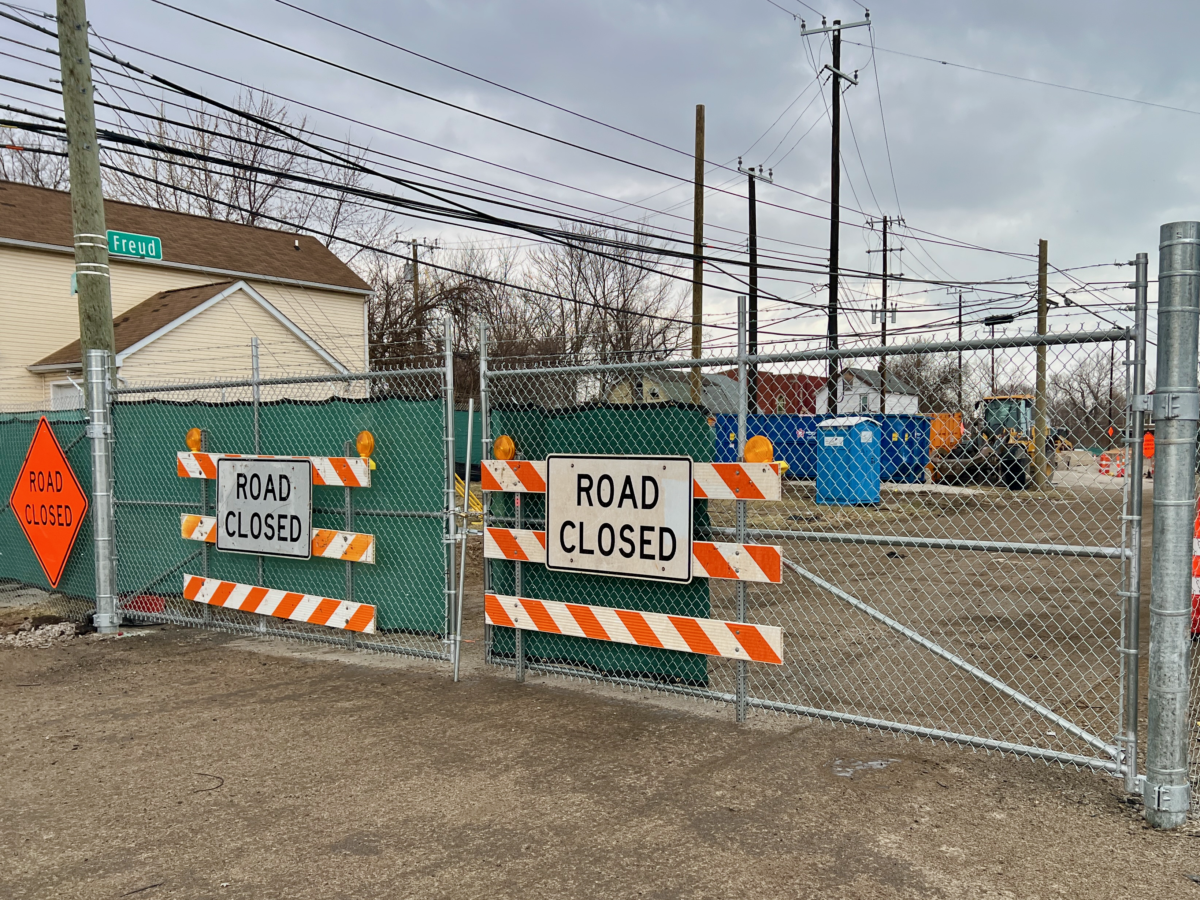
GLWA’s Jefferson Chalmers pump station wins zoning approval: ‘We don’t want another 2021’
Detroit City Council approves a hotly debated $130-million pump station project in Jefferson Chalmers, which received a flood zone designation after devastating 2021 basement backups. The project includes $5 million in community improvements, but some residents question whether it will prevent future flooding.


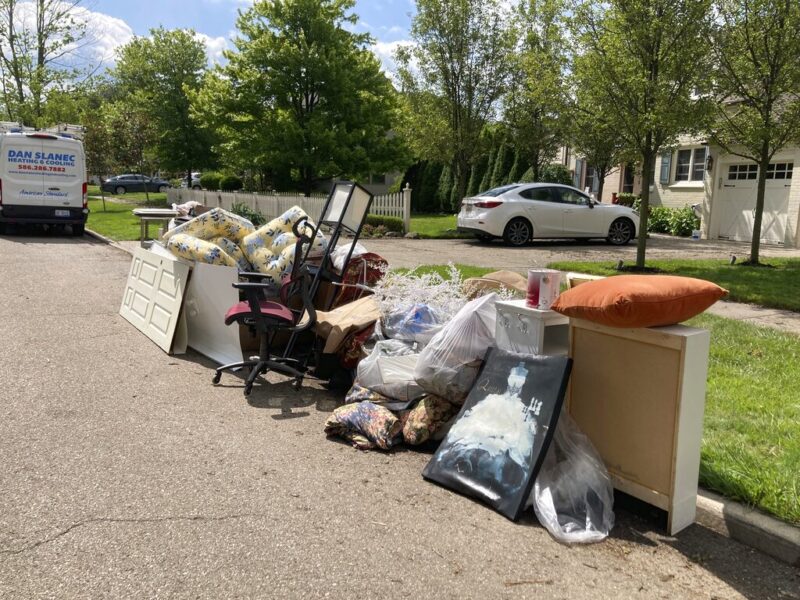
Mold takes hold in Metro Detroit basements after floods, sewage backups
Frequent heavy rainfall in Southeast Michigan over the last decade has raised awareness of indoor mold among homeowners and renters. As water recedes after a flood, mold can develop within as little as 48 hours.