

Overview:
- Raeden and Cal Realty sue Gibraltar in federal court over the city's data center moratorium, allege it unfairly singles out the application for a 100-megawatt facility on the former McLouth Steel site.
- Legal expert says moratoriums typically hold up in court, and the lawsuit may be a pressure tactic to bring Gibraltar to the negotiating table.
- Executive at data center developer Raeden told Planet Detroit in March that he dislikes litigation.
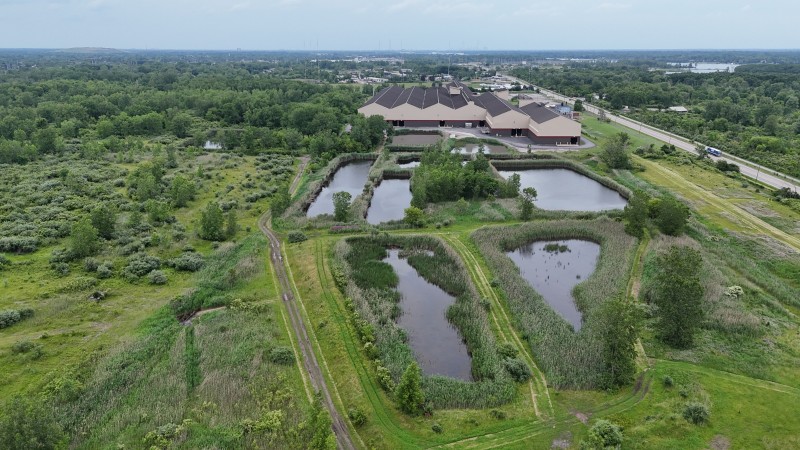
The developers of a proposed 100-megawatt data center on the former McLouth Steel property in Gibraltar are suing the city over its one-year data center moratorium.
🗳️ Civic Action Toolbox
Why it matters
A data center developer's lawsuit against Gibraltar could test the legal viability of the moratoriums on the facilities being passed in many communities.
Who's making public decisions
The Gibraltar City Council passed a data center moratorium in March following the site plan application for a data center on a former McLouth Steel property. The developer's lawsuit is pending in U.S. District Court and assigned to Judge Robert White.
Civic Actions: What You Can Do
- Attend Gibraltar City Council meetings
Gibraltar's one-year moratorium on data centers is being challenged in court. Council meetings are held at 6:30 p.m. on the second and fourth Mondays of each month in council chambers at City Hall, 29450 Munro Ave., Gibraltar, MI 48173. - Write a letter to the editor
Share your perspective with your community. - Register to vote or check your registration
Make sure your voice counts in the next election.
Organizations to Follow
What to watch for next
Watch for news from federal court on a data center developer's lawsuit against Gibraltar, such as a ruling on whether the city's moratorium can block an application submitted before the pause on data center developments took effect.
Are you taking action? Let us know.
Civic resources compiled by Planet Detroit
Raeden and Cal Realty’s lawsuit alleges Gibraltar’s moratorium unfairly singles out the data center project to avoid reviewing an application submitted before the March 9 moratorium vote.
The legal challenge tests the viability of data center moratoriums adopted by many communities looking to regulate the facilities.
Raeden has a purchase agreement with Cal Realty contingent upon approval of the data center.
The zoning of the property permits a data center, according to a city fact sheet released earlier this year.
The lawsuit was filed Aug. 17 in federal court; the city has yet to respond to the complaint.
Residents who spoke during Monday’s city council meeting expressed concern about the data center’s potential impacts on the power grid and Humbug Marsh.
The marsh is part of the Detroit River International Wildlife Refuge, and sits directly across the road from the proposed data center.
Council members made no mention of the lawsuit during Monday’s meeting. Gibraltar City Administrator Rachel Witherspoon told Planet Detroit by email that she cannot comment on ongoing litigation.
Moratoriums tend to hold up in court: Legal expert
Raeden and Cal Realty’s lawsuit may be a pressure tactic to expedite the review of the developer’s proposal, Brian Connolly, an assistant professor and real estate researcher at the University of Michigan, told Planet Detroit.
Connolly said he suspects the developer filed the suit to bring Gibraltar to the negotiating table, with the city facing the threat of potentially having to pay damages and attorneys’ fees if it loses in court.
Moratoriums passed after a new land use emerges tend to hold up in court, although municipalities can get into trouble if they extend them indefinitely, he said.
“Naturally, the local government’s not going to adopt a moratorium until there is some … threat that the use is actually coming to town,” Connolly said.
The developers may be filing the lawsuit as a “placeholder” that could be amended later if Gibraltar adopts data center regulations that are unfavorable to the project, he said.
Raeden spokesperson Kenyatta Mitchell told Planet Detroit by email the company believes the moratorium is unlawful as it applies to the company’s site plan review.
Raeden argues it should have received a review and decision under the city’s existing ordinances despite the moratorium, Mitchell said.
“The core legal question is whether an application submitted in good faith, under existing rules, receives the review process required by city ordinance when it meets all criteria.”
The legal landscape for Michigan data centers
When Planet Detroit asked Jason Green, Raeden’s co-founder and chief operating officer, in March if the company would consider suing the township to advance the project in March, he said he dislikes litigation.
“If we can’t gain community support, then there’s no reason for us to be here,” he said.
Raeden’s Mitchell said Tuesday the company remains committed to addressing community concerns, and its lawsuit targets a process issue, not the community.
If the developers win in court, Connolly said it would make municipalities second guess the use of moratoriums and change the dynamics of how communities respond to new land uses.
Michigan legal experts have previously said that communities are on solid legal footing using moratoriums, as long as they aren’t employed to indefinitely delay development.
Wixom was also sued over its data center moratorium in August. The city is considering finalizing its data center rules and ending the moratorium early, which could resolve the lawsuit, MLive reported.
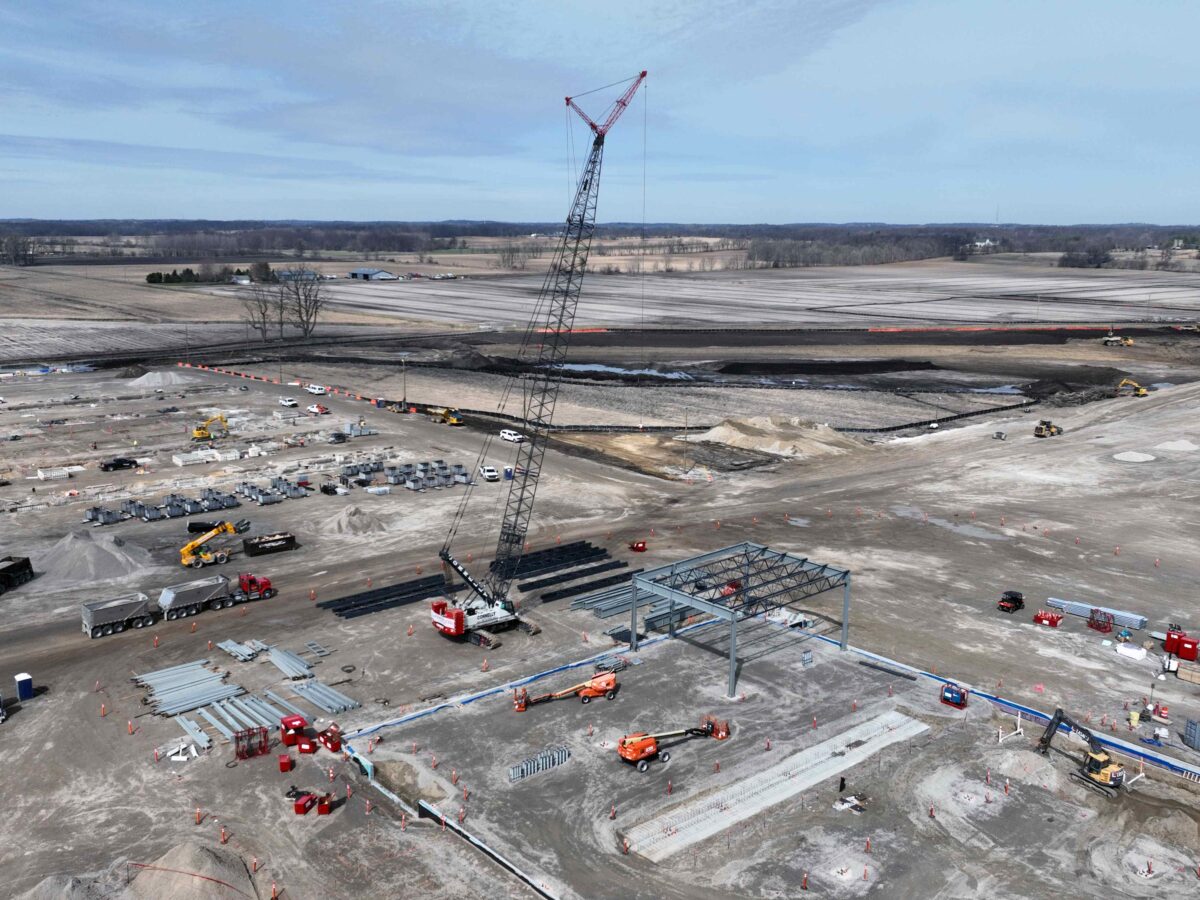
The hyperscale data center under construction in Saline Township, which triggered protests and challenges by Attorney General Dana Nessel, moved forward after the developer sued the community and the parties reached a settlement.
That lawsuit came after the Saline Township board denied rezoning for the data center project.
Data center plans include Superfund site
Unlike many Michigan data center proposals, Raeden’s Gibraltar project proposes redeveloping an industrial site and using an existing building at 27800 W. Jefferson Ave.
Cal Realty’s ultimate parent company is Ferragon Corp., according to a court filing.
Ferragon bought the former McLouth Steel property in 2015, the News-Herald reported at the time. The property is now a steel processing site.
The developer intends to locate a utility substation and some equipment on the adjacent Superfund property at 28000 W. Jefferson, which would be capped, Raeden’s Green told Planet Detroit in March.
The Gibraltar data center will generate the bulk of its own power, use a closed loop cooling system, and impact the city far less than previous industrial uses on the site, Raeden and Cal Realty say in the lawsuit.
The McLouth Steel plant that is now a Superfund site operated from the early 1950s to 1996, according to the Environmental Protection Agency.
The proposed facility is an inference data center, which powers the real-world usage of trained artificial intelligence models to generate outputs like photos or text, according to Google Cloud.
Gibraltar resident voices concern about power grid
Gibraltar resident Nick Manolias is concerned about the impact a 100 MW data center could have in a city with just under 5,000 residents that already deals with power outages.
A 100 MW facility uses as much power as about 80,000 households, Planet Detroit previously reported.
“The very brief storm that we had in early July was enough to knock out power in this city for three, four days, and I don’t believe that we have the ability to supply that much power to a data center that seemingly is unnecessary,” Manolias said at the Monday council meeting.
If the city loses the lawsuit, it should ensure the companies sign a strict contract to protect the Downriver area from the project’s impacts, he added.
MORE DATA CENTER NEWS
Lawmakers push data center accountability as Michigan prepares for midterms
Multiple bills in Michigan’s legislature would regulate or pause data center development, as communities grapple with facilities that can require over 100 megawatts of power and millions of gallons of water to operate.


‘Slap in the face’: Whitmer data center outrage indicates major election year issue
The backlash to Gov. Gretchen Whitmer’s support for a 1.4-gigawatt data center in Saline Township signals data centers may become a defining issue in Michigan’s 2026 election.


Gibraltar data center could support DTE grid with diesel generators: Developer
Around 150 people showed up for a town hall meeting on a proposed 100-megawatt Gibraltar data center Wednesday night, with many voicing concern about potential impacts to air quality, electricity bills, and the nearby Humbug Marsh. The Gibraltar City Council passed a one-year data center moratorium on Monday to give the city time to prepare…