

Overview:
- Precipitation in the Great Lakes region has increased 15% over the last 70 years.
- Southeast Michigan is grappling with "compound flooding" and the questions of infrastructure, funding, politics, and responsibility that go along with the stormwater.
- The aftermath of the June 2021 flood continues to play out in Michigan courtrooms.
Ethan Bakuli reported this story while participating in USC Annenberg’s Center for Climate Journalism and Communication and Center for Health Journalism 2025 Health and Climate Change Reporting Fellowship as well as a Solutions Journalism Network accelerator program for coverage of the health impacts of seasonal climate issues in Metro Detroit.
Metro Detroit is built over drained wetlands. The region, and its combined sewer system, face repeated strain from aging infrastructure, fluctuating river levels, heavy rainfall, and rapid development.
🗳️ Civic Action Toolbox — see how you can get involved
Why it matters
Increasingly severe rainstorms are flooding Metro Detroit, and the Great Lakes Water Authority remains in litigation over property damage that occurred during the June 2021 storm. GLWA and others say progress on infrastructure is being made — but flooding solutions are up against financial and political realities.
Who's making public decisions
The Great Lakes Water Authority controls regional sewer infrastructure decisions and is partner to the Army Corps of Engineers on a regional flooding study. The Southeast Michigan Council of Governments Flooding Task Force is developing mitigation priorities. Wayne County Circuit Court is reconsidering a class action lawsuit that could affect 7,000-10,000 properties damaged in the June 2021 flood.
Civic Actions: What You Can Do
- Attend the public hearing on GLWA's wastewater permit reissuance
The Michigan Department of Environment, Great Lakes, and Energy is holding a virtual public hearing at 5:30 p.m. Sept. 3 for the reissuance of the National Pollutant Discharge Elimination System permit for GLWA's Water Resource Recovery Facility. - Write a letter to the editor
Share your perspective with your community. - Register to vote or check your registration
Make sure your voice counts in the next election. - Attend the GLWA Board of Directors meeting
The GLWA board meets 2-6 p.m. on Sept. 26 virtually and in person at the Water Board Building, 735 Randolph, 5th Floor Board Room, Detroit, MI 48226.
Organizations to Follow
What to watch for next
The Great Lakes Water Authority is partnered with the Army Corps of Engineers on a four-year Southeast Michigan flooding study. The SEMCOG Flooding Task Force plans to release a regional flood mitigation plan by spring 2027. Court dates are scheduled in ongoing state and federal litigation over Metro Detroit property damage from the June 2021 flood.
Are you taking action? Let us know.
Civic resources compiled by Planet Detroit
A changing climate worsens the problem: It’s raining more in Southeast Michigan.
Precipitation levels across the Great Lakes region have increased by 15% over the last seven decades, according to research by Great Lakes Integrated Sciences and Assessments (GLISA), a climate adaptation partnership. GLISA developed models that forecast increasing average air temperatures and precipitation in Michigan.
Southeast Michigan’s No. 1 climate impact is flooding, said Richard Rood, a climatologist and professor emeritus at the University of Michigan who’s part of the GLISA team. It’s true in Michigan as a whole, and especially the Lower Peninsula, he said.
“It’s what we call compound flooding,” said Rood, caused by extreme precipitation, accumulation of water on the ground and surface due to nonporous infrastructure, and rising lake level effects.
How are the region’s communities and utilities coping? Not well enough, said Taylor Mayor Tim Woolley.
Frequent and heavy rainstorms are a strain on residents and city operations, he told Planet Detroit — including the mayor, whose basement received “a foot of water” in a recent flood.
“These lawsuits are coming out more and more, and these rains are getting heavier and heavier, and we’re doing everything we can,” said Woolley, who is a co-chair of the Southeast Michigan Council of Governments (SEMCOG) Flooding Task Force.
“Even though we’re investing millions of dollars every year into our infrastructure, I’m nervous every time I see a big rainfall: are people’s basements going to flood? And are we going to have to pay another settlement?”
For municipal and county officials, Woolley added, the question is: “Where do we slow this water now? Where do we put runoff?”
Warming temperatures across all four seasons contribute to a warmer atmosphere, more humid conditions, and ultimately more water vapor in the air, said Trent Frey, a meteorologist at the National Weather Service Detroit/Pontiac office.
“What’s happening is, when it rains now, it’s raining harder than it has historically,” said Frey.
“When we see our heaviest rainfall days, the amount of rain that’s falling is increasing.”
‘Meaningful progress’ on Detroit flood control since 2021: Engineer
Southeast Michigan’s infrastructure failures, from sewage overflows and pumping station failures to water main breaks, are well documented.
When 6-8 inches of rain fell across Metro Detroit in the June 25-26, 2021 storm, power failures at two pumping stations delayed the start of storm pumps, according to an audit of the Great Lakes Water Authority (GLWA)’s handling of the storm.
Had the pumping stations worked, an additional 336 million gallons of stormwater, or 26% of the total flow capacity, could have been pumped, the report said.
The federally declared disaster is estimated to have caused $139 million in property damage across the region, according to the National Centers for Environmental Information.
“There were problems, both physical problems, but also electric supply issues at two pump stations,” said Glen Daigger, the principal investigator for the audit and a University of Michigan engineering professor.
“But in that particular instance, it was the magnitude of the rainstorm that really caused the situation.”
The study attributed local flooding and basement backups to the intensity of the 100-year storm exceeding “the designed capacity of the wastewater system.” It’s a finding GLWA used as justification for denying all insurance claims related to the extreme rainfall event through Michigan’s Governmental Liability for Negligence Act.
If the 2021 storm occurred again, the region would be better prepared, with less flooding, Daigger said, citing recent upgrades to the pumping stations’ electric supply.
“There is meaningful progress. I won’t say it’s significant — that doesn’t matter to the individual homeowner if you’re flooded – but there’s meaningful progress.”
Aftermath of 2021 flood plays out in Michigan courtrooms
Homeowners and insurers filed lawsuits against GLWA and municipalities over property damage and losses in the wake of the June 2021 storm.
Ann Arbor-based attorney David Dubin represents homeowners in a lawsuit filed in Wayne County Circuit Court in October 2021 that seeks damages arising from sewer backups. The case was consolidated with eight other lawsuits against the regional water authority.
Chronic overflows have as much to do with a deteriorating system as they do with sewers exceeding capacity due to heavy rainfall, said Dubin, who alleges that GLWA and a handful of Metro Detroit cities were aware of defects in their respective sewer systems years prior to the 2021 storm, and failed to repair them.
The lawsuit cites a provision in the state’s governmental liability law for sewage system defects.
Regional and city documents from prior to the 2021 flood show recommendations for upgrades to pumping stations and the installation of new relief sewers to handle excess stormwater, according to the lawsuit.
Wayne County Circuit Judge Annette Berry ruled in favor of the municipal and regional water departments’ argument that the plaintiffs in the case could not establish a proximate defect.
Dubin and other attorneys appealed Berry’s decision. In an amended opinion issued Jan. 22, 2026, the Michigan Court of Appeals affirmed the lower court decision in part, reversed it in part, and remanded the lawsuits for further proceedings.
While Dubin did not disclose how much money the plaintiffs are seeking in the case, he said an outcome in their favor would offer relief to as many as 7,000 to 10,000 homes and businesses that suffered losses in the 2021 storm.
“The damages are significant,” he said.
An ongoing federal lawsuit similarly alleges that issues stemming from the conditions of the regional combined sewer overflow system and the pumping stations operated by GLWA could have been properly addressed prior to June 2021.
The lawsuit was filed by the insurers of 1,400 Metro Detroiters against GLWA, the Detroit Water & Sewerage Department, and the city of Detroit. It seeks a judgment against the utilities for property damages caused by the flooding and has an Aug. 24, 2027 trial date.
In both the county and federal lawsuits, GLWA and municipal officials maintain that a lack of sewer capacity for the June 2021 stormwater should not be considered a defect, and that record-setting rainfall is the root cause of both the backups and subsequent damages.
In 2022, the water authority denied 24,000 consumer claims that were filed after the storm.
GLWA cannot comment on the allegations in pending litigation, spokesperson Stephen Jones said in a statement to Planet Detroit.
The June 2021 storm was unprecedented in amount and intensity, he said, adding that basement backups and surface flooding “would have occurred even if every component of the regional system had operated ideally.”
Since then, the regional water authority has taken steps to strengthen the system’s resiliency, and to prepare for more severe wet weather, the statement said.
“GLWA remains committed to continued investment in the regional system and working collaboratively with our partners to mitigate flood risk across Southeast Michigan.”
With nearly three decades of experience litigating against Michigan cities and counties over sewage backups, Dubin said infrastructure woes trouble communities across the state, irrespective of income levels.
“The only difference is those more affluent communities have the resources to begin making the investments that are necessary, while the poorer communities, unfortunately, just don’t have those resources to address the decades of neglect that have fallen upon their infrastructure,” he told Planet Detroit.
As Michigan faces wetter, more intense storms, communities are being tested, he said — and failing.
Flooding solutions meet regional politics
The fractured jurisdiction of stormwater and wastewater infrastructure in Southeast Michigan contributes to “barriers, quite frankly, and requires increased collaboration between those various political entities,” said Daigger, the U-M engineering professor.
The neighboring suburban Detroit counties of Macomb and Oakland dispute responsibility for millions of gallons of treated and partially treated sewage discharged from local treatment facilities in the latter county into waterways.
Last April, after a rainstorm brought 2-3 inches of rain to Metro Detroit, 1.2 million gallons of raw and partially treated sewage flowed from Oakland County’s George W. Kuhn Retention Treatment Basin in Madison Heights into the Red Run Drain.
The drain is an outlet intended to carry treated waste and stormwater into the Clinton River, which flows east through Macomb County into Lake St. Clair.
After the April 2025 storm, Macomb County Public Works Commissioner Candice Miller’s office said “sanitary wipes, condoms and tampons” were found at the outfall of the Red Run Drain, where it emerges from a covered pipe just east of the county line at Dequindre Road.
The state notified the county of escalated enforcement of violations of the Natural Resources and Environmental Protection Act in a June 27, 2025 letter from EGLE to the Oakland County Water Resources Commission.
Oakland County Water Resources Commissioner Jim Nash has pushed for a “regional solution” to recurring flooding and overflow issues in the wake of “increasingly frequent large rain events.”
At the helm of Southeast Michigan’s water infrastructure is GLWA, a regional body formed in a deal toward the end of Detroit’s bankruptcy proceeding that took effect in 2016. Before GLWA, the Detroit region’s municipalities were customers of the Detroit Water and Sewerage Department.
The deal struck to form GLWA includes the authority’s agreement to lease Detroit’s water and sewer infrastructure for $50 million per year for 40 years, and acquire billions in outstanding debt from the city.
Roughly 3.8 million people across the region receive water and sewer services from GLWA.
The regional authority is at the center of public frustration when water transmission mains break.
In July, the authority announced that it would spend $81 million to improve water mains along 14 Mile Road in Oakland County after four breaks in the last seven years.
Alongside those payments, the authority recently executed a $280-million bond sale to fund future improvement projects, in addition to annual water and sewer rate hikes that face scrutiny from residents and advocates over consumer affordability.
Task force aims to release regional flooding plan by spring 2027
The Southeast Michigan Council of Governments, a regional planning body, convened a Flooding Task Force in September, composed of 80-plus engineers, emergency managers, and other local, academic, and nonprofit leaders from the region’s seven counties.
Its aim: to develop a regional plan to frame future flood mitigation priorities by spring 2027, addressing vulnerabilities across Southeast Michigan infrastructure networks, including its roads and freeways, a frequent site of flooding due to pumping station failures.
Any flooding mitigation developed for the area will incorporate green stormwater infrastructure, according to SEMCOG officials.
A recent federal grant provided to SEMCOG will fund up to 15 regional green stormwater infrastructure projects, including rain gardens, bioswales, and wetland restorations, with an aim to annually collect and divert 5 to 11 million gallons of stormwater runoff.
“We can’t rebuild all of our underground rail stormwater infrastructure … but if we can redirect some of that water to larger, nature-based solutions, it alleviates the capacity issues on the pipes at some level in the long term,” said Kelly Karll, manager of SEMCOG’s Environment & Infrastructure Group.
A concurrent, four-year flood risk study conducted by the Army Corps of Engineers and GLWA is aimed in part at surveying the region’s pipe system, Karll said.
The study will identify “pinch points where things start to back up, where it starts to bubble up out of the system and onto the roads,” she said.
Among the measures being considered in the study are the separation of Metro Detroit’s combined sewer system, reforestation, and large-scale green stormwater projects. After the study’s projected completion by the summer of 2028, both agencies will share recommendations with Congress.
In recent years, GLWA has estimated that it will cost as much as $15 billion to fully separate the region’s combined sewers, which service one-third of the 953 square miles the authority covers.
More than 260,000 flooding-related Individual Assistance claims have been filed in the study area since 2004, and about 94.8% of claims originate within GLWA’s combined sewers service area, according to FEMA data assessed and compiled by the Army Corps of Engineers.
Climate change is underlining the fact that Detroit’s infrastructure is outdated, and in need of updating and retrofitting, said Nicole Van Lier, a Loyola Marymount University professor of urban and environmental studies.
Van Lier’s recent research on Detroit’s water and wastewater infrastructure focuses on the historical and racial aspects of water affordability.
A 1999 court order assigns 83% of the region’s stormwater improvement costs to customers in Detroit, which has a greater number of lower-income residents, while suburban customers share the remaining 17%.
“This can be, in some ways, an opportunity to redesign a system that is better adaptable to a changing climate, to increased precipitation, and all the things that the Great Lakes region will be dealing with, but how those costs are assigned also needs to be completely reconfigured,” Van Lier said.
MORE FLOODING COVERAGE
Army Corps cuts funding, shortens timeline for Southeast Michigan flood study
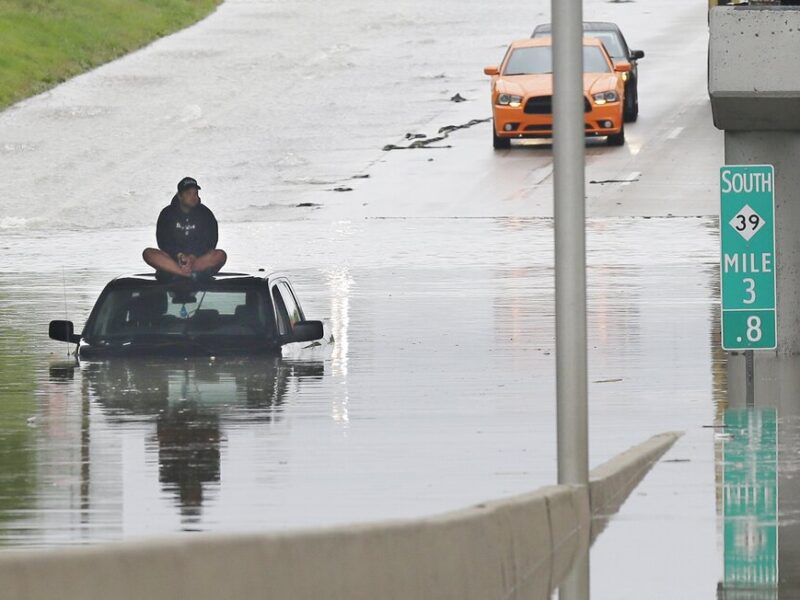
The U.S. Army Corps of Engineers has cut the funding and timeline in half for its Southeast Michigan flood study, eliminating plans for a formal Congressional report while shifting focus to urban flooding solutions.

Mold takes hold in Metro Detroit basements after floods, sewage backups
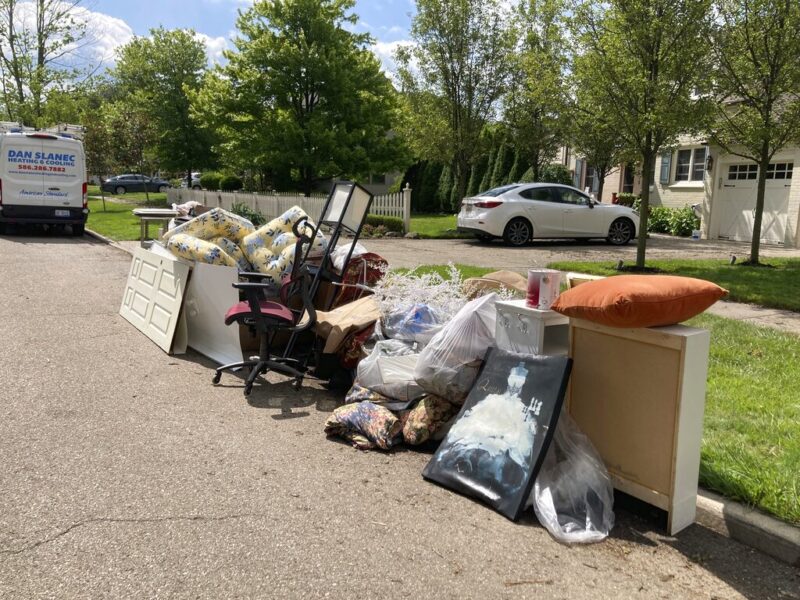
Frequent heavy rainfall in Southeast Michigan over the last decade has raised awareness of indoor mold among homeowners and renters. As water recedes after a flood, mold can develop within as little as 48 hours.

Repeat flooding is creating public health crisis in Detroit: ‘Long-term trauma’
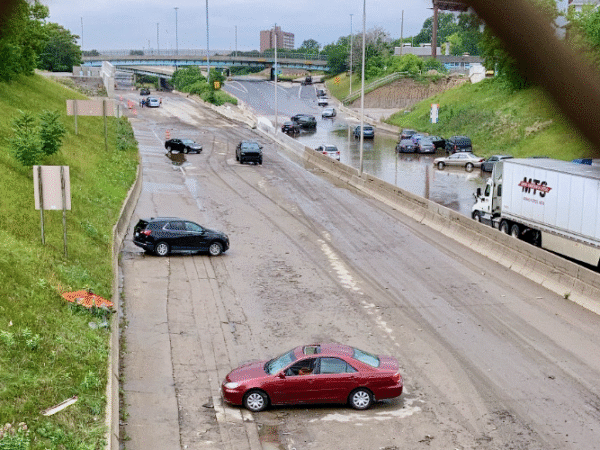
Ethan Bakuli reported this story while participating in USC Annenberg’s Center for Climate Journalism and Communication and Center for Health Journalism 2025 Health and Climate Change Reporting Fellowship as well as a Solutions Journalism Network accelerator program for coverage of the health impacts of seasonal climate issues in Metro Detroit. In the waning days of…
