

Overview:
- "I fear that Enbridge's disasters will follow me home to Michigan," Zoe Zeerip says after visiting the area of the Line 5 reroute in Wisconsin.
- Around 1.3 million gallons of natural gas liquids spilled from the Enbridge pipeline in Wisconsin Aug. 25.
- Zeerip calls for Gov. Gretchen Whitmer to use her remaining time in office to stop the Line 5 tunnel project.
As the leaves change and the days shorten, I find myself reflecting on a hot August day at the local watering hole in Mellen, Wisconsin, after a long day of pedaling.
Two days earlier, I left the trailhead in Bessemer, Michigan, for a 160-mile bikepacking adventure with friends. As we pedaled around the historical lands of the Ojibwe that hug the southern shore of Lake Superior in north Wisconsin, I took in the peaceful forest and babbling brooks that define the Bad River watershed.
Things suddenly changed when our route took us to the backside of an equipment site for the pipeline company Enbridge, exposing us to the rumbles of large equipment and “no trespassing” signs.
Enbridge’s construction project aims to reroute a section of the company’s controversial Line 5 oil pipeline, which crosses the reservation of the Bad River Band of Lake Superior Chippewa. The reroute was Enbridge’s answer to the tribe’s decision not to renew easements for the pipeline, which expired in 2013. The company has operated the pipeline in active trespass for over a decade.
Rather than shutting down the pipeline, Enbridge has chosen to crisscross every major waterway that feeds tribal lands — creating new threats to the tribe’s way of life.
Before starting my bike ride, I spent a few hours touring the 41-mile Line 5 reroute around the Bad River Band Reservation with a local water protector—while Enbridge’s security trailed us. As I drove down a private driveway, the radio program I was listening to signed off with “brought to you by Enbridge Radio.” The company, I learned, sponsors local stations to self-promote.
My first, alarming exposure to the real impacts of reroute construction was physical. As I walked, I felt the ground shaking beneath me. Enbridge contractors were conducting horizontal directional drilling approximately 60 feet underground.
The landowners whose property I stood on had fought hard and successfully denied Enbridge’s easement request. Many of their neighbors had less luck.
The pipeline project has tragically illustrated the deep damage that irresponsible actions from corporations can inflict on communities and the natural environment. The reroute is now roughly 65% complete, and the damage is irreversible. Trees have been cleared, soil disturbed, and wetlands trampled.
Eight frac-outs, or spilling of drilling fluid, have occurred since the Line 5 reroute began, the Milwaukee Journal Sentinel reported in October.
Michigan’s fight with Enbridge
On Aug. 25, Enbridge spilled around 1.3 million gallons of natural gas liquids, reportedly the largest spill in Wisconsin in at least 50 years, after an unoccupied truck struck the pipeline. Power was cut, homes were evacuated, and the entire pipeline shut down for nearly three weeks.
It’s hard to comprehend that less than five miles from where I was camping and swimming, people are now cleaning up a dangerous spill that threatened residents and responders.
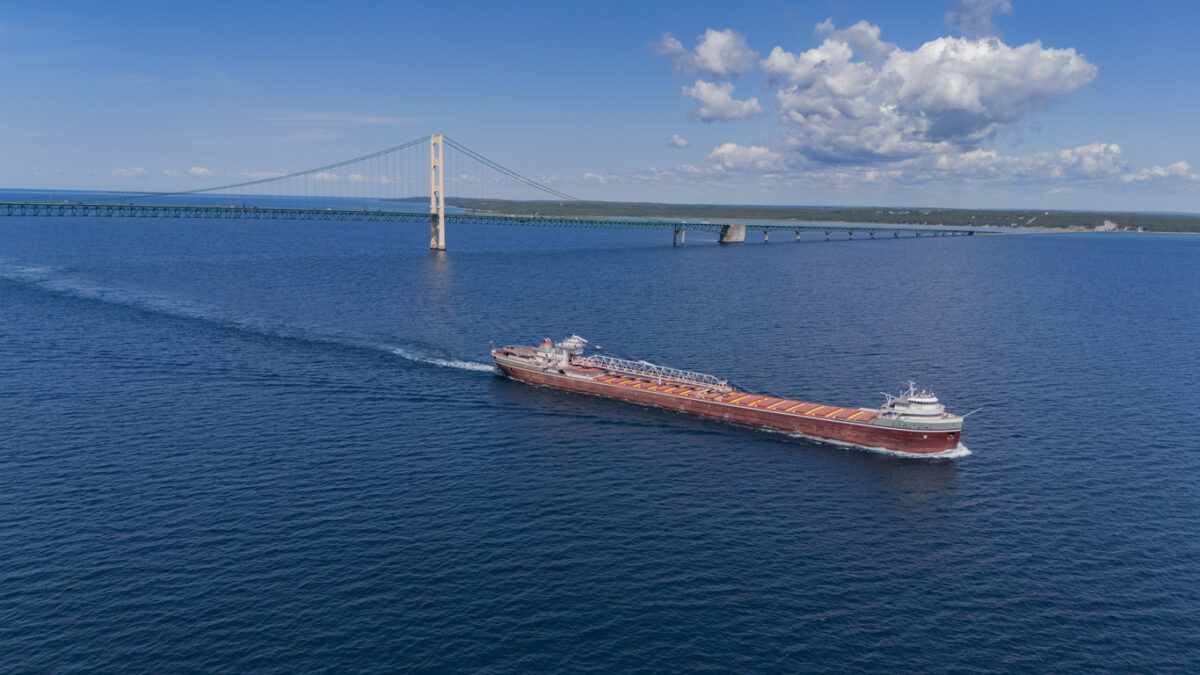
I fear that Enbridge’s disasters will follow me home to Michigan. Our state is fighting its own battle to stop Enbridge from building a risky oil tunnel beneath the Straits of Mackinac. That fight is still being waged in the courts, among state agencies, and in the court of public opinion.
Most recently, the Michigan Supreme Court ordered the Michigan Public Service Commission to reconsider Enbridge’s Line 5 tunnel permit, prompting Gov. Gretchen Whitmer to ask the Michigan Department of Environment, Great Lakes, and Energy to review the tunnel permits granted in July.
These directives, coupled with Whitmer’s demand that Enbridge remove the pipelines from the Straits lakebed, reinforce years of research showing there are viable alternatives to rerouting Enbridge’s oil, that a tunnel would be too hazardous, and that state agencies have failed to properly account for climate and environmental impacts.
Why Line 5 must shut down
What I witnessed in Wisconsin, paired with the news of the disastrous gas leak and continued aquifer breaches, should serve as a stark reminder of the dangers of Line 5 and the risks Enbridge’s construction records prove. This is the same international oil and gas company that has torn up forests and split small towns apart.
The tunnel is a false solution to a pipeline that shouldn’t exist in the first place. It’s an unprecedented, high-risk drilling operation in poor geological conditions, according to environmental lawyer Stanley “Skip” Pruss.
Enbridge and its predecessor company Lakehead are responsible for some of the largest inland oil spills in U.S. history; the recent Wisconsin spill; and the 1 million gallons that Line 5 has spilled during its lifetime. We should not entrust them with our precious Straits.
The same corporate responsibility propaganda that plays on Wisconsin radio also plays to susceptible ears in Michigan. It’s the same playbook our neighbors have been fighting for years: the same extractive logic threatening our waters, the heart of Turtle Island, and the unity of our communities.
The recent Michigan Supreme Court decision and Whitmer’s letter to Enbridge give us reason for hope, but the public pressure cannot let up.
We need Whitmer to use her remaining time to utilize her regulatory and legal levers to permanently stop the Line 5 tunnel project. She must revoke the EGLE permits granted this summer and stop any taxpayer payments to this project.
The spill and construction damage in Wisconsin don’t have to happen here. We must strengthen our resolve, commit to protect the Great Lakes for future generations, stand with tribal nations, and shut down Line 5 for good.
Planet Detroit’s Voices column includes opinion pieces from our community of partners and readers. These pieces express the voices of the authors and not necessarily those of the publication.
MORE PLANET DETROIT VOICES
Voices: Imagine Ann Arbor beats DTE. Why Prop E is worth fighting for.
An energy justice leader who has worked alongside Ann Arbor argues the City Council is giving up too soon on Prop E and public power, and why the fight is worth taking on.


VOICES: Faith, fairness, and the cost of keeping the lights on in Detroit
I have served the same Detroit community since 1990. When I first arrived, this was a neighborhood filled with working families. Many earned their living through Chrysler, Ford, General Motors, and the businesses that supported them. Block clubs were active, recreation centers were busy, and churches brought neighbors together. There was a shared belief that…


VOICES: After decades of grassroots greening, Detroit’s urban farms deserve a compliance pathway
A longtime Detroit grower argues the city needs dedicated funding and a grace period to help community farms meet regulations without losing the spaces that fed neighborhoods through crisis.
