

Overview:
- The Solar Intelligence Training Academy is a pilot program launched by the Detroit Black Community Food Sovereignty Network.
- Todd Winters of D-Town Farm says the knowledge from the class assists the farm in growing and expanding its solar infrastructure.
- "I'm captivated, because whenever I see solar, I can't unsee it," he says.
Detroit may have no bigger solar energy evangelist than Todd Winters.
A self-proclaimed “cheerleader” for the renewable energy source, the 52-year-old said his interest and awareness came as early as childhood, when he used calculators powered by solar cells.
Whether driving around Detroit in his van or working at D-Town Farm, which has a 4 kilowatt solar panel system, Winters said he doesn’t waste an opportunity to talk about solar energy. He sparks discussions with groups of students that stop by the farm, and encourages relatives to buy portable solar generators.
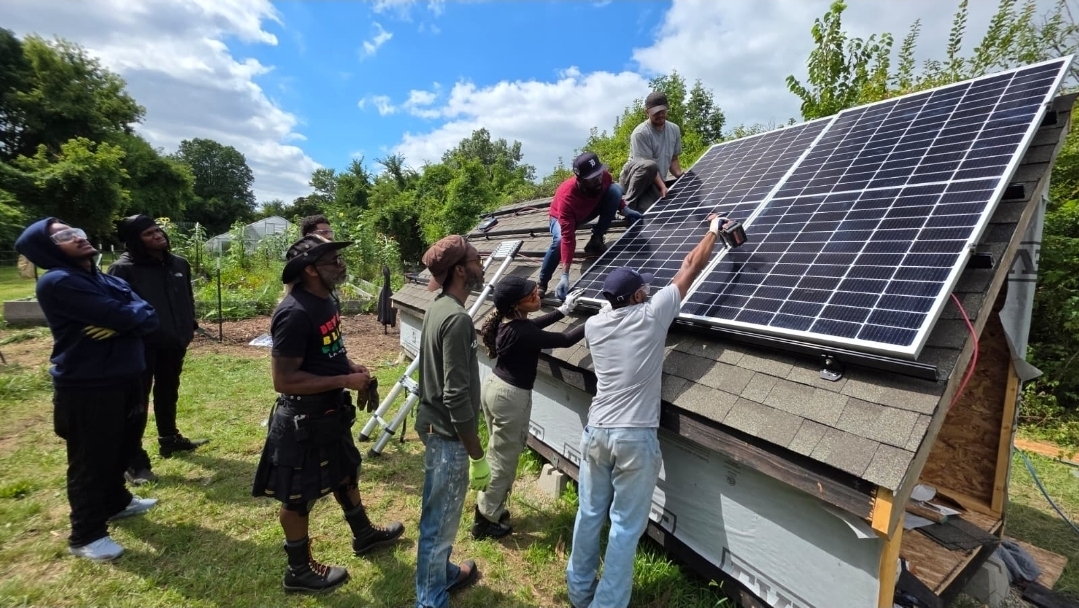
Winters’ fascination with solar energy led to his acceptance into the Solar Intelligence Training Academy, or SITA, this summer. SITA, a workforce development program, is designed to equip Detroit residents with skills in solar technology, environmental justice, and sustainable energy.
Launched in June by the Detroit Black Community Food Sovereignty Network, the pilot program offers four weeks of classroom and lab training, and enrolled 15 students out of roughly 70 applicants for its initial cohort.
“I’m captivated, because whenever I see solar, I can’t unsee it,” said Winters, who told Planet Detroit he’s tried to put solar panels on the roof of his car.
“It’s very easy to strike up a conversation with people who have great solar projects if you know what you’re looking at … It’s like when you see somebody with a nice pair of sneakers or a car.”
‘Energy leaders, not just energy consumers’
The SITA program’s origins stem from a desire to grow the number of Metro Detroit residents certified to install solar panels, increase awareness around renewable energy, and develop a cadre of instructors of color to educate the next generation of clean energy leaders, said Dr. Jeana Tall, DBCFSN’s organizational development director who oversaw the design of the program and grant funding.
“The SITA initiative grew out of our need to ‘get smart about solar’ after receiving solar products for our campus,” said Tall.
“We didn’t just want someone to give us fish, we wanted to learn how to fish ourselves. That’s the vision behind this program: building the skills and capacity for our community to be energy leaders, not just energy consumers.”
The workforce development model of providing clean energy training, Tall added, aligns with the state’s MI Healthy Climate Plan, which aims to bring Michigan to 100% carbon neutrality in the next 25 years.
Why solar training makes sense for Detroit
SITA is among a handful of solar installation training programs that have popped up in Detroit, from Green Door Initiative in Midtown to We Want Green Too, Communities Power, and Feed Your Neighborhood on the city’s east side.
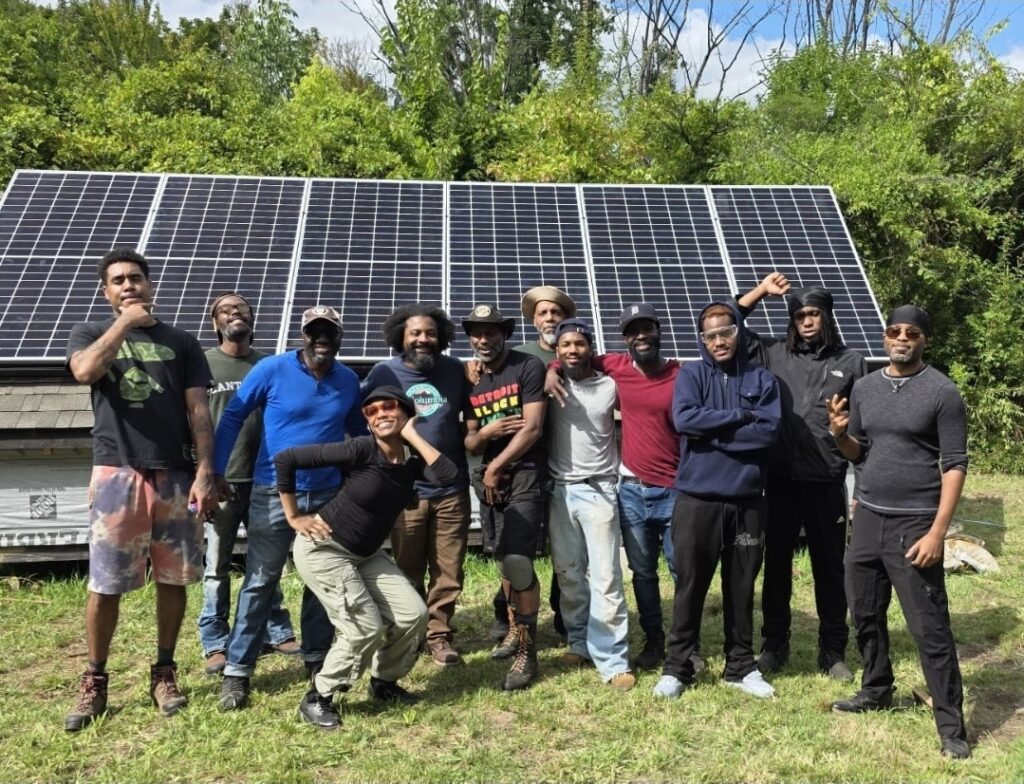
The training programs come at a time when low-income communities look to renewable energy as a means of offsetting utility costs, reducing fossil fuel emissions, and creating alternative power sources in a time of climate-related disasters.
As recently as this year, federal efforts to fund massive renewable energy projects, such as the $7 billion Solar for All program, have been terminated by the Trump administration.
“Solar energy isn’t just about panels and wires — it’s about economic independence, environmental justice, and community resilience,” Gi’Anna Cheairs, co-executive director of DBCFSN, said in a statement.
“This program is part of a larger vision where Detroit’s BIPOC communities lead the transition to clean, renewable energy.”
As a farmer at D-Town, which is operated by DBCFSN, Winters said the knowledge from the solar class assists the farm in growing and expanding the capacity of its solar infrastructure.
“If it’s cost savings as far as electricity, we definitely entertain it,” he said.
“If it extends the range of some of the projects that we have on the farm, if it removes gas generators, which are just loud and messy — I’m always recommending something in that magnitude.”
Whether it’s a power outage, such as the 2003 Northeast Blackout, or a climate-related disaster like flooding, Winters said, there are practical reasons to make the transition to clean energy.
“It makes your life easier if you can charge your phone,” he said.
“It makes your life easier if you can access light when you need it. It makes your life easier when you realize you do have a battery backup system that’ll last five to seven days because it’s totally off grid.”
Over the course of the SITA’s four-week program, trainees were educated in the foundational principles of electricity and solar energy, from the Ohm’s law formula, to how photovoltaic cells work, and the design and placement of solar panels, Winters said.
It’s not as simple as just placing solar panels on a roof, he said.
“Although you might have space on your roof, with some of the analysis and some of the applications that we learned, you might have to end up putting the solar array on the ground to take advantage of facing the sun at the right angles at the right time.”
Solar training prepares Detroiters for clean energy jobs
SITA is funded through a workforce development grant from Michigan’s Department of Environment, Great Lakes, and Energy.
Taught by an instructor from the Midwest Renewable Energy Association, SITA prepares students to take the North American Board of Certified Energy Practitioners exam and receive certification from the board.
The solar education program is an opportunity to attract both young people and Detroiters in need of upskilling into the clean energy sector, said DBCFSN’s Tall. The program has partnered with a Muskegon solar installation company to provide job opportunities for the program’s graduates, she said.
As a mainstay of Detroit’s energy efficiency landscape and a member of the Detroit People’s Food Co-Op, Gibran Washington welcomed the chance to join the program.
“I have already kind of been in and around that space, as far as utility programs and helping residents get (energy efficient) upgrades,” said Washington, founder of the startup green contractor Gneiss Life Services, and a former manager with EcoWorks.
“But I haven’t really worked on any other solar aside from having my own little smaller solar kits.”
Among the youngest program participants in this year’s cohort was 25-year-old Imari Bey Ellis, who arrived at SITA with five years of hands-on experience as a subcontractor for local home construction projects.
“I’ve been learning a good portion of everything that’s related to putting the house together, from framing, drywall, plumbing, tile work, roofing, gutter, siding, concrete,” said Bey Ellis, who added that he’s looking forward to incorporating the coursework into future projects and “seeing more solar being incorporated into our infrastructure.”
The path to clean energy in Detroit
Washington and Winters are among a handful of the DBCFSN program graduates being prepped to instruct future cohorts of solar installation trainees.
As the program grows, Washington said, it could incorporate more hands-on training.
He’s most excited about the possibility of a worker cooperative for future solar installers, creating a model “where people can kind of more collectively work together, as opposed to everybody being trained and individually trying to go out and find work.
“That might be the game changing or unique progressive thing that leads to an acceleration of interest among Black and brown people, but also being able to create new deploy projects of all sorts, whether it’s rooftops for people’s homes or ground mounts or just resiliency battery-based systems.”
D-Town Farm’s Winters said that, outside of urban farmers, plenty of groups across the city might conceive of creative ways to deploy solar projects in their neighborhood, and uses of the technology.
What they need most is the knowledge and experience to build out their vision, he said.
“You’re going to have people who need to know how to work on it, install it, or even understand it enough to even suggest it,” he said.
Any citywide solarization effort must acknowledge the poor condition of Detroit’s housing stock, Winters said, adding that the majority of homes lack a solid roof foundation to support the weight of solar panels.
As both students contemplate the future of clean energy in Detroit, they said they hope efforts like SITA draw more attention to the untapped expertise of local residents, knowledge of the region’s infrastructure challenges, as well as an ambitious vision for solar energy applications inside city limits.
Solar installation is a way to drum up excitement about trade work, Winters said.
“I grew up in an era where people had a trade, but at some point, people started preferring college degrees for their livelihood and shunning trades,” said Winters, who came to farming after stints in law and as an aviation mechanic.
“I feel like we got to take back some of these skills that we’ve lost.”
🗳️ What’s next? Tips for civic action
Why it matters
⚡ Workforce development programs are one way of upskilling residents for the clean energy sector as communities across the United States adopt grassroots and large-scale projects in order to transition from fossil fuel.
How to take civic action now
- 📅 Attend a fundraising event for DBCFSN’s Solar Intelligence Training Academy from 4-7 p.m. Dec. 7 at 21573 Grand River Ave. Donations will go toward covering exam fees, transportation, and equipment costs for graduates as they transition into solar installation jobs, according to DBCFSN’s Tall.
- 🌱 Follow local workforce development programs in solar installation, such as EcoWorks, We Want Green Too, Green Door Initiative and Communities Power.
- 📩 Email the Detroit Black Community Food Sovereignty Network at info@dbcfsn.org or call 313-345-3663.
MORE STORIES BY ETHAN BAKULI
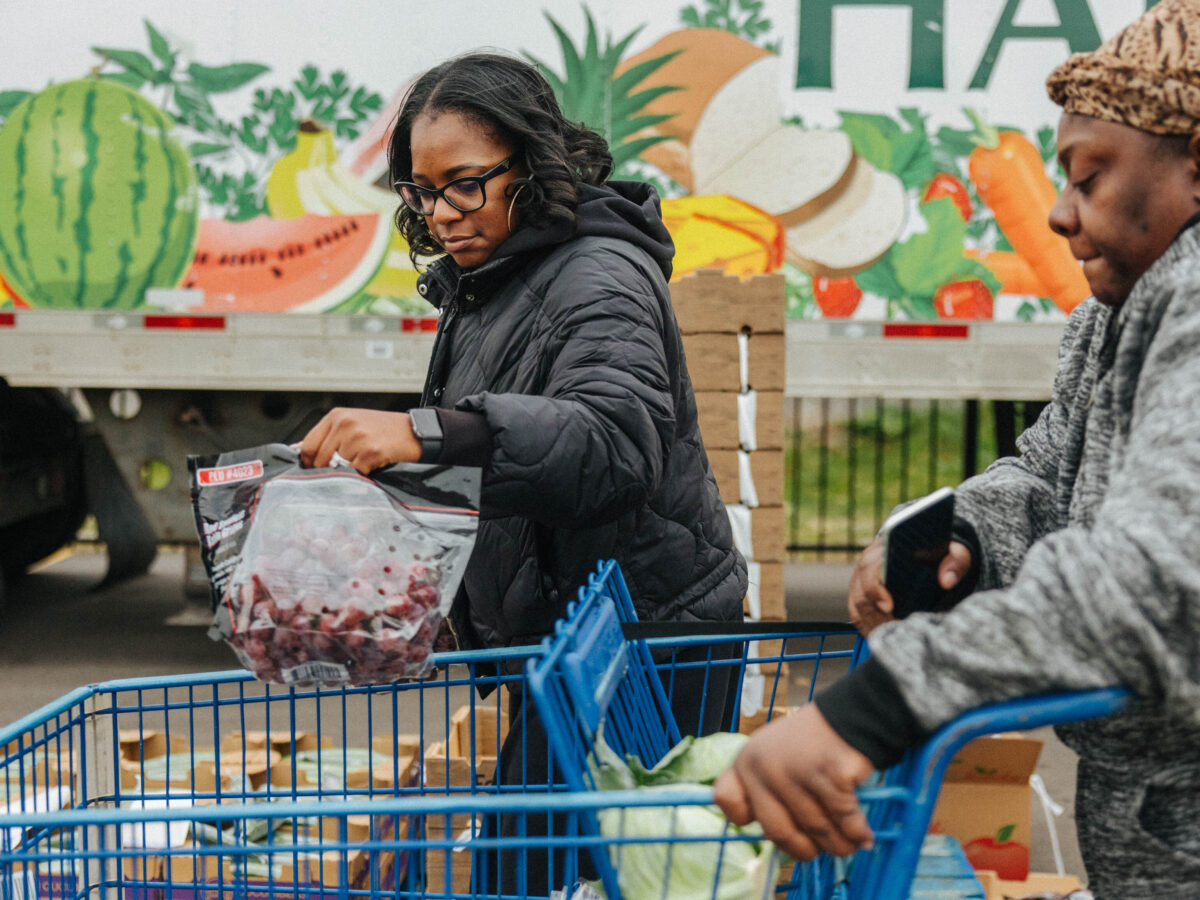
Detroit’s urban farms, food aid groups rally to close SNAP gap: ‘Perfect storm of hungry people’
Among some of the city’s urban farms, the SNAP pause spotlights a broader mission to make Detroit a food sovereign city, capable of feeding residents healthy and culturally relevant food all year long.

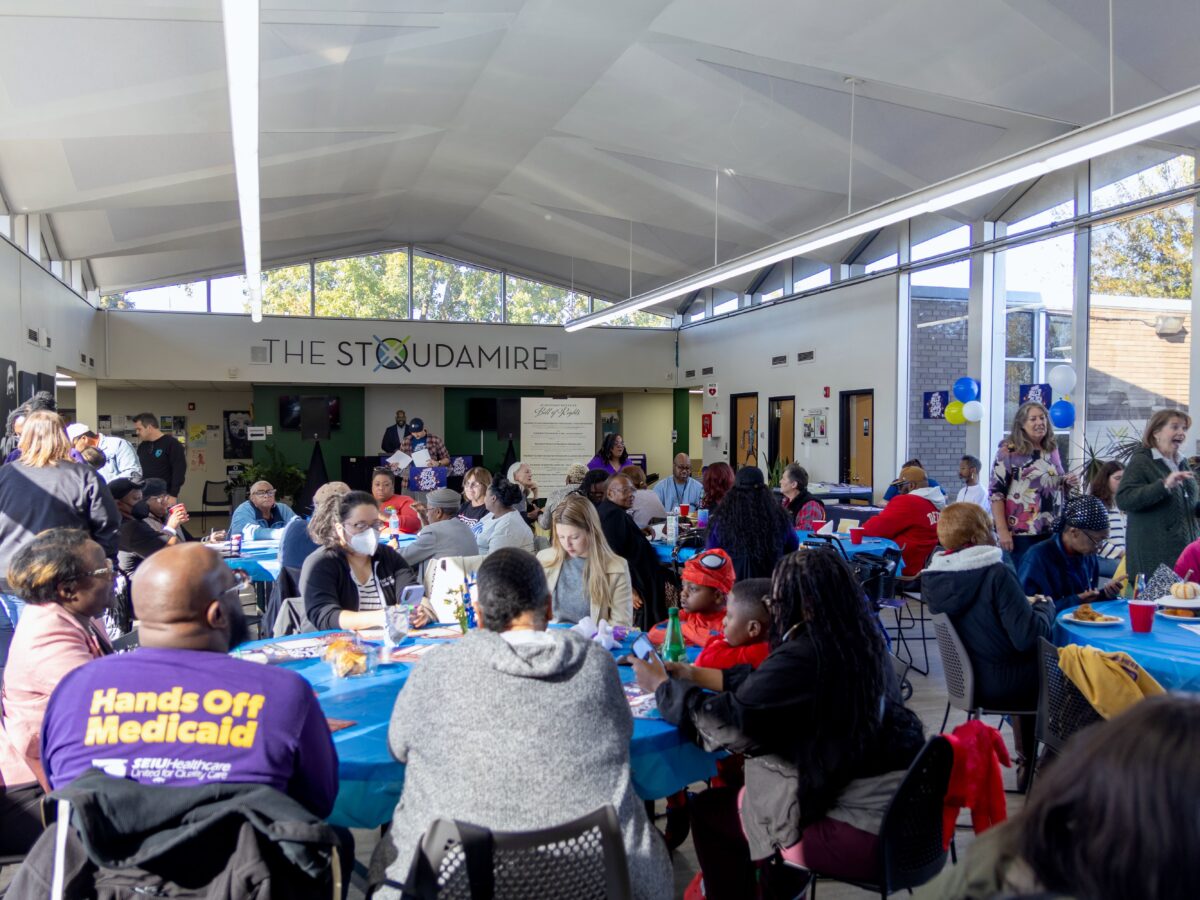
Utility shutoffs are ‘survival issue,’ says state rep who backs winter restrictions
Detroit residents, lawmakers, and activists gather on Detroit’s east side to push for bills targeting soaring utility costs, frequent outages, and service shutoffs.

City must act against Aevitas oil treatment facility that caught fire: Detroit councilmember
A Detroit firefighter was injured during the response to the June 30 fire at Aevitas Specialty Services, which took about seven hours to bring under control.
