

Overview:
- Proposed Southfield data center is smaller in scale compared to recent projects pitched in Saline Township and Howell Township, developer says.
- The city must consider new technologies and ideas, "because that's just the way the world is going," says Council President Pro Tem Coretta Houge.
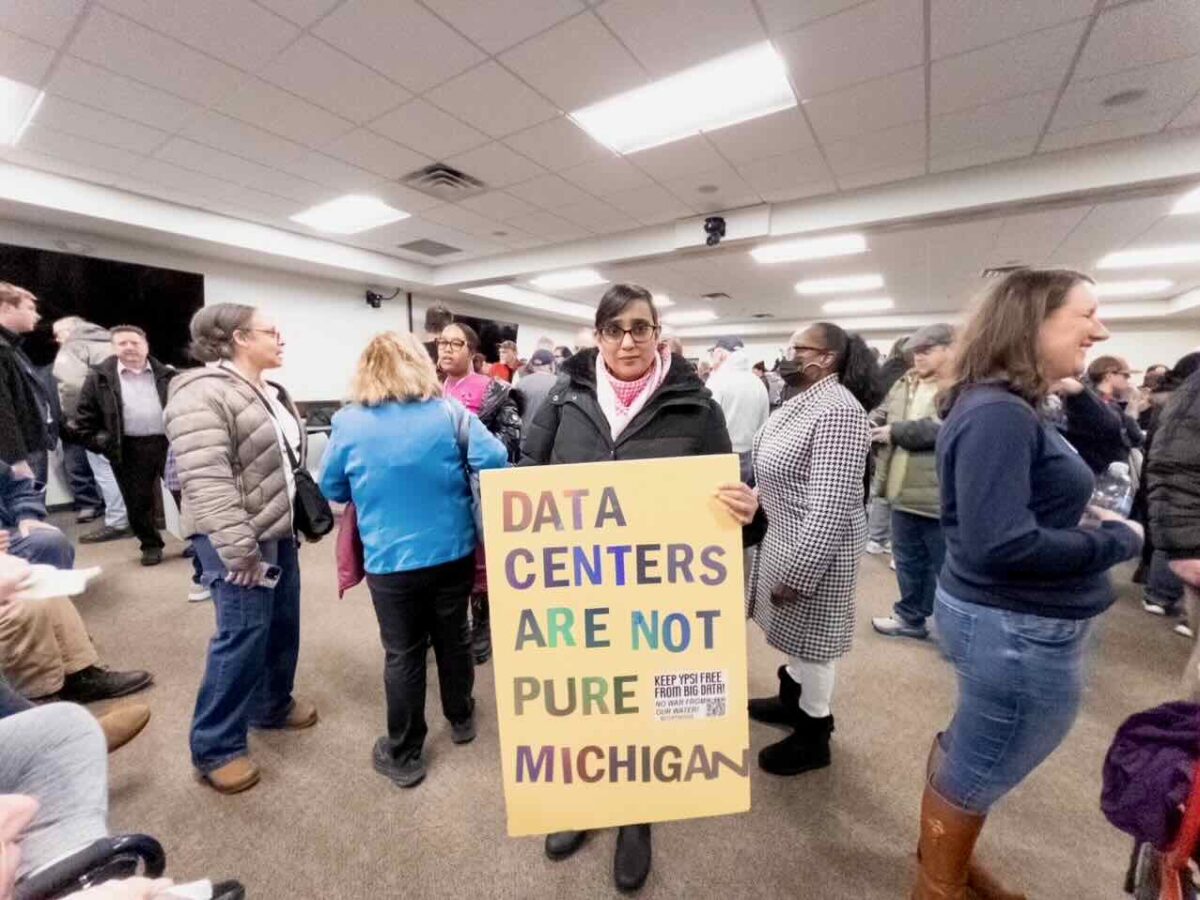
- Residents voice opposition to data center plan. "Why do we have to be the first one?" says Lysa Davis.
A 100 megawatt data center project in Southfield is moving forward after receiving City Council approval Monday.
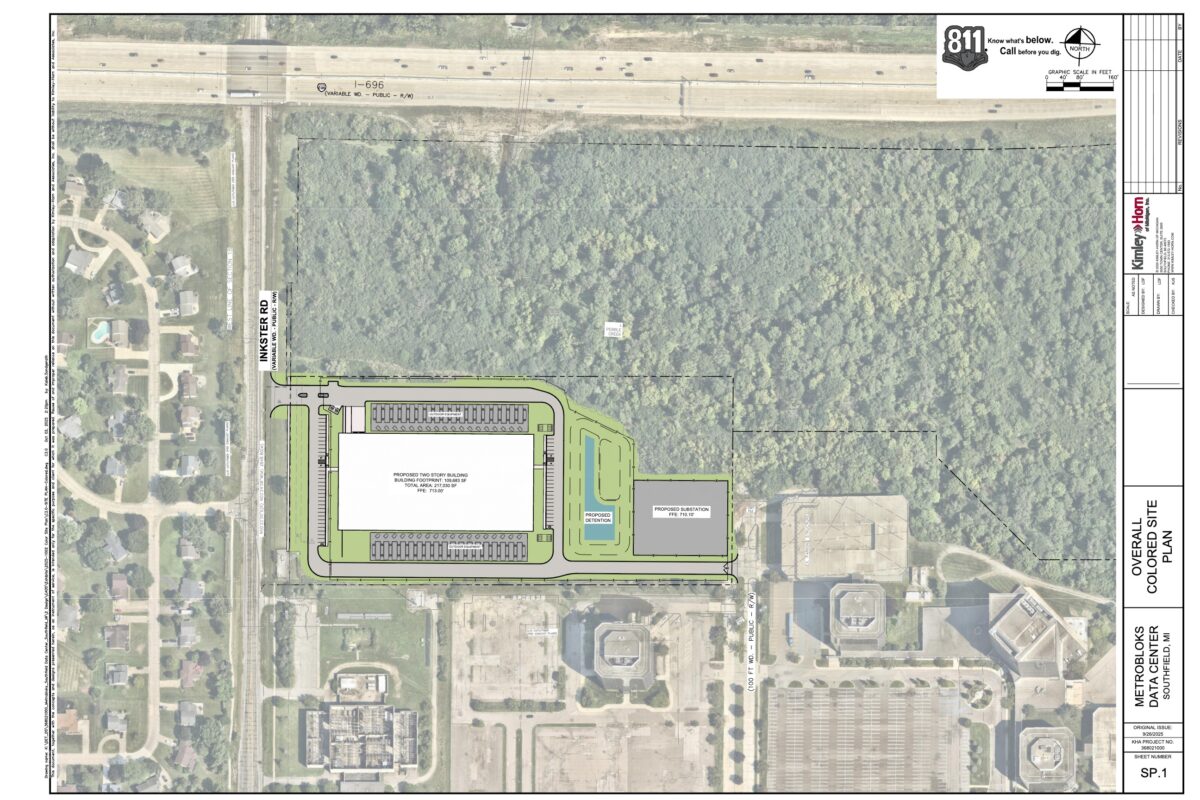
After nearly six hours of public comments and discussion, the Southfield City Council voted 5-2 Monday to approve the site plan submitted by developer Metrobloks for a 109,683-square-foot data center on 12.19 acres of vacant land in the city’s northwest corner.
The deliberation over the vote, which was met with opposition by a majority of residents who spoke, weighed city officials’ desire for economic development and tax revenue against residents’ concerns about the project’s potential environmental and health impact, as well as energy demands on regional power grids.
The proposed data center site is on the east side of Inkster Road between 11 Mile Road and Interstate 696.
The building will require 100 megawatts of power, said Jeff Mandel, chief investment officer at Metrobloks, a Los Angeles-based data center developer that brought the proposal to Southfield last month.
The project could bring 35 permanent positions at the data center; has noise and tree buffers; and a closed loop cooling system to reduce the environmental impact on nearby bodies of water, Mandel said at Monday’s meeting.
The proposed data center is smaller in scale compared to recent projects pitched in Saline Township and Howell Township, Mandel said. The Southfield data center will require “a fraction of the water use and a fraction of the electrical output,” he said.
The facility’s closed loop cooling system will use between 10 to 20 gallons of water a day, said Mandel. By minimizing its water usage, the company will be dependent on power from DTE Energy.
The utility told Metrobloks it will have to absorb the costs of upgrading infrastructure and using the regional utility, he said.
“We think it’s the right choice and compatible with the concerns of the community.”
Terrance Francis, an IT engineer from Southfield, told the council he initially supported the data center but changed his mind after talking with his colleagues in the industry.
“It takes a good steward to build up a data center like this,” said Francis, who said he has over 30 years of experience designing data centers nationally. “I’ve seen good data centers, but those companies lived and resided in those areas.”
He added: “Right now they’re saying 100 megawatts … it’s 150 megawatts that they’re really actually looking at by the time they break ground going forward.”
‘Too many unknowns’ or ‘the way the world is going’?
The project is expected to cost roughly $1.5 billion, split between two phases required to bring the data center up to 100 megawatts of power, Mandel said.
The slide deck shown at Monday’s meeting listed the development cost at $500 million; it’s unclear why there is a discrepancy between the two figures.
When asked by the council whether Metrobloks has the funding in place, the developer said: not yet.
“We have the money for the land, we have the money for the utility upgrades, and we have the money which we’ve already been spending to develop all the plans, and then when we have our tenant confirmed, then we’ll borrow against the contract and be fully capitalized,” said Mandel.
With site plan approval, the developer is held to a handful of conditions, including compliance with city ordinances and laws, minimal tree and soil removal, and remaining open to review and inspection by city officials.
The city, according to Southfield Planning Director Terry Croad, could also regulate or monitor noise and light pollution and rely on the Michigan Department of Environment, Great Lakes, and Energy for enforcement of state environmental laws.
Council President Charles Hicks, who voted no, said Metrobloks should consider a town hall to hear from and get in alignment with residents and city officials. Metrobloks’s limited track record developing data centers, Hicks said, makes him hesitant to back the project.
“I’m just concerned there’s too many unknowns, not enough fact based information to make a good decision,” said Hicks.
Council President Pro Tem Coretta Houge supports the data center. The facility could benefit the city, she said ahead of the vote, adding that data centers aren’t the only things impacting the grid.
“We have to consider new technologies, new ideas, because that’s just the way the world is going,” Houge said.
“We talked about a lot of residents who came before us who didn’t want it, but we also have been contacted by those who did want it. I got emails as well as telephone calls from people who do support this … There are some implications to the city for our lack of digital infrastructure if we don’t do it.”
Councilmember Ashanti Bland, who voted no, cited a November article in the Harvard Business Review about the public health impacts of artificial intelligence data centers.
“To grow up here and matriculate K-12 here, as are my children, I just don’t think it’s worth the risk,” said Bland. “I know our environment is already under heavy attack, but I would not want to do that in this city at this time.”
Southfield weighs economic development, data center questions
Monday’s decision comes against the backdrop of Southfield’s history as a hub for Fortune 500 companies, and the rise in retail and industrial vacancy rates in Metro Detroit.
City officials estimate Southfield has nine enterprise data centers, or facilities operated by private companies that require in-house IT infrastructure.
Southfield has supported large and small data centers and a broader technology ecosystem for decades, said council president Hicks. Data centers “allow the city to grow its tax base while preserving the quality of life for residents,” he said — although he did not vote in favor of the site plan approval.
“This type of development brings significant private investment to underutilized land, modernizes infrastructure, and reinforces the assets that continue to attract business and jobs to our community.”
City officials told the council that early estimates suggest the project could bring in about $400,000 a year in annual property tax revenue. The numbers could change depending on state policy, they said.
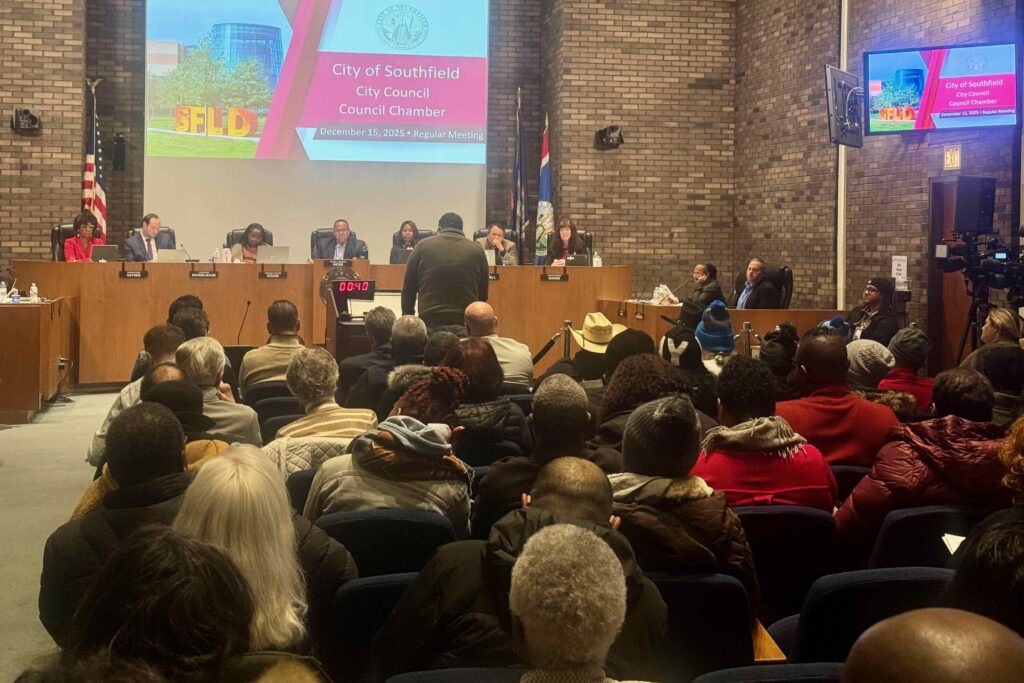
Over two dozen community members spoke Monday, advocating for a community benefits agreement, a health impact study, transparency between the developer and the city, and more investments in mixed use development, affordable housing, and green space.
“A vote tonight would be premature, given the scale and permanence of this solution,” said Jennifer Ormond, chair of the Southfield Wildlife Advisory Commission and a former biology teacher.
“This is not a reuse of existing office space. It is new construction that provides minimal employment and no community facing amenities.”
William Greene, a Southfield resident since 1997, said he’s concerned about recent DTE rate hikes. Southfield Mayor Ken Siver joined local and state leaders in 2021 in demanding DTE improve infrastructure after severe storms caused stretches of power outages.
“I don’t really see this as being a good thing to add another data center. It’s not as big as the other ones, but it’s big enough,” said Greene. “Our infrastructure is not ready for that.”
New data center developer eyes Metro Detroit, other major cities
Founded in 2024, Metrobloks says on its website that it focuses on placing data centers near major cities.
Although the company has yet to build a data center, it has decades of experience from its top executives, who previously worked for Amazon and Meta, as well as “several engineers with a combined probably 60 years of data center engineering experience,” Mandel said.
The company lists Detroit as a “strategic hub for Midwest expansion,” citing the region’s proximity to other major cities and fiber optic infrastructure, below-average power costs, and “recent state tax incentives for data center investment.”
Metrobloks is targeting Indianapolis, Phoenix and Miami for data center development, as well as international cities such as Paris.
“What we are focused on is making capacity for businesses that need new facilities and that need to be able to communicate very quickly with so called data dense environments, which is just a fancy nomenclature for urban populations,” Metrobloks’ Mandel said.
Lysa Davis, a business owner and founding member of the Southfield Community for Growth Coalition, was among the few residents who stayed through the meeting’s end.
The council’s vote is disappointing but not surprising, Davis said.
“This is a little scary,” she said. “Everybody else is fighting. Why don’t you let it go somewhere else first and see how it works? Why do we have to be the first one?”
🗳️ What’s next? Tips for civic action
Why it matters
⚡Data centers have large energy and water demands that environmental advocates argue could jeopardize Michigan water resources and state climate goals. At the same time, the developments can bring revenue for municipalities.
Who’s making civic decisions
🏛️ The Southfield City Council and Planning Commission voted in favor of the site plan for the Metrobloks data center project.
How to take civic action now
- 📅 Attend future Southfield City Council meetings to follow developments with the Metrobloks data center. Meetings take place at Southfield City Hall, 26000 Evergreen Road. The next meeting is at 6 p.m. on Jan. 5, 2026.
- 📩 Email comments and questions to Southfield City Council members.
What to watch for next
🗓️ Next steps by the Southfield City Council related to the Metrobloks data center project.
Civic impact
🌍 Following and weighing in on data center projects in your community can help shape the water and energy impacts these facilities have in the state.
⭐ Please let us know what action you took or if you have any additional questions. Please send a quick email to connect@planetdetroit.org.
MORE DATA CENTER NEWS
Saline Township resident alleges data center settlement was improper: Township attorney says ‘everybody saw them vote’
Saline Township’s settlement with data center developer Related Digital was not properly approved, a resident says in new court filing.

Data center news: Hyperscale project proposed in Oakland County by company with backing from Alphabet
A 1.8-million-square-foot hyperscale data center complex has conditional approval from the Lyon Township Planning Commission.

‘Project Cannoli’: Developer pitches 1-gigawatt data center for Van Buren Township
Van Buren Township residents express concern about pollution, ratepayer impacts from proposed 1 gigawatt data center.
