

Overview:
- A loophole exempts Michigan utilities from state climate targets when selling energy to other states, the Union of Concerned Scientists says.
- This could result in more air pollution as data centers add demand to Michigan's electric grid, according to the science advocacy group.
- The UCS projects that fossil fuel emissions by Michigan utilities will rise by 26% between 2023 and 2050 if the loophole is not closed.
Data center demand could lead to higher natural gas plant emissions in Michigan, increasing air pollution and undermining climate action, according to a nonprofit report.
As data centers come online and add demand to Michigan’s electric grid, natural gas power plants could emit more nitrogen oxide and sulfur dioxide pollution, according to a Wednesday report from the nonprofit Union of Concerned Scientists (UCS), a science advocacy organization.
State law requires a 100% clean energy portfolio by 2040 for retail electric sales — but those rules don’t apply to electricity sold to other states, the UCS report said.
The report calls for a “CO2 Reduction Policy” to address this dynamic and projects that Michigan electricity exports will increase from “minimal” levels today to more than 56 gigawatt-hours annually.
Michigan Public Service Commission spokesperson Matt Helms told Planet Detroit in an email that Michigan’s clean and renewable energy standards do not cover energy sales by utilities to other states.
Michigan’s two largest utilities have indicated they could see up to 22 gigawatts of load growth from data centers, the UCS report said. Even 5 GW of additional demand could combine with increases in electric transportation and building electrification to double the state’s energy consumption by 2050, the nonprofit said.
In addition to the energy export loophole identified in the UCS report, Michigan’s climate law contains an “off ramp” provision that allows utilities to keep fossil fuel generation online if there’s not enough capacity to meet demand.
Consumers Energy didn’t respond to a question about emissions from electricity exports.
The company will address state climate goals in its upcoming Integrated Resource Plan, which the company will file later this year, said spokesperson Matt Johnson.
DTE Energy did not answer questions about the potential impact of data centers on the utility’s emissions.
Data center-driven pollution could add to growing health risk: Nonprofit
Controlling carbon dioxide pollution would help rein in sulfur dioxide and nitrogen oxide pollution, which natural gas generation emits in direct proportion to CO2, said Lee Shaver, senior energy analyst for the UCS.
Nitrogen oxides and sulfur dioxide are precursors to fine particulate matter, or PM 2.5, a pollutant linked to cardiopulmonary problems and premature death. Nitrogen oxides also contribute to ozone formation, which can cause respiratory problems and increase the frequency of asthma attacks.
Shaver praised Michigan’s renewable energy and clean energy standards, but said the buildout of data centers could threaten the state’s clean energy progress.
“But what we see is that, due to the load growth from data centers, even with those policies, carbon emissions and health damages from air pollution are going to continue to increase,” he said.
This pollution would come as climate change and climate-driven wildfires contribute to a deterioration in U.S. air quality.
In 2025, The American Lung Association gave the Detroit area an “F” rating for air quality in its annual State of the Air Report.
Science group: Michigan Legislature should close loophole
The Union of Concerned Scientists’ proposed CO2 reduction policy would create a hard limit on how much gas Michigan utilities can burn, Shaver said. The report calls on the Michigan legislature to enact this policy.
By closing the loophole that allows Michigan utilities to burn fossil fuels for energy exports, the policy would achieve net zero emissions by 2050, the UCS said.
UCS projects that fossil fuel emissions by Michigan utilities will otherwise rise by 26% between 2023 and 2050.
UCS proposes a phased policy, with an 80% emission reductions for out-of-state sales by 2040 and a 100% reduction by 2045.
Michigan exports minimal energy to other states, the USC report said. Demand from data centers in Illinois combined with increased transmission capacity will contribute to higher exports of electricity from Michigan in the future, Shaver said.
Adopting a CO2 reduction strategy in Michigan would also help limit the damage from climate change in the state, including rising temperatures and more intense storms, the report said. Deaths related to increased heat are already on the rise, Shaver said.
“If carbon emissions continue, that trend is going to continue.”
🗳️ What’s next? Tips for civic action
Why it matters
⚡ Data center power demands could lead to more natural gas plant air pollution via a loophole that allows Michigan utilities to circumvent carbon reduction goals for energy exports. Increases in CO2 pollution will entail corresponding increases in other harmful air pollutants.
Who’s making civic decisions
🏛️ Michigan legislators could draft a bill to close the climate loophole for energy exports.
How to take civic action now
- 🌱 Follow the Union of Concerned Scientists, a science advocacy nonprofit.
- 📩 Email your state legislator, state senator and Gov. Gretchen Whitmer.
- 📣 Ask lawmakers if they support a CO2 reduction policy that would close Michigan’s loophole for energy exports.
What to watch for next
🗓️ Legislation that would address Michigan’s energy export loophole.
Civic impact
🌍 Engaging with your lawmakers on data center policy is one way you can influence the impact these facilities have in the state.
⭐Please let us know what action you took or if you have any additional questions. Please send a quick email to connect@planetdetroit.org.
MORE FROM PLANET DETROIT
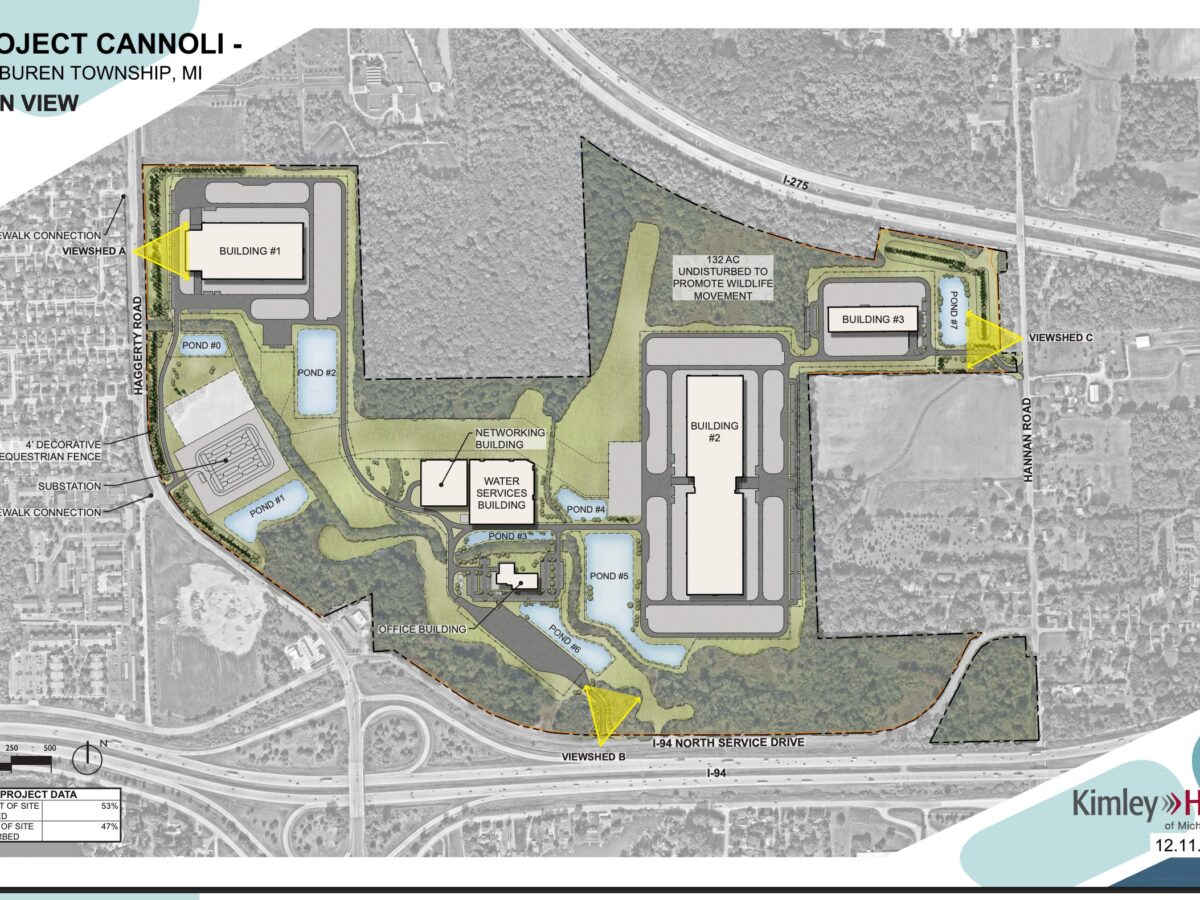
Data center protest in Van Buren Township targets 1-gigawatt proposal
Data center opponents say the 800,000-square-foot facility could strain local utilities. The data center will use as much as 3.6 million gallons of water a day, according to the township.


Lyon Township ‘may be revisiting’ data center site plan: Residents pack meeting
Approval for a 1.8-million-square-foot data center depends on review of sound study and energy audit, Lyon Township says.

Allen Park officials postpone decision on 26-megawatt data center
Allen Park residents say they’re concerned the data center could increase electric rates, while developers say the project will have minimal impacts.