

Overview:
- A bench trial over radioactive waste shipments to the Wayne Disposal landfill began Monday.
- Former Detroit and Wayne County health official Abdul El-Sayed testifies about a cancer study conducted around a Lewiston, New York site that is one source of the radioactive material.
- Wayne County Circuit Judge Kevin Cox issued a preliminary injunction halting the shipments in August.
A bench trial kicked off Monday that could determine whether shipments of Manhattan Project-era radioactive waste to a landfill in western Wayne County can resume.
U.S. Senate candidate Abdul El-Sayed testified about the health risks posed by radioactive waste, and regional factors like vehicle traffic and population density that could increase the likelihood of an accident.
El-Sayed compared radiation to cannonballs that destroy cells and increase the risk of cancer. Although the radiation from the Manhattan Project waste is relatively low, the volume coming to Michigan could still increase residents’ risk, he said.
El-Sayed is the former health director for the city of Detroit and Wayne County.
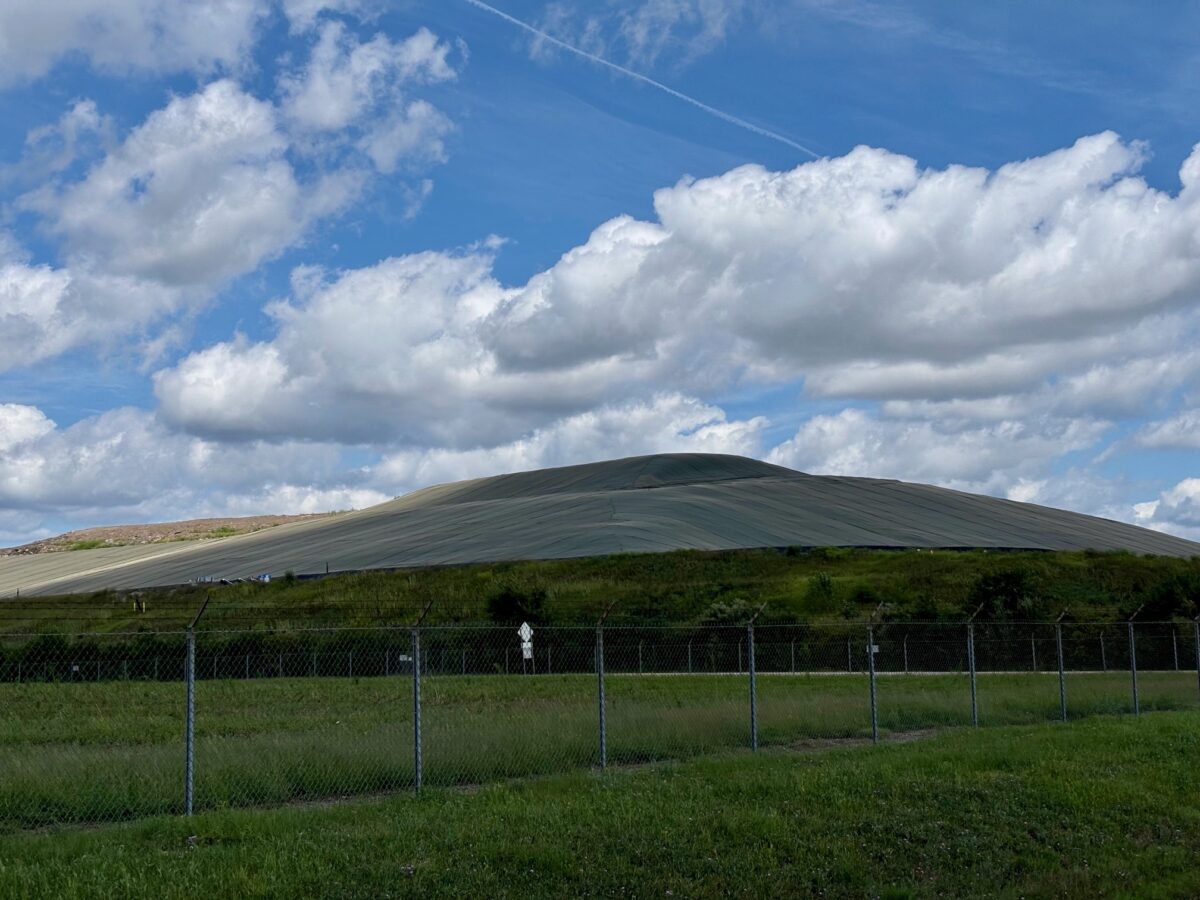
The legal battle over the shipments began in 2024 with the news that the U.S. Army Corps of Engineers planned to send elevated radiation waste from the Niagara Falls Storage Site in Lewiston, New York to Wayne Disposal Inc. in Van Buren Township. The hazardous waste facility is owned by Republic Services.
Belleville, Van Buren Township, Canton Township, Romulus, and the Van Buren Township fire chief filed a lawsuit in September 2024 to stop the shipments, and Wayne County intervened in the case.
Wayne County Circuit Judge Kevin Cox issued an injunction Aug. 6 to suspend shipments of elevated radiation waste from sites managed by the U.S. Army Corps of Engineers to Wayne Disposal.
“Runoff rainwater and/or contaminated surface water from the WDI Facility, if not fully contained and treated on site, would flow into one or more of the county drains and/or could drain into nearby Belleville Lake, the Huron River, and Lake Erie,” Cox said in the August order.
On Thursday, the Michigan Department of Environment, Great Lakes, and Energy (EGLE) approved a 24%, 5.4-million-cubic-yard expansion of the facility despite vocal pushback from residents and lawmakers.
Radioactive waste poses ‘unreasonable risk’ to residents: Attorney
Wayne Disposal operates without common sense limitations and exposes the public to unreasonable risks, Brandon Grysko, an attorney who represents the Wayne County communities that filed suit, said in his opening statement.
“Anybody being honest should say that this is unreasonable activity that unreasonably burdens the public,” he said. “The defendant is seeking to place this burden on a public that is not otherwise benefitting.”
Scott Watson, an attorney for Wayne Disposal, said the plaintiffs’ allegations are based on fear, speculation, and unsubstantiated risk.
To prevail, the plaintiffs would need to provide concrete evidence that the licensed disposal of the radioactive waste at the landfill will cause actual harm to human health or the environment, Watson said.
El-Sayed, who served as health director for Detroit and Wayne County, testified Monday that some communities have a foundational sensitivity to environmental threats on account of factors like poor access to health care and healthy food, the type of jobs they work, and the quality of education they receive.

El-Sayed stressed the risks radioactive material could pose in a densely populated area with a vulnerable population in response to questions from Michael Caldwell, attorney representing Wayne County.
According to MiEJScreen, EGLE’s environmental justice screening tool, the Census Tract where Wayne Disposal is located is in the 83rd percentile, while the tract to the south of the facility is in the 72nd percentile. These scores indicate above average pollution exposure and high levels of underlying health issues in the community.
Among the issues raised by Caldwell Monday: the mixing of radioactive waste with other material at a site within Wayne Disposal to reduce radioactivity and allow for disposal.
El-Sayed said: “Just because you dilute radioactive material doesn’t mean that you’re not talking about the same amount of cannonballs that are being fired.” The only type of dilution that would matter is if the waste was geographically diluted over more sites, he said.
A report from the New York State Health Department concerning the incidence of cancer in the area surrounding the Niagara Falls Storage Site in Lewiston, New York, shows the harm that could be caused by limited activity radioactive waste, El-Sayed said.
Niagara Falls is one of at least a dozen sites that sent radioactive waste to Wayne Disposal.
During cross-examination, Wayne Disposal attorney William Leeder asked El-Sayed a series of often “yes” or “no” questions and raised the issue of the many highly polluted sites near the Niagara site, including the notoriously polluted Love Canal site.
Leeder asked whether the study controlled for factors like smoking, occupational exposures, medical radiation, socioeconomic factors, or population mobility.
El-Sayed said that it did not.
In answer to a follow-up question from Caldwell, El-Sayed said there was no reason to believe that factors like smoking or occupational exposure were worse on one side of the site being studied than the other.
When Cox asked El-Sayed about the significance of the cancer study, he replied that it establishes a link with cancer, although it couldn’t prove direct causation.
“It establishes the possibility that proximity to that storage site could increase the likelihood of cancers.”
🗳️ What’s next? Tips for civic action
Why it matters
⚡ A Wayne County Circuit Court bench trial could determine whether shipments of Manhattan Project-era radioactive waste to a landfill in western Wayne County can resume.
Who’s making civic decisions
🏛️ Wayne County Circuit Judge Kevin Cox, who issued a preliminary injunction in the case in August that temporarily halted the shipments.
How to take civic action now
- 📅 Attend the trial online or in person in courtroom 1611 at the Coleman A. Young Municipal Center, 2 Woodward Ave., Detroit MI 48226.
- 🌱 Follow Michigan Against Atomic Waste for resident perspectives on Wayne Disposal.
What to watch for next
🗓️ Judge Kevin Cox will decide the outcome of the bench trial of a lawsuit filed to block radioactive waste shipments to Wayne Disposal.
Civic impact
🌍 The outcome of a trial over radioactive waste shipments to Wayne Disposal could affect residents who live near the hazardous waste facility in Wayne County.
⭐ Please let us know what action you took or if you have any additional questions. Please send a quick email to connect@planetdetroit.org.
MORE WAYNE DISPOSAL COVERAGE
Wayne Disposal fails to loosen court order blocking Manhattan Project waste shipments
Wayne County judge denies modification to injunction that bars waste shipments with elevated radiation from Army Corps sites to the Wayne Disposal landfill in Van Buren Township.

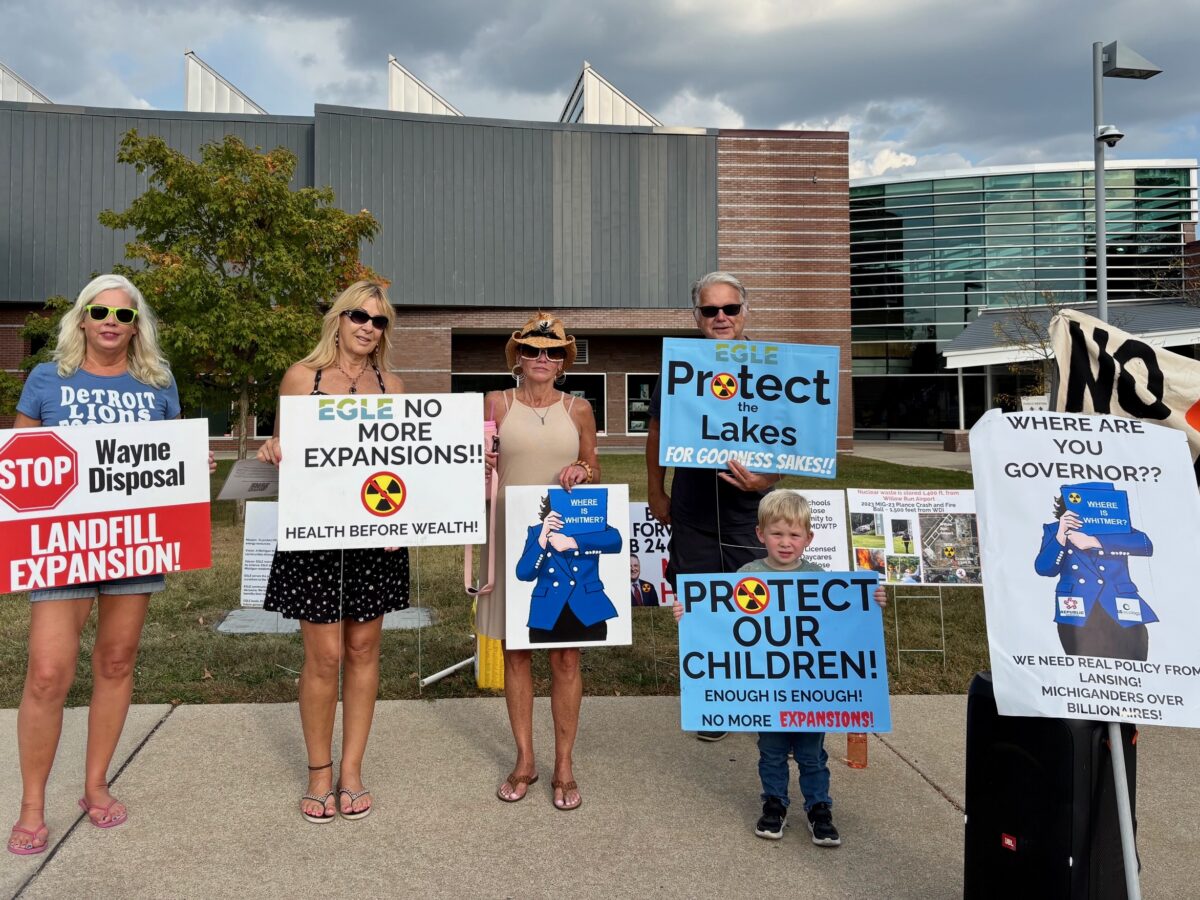
‘Mind-boggling’ Wayne County landfill expansion draws heat from residents
Community members tell regulators Wayne Disposal’s expansion would add pollution and truck traffic, and endanger the Huron River and Great Lakes.
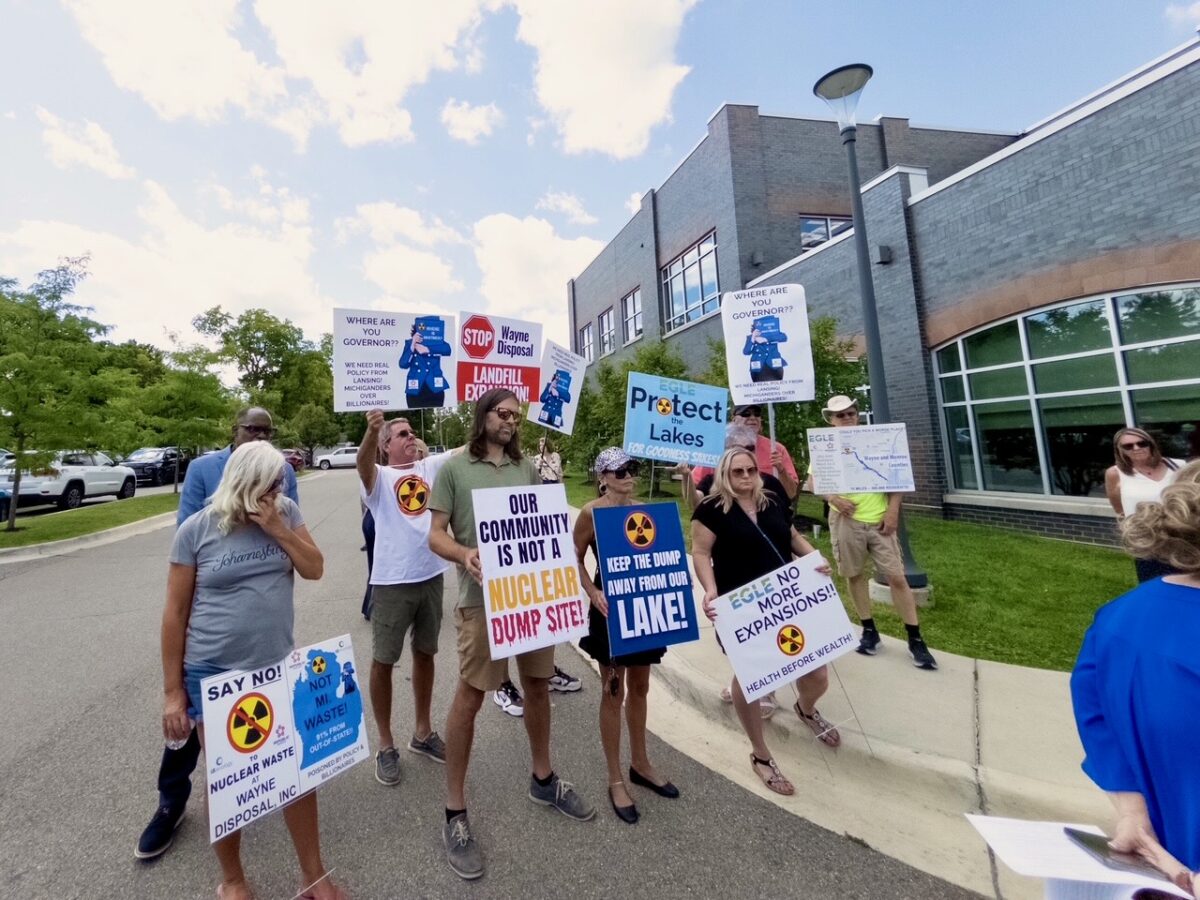
Lawmakers urge Whitmer to act on hazardous waste as Wayne Disposal landfill expansion nears approval
Regulators signal approval for Wayne County nuclear and hazardous waste site. Metro Detroit lawmakers say legislation is needed to rein in dumping in the state.