

Overview:
- Michigan regulators are seeking EPA approval to redesignate Southeast Michigan as meeting federal ozone standards.
- The move follows a December court ruling that found the EPA violated the Clean Air Act by redesignating seven Southeast Michigan counties from 'nonattainment' to 'attainment' status.
- State plans to exclude air monitoring data from days affected by wildfire smoke in 2023 and 2025 to show the region meets federal ozone standards over the last three years.
Michigan regulators will hold a virtual hearing Wednesday on a proposed request to the Environmental Protection Agency to find that Southeast Michigan complies with federal ozone standards, a move that could weaken protections in an area with longstanding air quality problems.
🗳️ Civic Action Toolbox
Why it matters
Who's making public decisions
The Michigan Department of Environment, Great Lakes, and Energy could ask the Environmental Protection Agency to find Southeast Michigan complies with federal ozone standards.
Upcoming Meetings
Open Comment Periods
Civic Actions: What You Can Do
Organizations to Follow
What to watch for next
EGLE will hold a virtual public hearing on the draft addendum at 6 p.m. April 22, after which the agency will decide whether to submit the proposal to the EPA.
Are you taking action? Let us know.
Civic resources compiled by Planet Detroit
The hearing follows a December decision from the U.S. Court of Appeals for the Sixth Circuit that found the EPA violated the Clean Air Act when it redesignated seven Southeast Michigan counties from “nonattainment” to “attainment” for federal ozone standards, a decision that requires additional pollution controls.
Michigan’s Department of Environment, Great Lakes, and Energy proposes submitting an addendum to the 2022 redesignation request it made to the EPA.
Ozone pollution can inflame and damage airways, make the lungs more susceptible to infection, increase the frequency of asthma attacks, and aggravate lung diseases such as asthma, emphysema, and chronic bronchitis, according to the EPA.
Elena Saxonhouse, an attorney with Sierra Club, which brought the case against the EPA for the ozone redesignation, previously expressed concern over EGLE’s proposed addendum.
“They have this opportunity to revisit what (they can) do about the pollution problem in southeastern Michigan,” she told Planet Detroit in March. “And they just repeatedly instead go the route of trying to put their heads in the sand and wave it away.”
EGLE will need to show Southeast Michigan has met federal ozone standards over the last three years, which could require tossing out air monitoring from several days, Saxonhouse said.
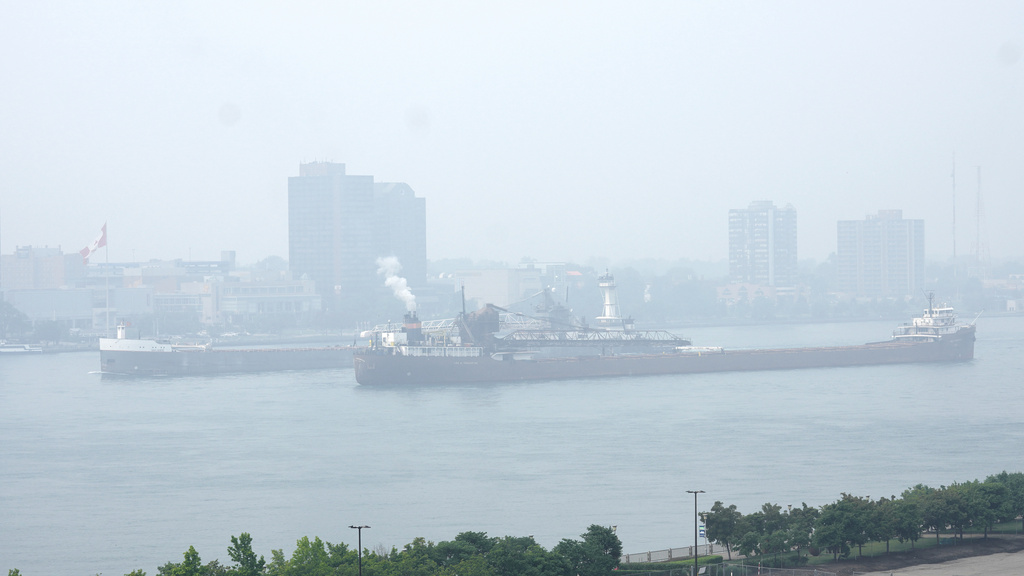
EGLE spokesperson Josef Stephens said the agency submitted a separate request to remove air monitoring data for several days affected by wildfire smoke in June 2023 and July 2025 from monitors in Oak Park and Port Huron, using the EPA’s exceptional events rule.
The EPA defines exceptional events as unusual or naturally occurring events that can’t be reasonably controlled by government agencies. Smoke from Canadian wildfires affected ozone data on the days in question, according to EGLE.
Once the public comment period on the ozone addendum closes, the agency will review comments and decide whether to submit the proposal, said spokesperson Josef Stephens.
If the addendum is submitted to the EPA, the federal agency will have 18 months to act on the request, Stephens said.
EGLE’s virtual hearing on the draft addendum will take place at 6 p.m. on Wednesday, April 22. Click this link or call 855-758-1310 to attend and use code 847 4896 8640.
AIR QUALITY NEWS

After Zug Island pollution lawsuit, attorney urges community engagement
Annie Seaman worked on Zug Island for 40 years from 1973 to 2013. She wore all pink to a community meeting about pollution from the island, but the stories she tells about her time as a U.S. Steel Great Lakes Works employee are less than rosy. Seaman, who lives in Detroit, worked as a powerhouse…

Michigan updates air quality alert system as wildfire smoke season approaches
Michigan will alert residents sooner when air quality reaches the Air Quality Index’s unhealthy for sensitive groups range.

EPA: Detroit’s air quality meets sulfur dioxide standards
EPA removes Detroit from sulfur dioxide nonattainment after 57% pollution drop over 13 years; lawyer says process too slow for residents.