
Overview:
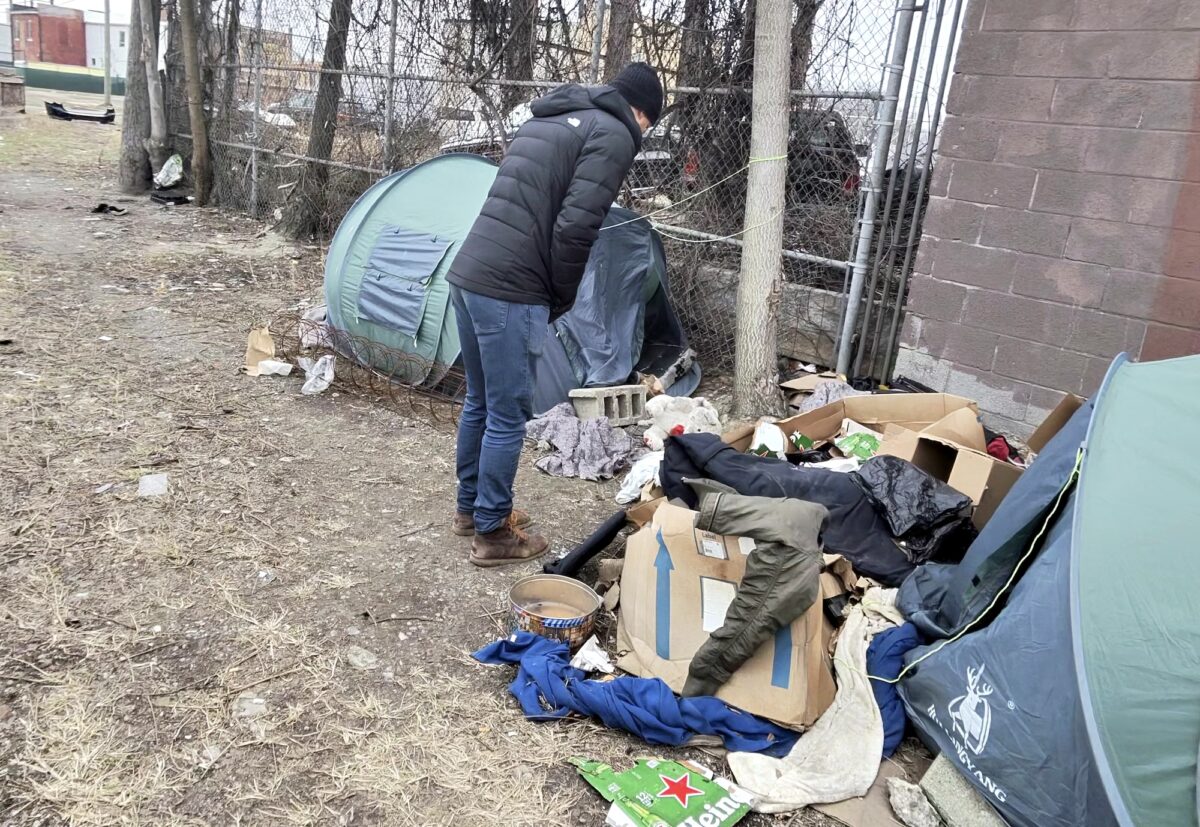
- Street Medicine Detroit brings healthcare directly to unhoused Detroiters in places traditional systems don't reach, from bridges to abandoned buildings
- Dr. Richard Bryce and volunteers use a harm reduction model focused on building trust with patients who have experienced poor treatment from hospitals
- Detroit's homeless population faces 'trimorbidity' — overlapping medical, psychiatric, and addiction issues — making consistent clinical care unrealistic without street-level outreach
Planet Detroit’s neighborhood reporters are local residents who cover health, environment and climate issues in their neighborhoods. The Lab is made possible with the generous support of the Kresge Foundation.
The cold spring air clung to the morning as a small street medicine team in an outreach van headed into Detroit’s West Side, stopping on Michigan Avenue. The team provides healthcare to unhoused Detroiters.
At the center of this work is Dr. Richard Bryce, a physician at Community Health and Social Services (CHASS) Clinic in Southwest Detroit. Dr. Bryce is also the faculty advisor and medical director of Street Medicine Detroit and Detroit Street Care, joined on this run by a CHASS community health worker and a group of first-year Michigan State University medical students.
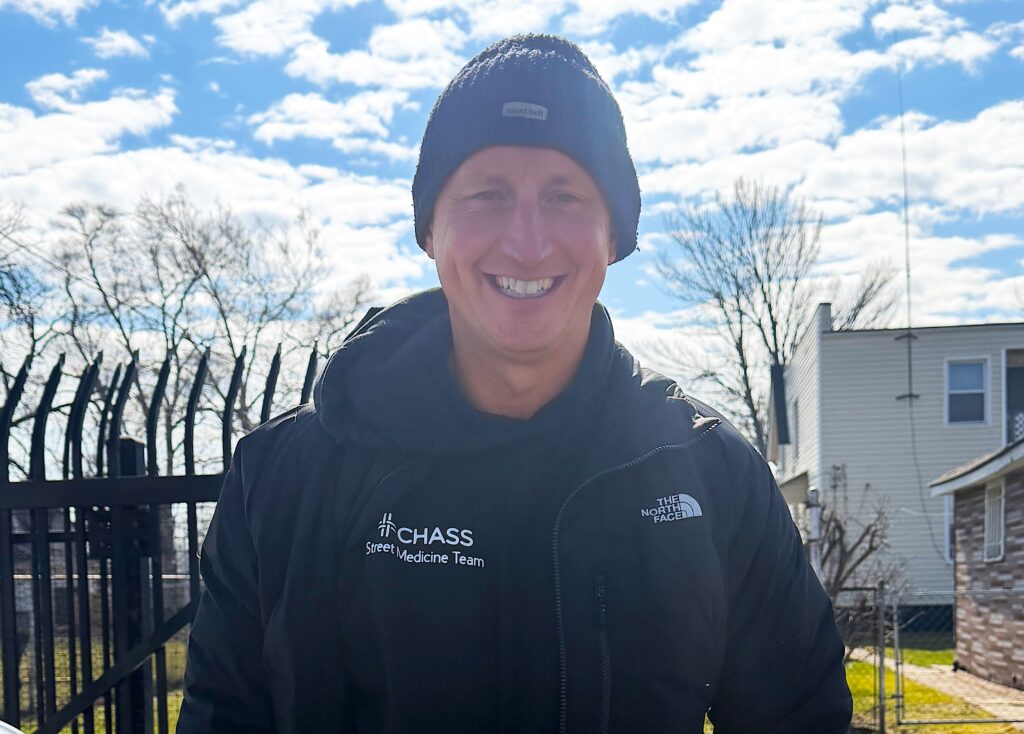
Throughout the run, Dr. Bryce shifted seamlessly between roles. He guided students through wound care, arranged follow-up appointments, called in prescriptions, and greeted familiar faces with the ease of someone who had built lasting trust over time.
Dr. Bryce emphasized that trust is the foundation of street medicine.
“When I meet someone on the street, the relationship is often already strained because of the treatment they’ve experienced from hospital systems and healthcare providers in the past,” he said. “Building trust becomes the first step. Street medicine operates through a harm reduction model rooted in dignity, trust, and meeting people where they are.”
Bryce’s work often unfolds in places most healthcare systems never reach: under bridges, in parks, and inside abandoned buildings. There, he offers immediate treatment and, just as importantly, builds trust.
For many patients, that trust becomes the first step toward stability, helping them connect with long-term care and a consistent medical home.
From grassroots to network
Street Medicine Detroit began as a small, student-led effort in 2012, when Wayne State University medical students partnered with a nurse practitioner at the Neighborhood Service Organization (NSO) to bring care directly to people living on the streets. What started as grassroots outreach has grown into a volunteer-driven network committed to serving Detroit’s unhoused community.
Dr. Bryce became involved after working with Dr. Jonathan Wong at the CHASS Clinic. Inspired by that collaboration and guided by his belief that everyone deserves access to healthcare, he remains deeply committed to the work.
“I’ve been so fortunate in my life, and I feel that it’s my duty to give back and support those who may not have been as fortunate as I have been,” he said. “I truly enjoy doing this work and learning so much from our patients.”
Originally from East Lansing, Dr. Bryce completed both his undergraduate and medical training at Michigan State University, earning his Doctor of Osteopathic Medicine from MSUCOM in 2008.
As a fluent Spanish speaker, he is well-positioned to serve CHASS’s diverse patient population, ensuring Spanish-speaking patients have access to compassionate, culturally responsive care. He also teaches at MSUCOM’s Detroit Medical Center campus and at Wayne State University School of Medicine, and advises both Street Medicine Detroit and Detroit Street Care.
Dr. Bryce emphasized the complexity of the population his team serves.
“It is really important to understand the vulnerability of the population that we’re serving,” he said. “Unfortunately, oftentimes, what we are dealing with is called trimorbidity. So there are medical issues, but oftentimes there’s a psychiatric illness, and many of our patients are facing addiction. And when you kind of tie those three things together, to be able to get consistent care, especially when they go to the hospital or clinic, it’s just not realistic.”
Surviving the cold
For Detroit’s homeless population, winter is more than a season. It is a prolonged fight to stay alive. Even during the city’s harshest cold spells, many unhoused individuals rely on resilience, imagination, and sheer determination to endure conditions that can quickly become life-threatening. Dr. Bryce recalled one example:
“We had, like, a really bad polar vortex a few years ago… this guy stayed outside. I’m like, how did you survive outside?… his perspective was, I just covered up in a bunch of blankets. I couldn’t sleep because it was so cold, but I would just look over in the distance and pretend that I was looking at the beach with palm trees, and that made me feel just a little bit warmer inside.”
When temperatures drop and stay there for days, the danger isn’t just surviving a single freezing night but enduring weeks of relentless cold without a safe place to recover.
“This year was really tough,” Dr. Bryce said. “I don’t want to say this is the coldest winter, but it was just cold for longer. And I think that is probably even worse… if you have 16 days where it’s less than 20, like you just never have a chance to warm up.”
Street medicine works to meet these immediate needs, especially in extreme weather, distributing socks, gloves, hand warmers, and winter gear. These supplies can help prevent frostbite, illness, and death.
Cass Tretyark, an outreach navigator with Community and Home Supports, was a familiar presence throughout the run. For the past two and a half years, she has worked full-time on the front lines, providing supplies and case management to individuals and families experiencing homelessness while collaborating closely with clinicians such as Dr. Bryce.
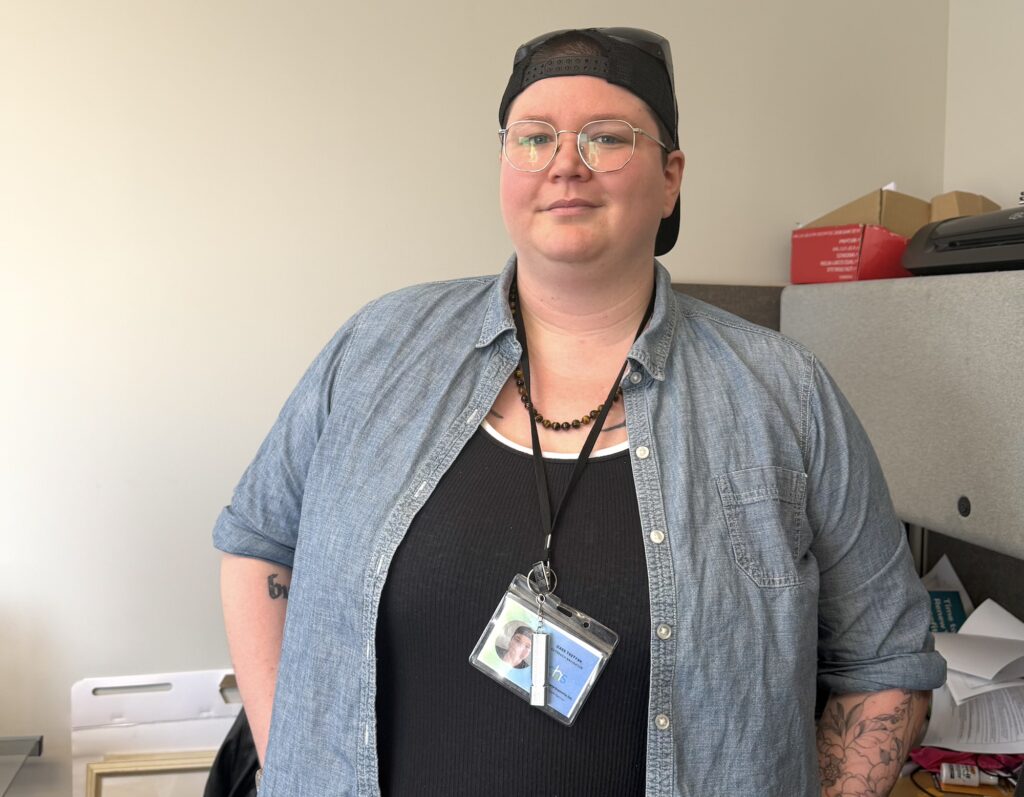
Tretyark said that in the winter months, many people make difficult, calculated decisions to avoid shelters despite extreme cold. “They don’t want to go to the shelter for a lot of reasons. It’s the shame, it’s the stigma, it’s the judgment, it’s that they know, if there is even an implication that they may have used drugs recently, they’re going to get them out. So they take the risk and go through like the whole rigmarole just to get back out in the elements.”
What stays with you
Tretyark described how small gestures can shift an interaction entirely.
“I make a lot of eye contact, because that’s how I’m trying to show you that I’m listening to you and I’m engaged,” she said. “When we’re going over the intake, some of these questions can be a lot, and the client got emotional with mentioning this was the first time in a while someone looked them in the eyes.”
Dr. Bryce recalled a patient with severe Chronic Obstructive Pulmonary Disease (COPD) who had recently been released from prison and was immediately facing instability and serious health challenges.
“He had been in prison for a few years, got out of prison, really didn’t have anything, he was sick, and he wasn’t walking well. He had pretty severe COPD. So he got admitted to the hospital, and we had a street medicine consult in the hospital for him.”
Following the patient’s release, he then navigated the harsh winter on the streets, his health failing further despite the team’s persistent outreach. Eventually, he slipped out of contact. The team later discovered he had returned to the hospital and moved into a long-term care facility.
A year passed before he contacted the team directly with an update: he had secured housing, remained consistent with his medical treatment, and was thriving. He had turned to poetry to process his history with homelessness, prison, and substance use.
For Detroit’s unhoused community, health is shaped not only by illness but by exposure to extreme weather, displacement, and barriers to consistent care. These realities have made the street medicine approach increasingly vital.
Dr. Bryce put it plainly: “If we’re going to make a change in terms of how people are treated in our medical system, especially when they’re unhoused, we really have to get people to really understand that this is not a disease or a condition, this is a person.”
MORE FROM THE NEIGHBORHOOD REPORTING LAB
Shaquille Quamae Hall’s vision for Detroit youth: ‘Many hands make light work’
Detroit photographer and Planet Detroit Neighborhood Reporting Lab participant Shaquille Quamae Hall details his journey from mentee to mentor.

Highland Park resident and filmmaker Jamela Lugo-Thomas inspired by city’s water crisis
The College of Creative Studies grad combines lived experience with film to shine a light on issues of clean water access as part of Planet Detroit’s Neighborhood Reporting Lab.

Detroit residents become reporters in Planet Detroit’s 2026 journalism program
Nineteen Detroit-area residents kicked off Planet Detroit’s third annual Neighborhood Reporting Lab, a six-week program that trains community members to tell environmental stories about their neighborhoods.