

Overview:
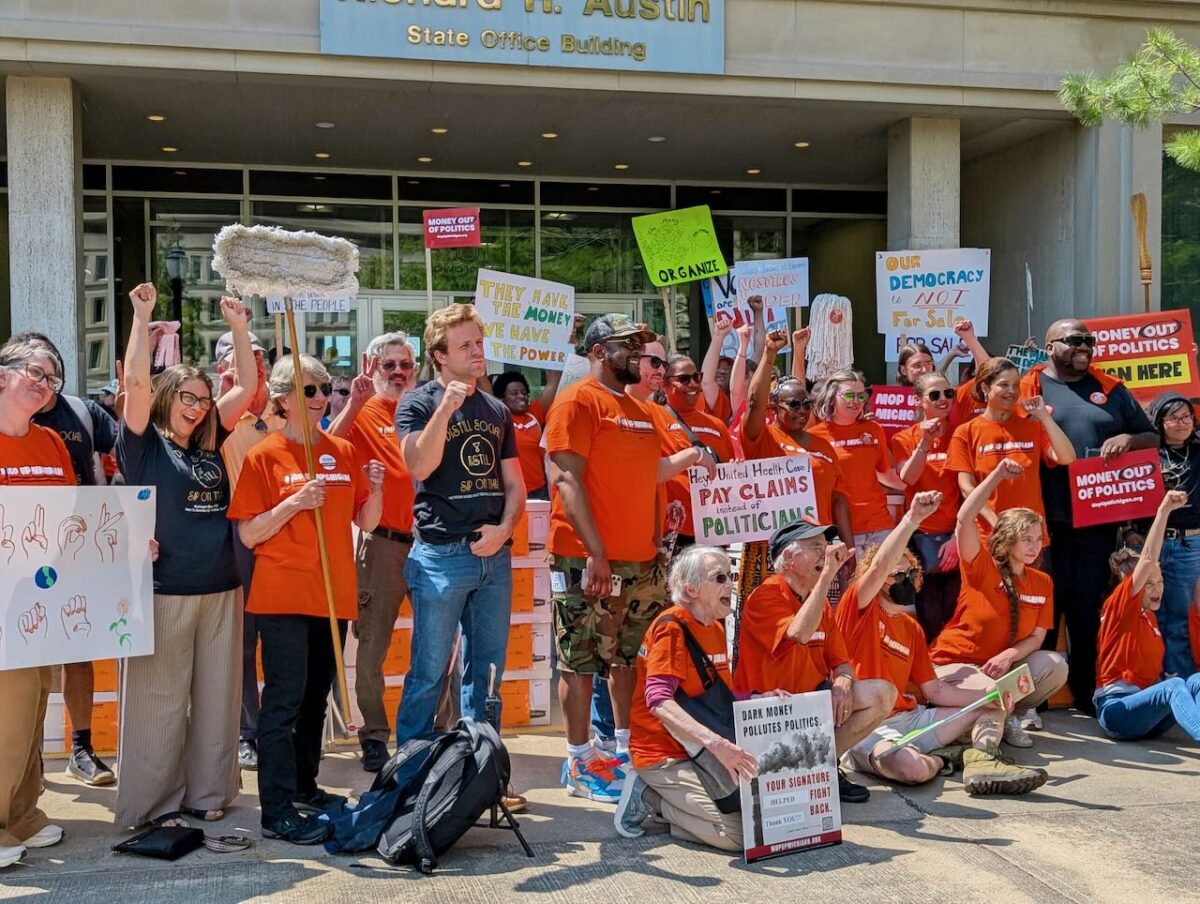
- The Michiganders for Money Out Of Politics ballot proposal would ban campaign contributions from DTE, Consumers Energy, and companies with large government contracts.
- A group backed by DTE, Consumers, and Blue Cross Blue Shield is challenging the proposal's certification in a lawsuit.
- Lawmakers could adopt the proposal to keep it off the November ballot.
The days and weeks ahead are crucial to the outcome of a ballot drive to ban campaign contributions by Michigan’s monopoly utilities.
🗳️ Civic Action Toolbox
Why it matters
If approved, the Michiganders for Money Out Of Politics ballot proposal could ban DTE Energy and Consumers Energy from making political contributions at a time when the utilities are seeking rate hikes totaling over $900 million.
Who's making public decisions
The Michigan Supreme Court will decide whether to hear the legal challenge, while the Michigan Legislature has until Sept. 5 to adopt, reject, or take no action on the ballot proposal.
Upcoming Meetings
Contact Your Representatives
Civic Actions: What You Can Do
Organizations to Follow
What to watch for next
Watch for any action taken by the Michigan Legislature on the ballot proposal by the Sept. 5 deadline, and for any developments in the lawsuit filed at the Michigan Supreme Court.
Are you taking action? Let us know.
Civic resources compiled by Planet Detroit
The Michiganders for Money Out of Politics ballot proposal has received needed approvals for ballot language and petition signatures.
Republican lawmakers may look to adopt the legislation to keep it off the November ballot, making it easier to amend or overturn later, Michigan Reps. Carrie Rheingans (D-Ann Arbor) and Betsy Coffia (D-Traverse City) told Planet Detroit.
If the Legislature takes no action on the ballot proposal by Sept. 5, it will automatically be placed on the ballot, the Secretary of the Senate’s office told Planet Detroit.
The ballot proposal faces a court challenge as well.
Protect MI Free Speech, a ballot question committee opposing MMOP, filed a lawsuit Aug. 4 alleging the Board of State Canvassers failed to follow protocol when certifying the petition. The lawsuit asks the Michigan Supreme Court to hear the challenge by Thursday.
No oral argument has been scheduled in the case, said Alexandria Kelly, administrative assistant at the Michigan Supreme Court.
The MMOP ballot proposal would amend Michigan’s campaign finance law to prohibit regulated gas and electric utilities and companies with more than $250,000 in government contracts from making political contributions. It would also block individuals associated with utilities and large government contractors from making political donations.
If approved, the proposal would bar campaign contributions by monopoly utilities, including DTE Energy and Consumers Energy.
The effort looks to increase transparency around dark money donations, expanding disclosure requirements for ads that clearly identify candidates.
A progressive dark money nonprofit, All Hands on Deck, is the single largest donor to MMOP, contributing a total of $5.4 million out of $7.4 million the committee has received, according to a July 30 campaign finance report.
Christy McGillivray, co-chair of the MMOP steering committee, said the initiative is fighting to change the rules of a broken campaign finance system.
“Until our proposal passes and those rules change, we’re operating under the same laws as everyone else while working to reform them,” she said in a statement.
How Michigan lawmakers could intervene
Michigan House Speaker Matt Hall (R-Richland Township) may attempt to keep MMOP off the ballot to dial back midterm enthusiasm for Democrats in the general election, Rheingans said.
“I believe the massive enthusiasm that was demonstrated during the primary has terrified Matt Hall and Michigan Republicans,” Rheingans said.
Hall could keep MMOP off the ballot by adopting it, Rheingans said, although she calls this a long shot. If the ballot proposal is fully adopted by the Legislature before Sept. 5, it will not appear on the November ballot.
Hall did not respond to a request for comment on the MMOP initiative.
Legislators could later amend or overturn the proposal with a simple majority and the governor’s approval in a subsequent session.
In contrast, amending or repealing a law passed with a ballot proposal is more difficult, requiring a three-fourths majority of the Legislature and the governor’s approval
The Michigan Legislature previously used an “adopt and amend” strategy in 2018 with the Michigan One Fair Wage proposal to increase the minimum wage, and the Michigan Time to Care proposal to require most employers to provide paid sick time, blunting the impact of both efforts.
The Michigan Supreme Court struck down these amended laws in a 4-3 decision in 2024 and determined the Legislature lacked the authority to adopt and amend laws in the same session.
Hall raised the possibility of adopting MMOP or putting a rival proposal on the ballot during a July interview with WDET.
The Legislature can reject a proposed ballot initiative and put forth a different measure, which would place both proposals on the next general election ballot.
“One concern I have about the proposal is it seems to not include unions and some of the more Democrat-leaning interests that put a lot of money in politics,” Hall said of MMOP.
Macomb County Clerk Anthony Forlini, the Republican nominee for secretary of state, told The Detroit News this month the Legislature could propose a separate plan that addresses spending from unions and out-of-state contributors.
Coffia said powerful Lansing interests would like to keep MMOP off the November ballot.
She doubts Senate Majority Leader Winnie Brinks (D-Grand Rapids) would be willing to adopt the proposal in the Senate, given that MMOP could boost voter turnout in November, Coffia said.
Rheingans said Democratic voters are supporting candidates who promise to get money out of politics, and all four of the Democratic candidates for statewide office support MMOP.
A May poll from Progress Michigan, a left-wing advocacy group, found that 8 in 10 Michiganders support MMOP, with 82% support from Democrats and 76% support from Republicans.
Utilities, Blue Cross back group challenging MMOP
The DTE-affiliated group Michigan Energy First contributed $50,000 to Protect MI Free Speech, according to a July 27 campaign finance disclosure. Consumers’ parent company CMS Energy Corporation contributed a cumulative $65,000 and Blue Cross Blue Shield of Michigan donated a total of $65,000, the disclosure shows.
Protect MI Free Speech has received a total of $579,000 in contributions, according to the filing.
Representatives for Blue Cross, DTE, and Consumers said the ballot proposal would silence their employees.
Blue Cross spokesperson Gabby Abel told Planet Detroit the company’s political action committee is funded by employees who “voluntarily contribute their own money to support and advocate for public policies that affect their work, the members we serve and the health of our great state.”
DTE spokesperson Ryan Lowry and Consumers spokesperson Katie Carey both said the ballot proposal would shift influence to out-of-state campaign donors, with Carey calling attention to MMOP’s own use of dark money.
MMOP’s McGillivray said anger over DTE and Consumers‘ proposed rate hikes could drive support for the ballot question in November. Taken together, the utilities’ latest electric rate increase requests would raise ratepayer bills by over $900 million if fully approved by state regulators.
“Michiganders are fed up with this pay-to-play system and overwhelmingly agree that our government should work for people, not powerful corporations,” McGillivray said.
Protect MI Free Speech, which has received support from utilities and Blue Cross Blue Shield of Michigan, calls MMOP a massive expansion of government regulation over speech and association that would limit First Amendment rights, sidelining business owners and their employees.
Protect MI Free Speech told Planet Detroit Monday that it looks forward to “the Michigan Supreme Court looking at the serious flaws that should knock MMOP off the ballot because the rules were not followed here.”
The group’s lawsuit alleges the Board of State Canvassers miscalculated the number of required signatures in its statistical sampling procedures, and that 12 of the approved signatures should have been invalidated.
MMOP’s McGillivray expressed confidence the Michigan Supreme Court will dismiss the legal challenge.
“It’s the opposition’s easiest and cheapest path to trying to stop this initiative before facing Michigan voters at the ballot box, where we know this people-powered initiative has overwhelming support,” she said in a statement.