


Overview:
- Michigan has more than 300 sites with PFAS-contaminated groundwater from industry, airports, and military bases.
- Proposed data centers across Michigan could introduce new PFAS pollution through refrigerants and cable coatings, threatening communities already impacted by contamination.
- Clean water advocates are calling for stronger regulations that address all PFAS chemicals as a group and hold polluters accountable for cleanup costs.
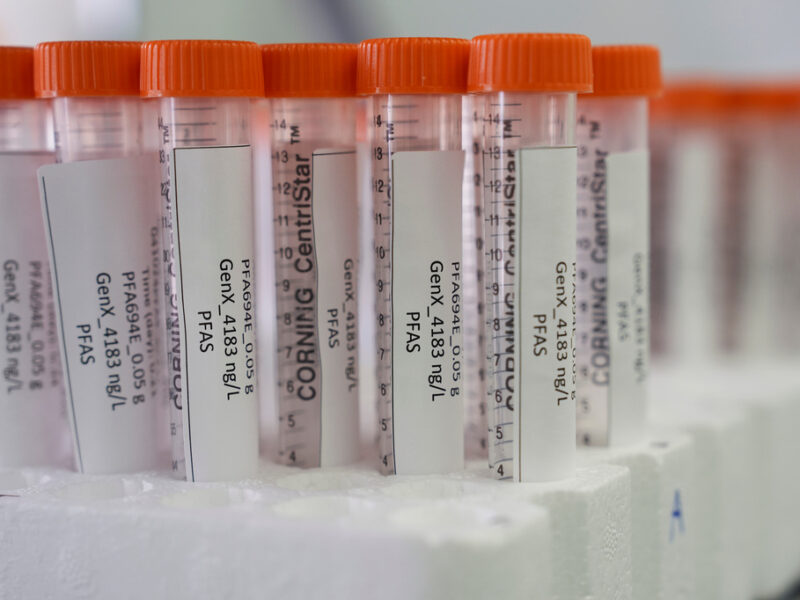
Sept. 21-25 is Michigan PFAS Awareness Week. Per-and polyfluoroalkyl substances (PFAS) are a large group of human-made chemicals that were first used in the 1940s for industry and manufacturing, are linked to harmful human health effects, and have been found in Michigan’s water, soil, air, fish, wildlife, and people.
Earlier this year, Michigan Gov. Gretchen Whitmer declared Sept. 21-25, 2026 as PFAS Awareness Week. Michiganders are encouraged to take action to protect themselves and their neighbors from PFAS by reducing their exposure to PFAS chemicals.
At the same time, many clean water advocates in the Great Lakes region are traveling to Detroit for the Healing Our Waters annual conference. It’s the perfect time to raise awareness about new PFAS threats in the state.
PFAS, or per- and polyfluoroalkyl substances, are a class of thousands of human-made chemicals widely used in consumer products like nonstick cookware and stain-resistant fabrics. They are linked to cancer, kidney disease, and other serious health problems, threatening families living near military bases, airports, manufacturing facilities, and municipal wastewater systems.
PFAS are everywhere. Over 140 million people in the U.S. have PFAS-contaminated drinking water; the forever chemicals don’t break down easily and are expensive to treat. PFAS are found in rivers, streams, and tap water across the United States, including the Great Lakes region.
Michigan has more than 300 sites where industry, airports, or the military have contaminated groundwater supplies with PFAS.
In Oscoda, Michigan, residents living near the former Wurtsmith Air Force Base are still dealing with PFAS-contaminated groundwater.
In Belmont, Michigan, Wolverine WorldWide dumped 3M Scotchgard waste containing PFAS into unlined pits, contaminating local groundwater supplies. PFAS chemicals have also been detected in metro Detroit’s drinking water supply. Communities and public water utilities are calling for corporate accountability to pay for the cleanup.
Now, a new water crisis is upon Michigan. Data centers are proposed across the state, drawn in by tax incentives and a lack of safeguards and regulations. The data centers under consideration in Michigan include the 1-gigawatt Project Cannoli in Van Buren Township, which would use up to 3.6 million gallons of water per day, supplied by the Great Lakes Water Authority.
Data centers consume large amounts of electricity and water, and also rely on PFAS. PFAS are used as refrigerants in data centers to absorb heat and cool servers, or to coat cables to protect them from high temperatures. Coolant leaks, and the coatings for pipes and cables that use PFAS chemicals are eventually incinerated, releasing PFAS into the air and landfills.
The communities most likely to live near a new data center are often the same low-income communities that have carried the legacy of PFAS contamination in the state. We can’t solve PFAS contamination in Michigan if we’re adding new sources of pollution without informing residents of the risks.
During this PFAS Awareness Week, we’re asking for more than a proclamation. States like Michigan are already taking faster, more aggressive action than the federal government, requiring wastewater treatment plants to track and limit PFAS pollution, resulting in declines in contamination. This is an important start.
To end this public health disaster, the EPA and state environmental protection agencies need to go further. Thousands of PFAS compounds are being used today, without proof they are safe for people or the environment. Public health safeguards must address all PFAS chemicals as a group, rather than tackle them slowly, one at a time.
We must stop adding fuel to this fire by addressing the root causes of PFAS pollution at the source, including the new threat of PFAS contamination through data center expansion. Those most responsible for PFAS in drinking water should bear the increased costs of testing and treating this pollution.
No matter where you live in Michigan, we can all agree we deserve safe, affordable water for our families and all beings. In Islam, water is a sacred gift and trust. We recognize the upcoming 35th anniversary of the historic first National People of Color Environmental Leadership Summit and the 17 Principles of Environmental Justice.
As we gather in Detroit and take action during Michigan PFAS Awareness Week and beyond, let’s make a plan for our state that keeps forever chemicals out of our waters once and for all.
Planet Detroit’s Voices column includes opinion pieces from our community of partners and readers. These pieces express the voices of the authors and not necessarily those of the publication.
MORE PFAS COVERAGE
Voices: The PFAS rollback is not the whole problem
Federal drinking water rules regulate only six of more than 14,000 PFAS compounds—less than 0.05% of the chemical class. A proposed EPA rollback could drop that to just two compounds, leaving Michigan communities vulnerable to thousands of unregulated “forever chemicals.”

Guide: What Michigan voters need to know about PFAS ahead of the midterms
This story is part of a series by Planet Detroit on the environmental and health issues at stake in the 2026 midterm election. PFAS, which stands for per- and polyfluoroalkyl substances, is the umbrella term for an alphabet soup of chemicals, which exist in dozens of common household items, from cookware to clothing to food…

What EPA’s PFAS rollback means for contaminated Michigan drinking water
The Trump administration announced it’s rescinding federal drinking water limits for four of six PFAS compounds, weakening protections for Michigan communities dealing with widespread contamination from the toxic ‘forever chemicals.’