


Overview:
- DTE is appealing a February federal court ruling that found Southeast Michigan’s electric service provider responsible for Clean Air Act violations by EES Coke Battery and entered a $100-million judgment against DTE.
- A three-judge panel at the Sixth Circuit Court of Appeals is scheduled to hear oral arguments in the case Dec. 17.
- The EPA sought a $140-million civil penalty in the lawsuit, which DTE lawyers say amounts to a shutdown order on Zug Island. DTE and its subsidiaries requested a $5-million penalty in the case.
DTE Energy’s lawyers filed their argument Friday to reverse a $100-million fine for sulfur dioxide pollution from the utility’s Zug Island facility.
🗳️ Civic Action Toolbox — see how you can get involved
Why it matters
DTE Energy is appealing a $100 million judgment for Zug Island pollution. The outcome of the lawsuit will determine whether DTE pays the penalty and funds $20 million in air quality improvements for Southwest Detroit, River Rouge, and Ecorse residents who live with high asthma burdens and heavy industrial pollution.
Who's making public decisions
A three-judge panel of the Sixth Circuit Court of Appeals will hear oral arguments in the Zug Island case Dec. 17.
Civic Actions: What You Can Do
Organizations to Follow
What to watch for next
Are you taking action? Let us know.
Powered by Civic Action Toolbox
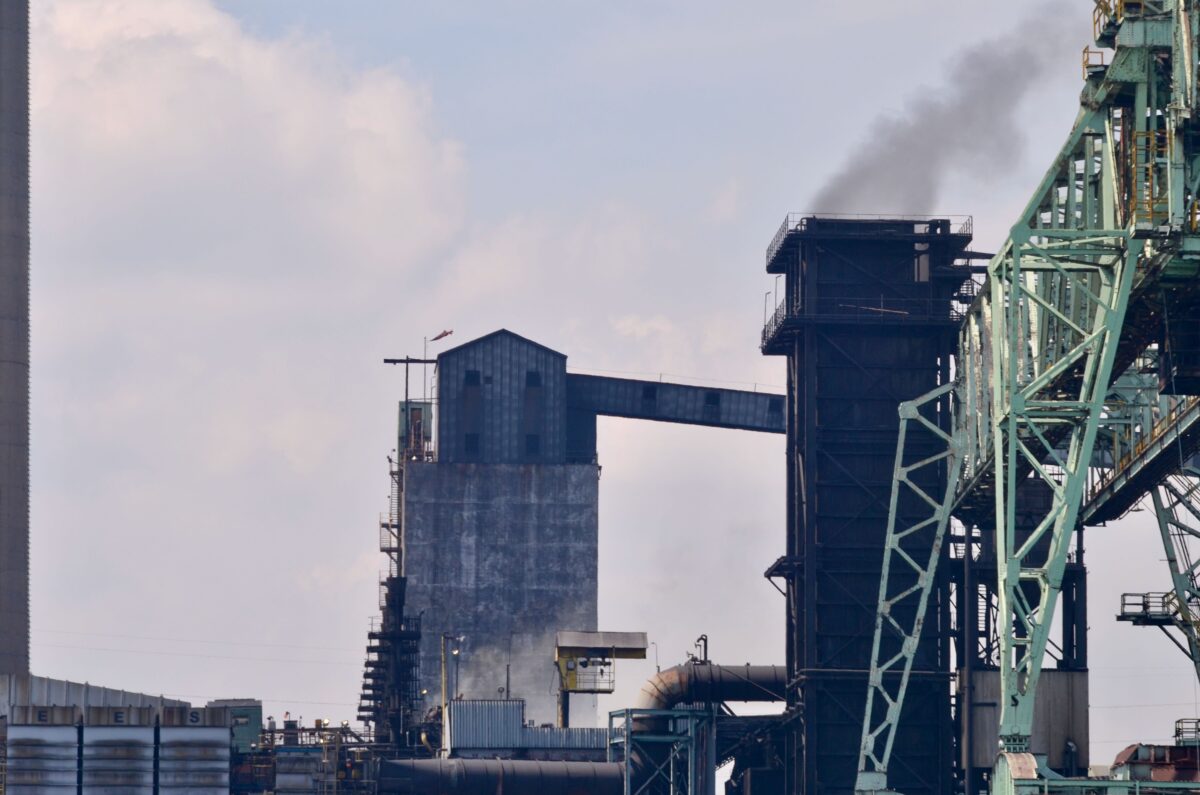
DTE is appealing a February federal court ruling that found Southeast Michigan’s electric service provider responsible for Clean Air Act violations by EES Coke Battery.
The utility reiterated the defense that it unsuccessfully mounted during a two-week bench trial: that DTE is not liable for the violations, and is not an operator of the coke oven battery in River Rouge.
“Nothing EES Coke did warrants the largest stationary-source penalty in the CAA’s history,” DTE lawyers said, referring to the Clean Air Act in the brief to the Sixth Circuit Court of Appeals.
A three-judge panel at the Cincinnati court is set to hear oral arguments in the case Dec. 17.
Even if the appeals court agrees that DTE is liable, it should still cancel the $100-million fine and send the case back to the lower court to reconsider the fine amount, DTE’s lawyers said in the court filing.
The $100 million air pollution judgment against DTE
U.S. District Judge Gershwin Drain ordered DTE and three of its subsidiaries to pay $100 million in fines to the federal government within 90 days, and to come into compliance with the Clean Air Act by submitting New Source Review Permit applications within 250 days.
DTE must form a community committee within 120 days and provide $20 million in funding for air quality improvement programs over seven years, Drain’s order said.
DTE exerted sweeping control over a heavily polluting coke facility, profiting from delayed compliance while nearby communities bore irreversible health costs, Drain said in the Feb. 17 order that followed a September 2025 bench trial.
The court found that DTE saved $70 million by failing to comply with the Clean Air Act. The judge applied a 1.5 times multiplier to the $70-million figure, known as the economic benefit of noncompliance, to deter future violations.
The EPA sought a $140-million civil penalty in the lawsuit, which DTE lawyers said amounts to a shutdown order on Zug Island. DTE and its subsidiaries requested a $5-million penalty in the case.
Drain entered the final judgment Feb. 24, and DTE appealed it March 25.
DTE posted a $123.5-million bond Sept. 1 to cover the $100-million judgment ordered by Drain; the $20 million in community funding; and one year of postjudgment interest on the civil penalties while the appeal is underway.
The Environmental Protection Agency sued EES Coke Battery in 2022, and DTE and two of its subsidiaries were added as defendants in 2024.
DTE: $20 million in community funding ‘crossed a line’
Drain’s order in the Zug Island lawsuit mandates the creation of a seven-member committee that will determine how $20 million for community air quality improvements is spent over seven years.
At least $5 million must be spent in the first three years, and the committee must meet quarterly. DTE is ordered to post progress reports semiannually on a public website.
The committee is established and the first meeting is being scheduled, Jill Wilmot, DTE’s director of corporate communications, told Planet Detroit.
DTE’s lawyers said in Friday’s filing that the court “crossed a line” by extending the $20 million in relief to advance air quality improvement projects to “thousands of non-parties … who did not sue” in River Rouge, Ecorse, and the Detroit ZIP code 48217. Those residents are not Sierra Club members, DTE said.
The Sierra Club and River Rouge intervened in the EPA lawsuit over EES Coke Battery emissions.
Sierra Club and River Rouge lawyers said that, because the Downriver city and the United States government are parties to the lawsuit, the public interest of their citizens, who “were personally harmed by this pollution,” is represented.
“The district court was well within its discretion to award the community fund relief to redress the still-ongoing harms from DTE’s air pollution in the communities where Sierra Club’s testifying members live (including River Rouge),” the Sierra Club said in its brief to the appeals court.
The district court found that Sierra Club members faced “substantial hardship as a result of the facility’s excess sulfur dioxide emission” based on evidence from residents, and air quality and public health experts who showed that residents suffer asthma attacks and early deaths, the brief said.
‘Terrible’ summer for Zug Island trial witness
Theresa Landrum, a lifelong resident of ZIP code 48217, Sierra Club member, and environmental activist, said this summer was “terrible” for her health, with wildfire smoke adding to the air quality burden.
Landrum testified about her experience living within miles of Zug Island for 71 years during the two-week bench trial held in the EES Coke Battery lawsuit in September 2025.
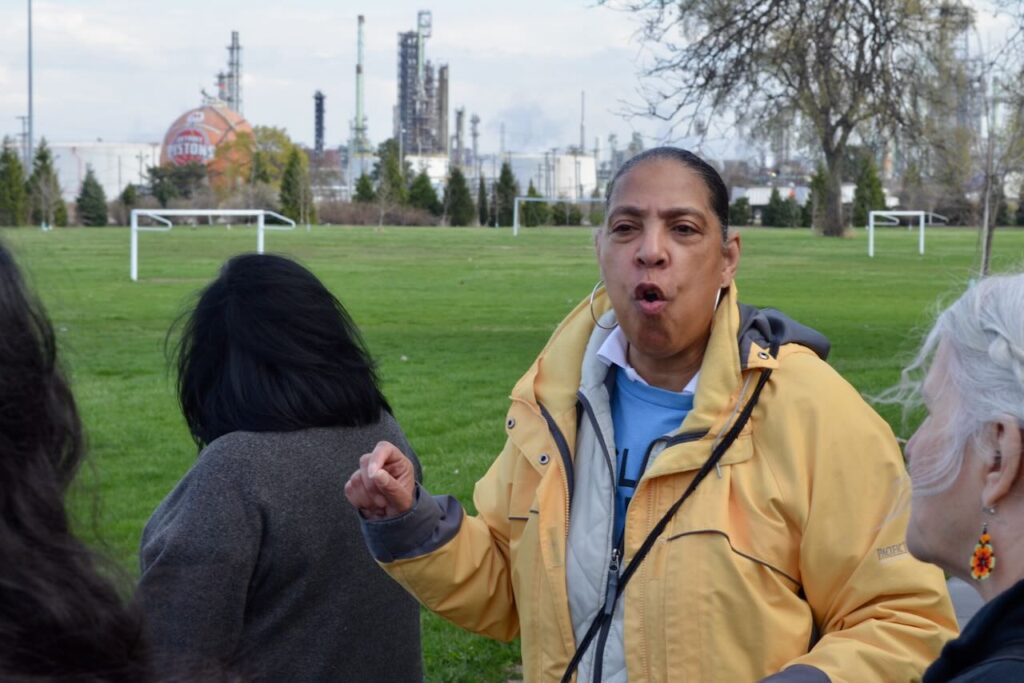
At the trial, the activist said she keeps her windows closed, runs central air constantly, and stopped riding her bike in Boynton, her Detroit neighborhood. After going near EES Coke Battery, Landrum said she must lie down for two hours afterwards.
On July 16, 2026, wildfire smoke caused Detroit’s worst air quality day since recordkeeping began in 1999, exceeding the upper limit of the air quality index itself.
An air monitor on the outside of Landrum’s house “stayed purple” for days during the intense wildfire smoke episode, she said.
“It was difficult for me. My lungs don’t expand to capacity. I was masked up with an N95, and the smoke came through that.”
The community wants to create hubs where people can retreat during poor air quality days, whether that’s from industry or from wildfires, Landrum said.
Landrum said she’s proud that a community committee will make decisions about how to improve air quality conditions in the neighborhood.
“I’m disappointed in DTE. They know the harm that they’ve done and they’re doing,” she said.
DTE’s Wilmot told Planet Detroit: “EES Coke is committed to 100% compliance with all regulations governing the site at the state and federal level that protect public health.
“We have been operating within the limits of the valid original state permit – both today and during the time period in question – while we serve a critical function producing coke to fuel the steel industry and supporting more than 170 jobs in the community,” she said.
Drop in US Steel demand triggered emissions increase, DTE says
Drain ruled Aug. 25, 2025 that EES Coke Battery violated the Clean Air Act by making a major modification to its operations, instead of a minor modification as its 2014 permit allowed.
EES Coke Battery applied for and received a 2014 permit from the Michigan Department of Environment, Great Lakes, and Energy that removed the facility’s coke oven gas combustion limit.
An EPA environmental engineer testified during the trial that EES Coke Battery emitted 14,180 tons of excess sulfur dioxide from 2019 to 2023, and will continue to emit about 3,000 tons of the pollutant annually until desulfurization is installed.
In Friday’s appeal brief, DTE argued that no New Source Review permits were required for EES Coke Battery, because the removal of the coke oven’s gas combustion limit was not a major modification of the facility per the Clean Air Act.
“The emissions increase would have happened even if the COG (coke oven gas) limit had remained in place,” according to DTE’s brief.
EES Coke Battery was forced to “flare” coke oven gas when U.S. Steel suddenly pulled back in 2016 on purchases of the gas, a byproduct of coke manufacturing, the defense lawyers said.
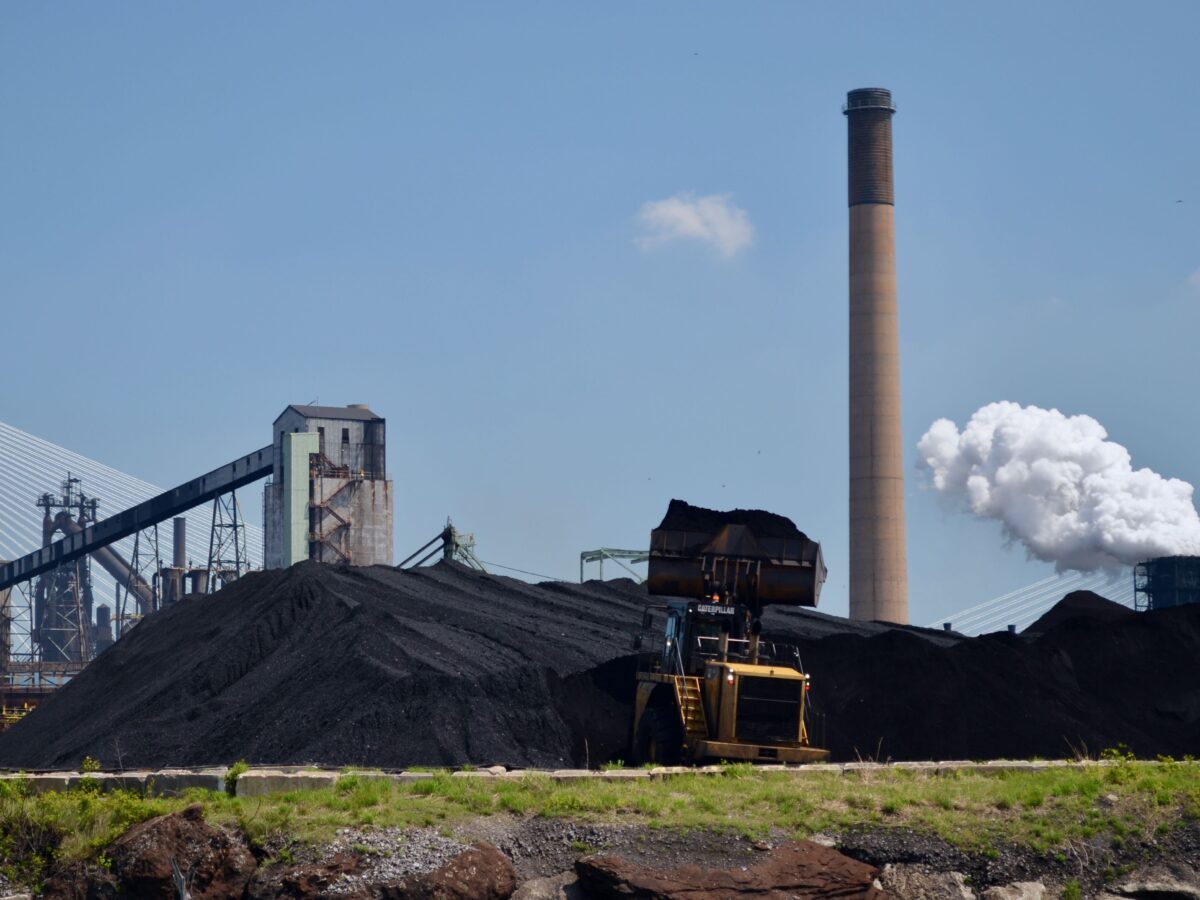
EES Coke Battery produces coke, a raw material in the steelmaking process. Coke is made by heating coal in an oxygen-free environment.
Lawyers for the Environmental Protection Agency said in an Aug. 24 brief that the district court correctly determined that EES Coke Battery’s permit change caused the pollution increase that triggered New Source Review requirements, and the penalty and injunction are justified.
While the appeal is pending, DTE must continue taking steps toward addressing air pollution and supporting affected communities, Drain said in a July 16 ruling.
The judge denied DTE’s motion to pause the environmental permit applications required in the order against the utility.
The company must submit a permit application to Michigan environmental regulators by Nov. 1.
MORE ZUG ISLAND NEWS
Federal judge to DTE: No delays for Clean Air Act compliance on Zug Island
DTE is appealing a $100-million judgment over sulfur dioxide pollution from its Zug Island subsidiary.



After Zug Island pollution lawsuit, attorney urges community engagement
Annie Seaman worked on Zug Island for 40 years from 1973 to 2013. She wore all pink to a community meeting about pollution from the island, but the stories she tells about her time as a U.S. Steel Great Lakes Works employee are less than rosy. Seaman, who lives in Detroit, worked as a powerhouse…

DTE appeals $100 million federal judgment over Zug Island air pollution
DTE Energy is challenging a federal court’s $100-million judgment over sulfur dioxide pollution from its Zug Island coke facility. The utility must also fund $20 million in community air quality programs.