

Overview:
- Michigan's lung cancer rate of 59.2 per 100,000 people exceeds the national average.
- Low-income communities and communities of color face disproportionate pollution exposure.
- While the federal government is backing away from climate action, municipalities are stepping up.
With populations growing across cities and developed areas, it has been too easy to overlook the relationship between human well-being and the health of our climate. A healthy Earth means healthy communities, but how do these two systems interact?
As global temperatures rise, the connection between an unstable climate and declining public health has become clear, especially through the increasing number of deaths during extreme heat waves.
Over the last 20 years, the United States has seen a 53% increase in fatalities from heat waves. Yet heat is only one part of a broader public health challenge. Other hazards such as air pollution risk going unnoticed if they are not considered by environmental and public health professionals.
The article “Air, Climate, and Our Health,” published by Change the Chamber as part of its #OurClimateOurHealth series, explores how pollution buildup worsens respiratory illnesses and cancers.
This finding is supported by research published in 2020 in JAMA Oncology. Researchers discovered that lung cancer is becoming more prevalent among women with no documented history of nicotine use. Approximately 16% of women in the study fell into this category.
The rise of pollution-related disease is especially evident at the state level. In Michigan, the rate of new lung cancer cases is 59.2 per 100,000 people, significantly higher than the national rate.
Even small shifts in temperature can influence how air pollution interacts with the body, exacerbating lung conditions and allergies. Allergies in particular are becoming more severe as warmer winters and earlier springs prolong pollen exposure.
At the same time, wildfires are becoming more frequent and intense, resulting in increased amounts of soot, sulfur dioxide, and other particulates that wreak havoc on our health. These factors contribute to deteriorating lungs and poor health, especially for high-risk groups such as older adults and children.
In 2025, lung and bronchus cancer contributed to 4,860 deaths in Michigan, putting Michigan in the top 10 among states for such deaths.
Alongside the close to 5,300 deaths in Michigan from chronic lower respiratory diseases in 2024, this underscores the health impacts of long-term exposure to polluted air.
Access to safe and breathable air is widely recognized as a human right. In the United States, the Clean Air Act (CAA) is intended to serve as a safeguard that helps protect people by limiting harmful emissions and improving air quality.
Inequalities in CAA enforcement remain. Wealthier communities are better shielded from pollution, while low-income communities and communities of color continue to bear disproportionate shares of environmental harm, highlighting environmental justice challenges.
These inequalities are exacerbated by recent attacks on Clean Air Act pollution limits.
In one example, the Trump administration granted a two-year exemption for the DTE Energy-owned EES Coke Battery on Zug Island from coke oven pollution rules enacted during the Biden administration.
On Jan. 12, officials announced that although the EPA would still take health benefits into account when reviewing pollution frameworks, it would no longer calculate the monetary burden on people or lives lost due to emissions – only the industry costs to reduce them.
While the federal government is backing away from climate action, municipalities are stepping up. Low-emission zones and electric buses reduce pollution in cities, ensuring the air that communities breathe does not harm their health while holding corporations accountable.
This momentum demonstrates the fight for clean air is not lost, and recent federal deregulation will not necessarily be the long-term trend as community groups, governments, and clean air advocates continue to push for and enact climate and clean air policies and programs.
Planet Detroit’s Voices column includes opinion pieces from our community of partners and readers. These pieces express the voices of the authors and not necessarily those of the publication.
AIR QUALITY NEWS
Detroit air quality gets another F from American Lung Association
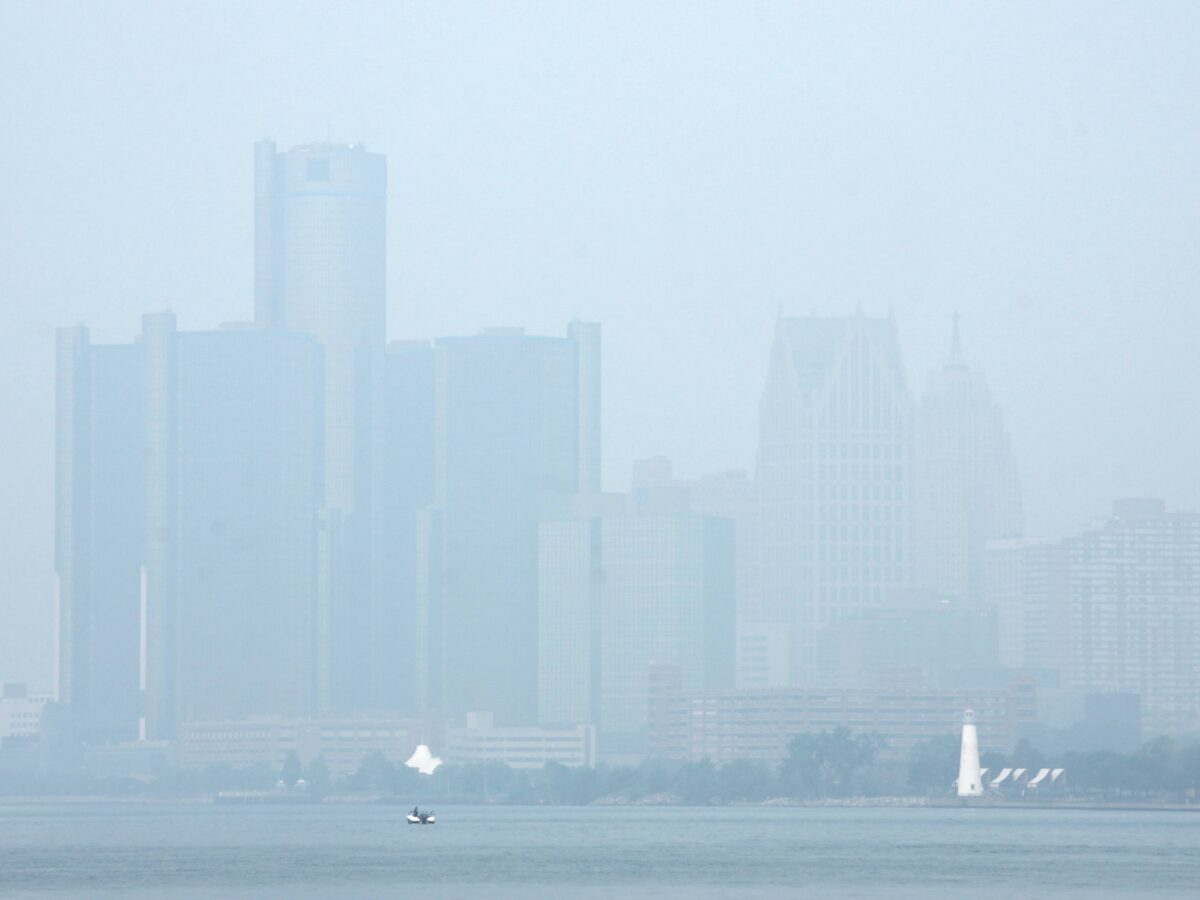
Detroit’s air quality receives another F grade from American Lung Association, ranking among the nation’s worst for particle pollution.


Detroit’s ozone status in focus Wednesday at Michigan regulatory hearing
Michigan regulators will hold a virtual hearing Wednesday on a proposal that could weaken air quality protections in Southeast Michigan, following a court ruling that found the EPA violated the Clean Air Act.

After Zug Island pollution lawsuit, attorney urges community engagement
Annie Seaman worked on Zug Island for 40 years from 1973 to 2013. She wore all pink to a community meeting about pollution from the island, but the stories she tells about her time as a U.S. Steel Great Lakes Works employee are less than rosy. Seaman, who lives in Detroit, worked as a powerhouse…