

Overview:
- Detroit Community Composting Collective Project diverts over 3,300 pounds of food scraps from landfills between August and November 2025.
- Advocates call for food scrap drop-off sites in every city council district, mandatory composting in city buildings, and clearer regulations for composting operations.
- "There are more than enough resources in Detroit to compost," says Ricky Blanding, executive director of the nonprofit Scrap Soils.
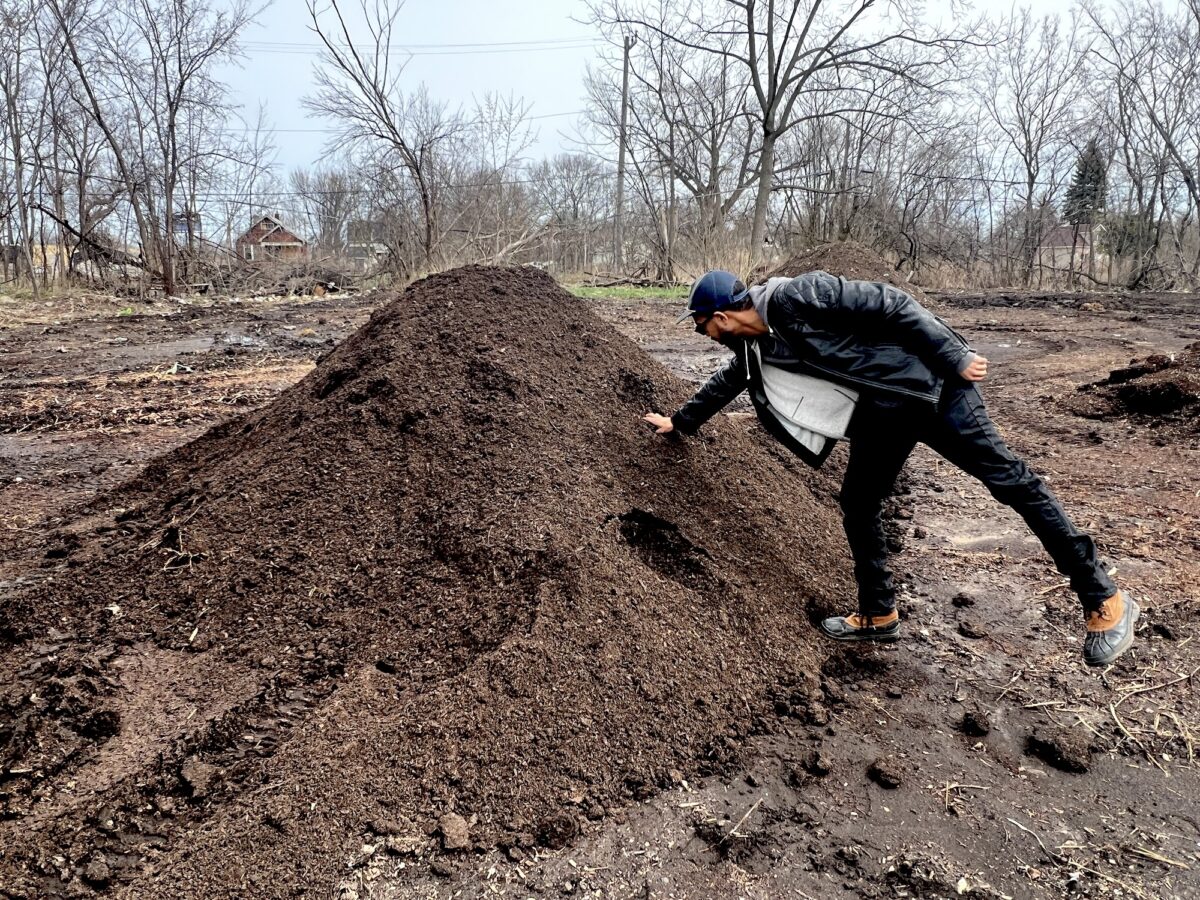
Markieta Phillips’ farming journey began with food scraps.
🗳️ Civic Action Toolbox
Why it matters
A citywide composting program could divert food scraps from landfills, reduce greenhouse gas emissions, and provide Detroit’s urban farms with nutrient-rich soil, according to composting advocates.
Who's making public decisions
Mayor Mary Sheffield and Detroit City Council will decide whether to enact citywide composting, while the Detroit Office of Sustainability is expanding its drop-off program following a nine-month composting pilot.
Upcoming Meetings
Civic Actions: What You Can Do
Organizations to Follow
What to watch for next
Are you taking action? Let us know.
Civic resources compiled by Planet Detroit
The westside Detroiter started growing produce and herbs in 2019, by reusing leftover fruit and vegetable seeds in pots on the patio of her apartment.
She quickly took to her newfound hobby, creating her own mini-batch of compost, picking up seeds and transplants through Keep Growing Detroit’s Garden Resource Program, and enrolling in classes to grow as an organic farmer, a herbalist, and soon-to-be beekeeper.
It wasn’t until a trip last year to Chicago, touring the city’s network of community farms, that she began to envision a more efficient way to maintain the health of her garden bed’s soil.
Since 2023, the Windy City has operated a citywide food scrap drop-off program, offering residents the chance to drop their household scraps at 33 locations around the city for free.
“It was amazing to hear about how they had their own composting program, but it was unfortunate we don’t have it here in Detroit,” said Phillips, 32.
For decades, Detroit’s decentralized network of farmers and gardeners have composted food scraps without city guidance.
After the conclusion of a pair of pilot composting projects — one led by the city’s Office of Sustainability and the other by a handful of local food and environmental justice organizations — experts from the community are making the case for supportive policy changes and a citywide composting program.
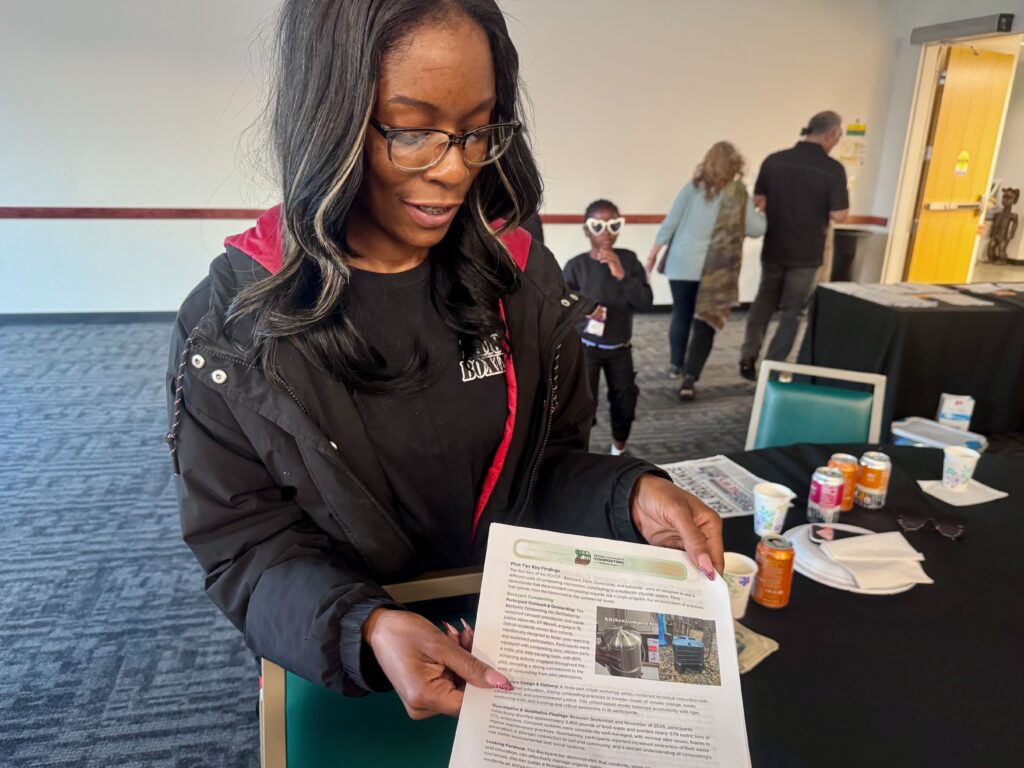
On Friday, several dozen urban farmers and advocates attended a community event at the Detroit People’s Food Co-op to hear about the latest results from the Detroit Community Composting Collective Project, or DCCCP, a three-month pilot program launched last spring to train residents and farmers on best practices for diverting organic matter from landfills.
“Detroit has been treated like waste,” said jøn kent, founder of the nonprofits Sacred Spaces and Sanctuary Farms on the city’s east side.
“That same logic that sends food to the landfill has also for generations turned its back on the city and its people. Composting as a practice pushes back against all of that. It says nothing here is waste.”
‘We have enough food scraps’
With an estimated hundreds of million pounds of food scraps created in Detroit each year, kent and other speakers advocated for comprehensive policy changes at the local and state waste management level.
Those changes would assist city residents in reducing greenhouse gas emissions, limit the amount of out-of-state waste entering the city, and provide Detroit farms with nutrient-rich soil to fuel the city’s food system, the speakers said.
Between August and November 2025, kent said, the pilot program diverted over 3,300 pounds of food scraps from landfills, with nearly three-quarters of the diverted food scraps coming from 75 backyard composters who participated in the program.
Ricky Blanding, an education and outreach coordinator for the DCCCP pilot program and the executive director of Scrap Soils, a Detroit-based composting nonprofit, said: “There are more than enough resources in Detroit to compost.
“We have what we need — we have enough food scraps, we have enough land, we have enough resources and people, and I think that the more we give farmers a chance to speak to each other, the more it happens.”
Phillips said she first heard about the DCCCP pilot program while participating in an organic farming course through Michigan State University Extension.
That’s where she met KT Morelli, one of the lead developers of the DCCCP pilot and a Detroiter who lives near the city’s former incinerator site.
“When residents are equipped with knowledge, tools and a sense of purpose, they are not only capable of managing organic waste at the household level, they become active contributors to a more resilient and regenerative urban farm system,” said Morelli, an organizer with the group Breathe Free Detroit, which advocated for the closure of the former incinerator near I-75 and I-94.
Backyard composters who participated in the pilot were given an outdoor standing bin and a kitchen pail to collect their compost, a luggage scale to weigh their food scraps, and access to training to build up their skills and knowledge of what and how to compost effectively, Morelli added.
A report on the pilot program won’t be released until this summer, organizers say, but the findings show participants’ increased interest in community composting education, and scaling composting across the city.
Charting the future of composting in Detroit
The city’s Office of Sustainability launched a pilot composting program in August.
On Monday, the office’s Urban Agriculture Division announced via social media that it will expand its drop-off program following the end of the nine-month pilot.
At Friday’s DCCCP event, the sustainability office’s Patrice Brown encouraged composting advocates to attend future charter meetings with Mayor Mary Sheffield to voice their desire to see more city action taken on composting.
The city is working on an open space amendment to reimagine land use, she said.
The latter portion of Friday’s event focused on galvanizing audience members to become ambassadors for Detroit’s composting future.
Amy Kuras, program manager at Detroit Food Policy Council, outlined a handful of local policy actions the council and other partners in the DCCCP want to advance in the coming years.
The proposals include food scrap drop-off locations in every city council district, mandatory composting across city buildings, a citizen-led commission on environmental justice, and a composting coordinator at the Department of Public Works.
Parker Jean, co-founder of Sanctuary Farms and owner of Detroit Garden & Compost, said he’s been “climbing the corporate ladder of composting” since composting in his backyard at 18 and moving toward farm and industrial scale composting.
“If you want to be a composter, it’s very difficult because the city is categorizing you as a solid waste handler, which is basically like a transfer facility that could take things to a landfill,” said Jean.
“There’s a lot of backwards policies, very unclear policies, just very regressive policies that really need to be changed to be able to provide a clear path to people that want to create compost in the city of Detroit.”
Large-scale composting operations have been issued blight tickets for illegal dumping in some cases, Jean said.
“They see a compostable bag, they think it’s a trash bag, or even if it’s just food scraps, they see food scraps and it’s (viewed as) trash,” said Jean.
Kuras said Detroit could take a cue from other places like New York City, which has a Waste Equity Law aimed at regulating waste disposal in neighborhoods overburdened by landfills and industrial polluters, and a Zero Waste Action Plan.
DCCCP organizers said they are in a prime window for public participation on a number of issues: Wayne County is updating its materials management plan, Detroit’s contract with waste haulers will be up for bid in 2029, and Michigan lawmakers have for years been pushing for a hike to the state’s landfill dumping fees.
At 36 cents per ton, organizers say it’s among the lowest rates in the Great Lakes region.
“Not only are we paying a lot less for shipping fees as Michiganders, but Canada is sending us their trash,” said Morelli.
“Ohio is sending us trash. Indiana, Illinois, they’re all sending us their trash. It used to be burned in our backyard, and now it’s going to landfills because it’s still cheaper than for them to deal with their own waste in their own state or country.”
Since participating in the pilot program as a backyard composter, Phillips said she’s been excited to find her compost teeming with microorganisms — a positive indicator of soil health.
With the growing season underway, she’s encouraging her friends and family to start their own gardens and learn how “beneficial” composting is for people’s gardens and the planet.
“I plan on showing up to council meetings and letting my voice be heard, and also to speak for and on behalf of my fellow farmers,” she said.
FOOD WASTE NEWS
VOICES: From cafeterias to climate action, Michigan schools can cut methane
Michigan schools threw away 16,000-plus tons of food in 2023. Student-led programs show how schools can cut methane emissions through food waste reduction.


Guide: 6 ways to fight food waste in Michigan
Michigan residents are taking action against food waste, leveraging tech tools like Flashfood and Too Good To Go to save surplus food from landfills. Composting initiatives, both at home and through local services, are gaining traction. Community efforts to donate excess food to nonprofits are empowering neighbors, while smart shopping and meal planning are reducing…

New landfill rules were supposed to cut methane. Michigan’s still falling short.
At Michigan Central’s Newlab, EcoSphere Organics is pioneering biodegradable materials from food waste, while apps like Flashfood and Food Rescue US are tackling food surplus by connecting it to those in need.
