

Overview:
- Michigan regulators release a draft permit allowing Enbridge to discharge up to 6 million gallons daily from Line 5 tunnel construction sites in the Straits of Mackinac.
- Environmental advocates protest the permit at state drinking water conference, call the tunnel a threat to Great Lakes ecosystems and climate.
- A public hearing on the discharge permit is scheduled for June 18.
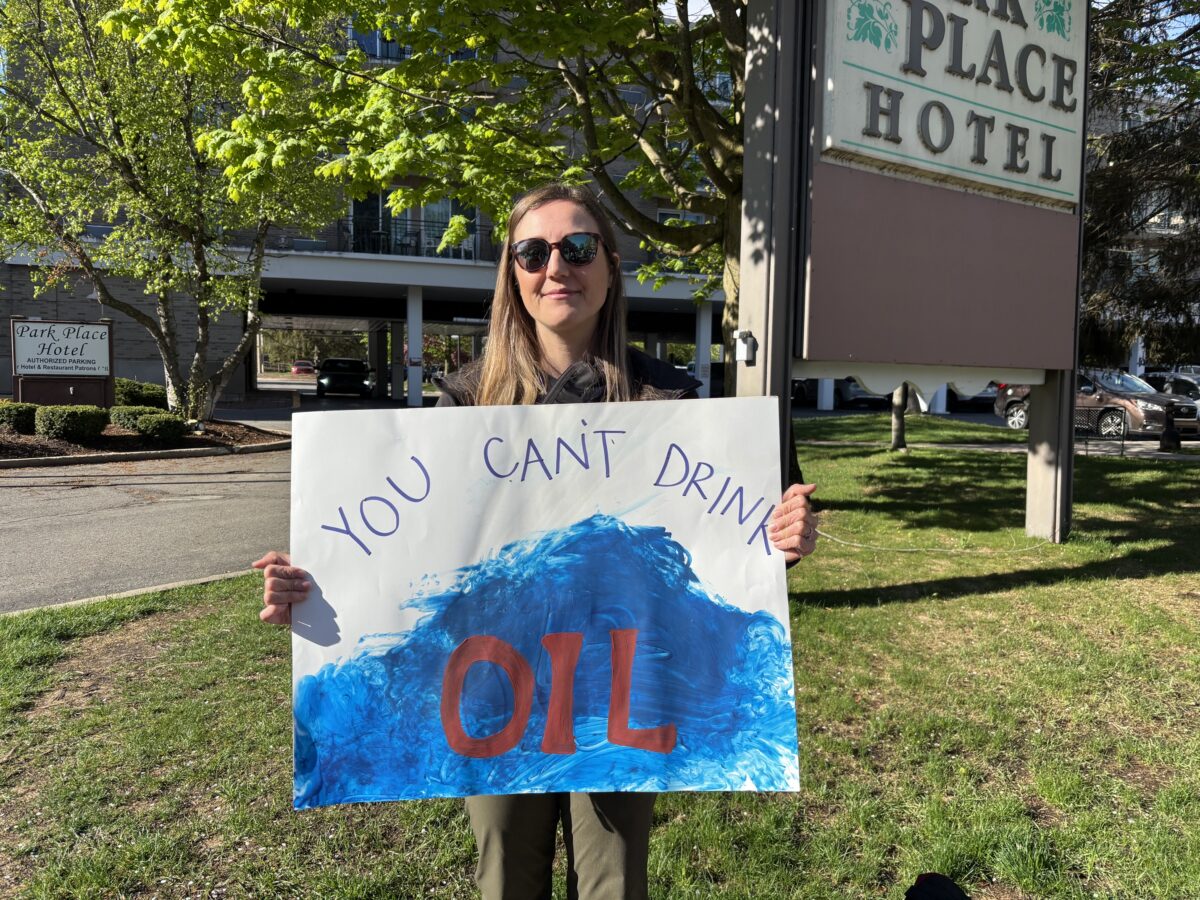
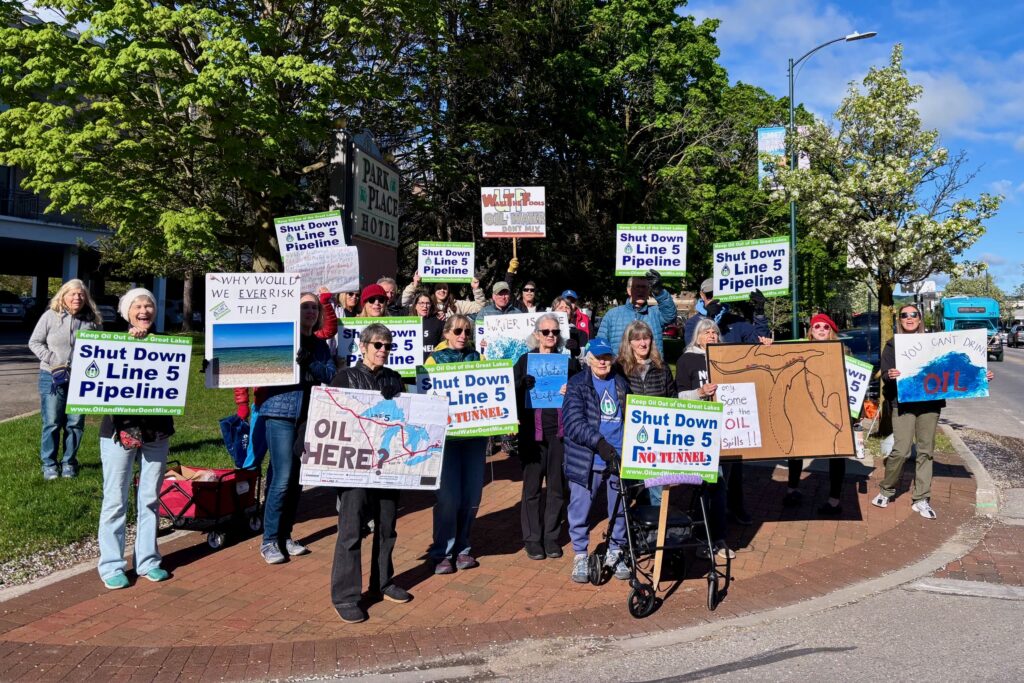
Water advocates staged a protest Wednesday against Michigan regulators’ draft water pollution permit for the proposed Line 5 pipeline tunnel in the Straits of Mackinac.
🗳️ Civic Action Toolbox
Why it matters
The Line 5 tunnel draft pollution permit could allow discharges that threaten fish populations and wetlands in the Straits of Mackinac.
Who's making public decisions
The Michigan Department of Environment, Great Lakes, and Energy is reviewing and will decide whether to approve the pollution discharge permit for Enbridge’s tunnel project.
Upcoming Meetings
Open Comment Periods
Organizations to Follow
What to watch for next
EGLE will hold a virtual public meeting and hearing on the water discharge permit at 6 p.m. on June 18, 2026.
Are you taking action? Let us know.
Civic resources compiled by Planet Detroit
The protest occurred outside the Michigan Department of Environment, Great Lakes, and Energy’s (EGLE) Great Lakes Drinking Water Conference in downtown Traverse City, the day after the agency announced a June 18 public hearing for the National Pollution Discharge Elimination System (NPDES) permit.
The draft permit would allow Enbridge Energy to discharge up to 6 million gallons a day at sites on the north and south sides of the strait.
“Folks are gathered here today to remind EGLE at their drinking water conference that 40 million people rely on the Great Lakes for drinking water. Line 5 presents a direct threat to all of that,” Ashley Rudzinski, climate and environment program manager with the nonprofit Groundwork Center, told Planet Detroit.
The permit is a renewal of one issued in 2021, EGLE spokesperson Scott Dean told Planet Detroit.
Line 5 runs from Northwest Wisconsin to Southwest Ontario, and transports oil and natural gas liquids through two pipelines underneath a 4.5-mile section in the Straits of Mackinac. Enbridge proposes to place the pipeline in a tunnel under the Straits, an effort that is the subject of ongoing litigation.
In April, the U.S. Supreme Court ruled that Michigan Attorney General Dana Nessel’s lawsuit to shut down operation of the pipeline in the Straits can remain in state court. Michigan Gov. Gretchen Whitmer revoked Enbridge’s easement for Line 5 in 2020.
Tribal nations and environmental groups have called to shut down the tunnel, arguing it’s a threat to climate action, ecosystems, and the Great Lakes, which hold an estimated 21% of the world’s fresh surface water.
Enbridge spokesperson Ryan Duffy said the original approval of the permit followed extensive technical review, public input, and regulatory scrutiny.
“Placing the pipeline within a tunnel buried beneath the Straits of Mackinac is a commonsense solution that adds multiple layers of safety and environmental protection to an already safe pipeline,” Duffy said.
Line 5 was damaged by anchor strikes in 2018 and 2020.
Enbridge’s Line 6B pipeline ruptured in 2010, causing a catastrophic spill near Marshall that led to an estimated $1.3 billion in cleanup costs, Bridge Michigan reported.
Line 5 a ‘carbon bomb,’ advocate says
At Wednesday’s protest, Rudzinski said the draft permit would allow for thermal pollution during critical spawning periods for Great Lakes fish like lake trout and whitefish.
Thermal pollution refers to the degradation of water quality through an unnatural change in temperature.
The project would also lead to the degradation and destruction of wetlands on both sides of the Straits, with the NPDES permit allowing for effluent discharges from tunnel boring operations and ongoing discharges after the drilling phase is completed, Rudzinski said.
David Holtz, coalition coordinator for the anti-Line 5 group Oil and Water Don’t Mix, said in a statement the permit would authorize chemical additives for water treatment, and allow Enbridge to withdraw up to 2 million gallons of lake water a day, which could kill or harm fish and other aquatic life.
The NPDES decision by the Michigan regulators, and the review of Enbridge’s construction permit application, give Gov. Gretchen Whitmer and the state “another chance to say no to a project that puts the Great Lakes at unacceptable risk,” Holtz said.
Enbridge’s Duffy said EGLE’s previous permit approval recognized that discharges would not impact water quality in Lake Michigan.
Dean, with EGLE, said post-construction discharges will consist of groundwater seepage and stormwater from the tunnel site.
The NPDES permit requires all discharges to the Great Lakes to meet drinking water standards, Dean said. Discharge standards and temperature limits for effluent would be protective of aquatic species and wildlife, he added.
Rudzinski called the tunnel project a “carbon bomb” that would lead to 27 million metric tons of carbon pollution annually.
“We are already dealing with the impacts of climate change across the region,” she said, pointing to increased storm severity and the ice storm that hit northern Michigan in March 2025.
“This project is another nail in that coffin,” Rudzinski said.
EGLE will hold a virtual public hearing at 6 p.m. on June 18.
WATER NEWS
What EPA’s PFAS rollback means for contaminated Michigan drinking water
The Trump administration announced it’s rescinding federal drinking water limits for four of six PFAS compounds, weakening protections for Michigan communities dealing with widespread contamination from the toxic ‘forever chemicals.’


$10 million in water assistance funding advances in Michigan Senate: ‘Basic human need’
The Michigan Senate Appropriations Committee advanced a budget Thursday with $10 million for water assistance—double last year’s amount but far short of the $60 million advocates say is needed to address Michigan’s growing water affordability crisis.


Ypsilanti utility OKs 12-month ban on supplying water for data centers
The Ypsilanti Community Utilities Authority approves a 12-month moratorium on supplying water to data centers, blocking service to facilities including a planned $1.2-billion University of Michigan project.