


Overview:
- The University of Michigan's $1.2-billion plans for a Ypsilanti Township computing center draw sharp criticism at a community town hall, with residents flagging concerns around noise pollution, increased electric bills, and lack of community input.
- The 100-megawatt project meets the threshold of being a large data center, says resident Andy Melichar, who works in the industry and says data centers do not belong in residential areas.
- Township officials say U of M misled them by initially proposing a 20-acre project before purchasing 124 additional acres. The township passed resolutions opposing the project, and its utility provider enacted a moratorium on supplying data centers with water.
Ypsilanti Township residents confronted University of Michigan officials at a town hall Wednesday over plans for a $1.2-billion computing center project on the Huron River that would be operated alongside the Los Alamos National Laboratory.
🗳️ Civic Action Toolbox
Why it matters
Residents and officials are concerned a 100-megawatt University of Michigan data center could increase electric bills and add other costs for Ypsilanti Township, as well as create environmental impacts. The university pays no local property taxes and is exempt from local zoning rules.
Who's making public decisions
The University of Michigan Board of Regents has the authority to stop or proceed with the project, according to university officials. The Ypsilanti Township board has passed multiple resolutions in opposition to the $1.2-billion project.
Upcoming Meetings
Contact Your Representatives
- Jimmie Wilson (Democratic)
State Representative, 32
jimmiewilson@house.mi.gov - Jeff Irwin (Democratic)
State Senator, 15
senjirwin@senate.michigan.gov
Civic Actions: What You Can Do
- Attend the next University of Michigan Board of Regents meeting
The Board of Regents next meets Sept. 17 at a time to be determined. The meeting will take place virtually and in-person at University Hall, Alexander G. Ruthven Building, 1109 Geddes Ave, Ann Arbor, MI 48109.
What to watch for next
Another community town hall is scheduled for Oct.1 at the Ann Arbor Marriott Ypsilanti at Eagle Crest, giving residents an opportunity to learn more and question university officials about project details.
Are you taking action? Let us know.
Powered by Civic Action Toolbox
The project, which the university refers to as a high-performance research computing center and critics say is a data center, could bring noise pollution, increased electric bills, and other costs for the community, residents said during public comments.
Residents said the university has shown a lack of respect for the community where it plans to construct a data center.
Ypsilanti Township resident Eric Wahr said U of M should have reached out to the community sooner.
“There is no trust, so in my mind it can’t move forward,” he said.
Some attendees said Los Alamos’ work on nuclear weapons research will make the facility a target in a populated area, creating a security issue.
University officials struggled to speak over near-constant shouting. They said the project is not a commercial operation, and will conduct important research and create economic development.
Patricia Hurn, a U of M interim vice president for research and innovation who represented the university Wednesday, said she heard “enormous anger” and “enormous distrust” from attendees.
When asked whom at the university can stop the project, Hurn said the Board of Regents can do so. The regents next meet Sept. 17 at a time to be determined.
Lindsay Passmore, a U of M alumna, said the project has destroyed respect for the university in the community.
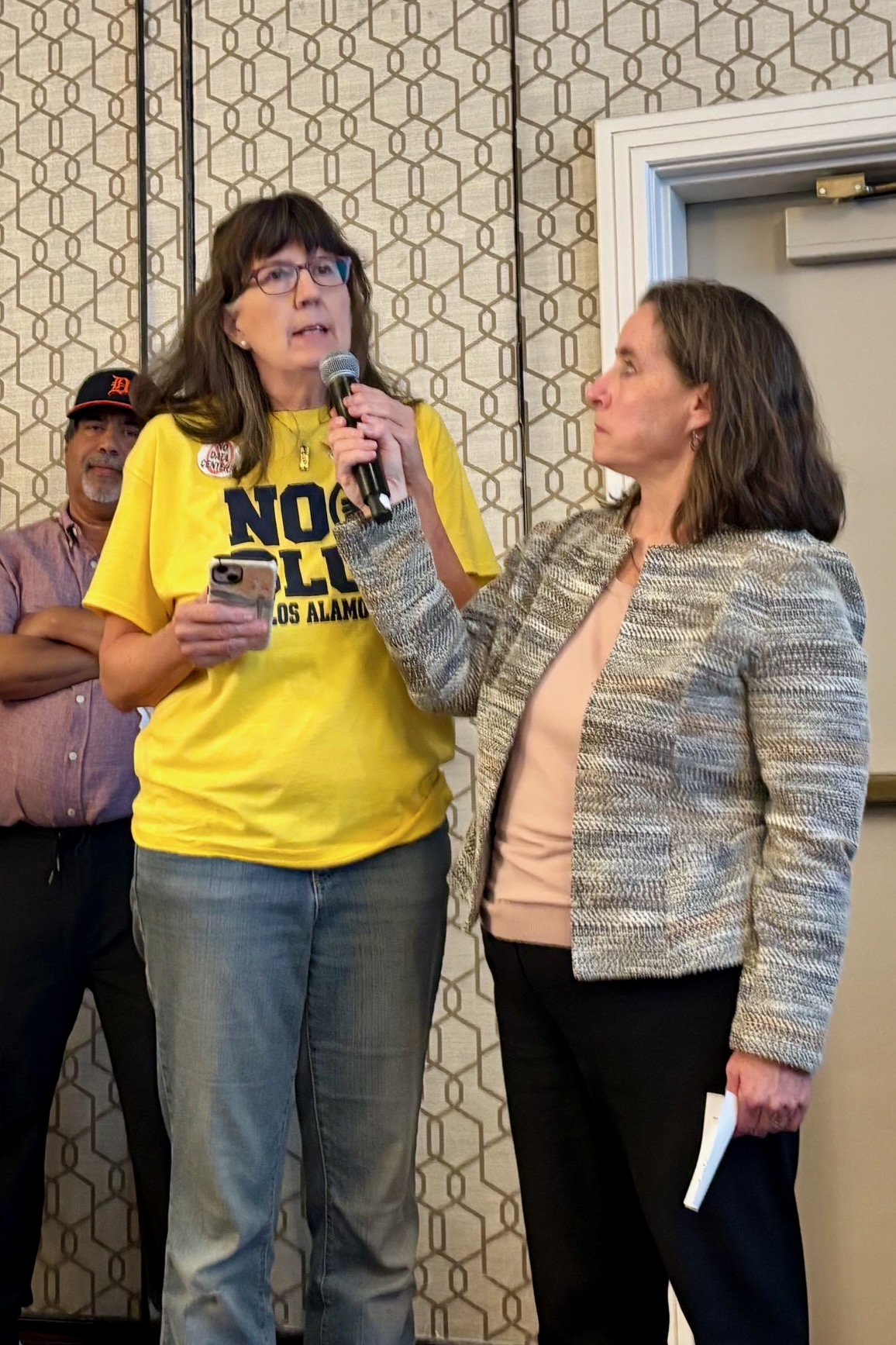
“Since you pay no taxes to our township, we are already subsidizing your vision,” Passmore said.
As a public university, U of M is exempt from local taxes and zoning rules.
Data centers ‘don’t belong in residential areas’: Ypsilanti Township resident
The facility’s full capacity will be 100 megawatts, according to a university official.
Andy Melichar, a Ypsilanti Township resident working in the data center industry, said the project qualifies as a large data center.
A 100 MW data center is generally considered a hyperscale facility, and can use as much power as 80,000 homes, according to The Joyce Foundation.
“I’ve been through beautiful data centers,” Melichar said during the town hall meeting.
“They pour tons of money into them, but they’re still loud, and they still have emissions, and they still have generators, and they don’t belong in residential areas.”
Chris Kolb, U of M vice president for government relations, said the project will create 30 to 50 technical support jobs at the Textile Road site; 200 higher-level research jobs; and 300 temporary construction jobs.
Kolb said he cannot legally state that jobs will only go to township residents.
“It may not sound like a lot, but I will tell you that having those jobs here will be meaningful for the families and individuals who have them as well as their buying power in the community,” Kolb said, adding that additional research jobs could be created.
The university is holding another community town hall meeting from 5:30-7 p.m. Oct. 1 in person at the Ann Arbor Marriott Ypsilanti at Eagle Crest, and virtually.
Ypsilanti Township officials say they were misled about the project
Ypsilanti Township Supervisor Brenda Stumbo said the university has treated the community with “arrogance, disrespect, and disregard,” and changed the details of the project after receiving initial support from township officials.
U of M originally approached the township for a 20-acre project with 200 jobs on-site that would pay $200,000 salaries, before it purchased an additional 124 acres, Stumbo said.
U of M finalized the purchase of the 124 acres in March, informing Stumbo by text message.
The township cannot be partners with entities that “start out with an untruth,” Stumbo said.
State Rep. Jimmie Wilson Jr. (D-Ypsilanti) said he agrees with Stumbo’s comments, and is disappointed in the university for waiting two years after the project was first publicly discussed to hold a town hall.
The collaboration between U of M and Los Alamos on a computing facility was announced in late 2024.
The university held an open house for the project in January of this year that featured one-on-one discussions between project representatives and community members.
Wilson said he hopes another site can be found for the project because “the community doesn’t want it.”
In December, Wilson introduced legislation to rescind a $100-million grant from the Michigan Strategic Fund and Michigan Economic Development Corp. for the project.
The Ypsilanti Township board passed a resolution in August 2025 objecting to construction of the data center at the Huron River site, and recommended relocation to the American Center for Mobility near the West Willow neighborhood.
The board hardened its position in April, passing a resolution opposing the placement of U of M and Los Alamos’ project anywhere in the township.
In April, the Ypsilanti Community Utilities Authority (YCUA) approved a 12-month moratorium on supplying water to resource-hungry facilities, including hyperscale and mid-size data centers, artificial intelligence computing facilities, and high-performance computational centers.
The Ypsilanti Township board approved a six-month moratorium on new, major electric infrastructure in August.
U of M, Los Alamos stress facility’s research function
Steve Ceccio, a U of M professor of mechanical engineering, sought to differentiate the University of Michigan and Los Alamos project from large data centers like the 1.4-gigawatt Oracle and OpenAI data center under construction in Saline Township.
“It’s really a scientific computing center; it’s not a commercial activity,” Ceccio said Wednesday night.
Ceccio said the project’s power draw is “tremendously smaller than these large hyperscale data centers.”
U of M seriously considered other sites for the project, including the American Center for Mobility in West Willow, Ceccio said. The alternative site proved unworkable because of the difficulty of redeveloping a brownfield property and existing real estate agreements, he said.
Water will not be drawn from the Huron River for the facility or discharged into the river, Ceccio said. U of M is still weighing whether it will use an energy-intensive, closed-loop cooling system for the facility, or an open-loop system that can utilize reclaimed water from the YCUA, he said.
Ceccio said he is interested in fostering a dialogue and working with the community.
Rob Green, project director for U of M, said the Textile Road site was chosen because it has access to high-capacity power lines, high speed data, and water and sewer service.
Los Alamos National Laboratory Director Thom Mason said in a letter to the community that the facility will not be a military installation or weapons production site, but will perform research on issues like wildfires, disease, changes in Arctic sea ice, and strengthening the power grid, as well as work related to nuclear modernization.
“This work uses modeling and simulation to help scientists assess the safety, security, and reliability of the nation’s existing nuclear stockpile without nuclear testing,” Mason said.
MORE DATA CENTER NEWS
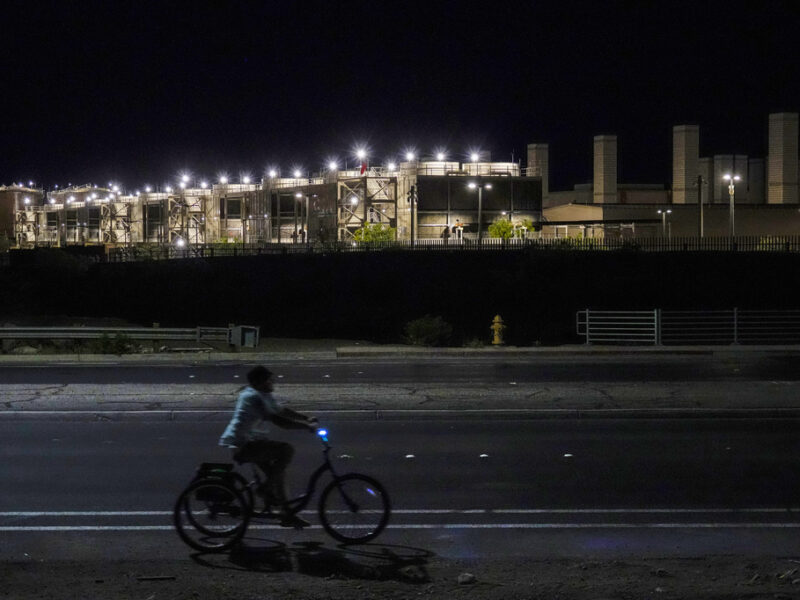
DTE wants approval for Google data center power contracts: What’s at stake with 1-gigawatt Van Buren Township project?
Michigan’s utility regulator may decide Thursday whether to approve DTE Energy’s contracts for Google’s 1-gigawatt data center in Van Buren Township, as Attorney General Dana Nessel and environmental groups call for stronger protections to ensure other customers don’t pay for the facility’s infrastructure costs.


Environmental groups call for Detroit data center moratorium as city develops ordinance
Environmental justice groups criticized Detroit’s data center working group process and call for a moratorium on the facilities.
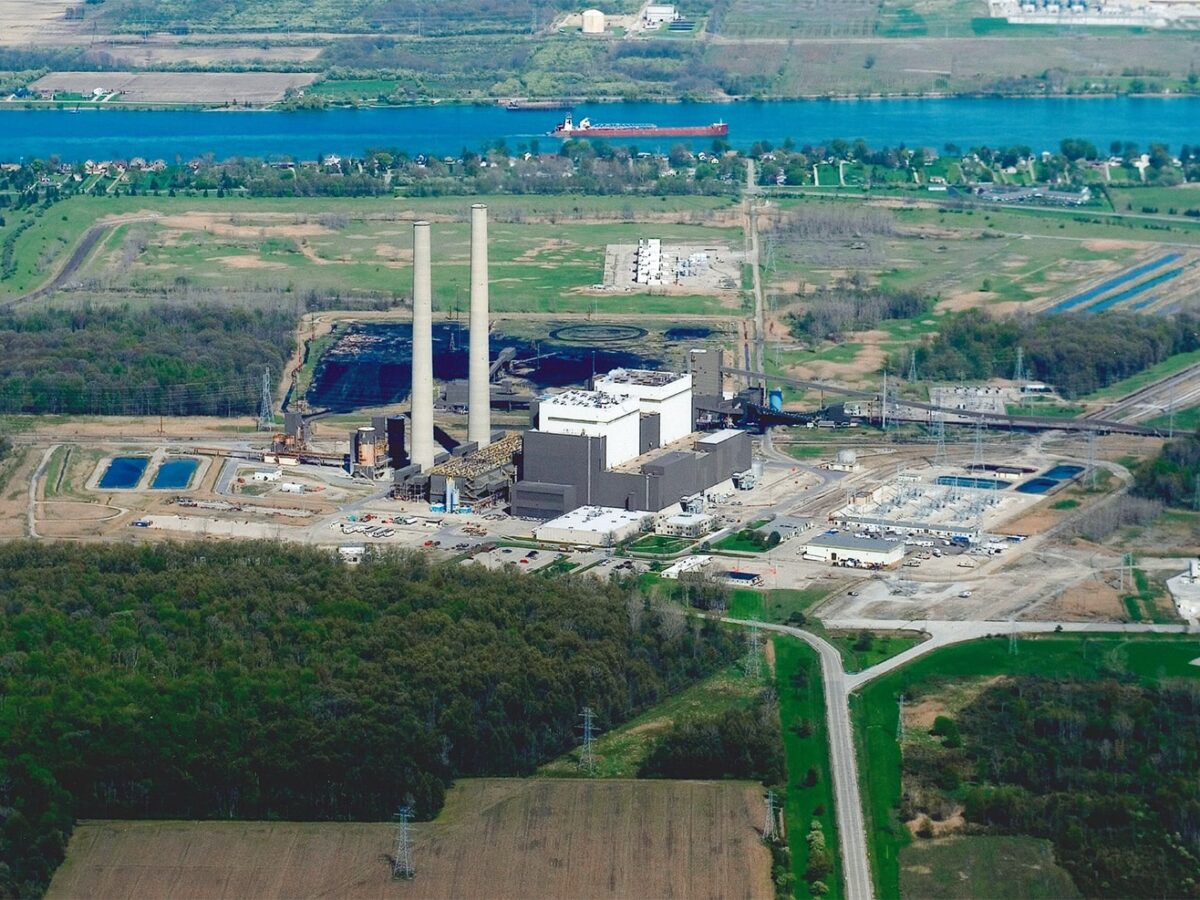
DTE will seek approval for 2 natural gas plants as coal phases out, data centers go online
DTE Energy will ask regulators to approve construction of two natural gas plants totaling 2.1 gigawatts of capacity.