

Check out Planet Detroit’s 2026 Voter Guide to look up your races, compare candidates on environmental issues and follow Planet Detroit’s coverage, from governor to your state House district.
This story was produced as part of Next City’s Local Reporting Hub, with funding from the Kresge Foundation.
Once home to nearly 53,000 residents in 1930, Highland Park’s population and fortunes declined after Ford and Chrysler left, taking with them tax revenue and corresponding investments in the city’s infrastructure — including drinking water.
🗳️ Civic Action Toolbox — see how you can get involved
Why it matters
Highland Park residents are choosing their next mayor as the city faces ongoing water issues, including drinking water affordability and an ongoing sewer charge dispute with the Great Lakes Water Authority.
Who's making public decisions
Highland Park voters will choose between Mayor Glenda McDonald and challenger Shamayim "Mama Shu" Harris. The Highland Park City Council passed a shutoff moratorium. The Great Lakes Water Authority provides the city's drinking water and charges the combined sewer overflow rates the city disputes.
Upcoming Meetings
Deadlines & Notices
- ✓Election day, Nov 3 — polls open 7 a.m. to 8 p.m. (Election deadline · Michigan Secretary of State)
by Nov 3, 2026
General election. Polls are open 7 a.m. to 8 p.m.; anyone in line at 8 p.m. may vote.
Find your polling place → - ✓Vote early in person, Oct 24 to Nov 1 (Election deadline · Michigan Secretary of State)
through Nov 1, 2026
Nine days of early in-person voting, Oct 24 through Nov 1, at your community's early voting site.
Find your early voting site →
Civic Actions: What You Can Do
- ✓Confirm your early or Election Day voting location →
In-person early voting runs through Nov. 1, and polls are open on Election Day, Nov. 3, from 7 a.m. to 8 p.m. Check your polling place and sample ballot on the Michigan Secretary of State's voter information site. - ✓Write a letter to the editor →
Share your perspective with your community. - ✓Register to vote or check your registration →
Make sure your voice counts in the next election.
Organizations to Follow
What to watch for next
Watch for the outcome of Highland Park's city election Tuesday, and how the city uses the 90-day shutoff moratorium to conduct outreach on its income-based drinking water payment plan.
Are you taking action? Let us know.
Powered by Civic Action Toolbox
Due to mounting debt, an emergency financial manager was appointed to the city between 2001 and 2009. Highland Park’s water treatment plant closed in 2012. The 3-square-mile city now has an estimated 8,248 residents.
As Election Day nears and Highland Park chooses its next mayor, water troubles continue to impassion the city’s residents.
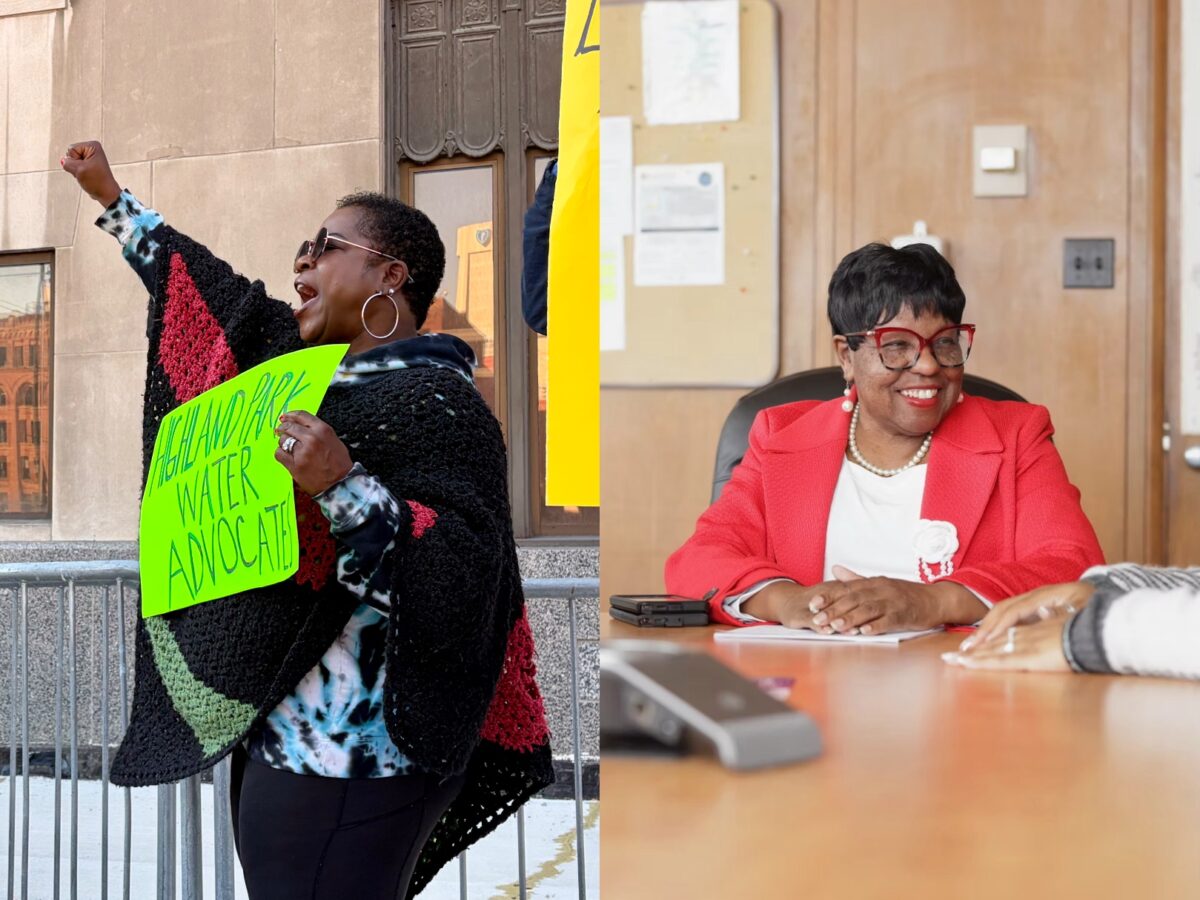
Shamayim “Mama Shu” Harris, a longtime resident and developer of the eco village Avalon Village, helped distribute water bottles when residents lived under two boil water notices that spanned a total of 13 days in March 2025.
As a member of the Highland Park Community Crisis Coalition, Harris partnered with local organizations and faith leaders to distribute the water.
Harris is challenging incumbent Mayor Glenda McDonald on Tuesday’s ballot.
McDonald led the city through an ongoing dispute with its water utility, the regional Great Lakes Water Authority.
The city and water authority settled long-running litigation in 2024 in a deal that includes $70 million in state funding for the city’s water infrastructure. Highland Park is now contesting the wastewater charges levied by GLWA.
The city’s population has fallen by half over the last quarter-century. Remaining residents and advocates say they are making up for a shrunken tax base and inadequate cost-sharing formula.
Highland Park is requesting a $1.5-million reduction from GLWA to its combined sewer overflow bill for fiscal year 2026. The charges are based on a 1999 allocation that uses population data and impervious area, according to city documents. The city’s position is that its CSO costs should be based on metered wet weather sewer volumes.
“We have less than 10,000 people in our city, and it seems like we’re paying for ghosts,” said Linda Wheeler, a resident and member of the grassroots Highland Park Water Advocates organization.
McDonald, Harris on drinking water source, costs
The mayoral candidates said they want to work with state legislators to create a statewide water affordability program.
Harris wants to improve communication and coordination with residents who are struggling to pay their water bills, she told Planet Detroit.
“What I’ve seen is a breakdown in the things that have happened with the infrastructure and how it has caused a crisis in the community,” said Harris.
“There’s been several water boil alerts. We have had to step in … in cases of an emergency, and so we’ve seen that over and over.”
The state-funded, multiyear project to replace water main pipes and service lines contributed to the water pressure drops behind the boil alerts, Planet Detroit reported at the time.
McDonald said her administration is “very forthcoming with people” on construction projects by the city’s water department.
“Citizens will be made aware of when they will need to turn off water or when they would need to dig up pipes and things like that,” and when workers will need to enter homes to make a connection, she said.
The mayor said of the city’s drinking water affordability concerns: “I want everybody’s water to be affordable, mine included, because I pay a lot too, just like everyone else.”
Highland Park’s water treatment plant was shut down indefinitely in 2012 due to lack of repairs. Before the shutdown, the city sourced its water from a Lake St. Clair intake.
The city switched to Detroit water on an emergency basis. GLWA, the regional utility, came into being in 2016 as part of a deal made as Detroit prepared to exit municipal bankruptcy.
Harris and McDonald are in agreement on the desire to reestablish the city’s drinking water facility.
In the longer term, Harris said she wants to explore reestablishing Highland Park’s water plant, beginning with reviewing contracts and understanding the city’s options.
“Talking to the citizens, they want their own water plant back, and any way that we can make that happen, that’s what I want to do,” she said.
McDonald said she is “very serious” about reopening the water plant, adding that the city’s agreement with the state requires it to first replace its century-old water mains.
Highland Park enacts water shutoff moratorium, plans outreach on payment plans
Highland Park City Council passed a 90-day moratorium on water shutoffs Oct. 5.
The moratorium calls for the city’s water department contractor, Metro Consulting Associates, to hold public meetings and explain water payment options during the three-month pause.
Residents who enroll in the city’s payment plan can pay 5% of income for current water bills and outstanding balances. It requires residents to opt in to the plan through a Water Department customer service representative.
Information about the payment plan is available on the city’s website. Printed flyers are available at Highland Park City Hall, next to the Water Department customer service desk.
The flyer shares information about programs available from two nonprofits to help residents pay their water bills: the Heat and Warmth Fund’s MI WATER program and Wayne Metropolitan Community Action Agency’s Water Affordability Program, which offers up to $3,000 in assistance for residents with overdue water bills or who are at risk of service shutoffs.
McDonald said water shutoffs have occurred in Highland Park in the last year-and-a-half since the city entered into the settlement agreement with GLWA. She did not provide the number of shutoffs.
Stipulations exist to prevent shutoffs that take place in the middle of winter, or affect vulnerable groups like low-income families or seniors, she said.
Highland Park Water Department Director Damon Garrett did not respond to multiple requests for comment on water payment plans and shutoffs.
Highland Park resident Carolyn Baker, executive director of the General Baker Institute, a community nonprofit, said the city’s payment plan is an attempt to limit the scourge of shutoffs that her mother and other water activists fought through the early 2000s.
“Whether you are low-income or senior, it doesn’t matter,” Baker said. “If you just couldn’t afford it, you can just go and say, ‘I can’t afford it,’ and you should be able to be put on this plan.”
Baker’s mother, Marian Kramer, a longtime welfare rights organizer, was a plaintiff in a 2015 water lawsuit as a member of the Highland Park Human Rights Coalition.
Although the Wayne Metro and THAW assistance programs are helpful, Baker said they serve as a “Band-Aid,” not a long-term solution to the affordability issues confronting Highland Park residents.
With a growing number of communities across the United States struggling to afford water, advocates have petitioned for moratoriums and income-based affordability programs to protect residents from the financial, physical, and emotional toll of water shutoffs.
In Metro Detroit, groups such as the Highland Park Human Rights Coalition, People’s Water Board Coalition, and We The People of Detroit spearheaded efforts to enact affordability policies at the municipal and statewide level in response to mass water shutoffs that impacted residents through most of the first quarter of the 21st century.
Cities such as Philadelphia, Baltimore, and Detroit have adopted and enacted the kinds of affordability programs that Highland Park advocates say the settlement’s payment plan offers.
In August, Baker said she began to hear about possible shutoffs after speaking with staff from local assistance programs. Baker and other residents raised the shutoff issue at multiple city council meetings, requesting a moratorium and better management of the payment plan, of which she said residents are unaware.
A 2022 University of Michigan statewide study found that shutoffs require families to ration water, and engage in the physically demanding task of transporting water from neighbors’ houses or businesses. In some communities, children were removed from homes after the loss of water access.
Water bill litigation
Highland Park residents were threatened with foreclosure when overdue water bills were placed as liens on properties during the emergency financial manager period, according to a 2007 Metro Times report.
In 2015, a handful of residents and water activists including Kramer sued the city, alleging illegal billing practices, no due process, illegal shutoffs, and rolling arrearages on property taxes.
“Our goal was to make sure that people were not getting their water shut off,” Alice Jennings, one of the plaintiffs’ lawyers in the 2015 lawsuit, said at a Thursday, Oct. 29 town hall meeting.
After Highland Park’s water treatment plant closed and the city began to receive water and sewer services from Detroit, some residents received inaccurate bills ranging from “several hundred to several thousand dollars,” according to the class action lawsuit.
“I remember some people’s water bills were $10,000,” said resident and water advocate Wheeler.
40.9% of Highland Park residents live below the federal poverty line. The median household income is $29,300
The 2019 settlement of the lawsuit produced the city’s water affordability plan, which Jennings said should protect Highland Park residents “from being emotionally affected by worrying about your water being shut off.”
Beyond ensuring the affordability plan is in compliance, Jennings said she and other advocates want improved communication between residents, city government, and local nonprofits assisting residents with utility bills.
“We want a hotline, so if someone’s about to face water shutoff, they can immediately call that hotline, and they can get on the list, and it freezes them from getting shut off,” she said.
Candidates say they’ll work on utility affordability
Harris said the burden of utility affordability continues to fall on residents, and it’s one that has yet to be solved under McDonald’s administration.
One of Harris’ policy goals is to establish a Highland Park Initiative, a door-to-door intake process that would connect existing organizations and services to the city’s residents, and narrow communication gaps.
“I want to be able to touch each resident here face-to-face to know exactly what that household needs,” said Harris.
McDonald said that if she’s reelected, she wants “to continue making progress and working with the citizens to make sure that they have resources that they need in order to keep their water on.”
MORE HIGHLAND PARK COVERAGE
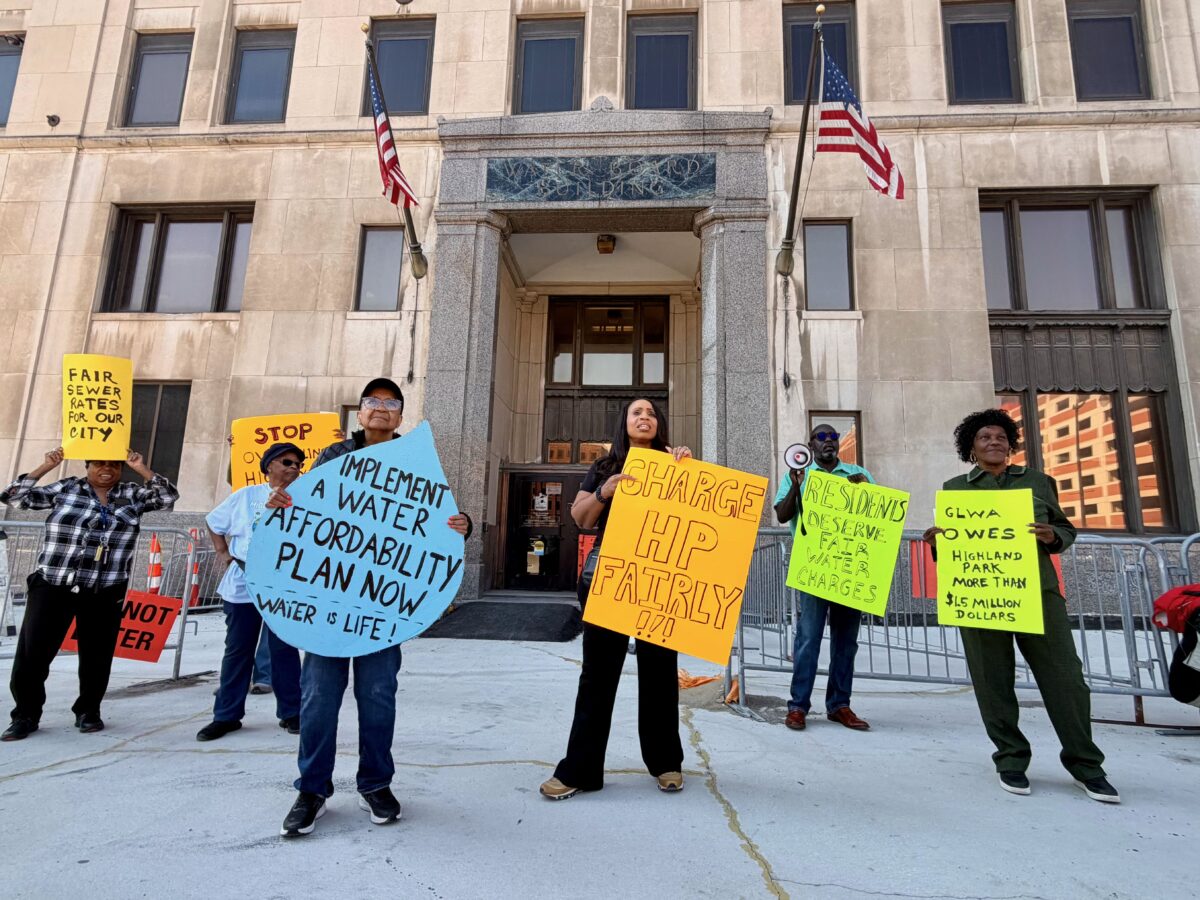
Highland Park residents say Great Lakes Water Authority overcharged $1.5 million for sewer fees
Highland Park residents protest outside a Great Lakes Water Authority meeting, alleging $1.5 million in sewer overcharges. GLWA says it is following a 2024 settlement.


Highland Park’s water director finds purpose serving a community that looks like him
Damon Garrett, one of few licensed Black engineers in Michigan, has spent a decade directing Highland Park’s Water Department through infrastructure challenges and a historic water line replacement project.

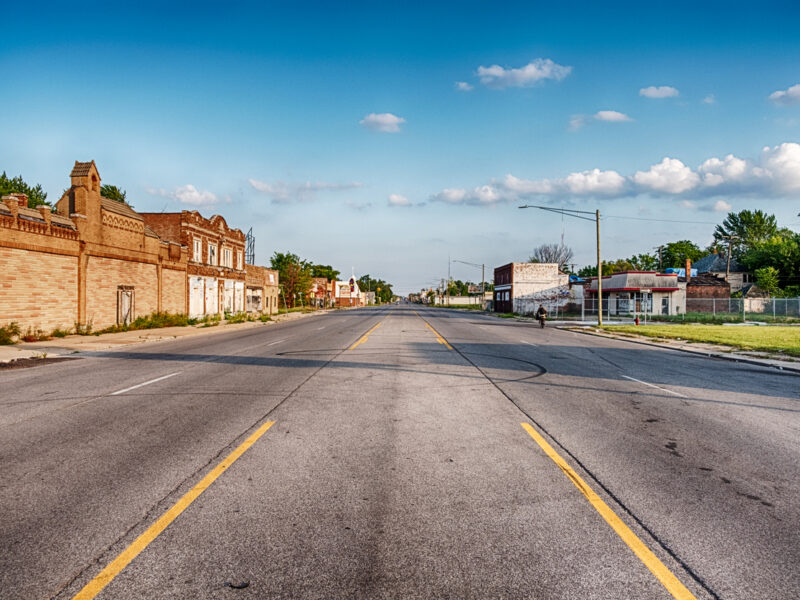
Highland Park residents face boil water advisories as city replaces century-old pipes
Highland Park resident Runae Ford said the latest boil water advisory couldn’t have come at a worse time: the end of the month. “At least do something about our water bill,” she says. “We’re paying for something we cannot use.”

