

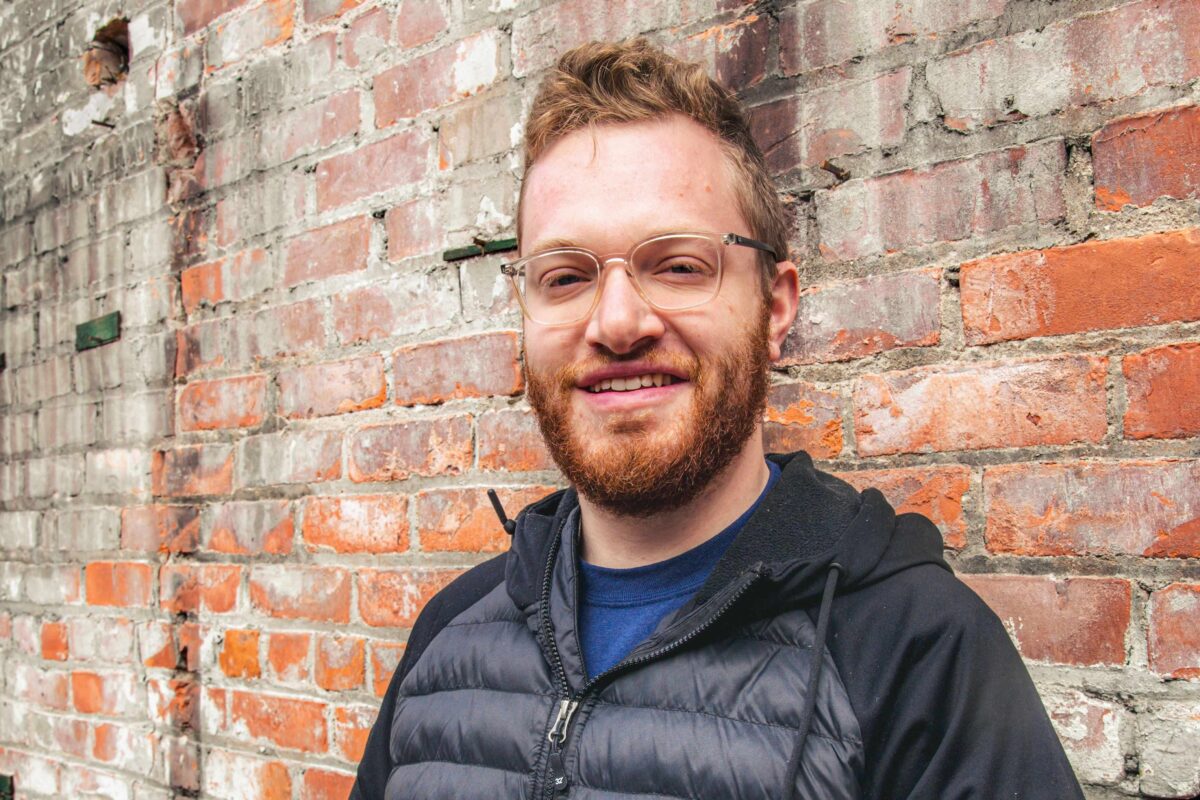
Overview:
- Northwest Goldberg, a historically Black and Jewish neighborhood on Detroit's west side, has lacked adequate food access for decades, says Jeremy Rosenberg.
- Mezuzah, a two-year-old nonprofit led by Detroit native Rosenberg, is working to open a micro market and coffee shop in the neighborhood.
- The organization aims to build inclusive Jewish community life in Detroit while addressing food access needs that affect all neighborhood residents.
Planet Detroit’s neighborhood reporters are local residents who cover health, environment and climate issues in their neighborhoods. The Lab is made possible with the generous support of the Kresge Foundation.
Northwest Goldberg, a historic neighborhood on Detroit’s west side, has been a food desert for at least two decades, according to Jeremy Rosenberg.
Rosenberg, a Detroit native, grew up in the suburb of West Bloomfield Township, before moving back to the city almost 10 years ago. working to bring a micro market and a coffee shop to Northwest Goldberg through his nonprofit, Mezuzah.
Mezuzah is focused on building an equitable and vibrant Jewish community in the neighborhood, while supporting Jewish Detroit more broadly.
The organization, which Rosenberg started two years ago, works alongside other neighborhood revitalization initiatives led by NW Goldberg Cares, a community development organization founded by lifelong resident Daniel A. Washington.
Food access is a vital way to support a walkable, inclusive community in a historically Black and Jewish part of the city, Rosenberg said. Jewish communities in Southeast Michigan have increasingly moved out of Detroit, and Mezuzah is Rosenberg’s response to that suburbanization.
“The object of it all is to be as inclusive as possible and uplift the entire neighborhood at the same time,” he said.
In this interview, Rosenberg spoke about why Mezuzah chose NW Goldberg, what it means to build Jewish community life in the city, and how projects like kosher markets and coffee shops could address the needs of the neighborhood.
Q: What do you spend your day to day time on right now?
Rosenberg: Northwest Goldberg has been a food desert for at least two decades now. My wife and I and a couple other people are trying to bring a market, not a full-on grocery store, but a micro market and a coffee shop, to the neighborhood. A lot of my time goes into community building around that, and figuring out fundraising and how we fund it.
Q: What is Mezuzah?
We do a lot related to Black and Jewish history and Jewish community building, because a lot of Jewish stuff happens in the suburbs, and Jewish families were often the only ones who could sell to Black families during neighborhood transitions. But here in Northwest Goldberg there was a longer overlap, and it was more integrated between those two communities for a while.
Q: How does the market idea connect to that mission?
Bringing a small grocery store to the neighborhood supports our mission, but it also benefits everybody who already lives here who has not had food access for years. We do programs and infrastructural campaigns like that to try to make life as easy as possible for everybody here.
We are doing it through a Jewish lens because we are Jewish and that is what we know, but the object is to be as inclusive as possible and uplift the entire neighborhood at the same time.

NEIGHBORHOOD REPORTING LAB STORIES
How black mold and flooding shaped one Detroiter’s fight for community health
After losing family members to mold-related illness in her Detroit home, Najmah Anderson is channeling grief into storytelling through Planet Detroit’s Neighborhood Reporting Lab, documenting how environmental injustice impacts her community.

North End resident wants urban farms to connect with neighbors who don’t know they exist
Catherine Kurth has watched Detroit’s urban farming scene grow for years. Now living in North End, she’s focused on bridging the gap between community gardens and the neighbors who don’t know they can access them.

Sarah Johnson trades event planning for storytelling: ‘For me, it’s like breathing’
Sarah Johnson shifts from Detroit events to writing after pandemic pause, joinsPlanet Detroit’s Neighborhood Reporting Lab program.

