

Overview:
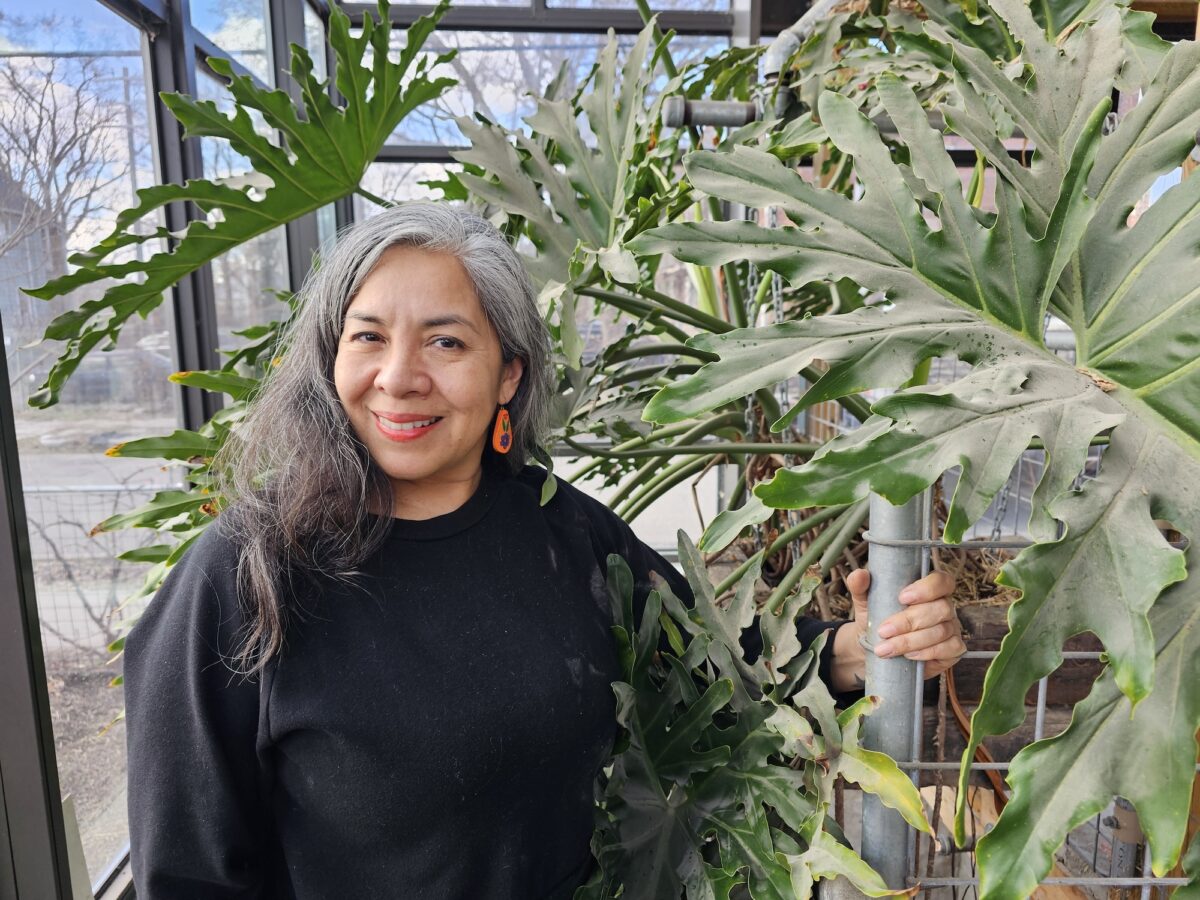
- Raquel Garcia leads Southwest Detroit Environmental Vision with a hands-on approach rooted in her personal experience after her son tested positive for lead at age 3
- SDEV conducts door-to-door outreach to collect real-time community data, equipping residents with air quality sensors and seats at planning tables to drive policy changes
- Garcia's team will lead community engagement for the Detroit/Wayne County Port Authority's environmental justice initiatives, including hydrogen-powered transportation to eliminate tailpipe emissions
Planet Detroit’s neighborhood reporters are local residents who cover health, environment and climate issues in their neighborhoods. The Lab is made possible with the generous support of the Kresge Foundation.
For Raquel Garcia, the distance between a city planner’s map and a resident’s front porch can be miles wide if it isn’t bridged by conversation. Since taking the helm of Southwest Detroit Environmental Vision in 2019, Garcia has worked to move community engagement from a bureaucratic checklist to neighborhood-driven power.
Her daily work involves translating complex environmental health policies into action, whether she’s walking a resident through the impact of local emissions or organizing a strategy session to strengthen civic participation.
On a brisk Tuesday morning in Southwest Detroit, Garcia doesn’t start her day behind a desk. She’s on a residential sidewalk, clipboard in hand, within earshot of nearby industrial corridors.
This hands-on approach draws from a career spent working across Detroit’s social and political landscape. Garcia previously served as director of housing and special projects for Global Detroit, where she secured immigrant access to affordable homeownership through land bank engagement and language-access programs.
Whether serving on the City of Detroit Board of Ethics or advising the Detroit City Council Immigration Task Force, Garcia’s focus remains on the neighborhood. Her 15 years in higher education and her roots as an immigrant rights organizer serve as the foundation for her efforts to ensure Southwest Detroiters are not just informed by policy, but are driving it.
“When we go door-to-door, we aren’t just handing out flyers,” Garcia said. “We are collecting the live data of neighborhoods. Formal studies show us the parts per million in the air, but only a mother living next to a freight route can tell you how that dust affects her child’s asthma at 3 a.m. Or the mother who wipes gray dust from her windows every morning, watching it settle again by afternoon as trucks move piles of industrial dirt just down the street.”
‘The not knowing ends with us’
For Garcia, the fight for environmental justice is also personal. She still remembers the day her son, then only 3 years old, tested positive for lead.
“Shock, unbelief, and emotional,” Garcia said, her eyes welling with tears. “I was in a paralyzing fog. I didn’t know where the lead was coming from, how to fix my home, or who to even call for help.”
Environmental policy suddenly became a daily routine of water filters, strict medication schedules, and deep-cleaning cycles to prevent further exposure. The realization that her own home could be a hazard reshaped her career.
“I remember that feeling of not knowing how to protect your own child in your own house,” Garcia said. “I knock on doors today because I refuse to let another parent in Southwest Detroit navigate that fog alone. My mission is to make sure the ‘not knowing’ ends with us.”
From frustration to the planning table
At SDEV, the engagement process rarely begins in a conference room. It starts with a neighbor standing on a vibrating curb, shouting over truck traffic to point out a pothole or a pile of uncollected blight.
“We take that raw, exhausted frustration and swap the grievance for a handheld air-quality sensor and a seat at the planning table,” Garcia said. “Suddenly, the dynamic shifts. They aren’t just pointing at cracked asphalt or a dark alley; they are using hard data to map out diverted truck routes and demanding lower industrial emissions with the authority of an engineer.”
By grounding policy in everyday struggles, Garcia ensures environmental projects aren’t mandates handed down from city hall. When the city plans a new park, SDEV brings residents into the process. They review blueprints to make sure the location isn’t just an empty lot on a map, but a safe, accessible space with lighting and amenities that reflect what the community actually needs.
“When people feel their voices are heard and valued, they are more likely to participate in implementing solutions,” Garcia said. “They don’t just show up for the meeting. They show up for the future of the neighborhood.”
SDEV will also lead community engagement and worker recruitment for the Detroit/Wayne County Port Authority’s new environmental justice initiatives, per an Oct. 29, 2024, announcement. Garcia said the project’s focus on zero-emission fuels will “result in the measurable removal of emissions” and prepare the region for clean energy technology.
Her latest initiative introduces hydrogen-powered transportation to the port to eliminate tailpipe emissions. “We applied for a mini electrolyzer with the port,” Garcia said, noting the technology creates fuel from water to improve local air quality.
Block by block
Garcia credits mentor Dr. George W. Swan III with shaping how she leads.
“Who are you teaching?” Swan would ask. “If you’re doing it alone, you’re doing it wrong.”
That lesson plays out on the sidewalks of Southwest Detroit, where Garcia and her team knock on doors and listen.
Nicole Alequín-Avilés, SDEV’s project manager, is one of the people doing that knocking. She spends much of her time in residential blocks shaped by nearby industry, where neighbors regularly raise concerns about pollution and quality of life.

“Changes take time, and it takes more than one person to make change, right? I think that change is collective,” Alequín-Avilés said.
The team divides tasks and shares the load so they can respond quickly without burning out. “We tackle things as a team,” Alequín-Avilés said. “When individuals, communities, and governments unite, the combined strength creates a multiplier effect.”
During one visit, a man hesitated before speaking. He told Garcia he had a felony record and believed his voice didn’t matter.
“He said he felt like he didn’t have any rights,” Garcia recalled.
After talking about community meetings and civic participation, Garcia said the man became emotional.
“I remember he started crying,” she said. “Then he hugged me and said, ‘Really? My voice matters?'”
The conversations are rarely predictable. On another visit, a woman opened the door and quietly asked where she could find help for domestic violence. Garcia returned later with information and connected her with local resources.
“You just never know what’s happening behind those doors,” Garcia said, her eyes filling with tears. “You have no idea what people are going through.”

NEIGHBORHOOD REPORTING LAB STORIES

How Michigan attorney general race could reshape utility regulation, ratepayer protection
Michigan’s next attorney general will decide whether to continue Dana Nessel’s work challenging utilities over rate hikes and environmental issues.

Michigan environmental news: 105,000 without power after overnight storms, more severe weather expected
Overnight storms left over 105,000 Michigan residents without power, with more severe weather expected Thursday. Plus: fall vaccines arrive, Sterling Heights unveils green infrastructure project, and Lincoln Park raises water rates.


CatchLight selects Planet Detroit for grant to report on climate anxiety among Detroit youth
Planet Detroit receives a national grant to report on how climate change and pollution affect the mental health of young Detroiters through Climate Cafés, photography workshops, and youth-led storytelling.