

Overview:
- Michigan's inflation-adjusted average water costs increased 188% between 1980 and 2018, with Detroit and Flint seeing jumps of 285% and 320%.
- Up to 10.75% of Michigan households are water-burdened, spending over 5% of income on water.
- State and federal lawmakers have introduced bipartisan water affordability bills that would cap bills for low-income residents and add shutoff protections.
This story is part of a series by Planet Detroit on the environmental and health issues at stake in the 2026 midterm election.
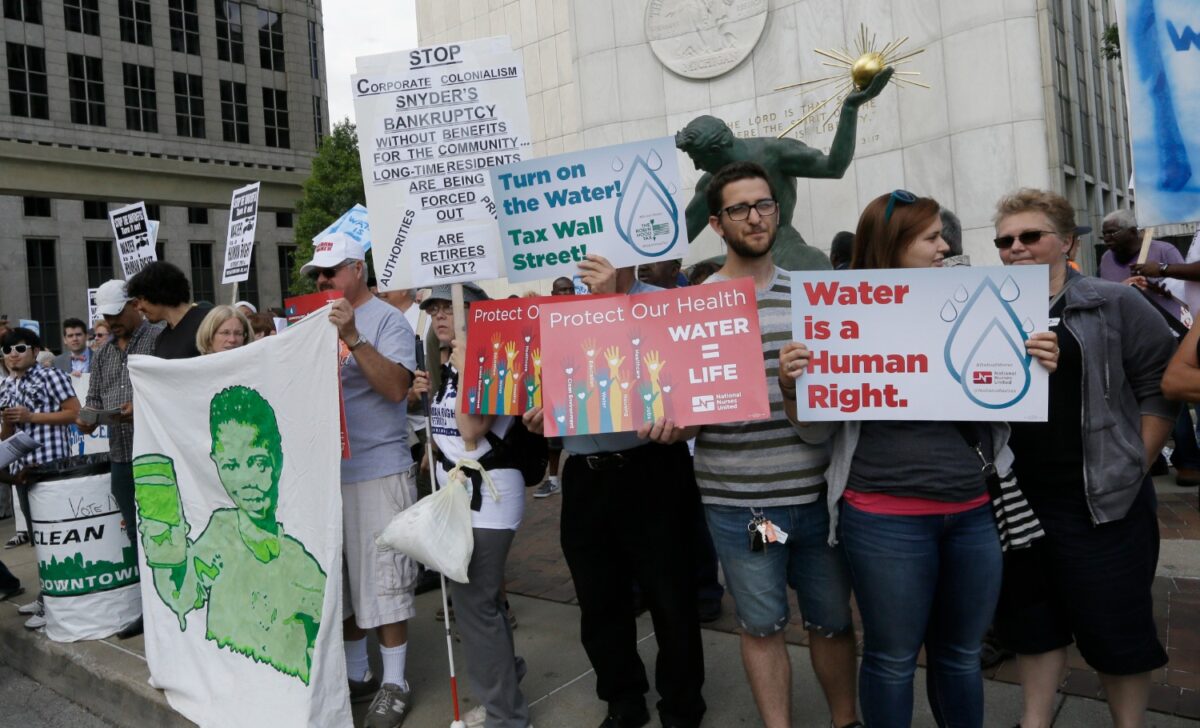
Water shutoffs in Detroit made headlines in 2014 during the city’s financial crisis, with the Detroit Water and Sewerage Department disconnecting an estimated 140,000 homes between 2013 and 2020.
🗳️ Civic Action Toolbox
Why it matters
Who's making public decisions
Michigan legislators have proposed water affordability legislation, with State Sen. Stephanie Chang’s bipartisan bill awaiting floor action after passing committee in November, and separate House legislation awaiting a hearing.
Contact Your Representatives
Civic Actions: What You Can Do
Organizations to Follow
What to watch for next
Watch whether the Michigan House holds a hearing on its water affordability bill and whether the Senate bill that passed committee in November comes to a floor vote in this legislative session.
Detroit’s Lifeline H2O program is expected to reopen in late summer, according to the water department.
Are you taking action? Let us know.
Civic resources compiled by Planet Detroit
United Nations experts issued a statement in 2014 that that Detroit’s water shutoffs were “contrary to human rights,” arguing that disconnections should not be allowed when there is a genuine inability to pay.
Residents and activists have frequently said that water rate hikes could lead to increases in waterborne illnesses and force residents to choose between covering water bills and paying for other essential needs like food and medicine, with low-income areas and communities of color being hit the hardest.
A 2022 University of Michigan study found that shutoffs required families to ration water and engage in the physically demanding task of transporting water from neighbors’ houses or businesses, and that, in some communities, parents have had their children removed from the home after losing water access.
Water affordability is a statewide issue in Michigan.
The U of M study found the inflation-adjusted average cost of water increased by 188% in Michigan between 1980 and 2018.
The problem was especially pronounced in certain cities, with Flint and Detroit seeing increases of 320% and 285%, respectively, according to the report.
6.59% to 10.75% of Michigan households are water-burdened, meaning they spend more than 5% of their income on water service, the U of M report said.
Michiganders’ water costs have risen as federal funding for water systems plummeted. Federal funding covered 50%-60% of capital funding for water infrastructure in the later 1970s and early 1980s, but paid for 7% in 2021, according to a report from the Value of Water Campaign, a coalition of nonprofits, utilities, and private companies.
Water affordability legislation still out of reach
In Detroit, the city’s Lifeline H20 plan is scaled back from its initial iteration, having failed to secure permanent funding. The Lifeline program previously served 29,000 households; 4,711 are enrolled in Lifeline H20 as of May 27.
Lifeline H20 is closed to new applicants due to funding being exhausted, and is expected to reopen in late summer, according to the Detroit Water and Sewerage Department.
Michigan lawmakers have attempted to pass statewide water affordability legislation during recent legislative sessions that could help support water systems and customers.
State Sen. Stephanie Chang (D-Detroit) spearheaded legislation that attracted bipartisan support and backing from utility industry leaders. The legislation would create a statewide water affordability program that caps water bills for low-income Michiganders and add shutoff protections, among other measures.
Water affordability legislation introduced in the Michigan House would enact income-based billing, debt forgiveness, and shutoff protections.
The Senate legislation passed out of committee in November. The House bills have yet to receive a hearing.
At the federal level, U.S. Reps. Debbie Dingell (D-Ann Arbor) and Rashida Tlaib (D-Detroit) introduced legislation in April that promotes universal drinking water access for low-income households.
The legislation includes automatic enrollment in access programs and measures to reduce enrollment burdens; assistance for low-income households; prohibitions on water service disconnections and associated fees; and provisions for equitable treatment of owner-occupied households and rental households.
“Our families can’t live without access to water,” Tlaib said in a statement.
“We have a federal program for electricity and gas, but no permanent program for water. Millions of our neighbors across our country are having their water shut off simply because they cannot afford the rising bills.”
DRINKING WATER COVERAGE

Voices: GLWA’s Freud Pump Station and the region’s legacy of racial inequity
The Great Lakes Water Authority is building a 42-foot sanitary pump station in Jefferson Chalmers, a predominantly Black Detroit neighborhood already bearing disproportionate infrastructure burdens.

What EPA’s PFAS rollback means for contaminated Michigan drinking water
The Trump administration announced it’s rescinding federal drinking water limits for four of six PFAS compounds, weakening protections for Michigan communities dealing with widespread contamination from the toxic ‘forever chemicals.’

$10 million in water assistance funding advances in Michigan Senate: ‘Basic human need’
The Michigan Senate Appropriations Committee advanced a budget Thursday with $10 million for water assistance—double last year’s amount but far short of the $60 million advocates say is needed to address Michigan’s growing water affordability crisis.