


Overview:
- Republican Mike Rogers holds up to $250,000 in Blackstone Real Estate Income Trust, which backs data centers; Democrat Abdul El-Sayed's holdings are limited to mutual funds.
- 62% of likely Michigan voters oppose data center development in the state, according to an August poll, putting pressure on candidates to address community concerns.
- Both candidates now support data center moratoriums, though Rogers initially backed streamlined development.
Check out Planet Detroit’s 2026 Voter Guide to look up your races, compare candidates on environmental issues and follow Planet Detroit’s coverage, from governor to your state House district.
Michigan’s data center buildout has emerged as a major issue in the closely watched U.S. Senate race between Republican Mike Rogers and Democrat Abdul El-Sayed.
🗳️ Civic Action Toolbox — see how you can get involved
Why it matters
The next U.S. Senator from Michigan could make policy decisions on artificial intelligence and data centers that affect the utility bills and service Michiganders receive and the state's water resources, among other ramifications.
Who's making public decisions
Michigan voters will decide the Senate race between Mike Rogers and Abdul El-Sayed in the Nov. 3 general election.
Civic Actions: What You Can Do
What to watch for next
Watch for the upcoming Senate election results and whether the winner pursues a federal data center moratorium or regulation.
Are you taking action? Let us know.
Powered by Civic Action Toolbox
After initially expressing support for a plan to streamline data center development, Rogers said in August that he supports a state data center moratorium. El-Sayed released “terms of engagement” for data centers in January and said he supports state and local moratoriums.
Data centers face intense opposition in many Michigan communities, and candidates for office are increasingly calling for moratoriums and guardrails to prevent impacts to the environment or utility ratepayers.
Several voters told Planet Detroit in Saline on Tuesday their vote could be influenced by Rogers and El-Sayed’s track record on speaking out on data centers, the candidates’ financial interests in data center companies, and overall feelings about how well Republicans and Democrats are handling the data center issue.
Rogers reported holdings in a Blackstone real estate trust; Blackstone, an asset manager, is helping to finance the $16-billion Oracle and OpenAI data center under construction in Saline Township.
The Saline Township project is especially fraught, with the township board voting against rezoning land for the development in September 2025 and then agreeing to a settlement after the township was sued by landowners and developer Related Digital.
Augusta Township resident John Gonzalez lives near the site of a data center that was proposed in Augusta Township. The University of Michigan’s planned $1.25-billion Ypsilanti Township computing facility and the Saline Township data center. are also nearby.
Gonzalez is opposed to the projects, and holds more trust in El-Sayed to deal with the data center issue, he said, speaking to Planet Detroit outside a coffee shop in downtown Saline.
“Rogers is more tied to Trump, and Trump is supporting it,” he said, against the backdrop of heavy truck traffic on Michigan Avenue, which locals say has increased with construction of the Oracle and OpenAI facility a few miles down the road.

President Donald Trump is a major booster for artificial intelligence, with the White House saying the nation is “in a race to achieve global dominance in artificial intelligence” that could reap broad economic and security benefits.
Sixty-two percent of likely Michigan voters oppose data center developments in the state, and 73% oppose federal tax breaks or policies to support the facilities, according to an August EPIC-MRA poll commissioned by clean energy advocacy group Climate Power.
The same August EPIC-MRA poll found 34% of likely Michigan voters have a generally favorable view of Trump.
A New York Times and Siena University poll of likely voters released Wednesday shows El-Sayed with a five-point lead over Rogers, 49% to 44%, in a contest that could help decide control of the Senate.
Rogers represented Michigan’s 8th District in the U.S. House of Representatives from 2001 to 2015, and served in the state Senate from 1995 to 2000. El-Sayed is the former health director for Wayne County and Detroit.
Financial disclosures show Rogers’ ties to tech industry, El-Sayed’s mutual fund holdings
Pittsfield Township resident Bob Zammit, who works at a land conservancy, told Planet Detroit that stock trading by lawmakers is a conflict of interest that could influence their decision-making.
Zammit is more understanding of lawmakers who have passive investments in mutual funds and retirement accounts, he said.
Rogers and his wife Kristi Clemens Rogers hold between $1.7 million and $2.6 million in companies that could benefit from policies favorable to tech and AI, investigative news outlet The Lever said in an analysis of Rogers’ July financial disclosure.
Rogers did not respond to a request for comment for this story, including questions on whether he would divest from holdings in data center companies if elected.
Rogers voiced support for the use of blind trusts by lawmakers in a 2024 interview with WZMQ-TV in Marquette during his Senate campaign against Democrat Elissa Slotkin.
“We need trust in the institution and if the easiest way to do that is just ban stock trading – doesn’t mean you shouldn’t own stocks, put it in a blind trust, there’s ways they can protect it so you’re not influencing those decisions,” he said.
Rogers’ financial disclosure shows holdings of between $100,001 and $250,000 in the Blackstone Real Estate Income Trust, which has 29% of its portfolio invested in data centers. None are in Michigan, according to the trust’s website.
Related Digital and Blackstone-affiliated funds are providing equity to finance the Saline Township data center, along with fixed-rate, long-term debt financing anchored by PIMCO-managed funds and accounts, according to an April press release from Related Digital and Blackstone.
The Rogers campaign received $34,500 in donations from seven Blackstone employees, FEC records show.
Blackstone did not respond to a request for comment.
In addition to their investments, Rogers and his wife serve on Forgepoint Capital’s advisory council, and hold investments in two Forgepoint funds. Forgepoint, a venture capital firm invested in many tech companies that use AI, did not respond to a request for comment.
El-Sayed’s campaign did not receive any donations from Blackstone employees, according to Federal Election Commission data.
El-Sayed’s campaign received a $500 donation from an OpenAI employee, and a total of $4,750.99 from four Oracle employees, according to the FEC.
The Democrat’s July disclosure shows holdings in several mutual funds that have investments in tech stocks associated with data center development. For example, El-Sayed has between $50,001 and $100,000 invested in the Amana Growth Fund, which counts Apple, Alphabet, and the AI chip maker Nvidia among its top holdings.
“Abdul does not directly own stock, and he does not control the investments made through mutual funds as part of his retirement account,” El-Sayed spokesperson Roxie Richner told Planet Detroit.
Data centers: Where Rogers, El-Sayed stand
Zammit, the Pittsfield Township resident, said he feels El-Sayed has more credibility on the data center issue, and questioned Rogers’ commitment to reining in the facilities.
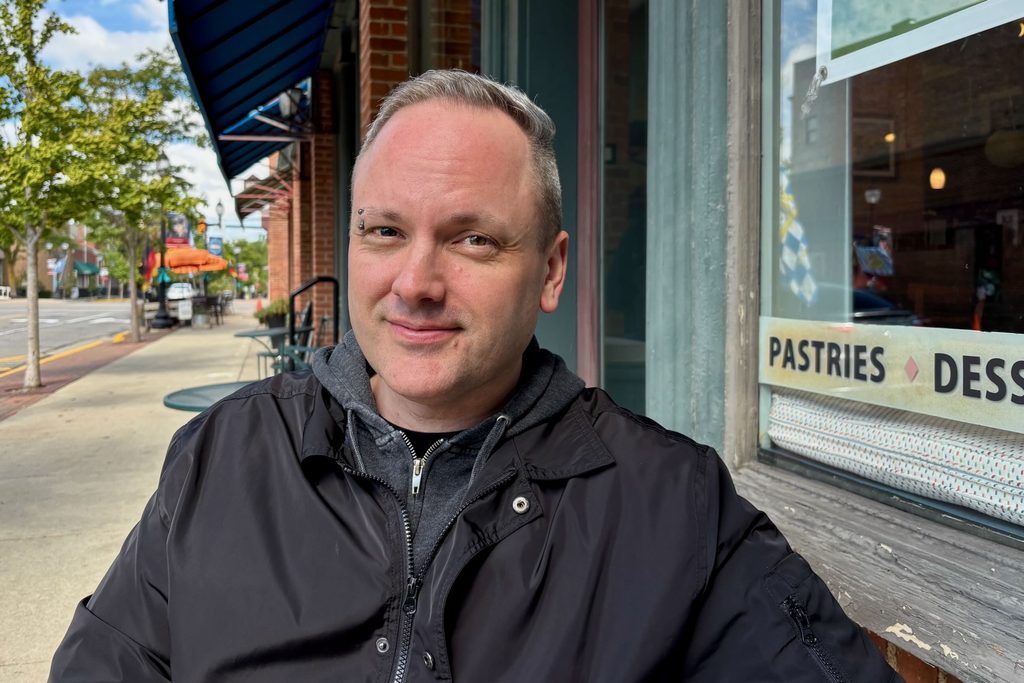
“Rogers is savvy enough to see how unpopular data centers have become and is playing the game,” he said.
On Aug. 20, Rogers said he supports a one-year data center moratorium; does not support a federal ban; and said Michigan needs stronger guardrails to protect other utility customers and water resources, The Detroit News reported.
“I am calling for a one-year moratorium on new data centers until we establish a fair, transparent approval process that puts local communities first,” he said.
In March, Bridge Michigan reported that Rogers endorsed Trump’s “National Policy Framework for Artificial Intelligence,” which looks to streamline permitting for AI infrastructure and operation, as well as provide protections for residential ratepayers.
El-Sayed expressed support for state and local data center moratoriums in a September WJBK-TV interview.
El-Sayed introduced “terms of engagement” for data centers in January that he said will protect other utility ratepayers from data center costs, ensure community engagement and community benefits for the projects, protect energy reliability, safeguard water resources, and require projects to comply with clean energy laws.
“It’s important for forward-thinking, future legislators to be talking about what it looks like to actually stand up for communities and protect them,” El-Sayed told Planet Detroit in January.
Senate race spotlights congressional stock trading ethics
Stock trading by lawmakers is “exceedingly problematic” and creates conflicts of interest, Craig Holman, a government affairs lobbyist at watchdog organization Public Citizen, told Planet Detroit.
Mutual funds, unless managed by a family member or friend, pose far fewer issues because they don’t emphasize specific stocks, and are overseen by third party managers, he said.
Danielle Caputo, senior legal counsel with the nonprofit Campaign Legal Center, said that conflict of interest concerns go down to “virtually zero” with mutual funds.
The Restore Trust in Congress Act — which was introduced in the U.S. House of Representatives in September 2025, and in the Senate in January — would bar members of Congress from owning or trading individual stocks.
The bill doesn’t apply to candidates for office, who may still be private citizens, Caputo said.
Financial disclosures are important partly because they provide a “full picture of who that candidate is,” including whether their values align with those of voters, she said.
Public Citizen’s Holman said the STOCK Act of 2012, signed into law by former President Barack Obama, was an important step forward for reforming stock trading among lawmakers.
The law applied insider trading rules to members of Congress and required that financial disclosures for members of Congress and candidates for Congress be posted on the Senate and House websites within 30 days of filing. The disclosures were mandated by the Ethics in Government Act of 1978.
Many lawmakers continue to trade stocks, Holman said, adding that he supports the Restore Trust in Congress Act.
Rogers served in Congress when the STOCK Act was passed, but did not vote on the bill, which received overwhelming support from House Democrats and Republicans.
El-Sayed supports a ban on congressional stock trading, according to his campaign website.
MORE POLITICS NEWS
Where’s the environment in Michigan election? ‘The vocabulary and framing has changed’
Environmental issues rank near the bottom of voter concerns in Michigan’s 2026 election, but climate and environmental policies are still shaping key races through debates over data centers, energy costs, and corporate accountability.


Michigan constitutional convention opponents say environmental protections at risk: ‘Pandora’s box’
Michigan voters will decide in November whether to hold a constitutional convention. Environmental advocates warn the process could endanger climate protections, clean energy laws, and Great Lakes safeguards.
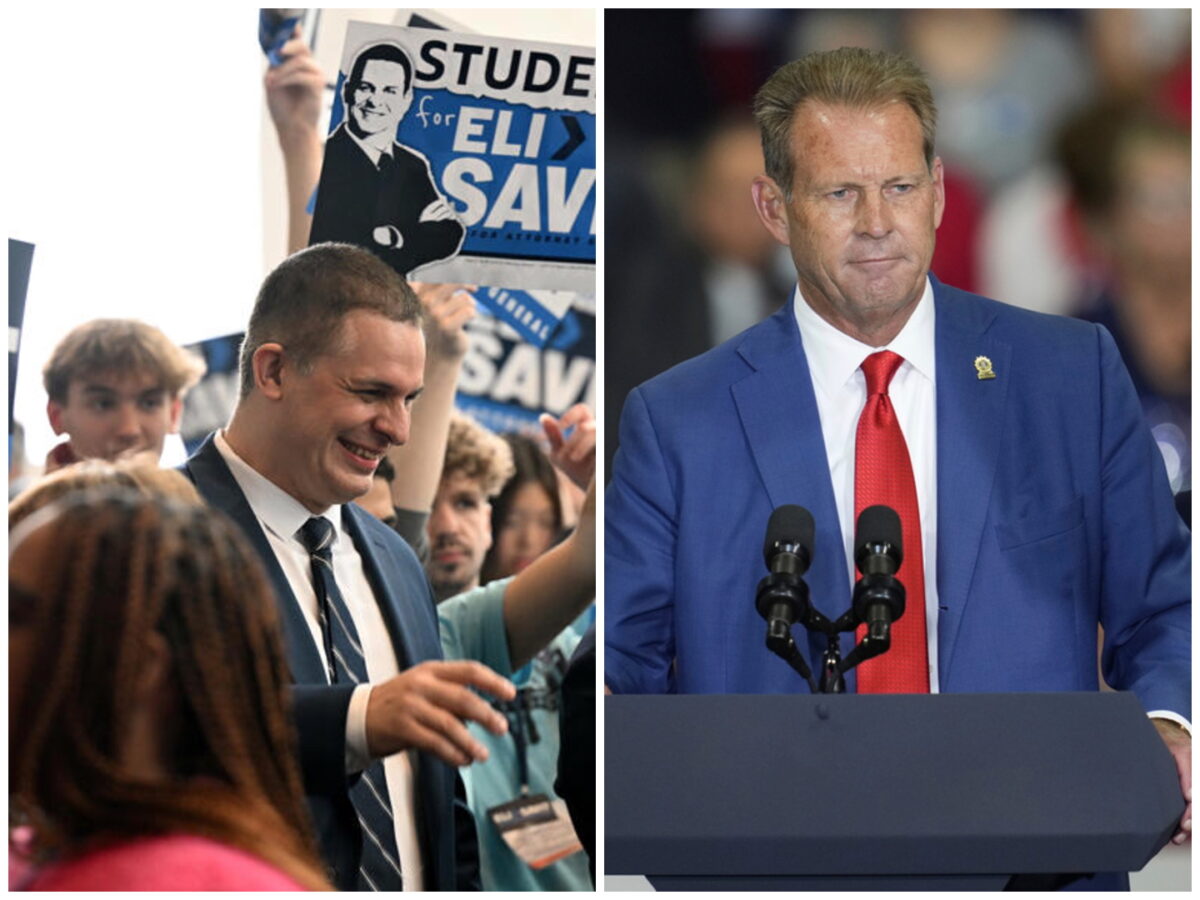
How Michigan attorney general race could reshape utility regulation, ratepayer protection
Michigan’s next attorney general will decide whether to continue Dana Nessel’s work challenging utilities over rate hikes and environmental issues.