

Overview:
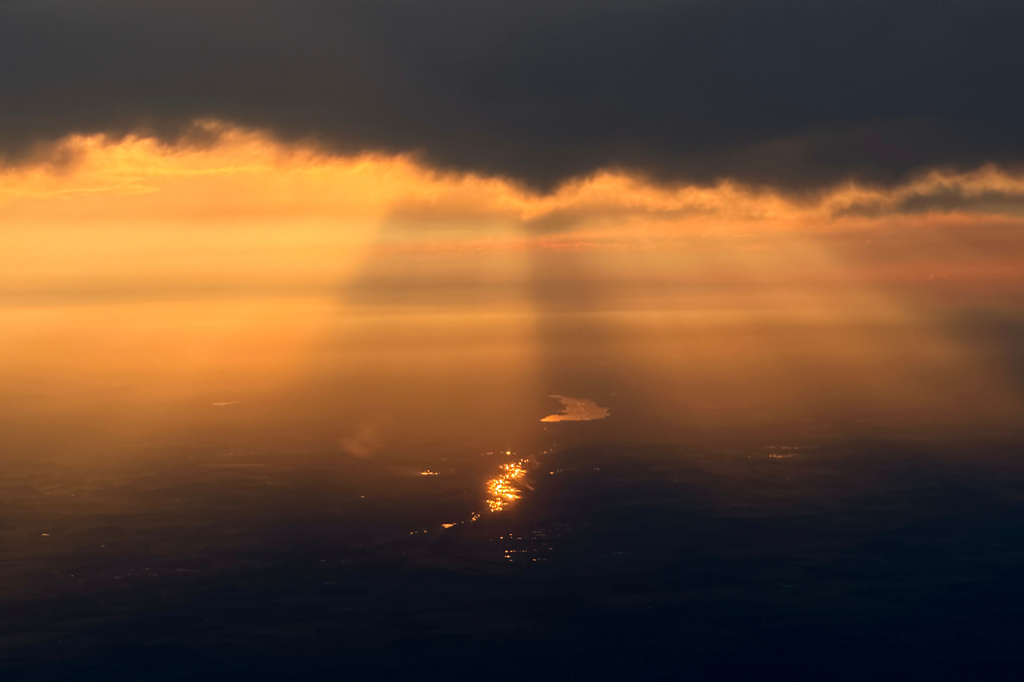
- Detroit's air is clear after wildfire smoke drove AQI values last week to the worst levels seen since tracking began in 1999.
- Recent rainfall in Ontario is helping suppress wildfire smoke, but drier conditions later this week could worsen conditions.
- Experts say keeping indoor air clean is crucial for public health, as wildfire smoke exposure causes increased emergency room visits and long-term health risks, including premature births and cardiovascular problems.
Detroit’s air quality has improved dramatically since record high pollution hit the area last week, but wildfire experts caution that fires burning in Ontario and elsewhere continue to pose a risk.
🗳️ Civic Action Toolbox
Why it matters
Wildfire smoke sent Detroit’s air quality to hazardous levels last week — the worst since air quality index recordkeeping began in 1999 — posing health risks for the general public, and especially those with heart and lung problems, and pregnant people.
Who's making public decisions
Michigan Department of Environment, Great Lakes, and Energy meteorologists monitor and forecast air quality conditions, while Canadian fire management agencies decide firefighting strategies for the Ontario wildfires sending smoke to Michigan.
Upcoming Meetings
Civic Actions: What You Can Do
Organizations to Follow
What to watch for next
Are you taking action? Let us know.
Civic resources compiled by Planet Detroit
Michigan air quality index values for fine particulate matter, or PM2.5, are expected to remain mostly in the good (green) and moderate (yellow) ranges Wednesday and Thursday, Michigan Department of Environment, Great Lakes, and Energy (EGLE) meteorologist Stephanie Hengesbach said in a forecast issued Wednesday.
Recent rainfall in parts of Ontario is suppressing smoke production from wildfires, but fires burning in central and northwestern Canadian provinces could send some smoke toward the western Upper Peninsula, Hengesbach said.
Warmer and drier conditions late in the week could result in fires across Ontario becoming more active, she said.
On Thursday and Friday of last week, Detroit’s air quality was listed as hazardous (maroon) and very unhealthy (purple) on the Environmental Protection Agency’s AirNow website.
The AQI values in the city exceeded 500, the top end of the scale, and represented the worst pollution the city has experienced since regulators began tracking the AQI in Detroit in 1999.
Rain helps Canadian fire crews
Recent rainfall has reduced the risk of another smoke event like the U.S. and Canada experienced last week, Brian Wiens, managing director of the research partnership Canada Wildfire, told Planet Detroit Tuesday.
The risk of another smoke event is not high, “but it’s not zero,” he said.
The rainfall will allow fire crews to bulldoze firebreaks and bring in air tankers of water to manage fires, Wiens said. When fires are raging, the heat and smoke make it impossible to get close, he said.
“The amount of heat coming off these is almost impossible to describe … it’s like having 10,000 electric stoves, every meter going full tilt,” he said.
Lightning becomes less frequent later in the summer, which means there are likely to be fewer fire starts and less of a chance that fire managers will get overwhelmed, Wiens said.
Climate change, remoteness add to Canada’s wildfire challenge
Michigan gubernatorial candidate U.S. Rep John James (R-Shelby Township) and three other Republicans from Michigan’s Congressional delegation signed a July 15 letter to Canadian Prime Minister Mark Carney that blamed Canadian officials for failing to address the causes of wildfires sending smoke to the U.S.
“Sovereignty comes with responsibility, and the responsibility to prevent a foreseeable disaster from crossing into another country’s airspace has not been met,” the letter said.
U.S. agencies could explore “direct involvement in cross-border fuel reduction and firefighting capacity,” the letter stated.
President Donald Trump also laid blame on Canadian leadership in a July 17 Truth Social post that threatened tariffs to offset the costs of pollution.
“We are holding Canada responsible for the fact that they are not properly maintaining their Forests, and Brush therein,” Trump wrote in part.
Wiens expressed frustration that wildfires are being politicized, and noted the difficulty of firefighting in Canada’s immense boreal forest.
The forest stretches across Canada and and covers nearly 700 million acres of the 1.3-billion-acre boreal zone.
Much of this landscape is incredibly remote, lacking in roads, and covered by peat bogs, Wiens said, adding that it would take months to build a road just to reach some fires.
Climate change is increasing the hot, dry, and windy conditions that make wildfires more likely, he said.
Despite the heated rhetoric from some U.S. politicians, Wiens said there is a remarkable level of cooperation among North American firefighters.
“We ship firefighters back and forth all the time,” he said.
Indoor air quality key to protecting public health, doctor says
The last decade shows that exposure to wildfire smoke may become a yearly problem for people in fire-prone parts of the world, Dr. Sarah Henderson, with the British Columbia Centre for Disease Control, said in a Tuesday fire weather outlook.
“So far, the evidence suggests that wildfire has a strong effect and may be more toxic than air pollution from other sources,” Henderson said.
Smoke leads to an increase in emergency room visits for people suffering from heart attacks and other cardiovascular and lung issues, as well as mental issues, doctors and scientists told the Associated Press.
Smoke also harms pregnant women, increasing the risk of premature births and low-weight babies who could have breathing problems the rest of their lives, doctors and studies say. In the long-term, prolonged smoke and air pollution exposure is associated with some cancers and dementia.
On average, 24,100 people died each year in the lower 48 states between 2006 and 2020 because of long-term exposure to wildfire smoke, according to a study this year in the journal Science Advances.
Henderson said most people spend more than 90% of their time indoors, and keeping the indoor environment smoke-free is the best way to protect public health.
“The outdoor conditions are not going to improve as the climate continues to change, but we can improve the indoor conditions if we put our minds to it.”
Additional resources are available in Planet Detroit’s guide for dealing with wildfire smoke.
The Associated Press contributed to this report.
MORE AIR QUALITY COVERAGE

Detroit Zoo stays open through wildfire smoke: How it keeps animals, people safe
As Detroit’s air quality hit a dangerous 724 on the Air Quality Index during recent wildfire smoke, the Detroit Zoo modified operations to protect animals, staff, and visitors while staying open.

Detroit air quality improves as wildfire smoke eases: What the forecast says
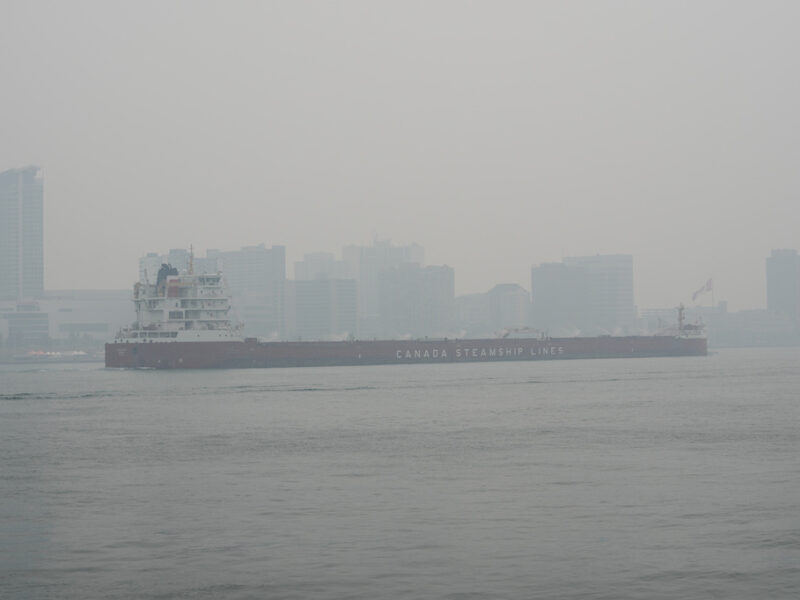
Detroit’s air quality is forecast to improve Tuesday as smoke from Ontario wildfires clears, though concerns remain about potential new smoke formation later this week.

Detroit air quality to improve Saturday, but relief may be short-lived
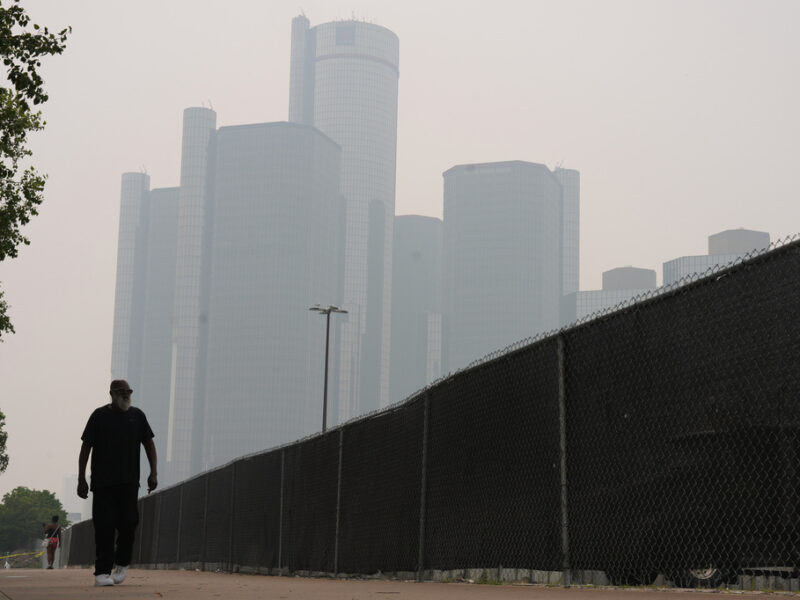
Detroit’s air quality ranks as the worst in the world for the second day Friday as smoke from Ontario wildfires continues to pour into Michigan. Air quality is expected to improve slightly Saturday before worsening again.