

Overview:
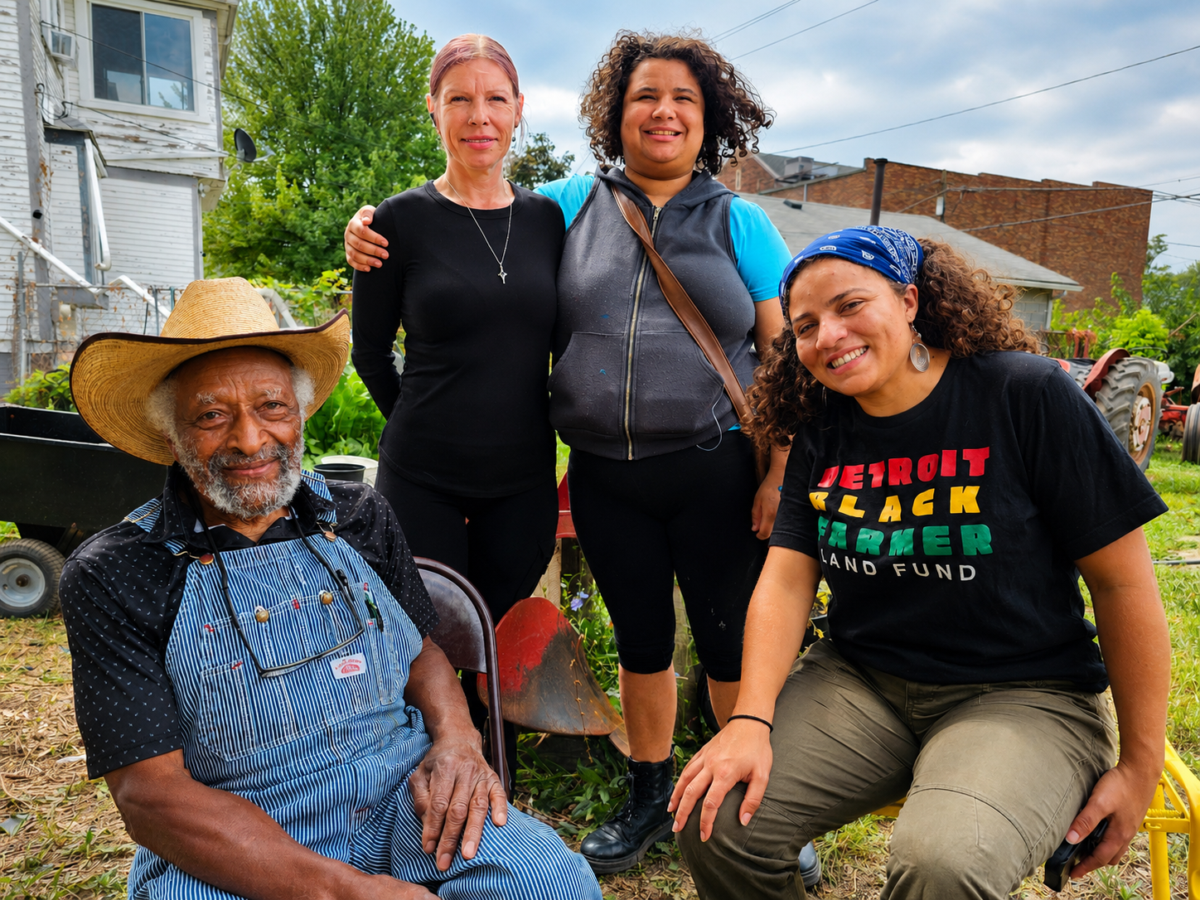
- Willie Patmon, 91, operates WJP Urban Farms in Detroit, where he transformed contaminated vacant lots into productive farmland over 14 years ago
- Patmon uses the farm as an outdoor classroom to teach youth resilience, self-sufficiency, and problem-solving through hands-on gardening and cultivation
- The farm faces ongoing challenges including water costs and infrastructure expenses, but Patmon relies on community support from neighbors like Victoria Llorens to sustain operations
Rooted in Detroit: Stories from the Soil is a Planet Detroit farmer profile series exploring Detroit’s local urban farming community. Local journalists, farming leaders, and Planet Detroit Neighborhood Reporting Lab Fellows and participants write the farmer profiles, supported by the Kresge Foundation and the Sustainability Institute of Detroit. See the full series here.
At 91, Willie Patmon continues to walk the rows of WJP Urban Farms, carefully inspecting the soil, tending the vegetables, and ensuring the thirsty plants get enough water to thrive in Detroit’s summer heat. Each trip through the garden reflects the persistence it took to transform vacant land into a place where food, knowledge and community can grow.
The work is demanding. Water must reach every bed, weeds must be pulled, crops must be monitored, problems must be solved as they arise. Yet Patmon keeps moving from row to row, refusing to let age or the challenges of urban farming determine what can be accomplished.
For Patmon, the garden is more than a place to grow vegetables. It is a classroom.
“The challenges come every year as a farmer. If it isn’t the wind, it’s the storm or the hail. There’s always something that challenges you, but you learn to overcome it,” he said. “You develop a way of thinking. ‘You can’t beat me. I’m going to find a way to win.’ My goal is to pass that same mindset on to the students I work with—to teach them how to face challenges, overcome them and keep moving forward.”
The proof of Patmon’s mindset grows all around him, from the very ground beneath his feet. Watermelon vines sprawl across the soil, while heirloom tomatoes gradually ripen to a deep crimson where vacant, neglected lots once stood.
“It’s in an urban area. There are challenges everywhere, from the purchase of the property to the cleanup of the property,” he said.
Before the first seed could take root, Patmon had to clear years of overgrown vegetation, debris, and rocks, remove contaminated soil, and replace it with clean earth. That was more than 14 years ago. Today, the transformation is visible in every row — a landscape once defined by neglect now produces food, opportunity, and purpose.
Overcoming obstacles has become integral to his mission and to the youth he now mentors.
When young people visit the farm, Patmon wants them to gain more than tomatoes, watermelons and freshly harvested vegetables. He wants them to acquire valuable lessons in problem-solving, accountability, patience and perseverance.
The garden serves as Patmon’s classroom — a place where lessons in life, history, character and values take root alongside the crops. Drawing on his decades of experience and the challenges he has overcome, he strives to share the values that have guided his life: work hard, take responsibility, help others, and do not give up when circumstances become difficult.
“Farming is the best way to be self-sufficient,” Patmon said. “I tell the children, ‘You determine what your destiny is going to be. ‘I can’t’ doesn’t exist. Get it out of your system. Say, ‘I will. I’m going to get it done. I will not be defeated.’”
Farming is a masterclass in patience, resilience, self-reliance, and persistence. Weaving his way through the vibrant rows of his farm, Patmon sees each plant as a testament to challenges overcome and lessons learned from the land.
Even a rock can become a valuable lesson. When a student pulls one from a garden bed, Patmon transforms that discovery into a conversation about geology, soil, and the earth beneath their feet.
Emily Shaw has witnessed these teaching moments as her child, a returning student with special needs, works alongside Mr. Patmon.
“Mr. Patmon doesn’t just give instructions; he explains the ‘why’ behind everything,” Shaw said.
In the garden, planting requires following directions, tending to crops demands patience, and problems become opportunities to work through together.
By harvest time, Shaw’s child can come home with fresh vegetables grown by hand—tangible proof of their effort in the soil.
Expenses add up
Keeping the crops watered costs money, Patmon said. But water is only one of many expenses. Long before the first seed goes into the ground, the costs of building and maintaining an urban farm begin to add up.
Startup costs for land, cleanup, soil testing, tools, and infrastructure like raised beds run into the tens of thousands. Annual costs include plant seeds and stock, compost and fertilizer, water, repairs, and permits and licensing,
But those expenses don’t deter Patmon.
Other stories in our ‘Rooted in Detroit’ series





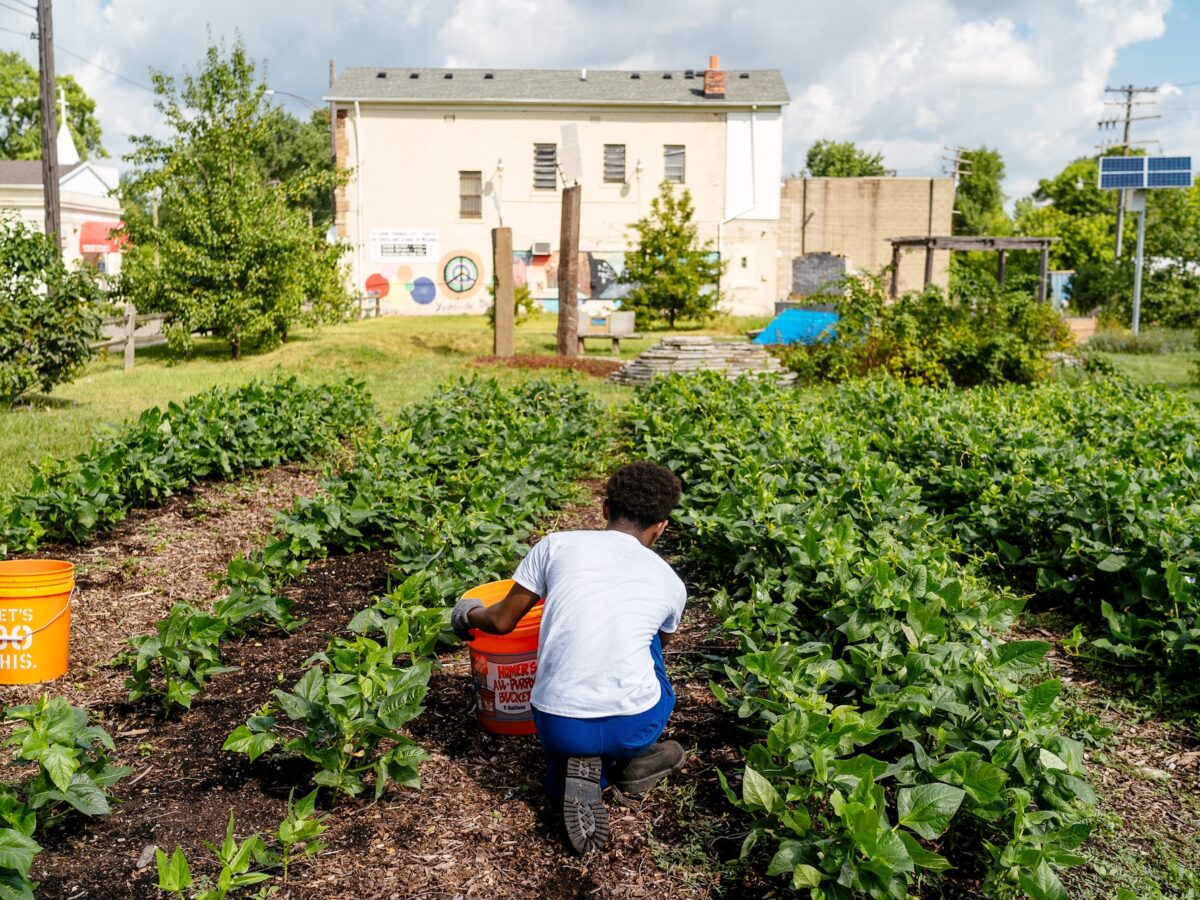

Patmon sees each obstacle as another problem to solve — and another lesson to pass on. Still smiling, he keeps finding ways to get water to his crops. For him, giving up has never been part of the growing process.
“My mom taught me there was no such thing as ‘can’t.’ That word wasn’t allowed in our house. You might say it once, but you wouldn’t say it twice. She taught me to take ‘can’t’ out of my vocabulary and replace it with three words: I can. I will. And I must.”
Through farming, Patmon teaches people determination, resilience, and self-sufficiency- how to confront challenges, find solutions, and keep moving forward when circumstances become difficult. The lesson is rooted in the same mindset he has carried throughout his own life: obstacles may come, but giving up is not an option.
Connected to community
At 91, Patmon still spends his days tending the soil, growing food and teaching others. But he does not carry the mission alone. Neighbor and devoted collaborator Victoria Llorens plays a crucial role in connecting the soil with the digital world, helping Patmon maintain WJP Urban Farms’ ties to the broader community.
Llorens helps take his work beyond the rows of the garden, connecting people to the farm and helping ensure that what Patmon has spent years building continues to be seen, shared, and grow.
When an email arrives, someone needs to respond. When community members want information about the farm, someone needs to connect with them. When the website needs updating, or a journalist wants to interview Patmon, Llorens helps coordinate the details.
“The lone wolf can’t make it,” Patmon said. “He might think he can, but a wolf needs the pack for food, protection and survival. We’re not much different. When we work together and help each other, we don’t just survive — we prosper.”
Llorens not only helps with farming but also manages the farm’s website and social media platforms, coordinates media interviews, facilitates community outreach, and engages with people interested in learning more about the farm.
Her efforts ensure that Patmon’s work in the neighborhood is visible, shareable, and discoverable beyond the farm’s borders.
“Mr. Patmon has dedicated so much of himself to this farm and this community,” Llorens said. “I enjoy being able to support him, whether that means helping with the website, answering questions, coordinating interviews or simply stepping in wherever he needs me.”
After more than 14 years of navigating the challenges of urban farming, Patmon now shares his knowledge with the next generation. At 91, he continues to plant seeds—some grow into food, while others develop into life skills his students will carry long after they leave the garden.
Raised to confront challenges rather than surrender to them, Patmon carries that philosophy into the garden and passes it along to the children who walk the farm with him.
A dry spell becomes a lesson in resourcefulness.
A broken hose becomes a problem that needs solving.
A struggling plant gives a student a reason to stop, look closer and determine what went wrong.
And when vegetables finally reach harvest, students can see and hold the results of patience, responsibility, and persistence in their own hands.