

Overview:
- Nan'Chang Thompson-Springer created Urban Bush Sistah's Community & Market Garden on three vacant lots after her diabetes diagnosis led her to growing food as medicine
- The west side Detroit farm has grown through grants from the Detroit Black Farmer Land Fund and Natural Resources Conservation Service, though recent federal cuts terminated major funding
- The garden now operates as a working farm with produce sales, educational workshops, and volunteer support focused on community health and food access
Rooted in Detroit: Stories from the Soil is a Planet Detroit farmer profile series exploring Detroit’s local urban farming community. Local journalists, farming leaders, and Planet Detroit Neighborhood Reporting Lab Fellows and participants write the farmer profiles, supported by the Kresge Foundation and the Sustainability Institute of Detroit. See the full series here.
When Cheryl Bell first came to help Nan’Chang Thompson-Springer build a garden on three vacant lots tucked away in Detroit’s west side, there was little to see.
“We just started with cardboard and wood chips and dirt,” Bell remembers.
That was in 2020, when the COVID-19 pandemic had pushed people outdoors and renewed conversations about food, health and community. Thompson-Springer had a plan. Bell, her friend from Black Girls Run, was willing to help.
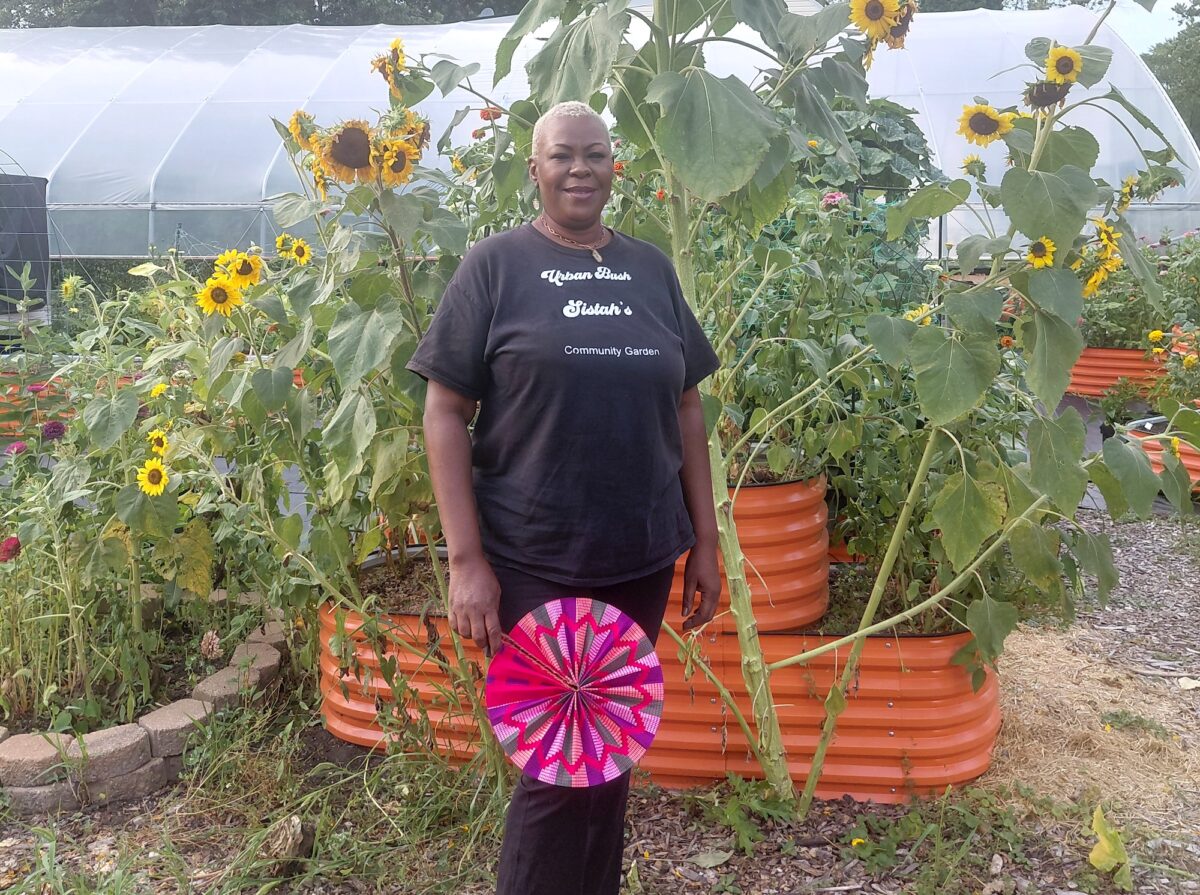
Six years later, the site has evolved into Urban Bush Sistah’s Community & Market Garden, a working urban farm with raised beds, a hoop house, fruit trees, herbs, vegetables, and chickens.
A small, barn-shaped yellow farm stand offers fresh produce and floral arrangements for pick-up onsite. Occasional workshops are held at the garden, inviting community members to learn skills like growing food and making herbal products. A pollinator sanctuary set up near the entrance draws bees and other insects.
The garden’s evolution mirrors Thompson-Springer’s own journey: from growing food to heal herself to building a place where she believes her community can heal, too.
“This is my all-around healing place, for my mind and my body,” Thompson-Springer said.
A calling rooted in food
Thompson-Springer did not grow up farming. She grew up on Detroit’s west side and eventually raised her own children in the neighborhood where her garden now stands.
Her relationship with growing food began soon after she developed diabetes.
She changed her diet, eventually becoming vegan, and began thinking about growing the food she wanted to eat. She started a garden in her own backyard in 2017.
For Thompson-Springer, gardening was initially about her own health. But eventually, she was compelled to share what she was learning about nutrition with her community, where the threats of conditions like diabetes, high blood pressure, and heart disease were all too common.
“I believe food is medicine,” she said.
Other stories in our ‘Rooted in Detroit’ series




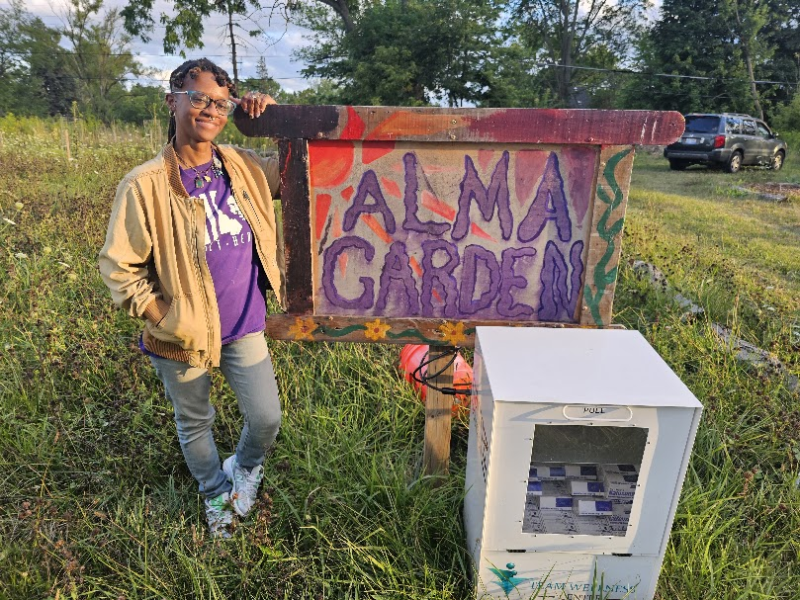
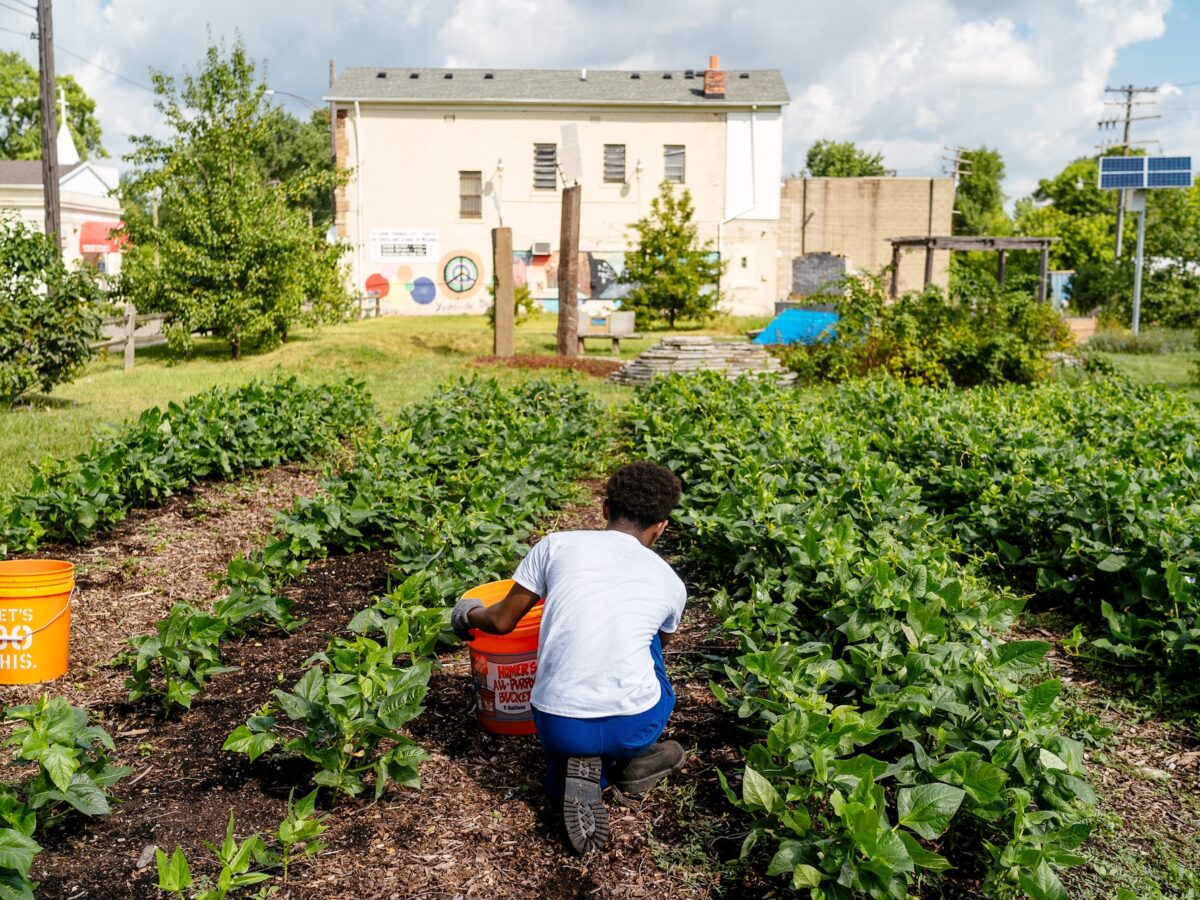

After enrolling in Keep Growing Detroit’s Urban Roots, a leadership program that teaches residents how to establish and maintain community gardens, Thompson-Springer began looking for land.
Just blocks from the high school her children attended, she found what would become her dream project, returning at different times of the day to get a sense of the surroundings.
According to Thompson-Springer, “this land chose me”.
Building a farm one grant at a time
Thompson-Springer’s garden has grown with help from a patchwork of grants, nonprofit organizations, volunteers, and neighbors.
At first, she did not own the property. She began what she called “guerrilla gardening,” planting in one vacant lot and eventually maintaining the two others.
In 2020, she received funding from the Detroit Black Farmer Land Fund to purchase the property.
The land purchase, however, remains part of a lengthy process with the city.
Thompson-Springer has had to navigate compliance requirements, inspections, permits, and consolidating the three lots into a single address. Because the garden now contains substantial infrastructure, with more to come, that infrastructure also requires permitting.
The Detroit Black Farmer Land Fund helped finance the garden beds and provided technical assistance, including support for her website. Keep Growing Detroit has helped install beds and other infrastructure. KGD has also provided educational support.
A grant from the Natural Resources Conservation Service helped fund a hoop house and includes money for the city water connection Thompson-Springer has been pursuing.
That federal grant helped her purchase storage containers, sinks, and equipment. However, because of recent White House cuts, her grant was terminated, leaving Thompson-Springer without a major source of funding.
She said the loss has slowed some of her plans.
Instead, this year, she has leaned on volunteers, donations, farmstand and other local market sales. The experience has reinforced something Thompson-Springer already knew: as much as it helped, the garden cannot rely on a single funding source.
The people behind the growth
Bell has remained Thompson-Springer’s longest-running volunteer, helping since the garden began.
Their friendship began through Black Girls Run, something Thompson-Springer joined to address her diabetes. Creating a garden became another shared passion for her and Bell.
Bell fondly remembered helping her grandparents, who grew vegetables in their garden on the side of their Inkster home, as a small child.
So, when Thompson-Springer described her plans during the pandemic, Bell jumped in.
The therapeutic benefits of gardening also became important to Bell. She suffered a stroke in 2021 and described her volunteerism as both physical and mental restoration.
“You know where it’s coming from,” she said, talking about growing her own food. “You can just go out in your garden and pick stuff and eat it if you want.”
Thompson-Springer has helped Bell build a raised bed in her own backyard, extending their gardening relationship beyond Urban Bush Sistah’s.
Another volunteer, Sheela Drummer, came to Thompson-Springer through attending gardening workshops in the community. Drummer, who started volunteering four years ago, has also had the chance to witness the transformation of the bare lots into a thriving produce market and community event space.
“She’s the one with the vision and ambition,” Drummer said about Thompson-Springer.
Drummer’s interest in rain gardens grew after severe flooding repeatedly damaged her home in 2021. She now sees gardening, native plants and stormwater management as interconnected parts of caring for a neighborhood.
Although Urban Bush Sistah’s Community & Market Garden is a small, volunteer-driven, tight-knit team, their network extends further to other Detroit growers who share resources, advice, and labor, like Griffin Gardens and CWO Farms.
The camaraderie between farms helps balance cultivation of their property against the administrative, financial, and physical demands of maintaining urban land.
A garden still growing
Thompson-Springer now works at the garden full time, with support from her husband. That has allowed her to scale the operation and devote more attention to maintaining it.
She sells vegetables, fruit and herbs, as well as herbal products she makes herself, such as teas, tinctures, oils and salves. She holds educational workshops on and offsite, and shares a library of gardening information online.
But she is not planning to rush into another major expansion.
Her immediate goal is simpler: finish the permitting processes and develop what she has already built.
“It’s just really just about maintaining what I have now,” she said. “I’m very blessed.”
Today, rows of food grow where there was once nothing. Volunteers and workshop participants are learning about plant-based self-care.
For Thompson-Springer, the work remains a process — one she believes is connected to her purpose and calling.
“Things happen the way they’re supposed to happen and when they’re supposed to happen,” she said. “Even though I want them to happen faster, they happen.”
For now, she keeps planting, harvesting, teaching, and anticipating that water line.
