


Overview:
- Michigan Public Service Commission will decide on DTE contracts for Google's planned 1-gigawatt Van Buren Township data center. It's the first contested rate case for a hyperscale data center in the state.
- Attorney General Dana Nessel is seeking stronger ratepayer protections, warning that existing customers could be charged if the data center uses less power than expected or closes before its 20-year contract expires.
- Environmental groups question whether DTE will build the full 1.6 GW of renewable energy and 480 MW of battery storage promised for the project, and whether additional fossil fuel plants will be needed.
Michigan’s utility regulator may decide as soon as Thursday whether to approve DTE Energy‘s contracts for Google’s 1-gigawatt data center in Van Buren Township — and Michigan Attorney General Dana Nessel and environmentalists are calling for greater ratepayer protections.
It’s the first contested rate case for a hyperscale data center. The Michigan Public Service Commission made the contentious decision in December to grant “ex parte” approval of DTE contracts for Oracle and OpenAI’s 1.4-gigawatt data center in Saline Township.
In the fast-tracked Saline Township case, ratepayer advocacy, environmental, and other groups lacked the opportunity to file testimony on the project’s impacts as part of a contested case.
DTE requested a decision by state regulators on the Google data center contracts by Thursday, Sept. 10; the MPSC’s next meeting is 1 p.m. Thursday.
Intervenors in the Google data center case say the MPSC needs to ensure other utility customers don’t pay for connecting the data center to the grid and supplying it with power. They also object to paying for stranded costs if the facility closes before the end of its contract, or uses less power than anticipated.
Environmental groups want to guarantee DTE has a plan for bringing renewable energy and other resources online to help power the facility.
DTE announced in March the project will be served by 1.6 GW of renewables; up to 480 MW of energy storage; and demand response capability to reduce load on peak event days that will come online with the project.
Will Conkling, Google’s head of data center development for the Americas, said in a March blog post that the company is adding clean, around-the-clock power to support the data center, enhance grid reliability, and establish Michigan as a leader in infrastructure development.
DTE said in March that its contracts with Google are expected to have nearly $1.7 billion in “positive affordability benefits” for existing customers.
DTE plans new natural gas plants as data centers increase demand
DTE will seek approval for 1.4 GW and 700 MW natural gas plants in its upcoming integrated resource plan, the utility announced Aug. 25. The long-term plan covers how the utility will meet customer energy needs.
The data center project in Saline Township does not require additional fossil fuel generation, but each additional 1 GW data center could necessitate a new natural gas plant, DTE President and CEO Joi Harris said during an October 2025 earnings call.
One gigawatt is roughly equivalent to the energy used by 800,000 homes.
Natural gas is mostly methane, a potent greenhouse gas that produces carbon dioxide when burned. Natural gas with carbon capture and storage that captures at least 90% of CO2 emissions is classified as clean energy under Michigan’s 2023 renewable energy law.
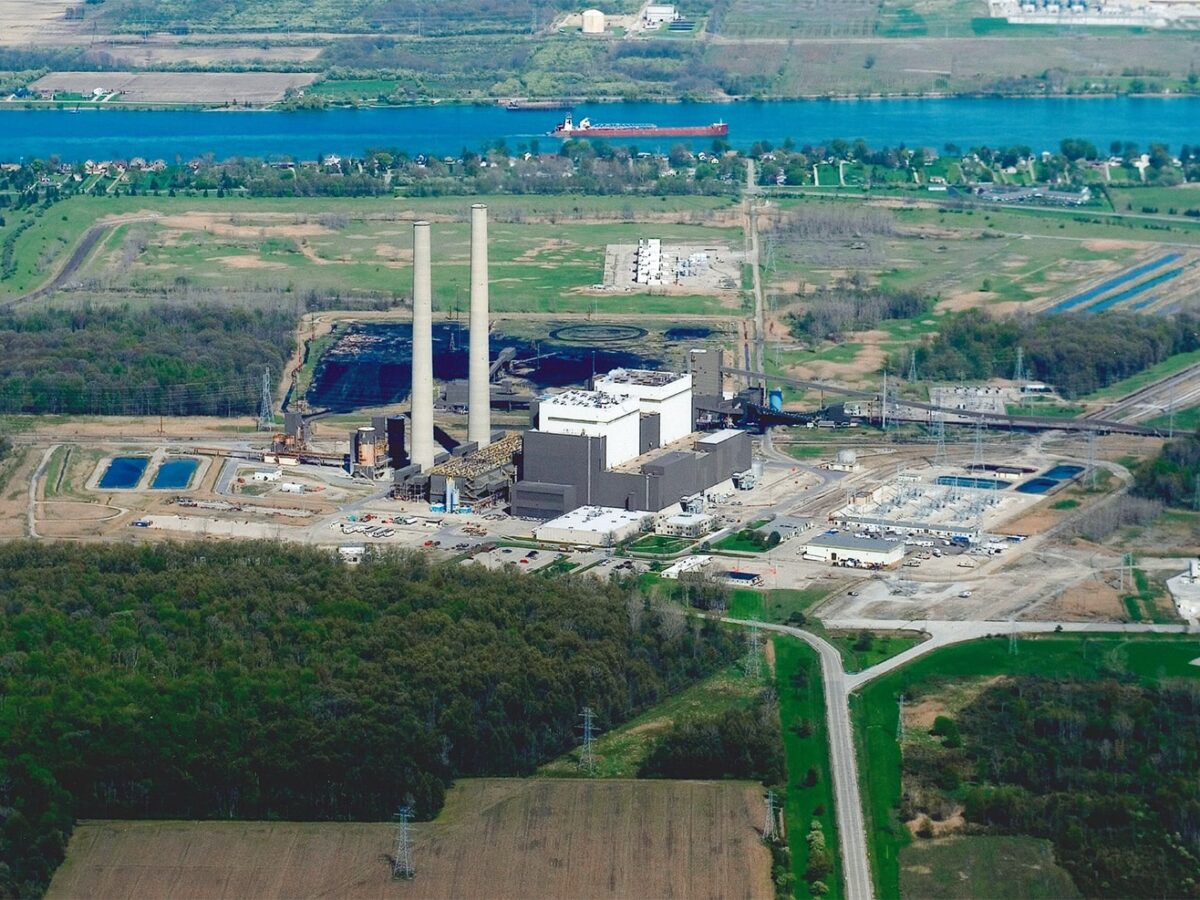
DTE spokesperson Ryan Lowry said in April the utility is considering multiple baseload generation sources, including natural gas with carbon capture, to replace its Monroe coal plant.
Shannon Fisk, director of state electric sector advocacy for the environmental legal group Earthjustice, told Planet Detroit that despite the large amount of renewable energy and battery storage included in the Google project, it will still require additional generation.
Fisk is representing the Sierra Club in the Google data center case before Michigan regulators.
Building power plants to meet data centers’ energy needs could add significant costs for residential, commercial, and industrial utility customers under the state’s cost allocation framework, he said.
Lowry said in a statement this week that DTE’s contracts contain enforceable provisions to ensure Google pays the full costs of serving its load, including requirements for the company to cover generation, energy storage, transmission, and distribution costs.
Google spokesperson Jessica Ryan said by email that the company remains confident “the proposed agreements ensure Google will fully cover the electricity and infrastructure costs, incorporate robust ratepayer safeguards, and support the long-term reliability of Michigan’s grid.”
Nessel seeks additional ratepayer protections in contracts
Nessel has pushed back on the proposed DTE contracts for the Google data center, arguing other customers could be at risk if the data center uses less power than forecast, or the facility shuts down before the 20-year contracts expire.
This concern over so-called stranded assets refers to investments in energy infrastructure built for facilities that fail to materialize or go out of business.
Nessel challenged DTE’s use of an 80% “minimum billing demand,” which refers to the minimum amount of the facility’s contracted demand that will be charged each month, in an Aug. 3 brief filed with the MPSC.
The MPSC should direct the companies to use a 90% minimum billing demand, Nessel said. An early contract termination payment should be based on a 100% minimum billing demand multiplied by the remaining months in the 20-year contract, she said.
Since the Van Buren Township project represents the first large load customer with a contested MPSC case for such contracts in DTE’s territory, these issues are “novel,” Nessel said, adding that DTE’s efforts to refer to “commission precedent” from the Oracle and OpenAI contracts should be ignored.
In a June 20 brief, DTE said the MPSC lacks the authority to change the minimum billing demand and termination payment.
The commission can only approve or decline to approve the contracts, and “possesses no statutory authority” to change the terms of the companies’ contracts, according to DTE.
In the event of a customer bankruptcy or other circumstance in which the utility is unable to recover costs, DTE will not seek to recoup any of these losses from other customers, the utility said in its brief.
Nessel said in her Aug. 3 brief that despite this promise, other customers would still pay.
“If DTE’s credit ratings or other financial situation take a significant hit, the customers that make up the company will be the ones who eventually suffer,” Nessel said.
‘Unprecedented’ projects require ongoing oversight, attorney says
Katie Duckworth, an attorney with the nonprofit Environmental Law & Policy Center, said she’s concerned about the potential for the project’s infrastructure costs to be shifted onto other ratepayers.
The nonprofit is an intervenor in the Google data center case.
Serving the data center will increase overall system costs, and protecting customers will require properly allocating those costs to Google, not other customers, she said.
“A lot of the costs aren’t known with certainty at this time,” Duckworth said, referring to the potential for the data center to drive up wholesale power costs or add transmission expenses.
The MPSC will need to assess Google’s actual data center costs in future electric rate hike cases for the life of the 20-year contract, and DTE’s contracts with the company need to be flexible enough to ensure other utility customers aren’t paying these costs, she said.
DTE’s lawyers said in the June 20 brief the company’s cost and benefit analysis for the Google data center contracts will be presented in upcoming contested rate cases and power supply cost recovery proceedings.
Power supply cost recovery charge proceedings address the costs for fuel used to generate power or electricity purchased by the utility.
Intervenors look to ensure renewables brought online
The intermittent nature of renewable energy means the Google data center will likely need 200 MW of additional capacity, Earthjustice’s Fisk told Planet Detroit.
Earthjustice’s biggest question is what DTE’s plan is for bringing such a large quantity of renewable energy and battery storage online, Fisk said.
Hundreds of planned wind, solar, and battery storage projects are waiting to connect to the grid in Michigan, according to a Midcontinent Independent System Operator database. Nationally 75% of proposed interconnection requests presented between 2000 and 2020 were withdrawn by 2025, according to the Lawrence Berkeley National Laboratory.
Earthjustice is also looking to ensure the utility builds the full amount of renewable energy and storage resources included in the contracts, Fisk said.
The contract language says DTE will build “up to” 1.6 GW of renewables and 480 MW of energy storage, but the MPSC should ensure the utility builds the full amount, he said.
DTE’s Lowry said the utility is committed to what’s filed in the contracts.
DTE identified the resources needed to reliably serve the data center without compromising service for existing customers, while remaining in compliance with Michigan’s clean and renewable energy standards, he said.
Duckworth said the contracts are a chance for the MPSC to direct DTE to help bring more distributed energy resources like rooftop solar and battery storage online. These resources could provide reliability and affordability benefits for residents, she said.
“It would be appropriate for the commission to be encouraging the ability of large, financially capable customers like Google to develop and fund innovative distributed solutions.”
MORE DATA CENTER NEWS

Environmental groups call for Detroit data center moratorium as city develops ordinance
Environmental justice groups criticized Detroit’s data center working group process and call for a moratorium on the facilities.

DTE will seek approval for 2 natural gas plants as coal phases out, data centers go online
DTE Energy will ask regulators to approve construction of two natural gas plants totaling 2.1 gigawatts of capacity.

Gibraltar faces data center developer lawsuit after city passes moratorium
The developers behind a proposed 100-megawatt data center on Gibraltar’s former McLouth Steel property are suing the city over its one-year moratorium on data centers.