


Overview:
- Only 1% of Michigan voters identified environmental issues as their top concern in a September poll, far behind jobs, economy, and cost of living.
- Democratic and Republican candidates are framing environmental issues through the lens of data center regulation, energy affordability, and corporate accountability rather than direct climate messaging.
- The governor's race features stark contrasts, with Democrat Jocelyn Benson tying clean energy to job creation while Republican John James promises to repeal Michigan's clean energy law.
Environmental and climate issues are playing a lesser role in Michigan’s 2026 election in a landscape of rising gas, health care, and housing prices.
🗳️ Civic Action Toolbox
Why it matters
How Michigan candidates approach energy policy, data centers, and environmental regulation will impact residents' utility bills, water resources, and whether communities can control development in their neighborhoods.
Who's making public decisions
Upcoming Meetings
Contact Your Representatives
- Tom Barrett (Republican)
U.S. Representative, Michigan District 7, District 7
202-225-4872 · Contact - Jocelyn Benson (Democratic)
Michigan Secretary of State
888-767-6424 · Contact - John James (Republican)
U.S. Representative, Michigan District 10, District 10
202-225-4961 · Contact - Jim Runestad (Republican)
State Senator, 23
senjrunestad@senate.michigan.gov
Civic Actions: What You Can Do
- Register to vote or check your registration
Make sure your voice counts in the next election.
Organizations to Follow
What to watch for next
Watch for the Nov. 3, 2026 election results that could determine environmental issues such as whether Michigan continues or reverses its 100% renewable energy goals and how data centers are regulated in the state.
Are you taking action? Let us know.
Powered by Civic Action Toolbox
The environment ranked far behind other issues in a September WDIV/Detroit News poll that asked Michigan voters to identify their top concern. Jobs and the economy, and cost of living, were identified as the top concern by 14.3% and 11.4% of respondents, respectively.
Environmental issues and preservation; and data centers were each selected by 1% of those surveyed as their top concern.
Michigan voters will choose their next governor, state Legislature, attorney general, secretary of state, a U.S. senator, and U.S. representatives Nov. 3, as well as ballot questions including the Michiganders for Money Out of Politics initiative.
The midterms intersect with environmental issues in countless ways, from the governor’s approach to data center development to the attorney general’s role in utility regulation, and the policies impact everything from the air voters breathe to the utility bills they pay.
Climate change poses an existential risk to humanity, and Michigan has a unique responsibility to protect water in the Great Lakes, Dave Dempsey, senior advisor for the nonprofit For Love of Water, told Planet Detroit.
Michigan politicians are at best treating the environment as a “boutique issue” rather than using the bully pulpit to advance action on these issues, he said.
‘The vocabulary and framing has changed’
Democrats have been timid about discussing climate following President Donald Trump’s election in 2024, perhaps sensing that political winds shifted, Jonathan Hanson, a political scientist and lecturer at the University of Michigan, told Planet Detroit.
Environment and climate may not be the top issues this year, but the topics are intertwined with discussions over improving energy affordability, creating greater corporate accountability, and regulating data centers, according to those who spoke with Planet Detroit.
“I wouldn’t say environmental issues are absent; I would say the vocabulary and framing has changed,” said Tim Minotas, legislative and political director at the Michigan Sierra Club.
Issues like data centers and energy policy have environmental ramifications, but are being framed in terms of corporate accountability and affordability, he said.
For example, Michigan Democratic gubernatorial nominee Jocelyn Benson is pushing a green energy message framed in terms of economic development, while Democratic House candidate Will Lawrence is making data center opposition a centerpiece of his campaign with a corporate accountability message.
Republicans argue that Democratic renewable energy policies are raising prices. State Sen. Jim Runestad (R-White Lake), who chairs the Michigan Republican Party, told Michigan Public on Wednesday the “Green New Deal” has been “absolutely horrendous for what we need here in Michigan; we have the highest energy costs in the Midwest.”
While the 2019 federal Green New Deal resolution was not adopted by the U.S. House, Michigan passed a clean energy law in 2023 that looks to achieve 100% renewable energy generation by 2040.
Data centers, corporate accountability, environment are linked: Lawrence
Data center projects are encountering intense pushback in Michigan. Sixty-two percent of Michiganders oppose data center developments in the state, and 73% oppose federal tax breaks or policies to support the facilities, according to an August EPIC-MRA poll.
Democrat Will Lawrence, who is running to unseat U.S. Rep. Tom Barrett (R-Charlotte) in the 7th Congressional District, is someone running on environmental issues in an nontraditional way, Minotas said.
This district, which encompasses Lansing and Brighton, has seen several proposals for hyperscale data centers over the last year.
Lawrence, a co-founder of the Sunrise Movement, a progressive climate group, vocally opposes data centers. His messaging focuses on resisting tech industry interference in local decision making rather than potential environmental impacts.
Data centers‘ water and energy needs raise the prospect of impacts on utility ratepayers, water resources, state climate goals — and noise and air pollution from backup generators.
At a June 1 Lyon Township Board of Trustees meeting, Lawrence commented on a proposed data center, saying state and federal officials have either been silent on data centers or are actively helping projects move into Michigan communities.
“Local township officials are in a tough spot, having to stand up against the bullying coming from literally the richest people in the world,” he said.
Lawrence released a plan to slow AI development on Thursday that calls for pausing data center and advanced AI development, and passage of a national “AI Compact.”
This compact would create a jobs program funded by AI profits, bar the technology from key decision-making, block AI bailouts, and add environmental guardrails for data centers, among other priorities.
Lawrence backs a federal data center moratorium on data centers, a campaign spokesperson told Planet Detroit.
It’s impossible to have a conversation about corporate accountability without touching on the environment, Lawrence said in a statement to Planet Detroit. Data centers could jeopardize Michigan’s air and water, and add costs for residents, he said.
“We need corporate accountability in D.C. for Silicon Valley, so Pure Michigan comes first, not corporations,” he said.
Lawrence also criticized his opponent for accepting contributions from businesses associated with data center developments.
Google, Oracle, and Microsoft are among the individuals and businesses involved in data center developments that contributed to Barrett’s campaign, according to Federal Election Commission (FEC) filings.
The Lawrence campaign said it does not accept donations from corporate political action committees, and FEC data shows no corporate PAC donations.
Neither Barrett’s campaign nor representatives for the companies responded to questions about the donations.
In an August interview with CBS News, Barrett touted legislation he introduced to bar federal officials from signing nondisclosure agreements related to data centers; and legislation prohibiting federal agencies from overriding local land use decisions for data centers, or leveraging federal funds to compel state and local governments to give up their authority.

Barrett cosponsored the Ratepayer Protection Act, which looks to compel tech companies to cover infrastructure costs associated with data center development. The House passed the legislation Wednesday.
Barrett previously voted for a version of the One Big Beautiful Bill that included a 10-year moratorium on any state-level regulation of artificial intelligence, and supported the SPEED Act, which would have diminished federal environmental reviews for data centers and other projects.
When CBS reporter Major Garrett asked about these votes, Barrett said he supports robust oversight over “anything,” including data centers, adding that the SPEED Act was a permitting reform bill intended for many different types of development.
U of M’s Hanson said Lawrence is likely to have more credibility on the data center issue because he’s been out in front of it for so long.
Resistance to data centers ties into concerns over growing economic inequality, and tech companies that have been able to influence politics and push data center projects against local objections, Hanson said.
Benson ties climate to jobs, while James promises to repeal climate law
Climate has emerged more explicitly as a campaign issue in the governor’s race.
GOP gubernatorial nominee John James, a U.S. representative from Shelby Township, said clean energy is costing Michiganders. The Democratic nominee, Secretary of State Jocelyn Benson, said economic and environmental issues go hand in hand.
“We can create good-paying jobs, lower costs and protect our Great Lakes by investing in clean energy, strengthening local control and making sure corporations play by the rules,” Benson spokesperson Rajan Srinivasan said in a statement.
Benson’s environmental priorities include leading the country in clean energy and lowering utility costs, protecting the Great Lakes and Michigan drinking water, implementing guardrails to hold utilities and corporations accountable and fighting for environmental justice, the campaign said.
Benson supports a data center moratorium and only allowing data center projects that create union jobs, protect natural resources, and lower residents’ energy costs, the campaign said.
Benson had earlier supported guardrails for data centers and said she would hold companies that violate those rules responsible “up to and including a moratorium,” Bridge Michigan reported in July.
The James campaign did not respond to requests for comment for this story.
In August, The Detroit News reported that James initially sidestepped questions about a moratorium, before the campaign clarified that he supports a moratorium until there’s a local control standard, and environmental and ratepayer protections are in place.
At a Wednesday Detroit Economic Club event, where the moderator noted James’ support for a moratorium, the candidate said that as a conservative, he opposes bans and mandates.
“I have always said that we need to have local control. We need to prevent pollution. We need to make sure our electricity bills don’t go up,” he said when asked about data centers.
Like Barrett, James voted for a version of the One Big Beautiful Bill that included the 10-year moratorium on state-level AI regulation.
On renewable energy, James has said he would repeal Michigan’s clean energy law and argues net-zero mandates undermine energy affordability and reliability.
The candidate told Bridge Michigan his energy strategy would include “natural gas, nuclear, hydro, renewables where they make economic sense, biofuels and emerging technologies.”
U of M’s Hanson said ongoing energy affordability concerns and rising gas prices following the Iran war could lead Democrats to push back on this type of Republican opposition.
He said it wouldn’t be difficult for candidates to argue wind and solar are the cheapest forms of energy generation, or make the case for electric vehicles.
“I feel like the politics of this are ripe for a shift because people are seeing $4.20 gas.”
MORE POLITICS NEWS

Michigan constitutional convention opponents say environmental protections at risk: ‘Pandora’s box’
Michigan voters will decide in November whether to hold a constitutional convention. Environmental advocates warn the process could endanger climate protections, clean energy laws, and Great Lakes safeguards.

How Michigan attorney general race could reshape utility regulation, ratepayer protection
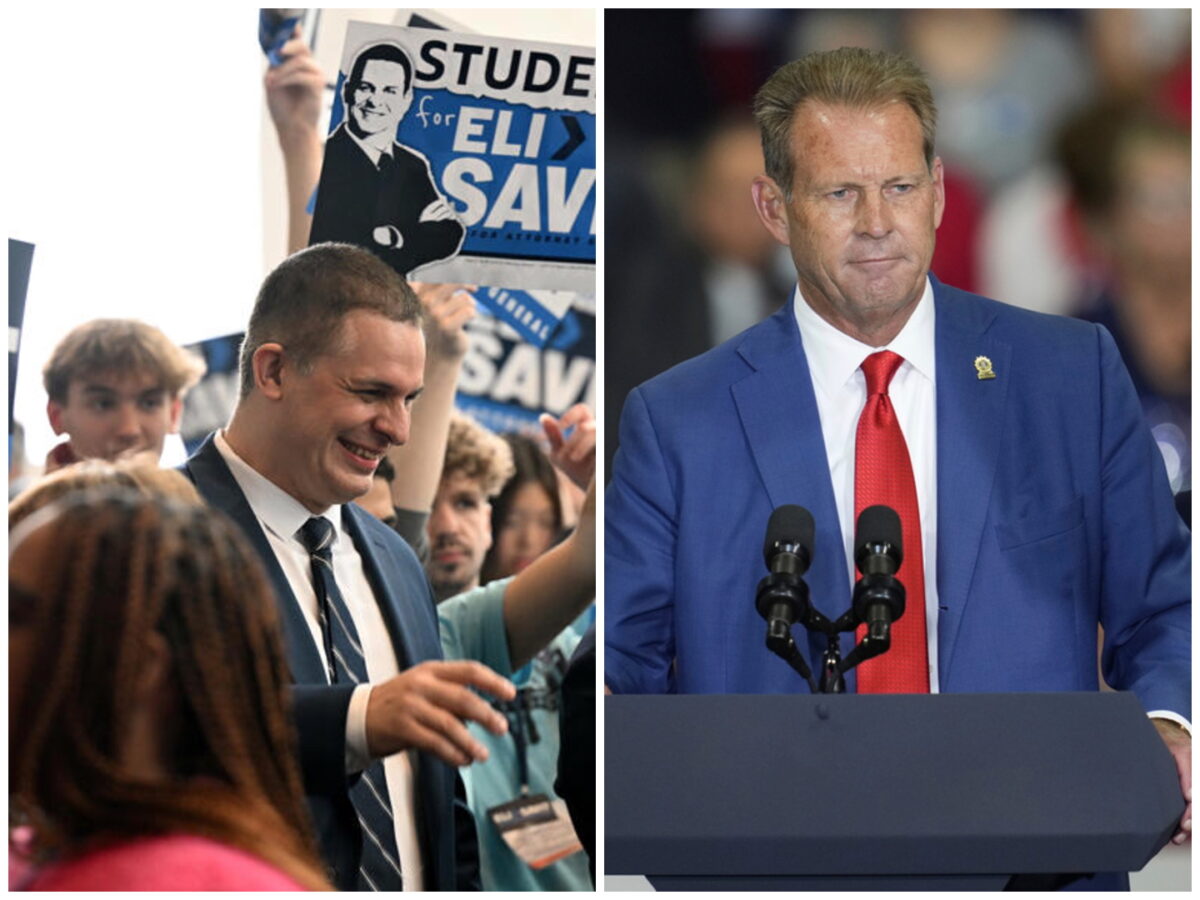
Michigan’s next attorney general will decide whether to continue Dana Nessel’s work challenging utilities over rate hikes and environmental issues.
Michiganders for Money Out Of Politics faces final hurdles: Lawsuit, Legislature
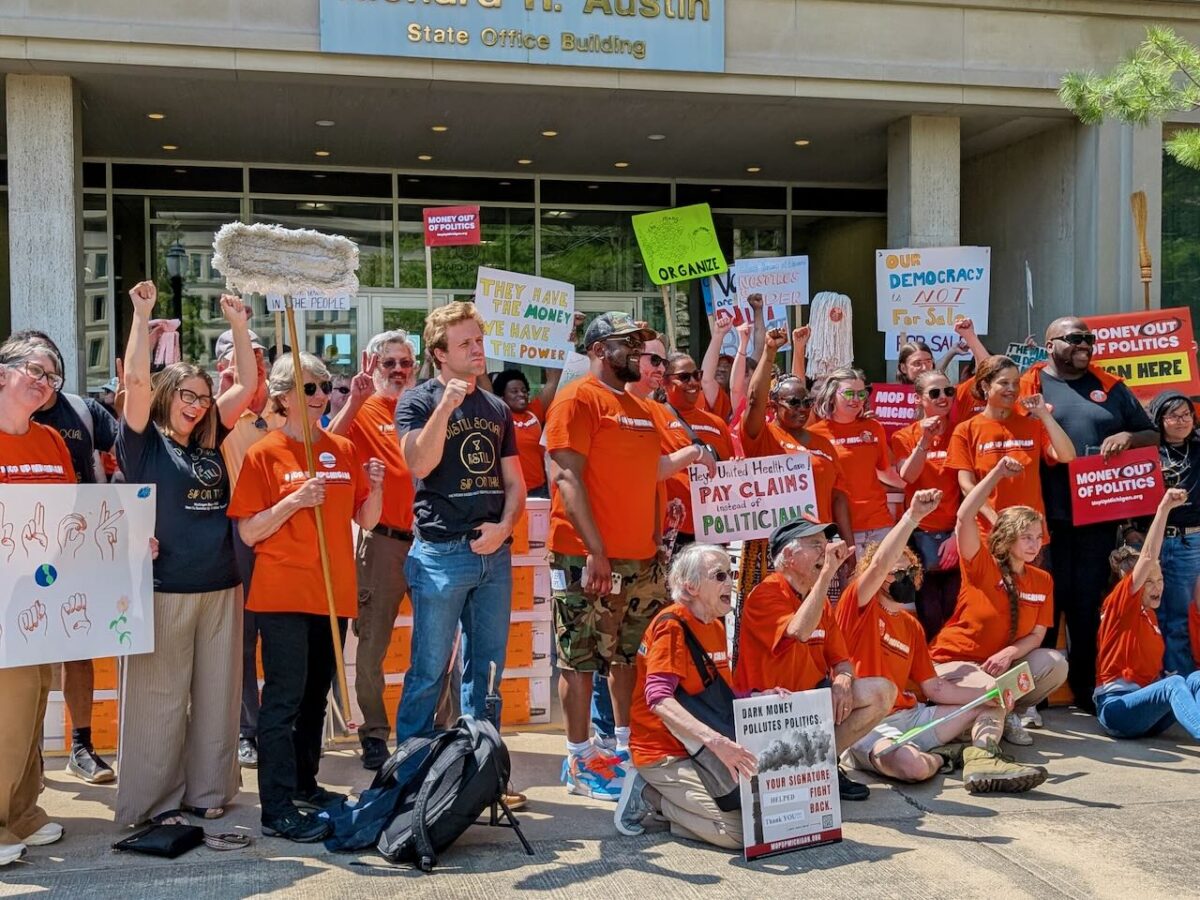
A group funded by DTE and Consumers Energy sues to block a ballot proposal that would ban utility political donations, while the state Legislature has until early September to intervene.