
Overview:
- ChaVonne McGowan and her team clean litter and debris from the grounds of Seeds of Knowledge Creative Learning Center on Detroit’s west side each morning before children arrive.
- Each child cares for their own plant and learns about plant growth, soil, seasons, and insects, including why bees matter to the garden.
- Through Taste Test Fridays, children try the produce they’ve grown, and community members can buy fresh fruits and vegetables from the harvest.
Rooted in Detroit: Stories from the Soil is a Planet Detroit farmer profile series exploring Detroit’s local urban farming community. Local journalists, farming leaders, and Planet Detroit Neighborhood Reporting Lab Fellows and participants write the farmer profiles, supported by the Kresge Foundation and the Sustainability Institute of Detroit. See the full series here.
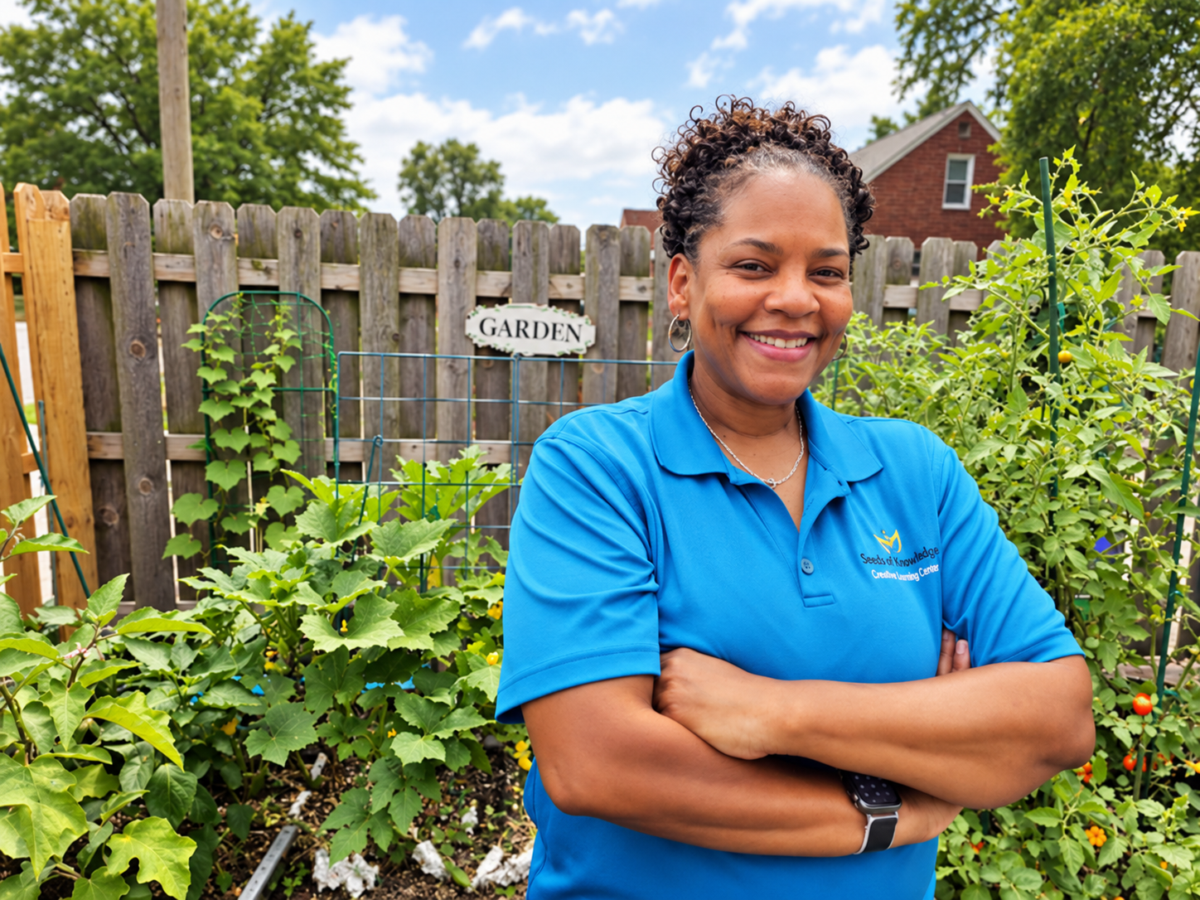
With a broom in hand and gloves on, Seeds of Knowledge Creative Learning Center founder and CEO ChaVonne McGowan clears walkways, removes discarded trash, and inspects garden beds before her students arrive.
The day’s first challenge has little to do with teaching children how to grow vegetables. McGowan must first deal with a persistent problem on Detroit’s west side that threatens her outdoor classroom’s safety: litter and debris left behind by others.
While McGowan teaches children to respect and care for their environment, she still has to clean up after people who don’t show the same consideration.
“Preparation begins the day before,” McGowan said.
By 6 a.m., she and her team are outside picking up litter, removing debris, and making sure the surrounding areas are safe for the children. Then they move indoors to clean, sanitize, and put everything back in order, whether the previous day brought a holiday celebration, a special event, or regular lessons.
“I want every child to walk into a fresh, clean and welcoming environment each morning, ready for another day of learning, exploration, and discovery,” she said.
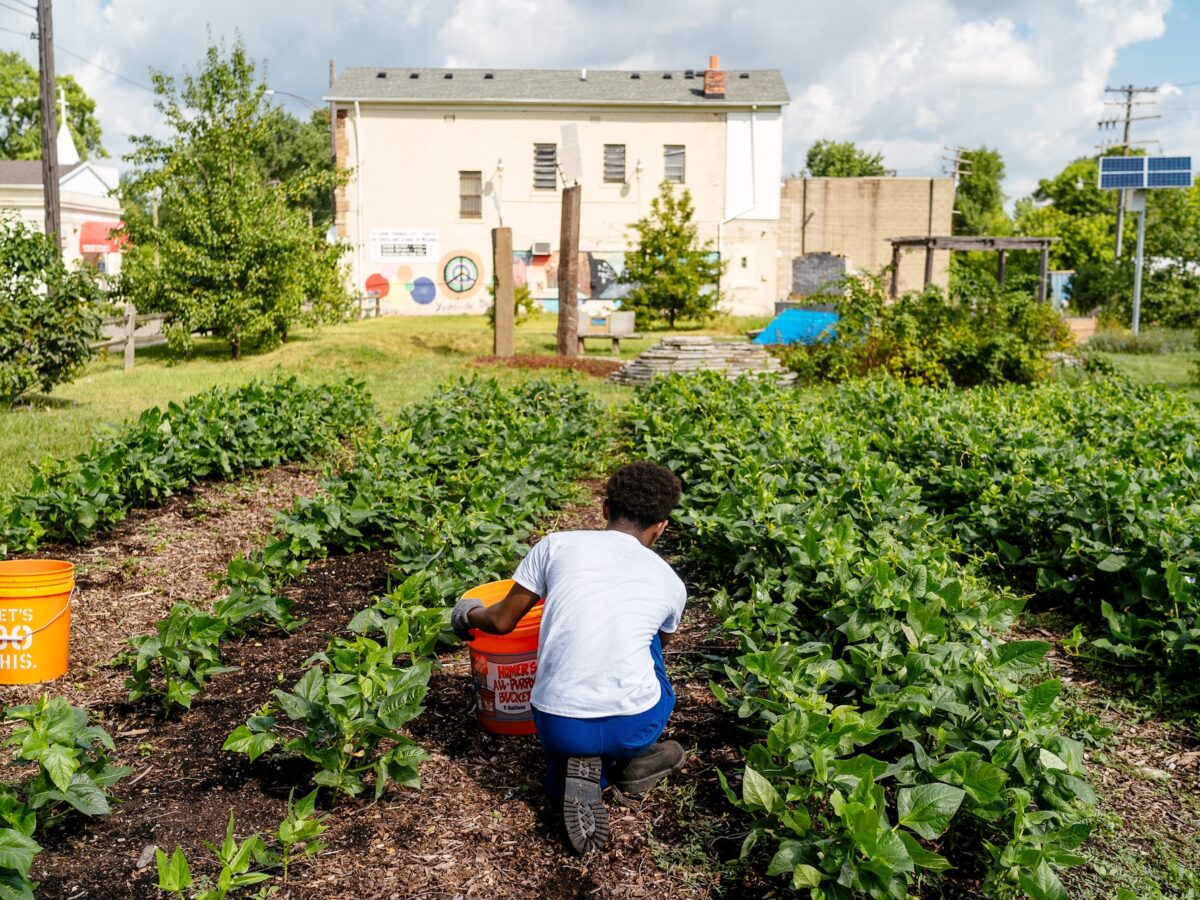
Once the children arrive, responsibility shifts from educator to student. Rather than doing everything for them, McGowan puts the learning in their hands. Each child cares for a plant, observes its development and sees how daily decisions influence its growth. Watering, monitoring changes and tending the soil become chances to practice patience, independence, and accountability.
“I guide them through the process, encourage them to ask questions, explore their surroundings and take pride in what they are growing,” McGowan said. “It’s about more than planting seeds. It’s about teaching responsibility, building confidence, and helping children discover what they can accomplish on their own.”
Children learn the fundamentals of agriculture, including the stages of plant growth, plant anatomy, and how water, sunlight, soil, and changing seasons influence what grows. They explore the roles roots, stems, leaves and flowers play in helping plants produce food, and they learn to recognize which insects benefit the garden and which may harm their plants.
“Every discovery becomes an opportunity to learn, ask questions and explore the natural world,” McGowan said.
Even a buzzing bee becomes a lesson. For many young children, a bee nearby is frightening enough to send them running. McGowan uses those moments to help them overcome their fears through knowledge, observation, and understanding.
“We teach them that not every insect is a threat, and that even the smallest creatures have important responsibilities in nature,” she said. “Bees are not simply insects to avoid. They play an essential role in keeping our gardens healthy and helping produce the fruits and vegetables we eat.”
That understanding marks an important shift in how children experience the natural world. Instead of reacting to every unfamiliar insect with fear, they’re taught to observe carefully, remain calm, and respect the space of the creatures around them.
Growing healthy habits
Children get excited when they return to the garden and find something new growing, and they can’t wait to show their teachers and classmates, McGowan said. She encourages them to speak up, ask questions, share their discoveries, and give everyone a chance to be heard.
“They’re not just learning how to grow plants; they’re developing communication skills, building self-confidence, and discovering the power of their own voices,” she said.
The excitement continues at harvest time, when children get to taste the fruits and vegetables they’ve grown themselves.
Through a monthly activity called Taste Test Fridays, McGowan encourages children to explore fresh produce, discover unfamiliar flavors, and develop healthier eating habits.
“I’ve found that children are more willing to try fruits and vegetables when they’ve actually planted, watered and watched them grow,” she said. “They take ownership of what they’ve produced, and that creates a different level of excitement about eating healthy.”
Research from the Community Preventive Services Task Force shows that youth gardening programs boost healthy eating. A review of 14 studies on children ages 2 to 18 found that hands-on gardening in schools, early childhood centers, and community settings increases vegetable intake and promotes better habits.
What children grow at Seeds of Knowledge doesn’t stay in the garden. On Taste Test Fridays, community members can buy fresh produce, sample the harvest, and celebrate the children’s work. The young gardeners also bring fruits and vegetables home to their families.
“Our young gardeners take pride in sharing their harvests,” McGowan said.
For McGowan, the true measure of success lies more in the lessons and values children carry beyond the garden than in what they harvest.
“I want every child who walks through our doors to leave knowing they are capable of doing something amazing,” she said. “When they see something grow because of their own hard work, they’re learning to believe in themselves.”
Lasting legacy: inspiring generations
Behind Seeds of Knowledge is a network of educators, staff, and volunteers who share McGowan’s commitment to nurturing young minds. For parent volunteer Ricardo Brown, that commitment is personal.
Long before his two children attended Seeds of Knowledge, Brown was a student in McGowan’s middle school classroom. Today he volunteers alongside his former teacher, helping carry forward the lessons and values that shaped his own education.
“Ms. McGowan poured so much into me as a student, and now she’s doing the same for my two children,” Brown said. “Her mission hasn’t changed. She’s still teaching, nurturing, and helping young people reach their potential.”
Brown said he’s watched both of his children grow, learn, and gain confidence under McGowan’s guidance. Her work goes beyond teaching ABCs and 123s, he said, to helping them grow emotionally, socially, and academically while learning to overcome challenges and believe in themselves.
“That’s why giving back and supporting her mission means so much to me,” he said.
“The most rewarding part is watching the seeds we plant in these children grow into something bigger,” Brown said. “They leave with friendships, confidence and a sense of belonging.”
When children return years later, it’s a reminder that the center’s work reaches beyond individual lives to strengthen families and build communities, he said.